


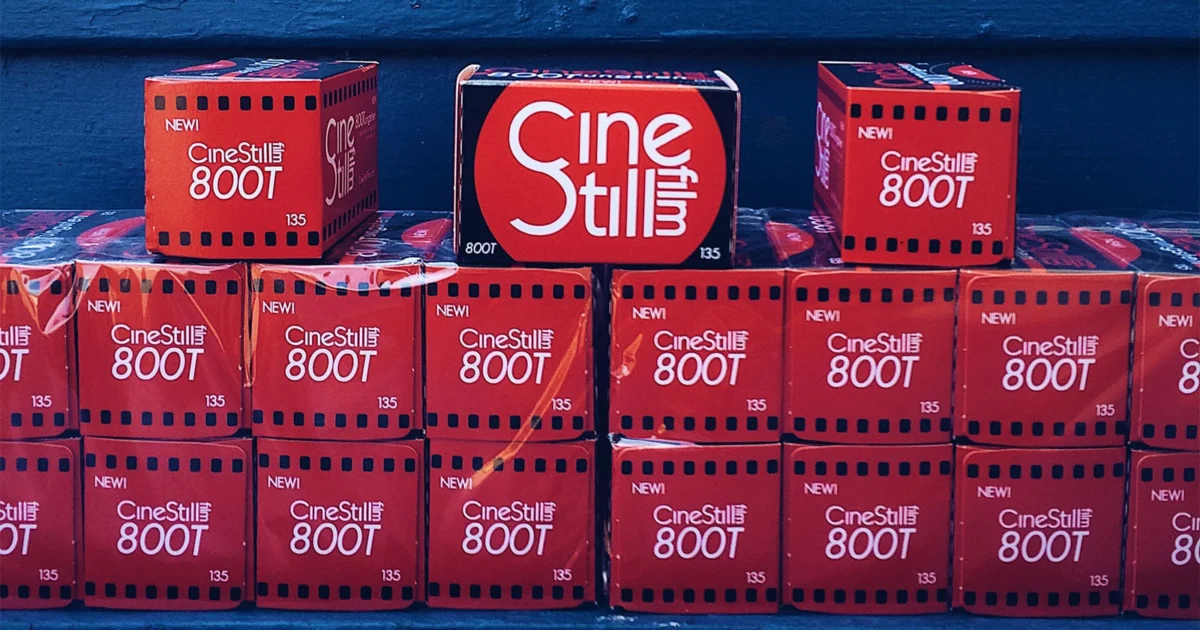
CineStill 800T has cemented its status as the flagship offering from the California-based company, serving as a bridge between the high-performance world of professional motion picture cinematography and the creative domain of 35mm and 120 still photography. Derived from Kodak’s Vision3 500T motion picture stock—specifically the 5219 emulsion—this film has revolutionized how photographers approach artificial lighting, low-light environments, and the aesthetic possibilities of analog media. Its rise to prominence represents a significant shift in the film market, transforming a niche, labor-intensive practice into an accessible standard for both amateur and professional shooters.

The Origins of Motion Picture Film Adaptation
The utilization of motion picture film in still cameras is not a new phenomenon; it has been a common practice among cinematographers for decades. Historically, professionals would use short ends—the leftover remnants of large rolls used on movie sets—to test lighting conditions and exposure before committing to expensive production runs. This practice, which predates modern digital testing, allowed photographers to experiment with film stocks that were often technologically superior to the consumer-grade emulsions available at local retailers.

The primary obstacle to this practice, however, was the "remjet" layer. This carbon-based anti-static and lubricant coating is essential for motion picture cameras, which pull film at high speeds through mechanical gates. However, when processed in standard C-41 chemistry—the universal standard for color still film—the remjet layer does not dissolve. Instead, it contaminates the processing chemistry, potentially ruining the developer and damaging the film and any other rolls being processed in the same batch. Consequently, for years, the only way to shoot motion picture stock was to either develop it in the ECN-2 process or manually remove the remjet layer, an arduous and often risky procedure.

The CineStill Innovation: Bridging the Gap
In 2012, brothers Brandon and Brian Wright sought to resolve these technical hurdles. By developing a proprietary method to treat and remove the remjet backing prior to the film being loaded into standard 35mm cassettes, they created a product that could be processed in conventional C-41 labs without damaging equipment. This breakthrough was met with immediate enthusiasm from the photography community, as it provided a "plug-and-play" solution for accessing the high-latitude, fine-grain characteristics of Kodak’s professional cinema stock.

The journey was not without initial challenges. Early batches of CineStill 800T were known for occasional issues, such as contamination or "red lightning bolts"—static discharge patterns caused by the absence of the anti-static remjet layer. Over time, manufacturing processes were refined. The introduction of 120 medium format film, following a successful crowdfunding campaign, further expanded the product’s reach, allowing users of medium format cameras to utilize the same unique emulsion.

Technical Specifications and Tungsten Balance
At its core, CineStill 800T is a tungsten-balanced color negative film with a native ISO of 500. It is engineered to neutralize the heavy yellow-orange color cast produced by incandescent and tungsten light sources (approximately 2400K). In traditional daylight-balanced films, shooting under these conditions results in a pronounced color shift that is often difficult to correct in post-production.

CineStill 800T effectively balances these tones, rendering scenes captured under artificial light with a natural, neutral color temperature. This specific design makes it an ideal tool for night photography, urban street scenes lit by older street lamps, and indoor environments. However, when used in daylight without a warming filter (such as an 85 or 81-series filter), the film exhibits a characteristic cool, blue cast. While this can be corrected in post-processing, many modern photographers have adopted this blue aesthetic as a deliberate stylistic choice, leveraging the film’s unique color science to create a distinct, cinematic look.

Exposure Latitude and Tonality
One of the most praised attributes of CineStill 800T is its exceptional exposure latitude. Because the base emulsion is designed for the high-dynamic-range requirements of cinema, it handles highlights and shadows with remarkable grace. Technical data from the field suggests that the film is highly forgiving of overexposure. Many photographers routinely rate the film at ISO 800 or 1000, and some push it to ISO 3200 with appropriate development adjustments.

When overexposed, the film yields a soft, dense tonal range that is often compared favorably to Kodak’s professional Portra line. This versatility allows photographers to operate in challenging, high-contrast environments—such as direct sunlight or harsh, mixed-lighting scenarios—without sacrificing detail in the shadows or blowing out the highlights.

The "Glow" Effect: Halation and Its Aesthetic Role
A defining feature of the CineStill line is the distinctive red "halation" effect visible around bright light sources. Halation occurs when light passes through the emulsion and reflects off the camera’s pressure plate, creating a halo effect. In standard still films, an anti-halation layer is built into the film base to prevent this. Because CineStill 800T has had its remjet/anti-halation layer removed to facilitate C-41 processing, it is prone to this phenomenon.

Rather than being viewed as a defect, the red glow has become an iconic trademark of the CineStill aesthetic. It provides a dreamy, ethereal quality to night photography, particularly when capturing point sources of light like street lamps or neon signs. This visual signature has made the film a favorite for night street photography and portraits, contributing to the "cinematic" look that the brand is named for.

Market Impact and Future Outlook
The success of CineStill 800T has had a profound impact on the analog revival. By successfully commercializing a modified industrial product, the company proved that there was a robust market for specialized, high-performance film stocks. This success encouraged other manufacturers and independent labs to explore similar conversions, effectively expanding the diversity of film options available to the modern shooter.

As of 2026, the industry has observed a significant shift as Kodak has begun manufacturing certain motion picture films without the traditional remjet layer (labeled as AHU film). This development marks a transition toward modern manufacturing standards that align more closely with the processes pioneered by companies like CineStill.

Conclusion
CineStill 800T stands as a testament to the enduring appeal of film photography in a digital age. By blending the high-tech requirements of modern cinema with the classic, tactile experience of the 35mm and 120 formats, the film has carved out a permanent space in the market. Whether used for its ability to produce neutral tones under artificial light or for its unique, red-halated glow during nocturnal street photography, CineStill 800T offers a creative toolset that is distinct from any other color emulsion currently in production.

For the modern photographer, understanding the technical history and the unique operating parameters of this film is essential to maximizing its potential. From its roots in the high-stakes world of Hollywood production to its current status as an essential item in the professional photographer’s kit, CineStill 800T continues to influence the visual language of contemporary analog photography. As supply chains stabilize and the community of film users continues to grow, the legacy of this tungsten-balanced emulsion is likely to persist as a staple of the medium for years to come.

