


Maryland, frequently recognized as the fifth-greenest state in the United States, provides a diverse and thriving ecological landscape that serves as a vital corridor for avian biodiversity. Among the most charismatic and ecologically significant inhabitants of the state’s woodlands, wetlands, and suburban forests are the eight distinct species of woodpeckers that reside or migrate through the region. These birds, known for their specialized physiological adaptations and their role as primary cavity excavators, are integral to the health of Maryland’s forests. Understanding their habitats, dietary requirements, and current conservation status is essential for local birdwatchers, environmental researchers, and conservationists alike.
The Ecological Role of Maryland’s Woodpeckers
Woodpeckers are categorized as "ecosystem engineers." By drilling into tree trunks and branches to forage for insects or create nesting cavities, they provide essential infrastructure for a wide array of secondary cavity nesters, including owls, bluebirds, and various small mammals. This process of cavity creation, often facilitated by the natural decay of trees or the presence of specific fungi, such as the Red Heart Fungus, allows these birds to thrive in mature forest ecosystems. In Maryland, the presence of these species is a strong indicator of habitat quality. As urbanization encroaches on traditional woodlands, the adaptability of certain species—such as the Red-bellied and Downy woodpeckers—has allowed them to transition successfully into suburban backyards, bridging the gap between wild forests and human-dominated environments.
The Pileated Woodpecker: A Giant of the Mid-Atlantic
The Pileated Woodpecker (Dryocopus pileatus) stands as the largest and most recognizable species in the region. Often described as having the stature of a crow, the Pileated is easily identified by its striking, bright red triangular crest and bold, black-and-white facial patterns. Historically, these birds were severely impacted by the massive deforestation that occurred across the Eastern United States in the 18th and 19th centuries. However, as secondary-growth forests have matured over the last century, populations have seen a steady recovery. They are specialized foragers, frequently carving distinct, rectangular-shaped holes into dead wood to reach deep-seated carpenter ant colonies. Their presence is a hallmark of a mature, healthy forest, and their loud, shrill whinnying calls are a definitive sound of the Maryland wilderness.
The Downy and Hairy Woodpeckers: A Study in Dimorphism
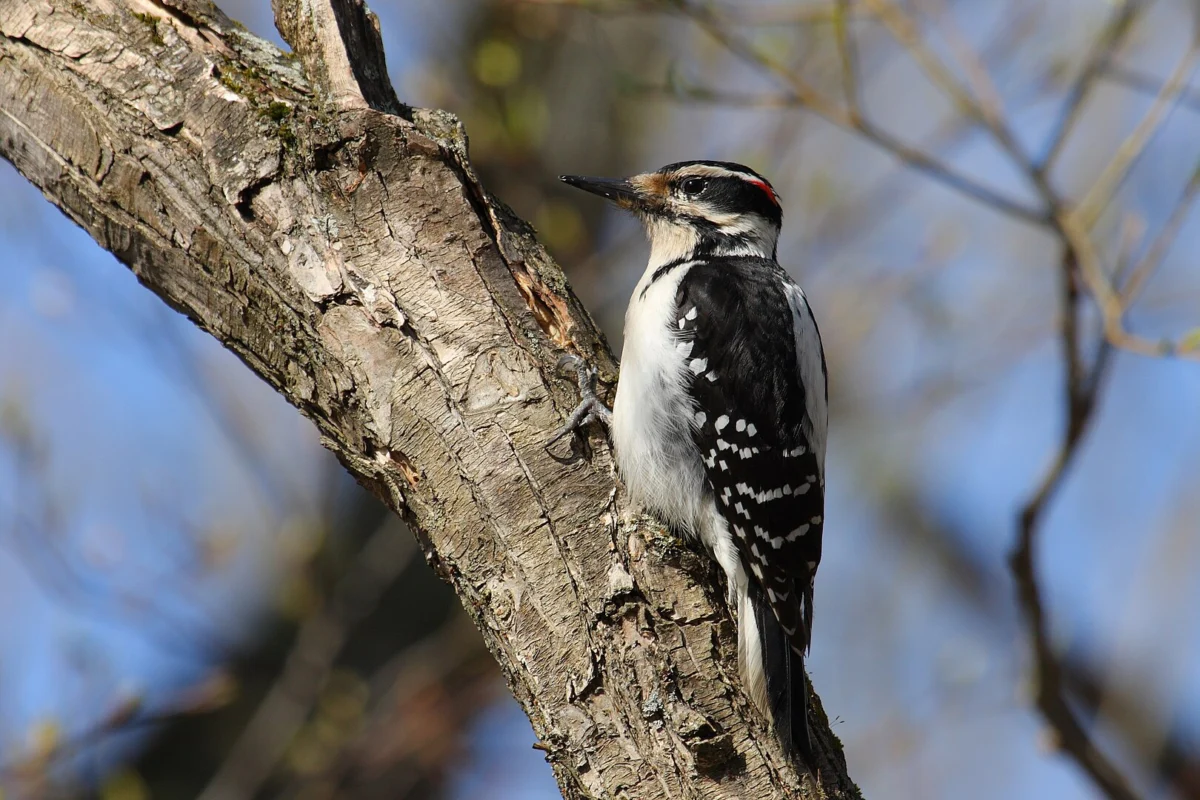
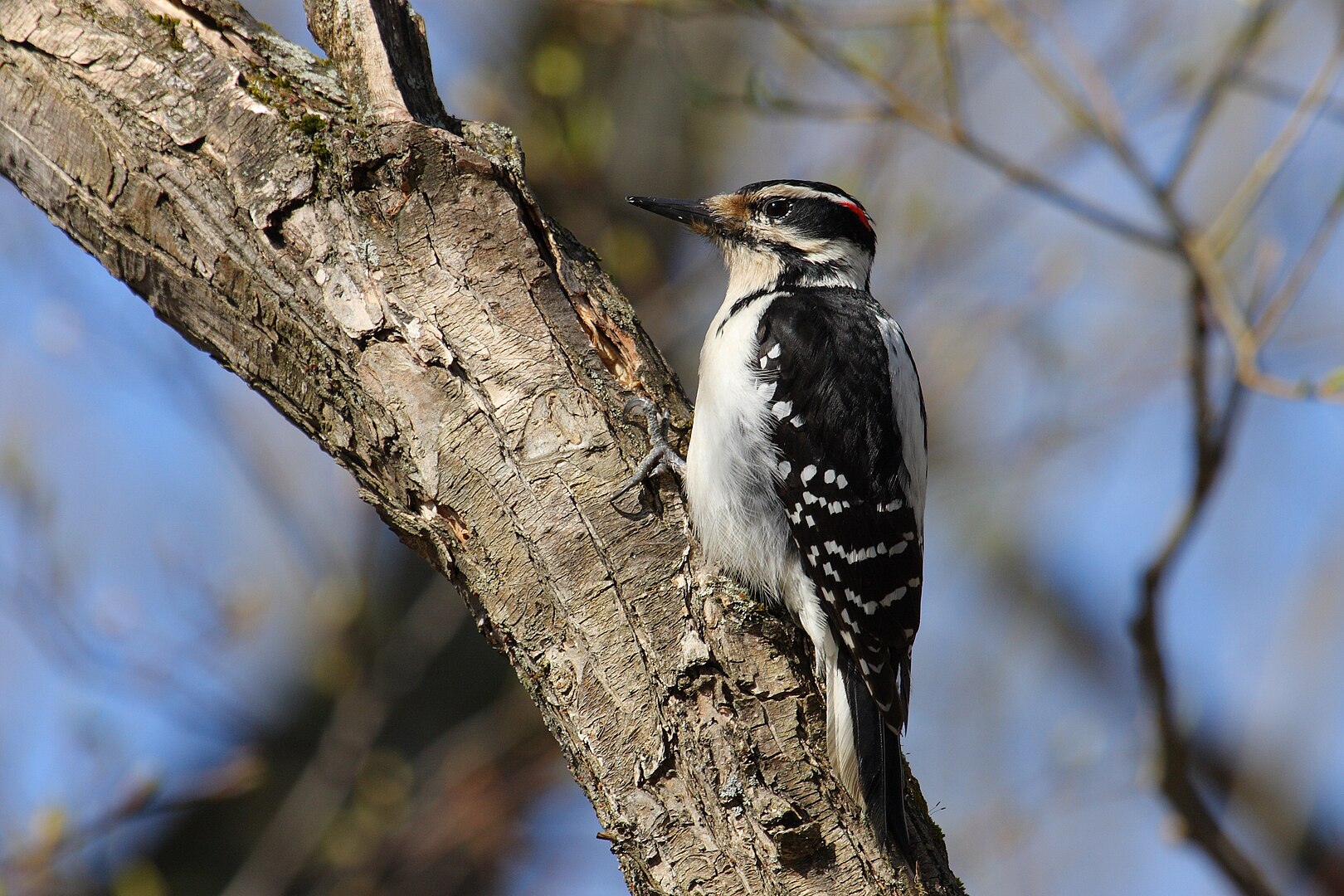
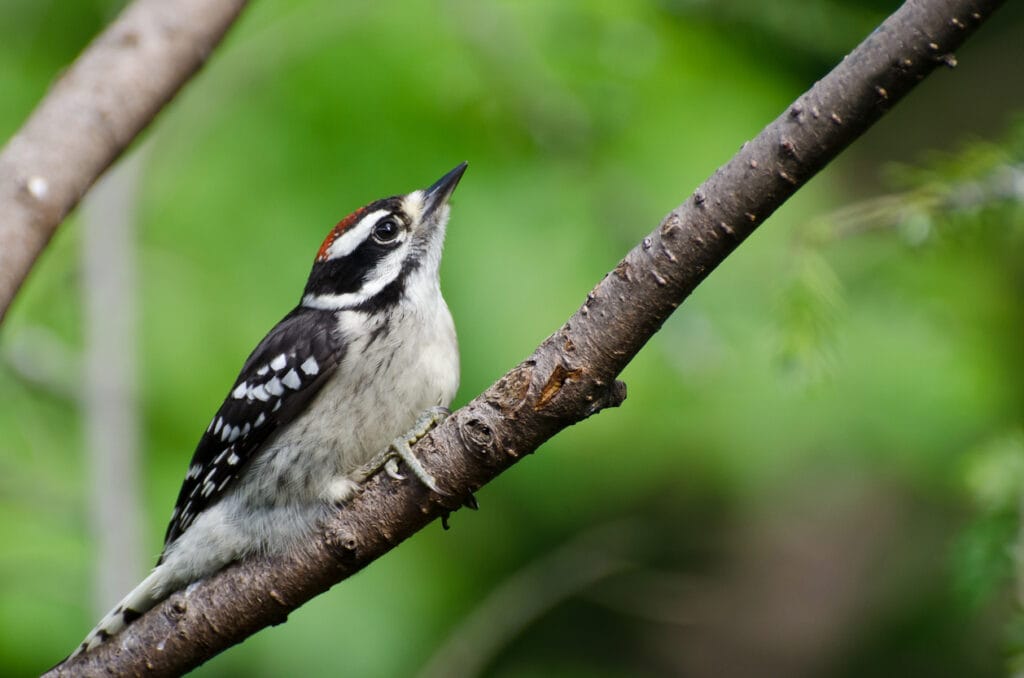
Perhaps the most frequent backyard visitors in Maryland are the Downy (Dryobates pubescens) and Hairy (Dryobates villosus) woodpeckers. These two species are often conflated due to their nearly identical black-and-white plumage. However, a closer inspection reveals significant morphological differences. The Downy is the smallest woodpecker in North America, sporting a bill that is disproportionately short compared to its head. In contrast, the Hairy Woodpecker is larger, possessing a robust, chisel-like bill that allows it to exploit deeper wood-boring larvae.
From an ornithological perspective, these two species serve as a prime example of niche partitioning. By evolving different bill sizes, they can exploit the same trees without direct competition, as the Downy focuses on the outer bark and surface-level insects, while the Hairy explores the deeper, more structurally sound layers of the wood. Both species are highly adaptable and are commonly seen at suet feeders, which has bolstered their populations in suburban Maryland.
The Northern Flicker: An Outlier in the Woodpecker Family
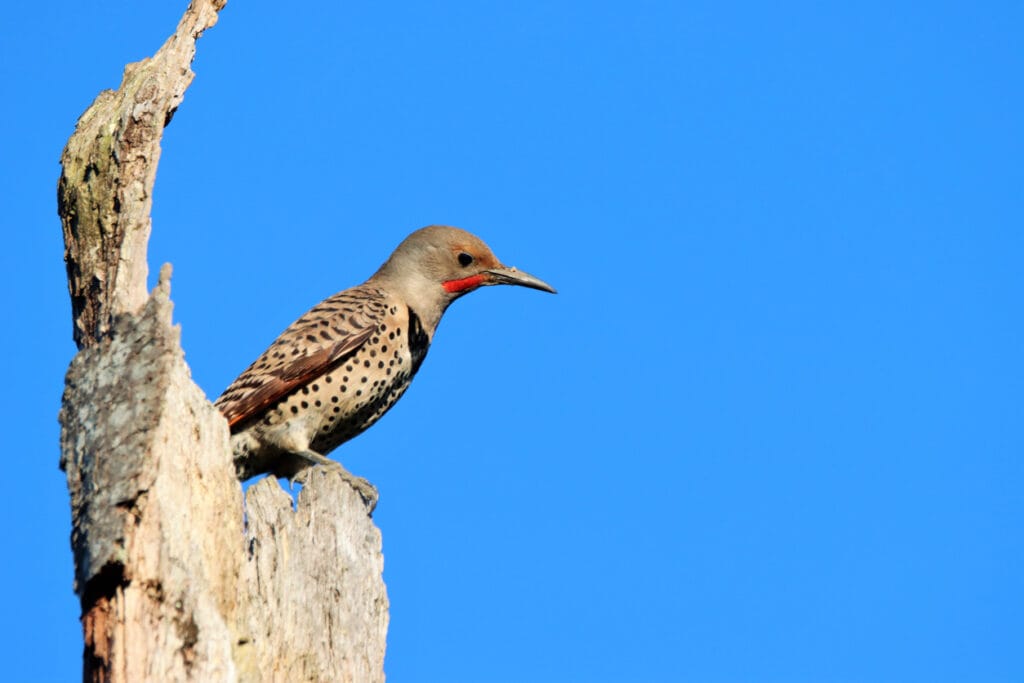
The Northern Flicker (Colaptes auratus) presents a unique departure from the typical black-and-white aesthetic of the woodpecker family. These birds exhibit a brownish-gray plumage with darker, intricate barring. Notably, they are often observed foraging on the ground, a behavior that separates them from their tree-clinging cousins. In Maryland, the Northern Flicker is a year-round resident, though its numbers may fluctuate during migration. They possess specialized feet known as "zygodactyl," which feature two toes pointing forward and two pointing backward, providing the necessary stability for vertical movement on tree trunks. Their diet is heavily skewed toward ants and beetles, and they have been observed utilizing long, sticky tongues to extract prey from complex underground or wood-based galleries.
The Red-Bellied and Red-Headed Species
The Red-Bellied Woodpecker (Melanerpes carolinus) is perhaps the most common species in Maryland. Despite the name, the "red" on its belly is faint and often difficult to discern. Instead, observers should look for the red streak on the head—the male features a full red crown, while the female’s red is restricted to the nape. These birds are highly opportunistic and have become adept at raiding backyard bird feeders, consuming a mix of insects, seeds, and fruits.
Conversely, the Red-headed Woodpecker (Melanerpes erythrocephalus) is a species of concern. Characterized by a completely solid red head and a bold, pattern-free black-and-white body, this bird is a striking sight. Unlike many other woodpeckers, the Red-headed is known for its ability to catch insects in mid-air and its habit of caching food in tree crevices. Data from the North American Breeding Bird Survey indicates a significant, long-term decline in their populations, with a roughly 70% decrease reported between 1966 and 2014. Habitat loss, particularly the removal of dead trees (snags) which they rely on for nesting, is considered the primary driver of this trend. Conservationists urge landowners to leave dead trees standing whenever safe, as this directly benefits the survival of this declining species.
The Migratory Yellow-Bellied Sapsucker
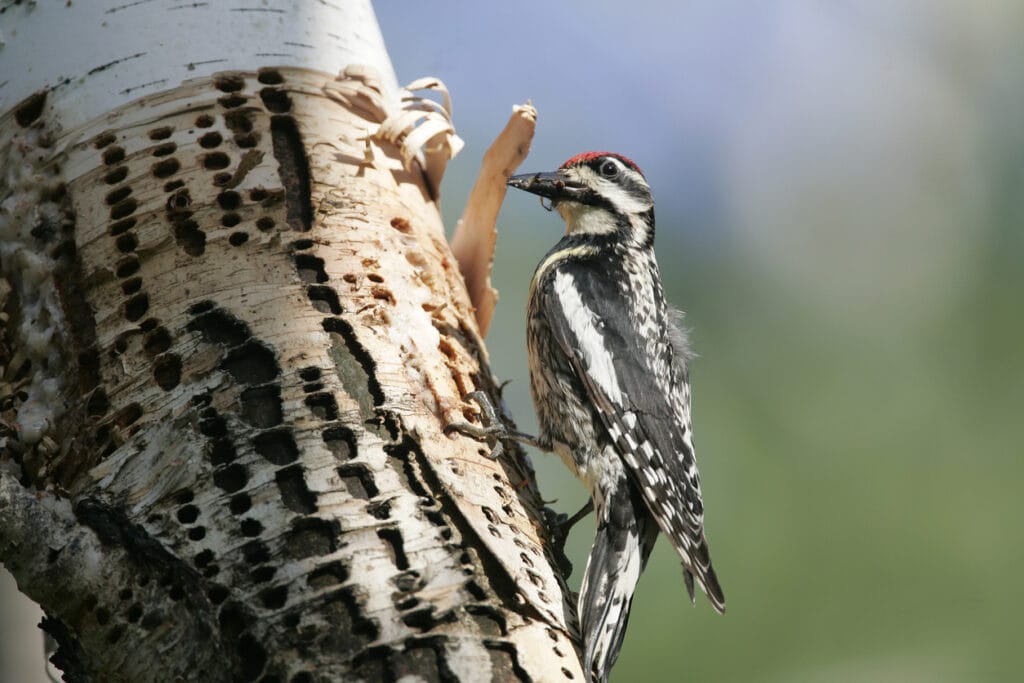
The Yellow-bellied Sapsucker (Sphyrapicus varius) is a migratory species that graces Maryland primarily during the winter months. As their name implies, these birds are specialized to feed on tree sap. They create horizontal rows of small, shallow holes in tree bark—often in maples, birches, and hickories—and return frequently to drink the oozing sap. This behavior also attracts various insects, providing the sapsucker with a reliable, two-fold food source. Their call is distinctive, often described as a cat-like mewing sound, and they are notoriously noisy during the spring breeding season.

Conservation and Citizen Science
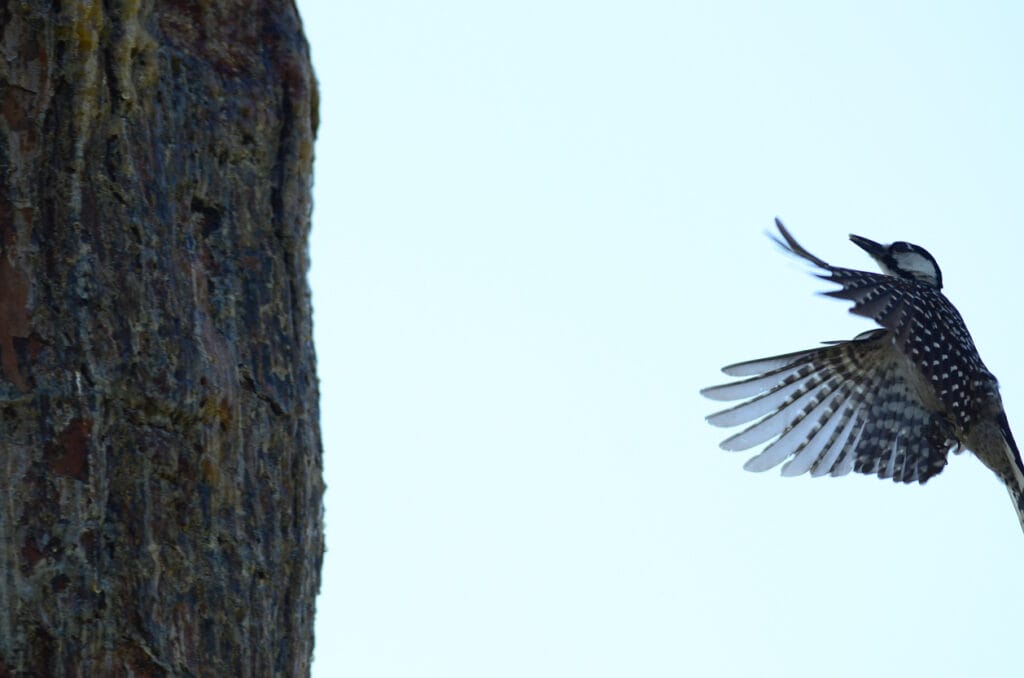
The Red-Cockaded Woodpecker (Leuconotopicus borealis), while historically found in parts of the mid-Atlantic, remains a rare and endangered species that requires very specific, old-growth pine ecosystems. Their reliance on the Red Heart Fungus to soften the wood of live pine trees makes them a highly specialized species, and their recovery is heavily tied to the restoration of native pine forests.
For residents interested in contributing to the conservation of these species, the use of citizen science platforms such as eBird has become invaluable. By logging sightings, dates, and locations, birders provide ornithologists with real-time data on population density, migration patterns, and the impact of climate change on local habitats. The Pickering Creek Audubon Center remains one of the premier locations in Maryland for observing these species in their natural habitat, offering educational resources that highlight the critical importance of protecting the state’s remaining forested tracts.
Summary of Implications
The diversity of woodpeckers in Maryland is a testament to the state’s environmental health, yet the declining status of species like the Red-headed Woodpecker serves as a cautionary tale. The continued encroachment of suburban development and the loss of "snags"—dead or dying trees—pose the most significant threats to these birds. To maintain the presence of these eight species, local policy and land-management strategies must prioritize the preservation of mature tree stands and the encouragement of "wild" spaces within both public and private lands. Protecting these birds is not merely a matter of aesthetic appreciation; it is a vital step in maintaining the complex, interconnected web of life that defines Maryland’s natural heritage.

