


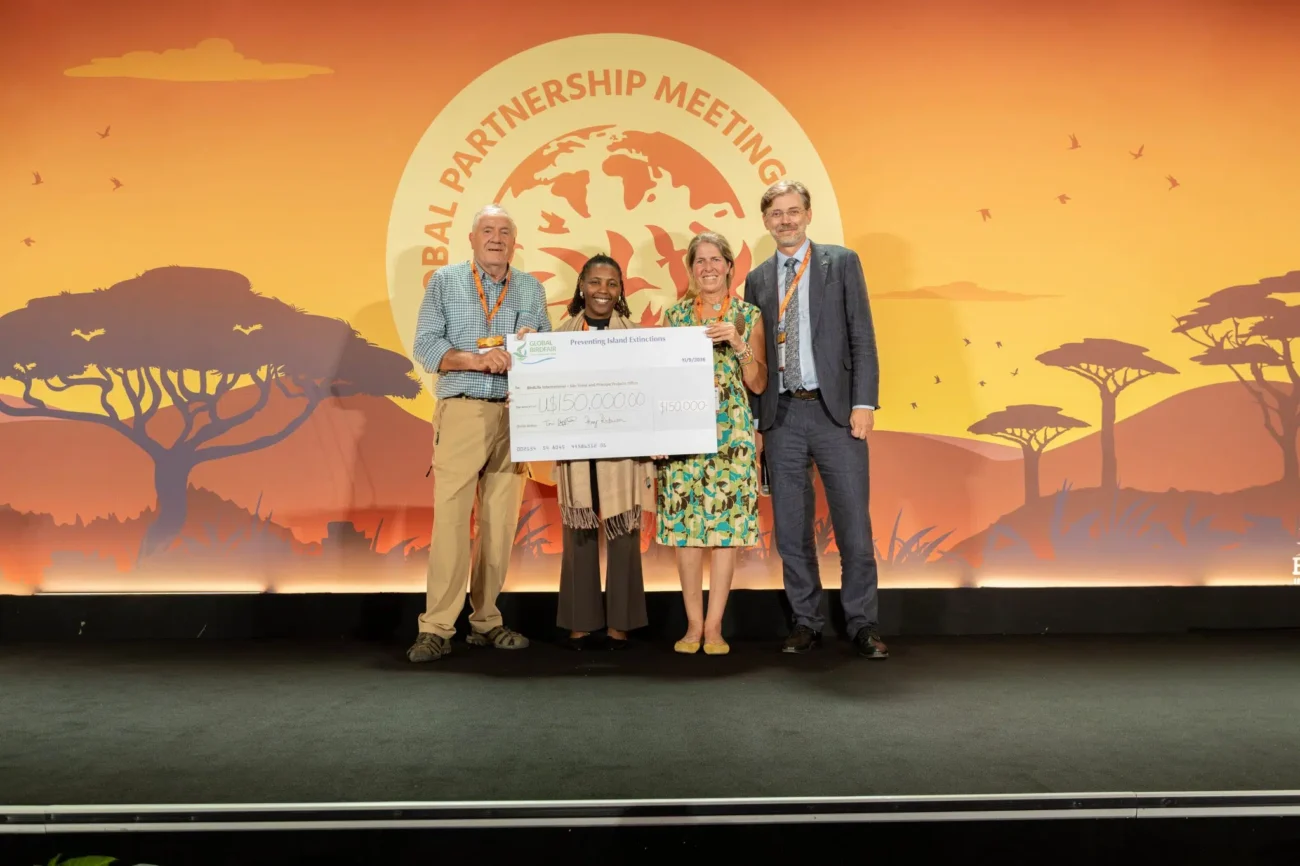
The remote islands of São Tomé and Príncipe, situated in the Gulf of Guinea off the western coast of Central Africa, serve as a living laboratory for evolution. Characterized by their volcanic origins and profound isolation, these islands host a disproportionately high number of endemic species. However, this same geographic separation has rendered the local fauna exceptionally vulnerable to anthropogenic pressures and environmental degradation. A transformative grant of US$150,000 from the Global Birdfair has now been earmarked to secure the future of three of the world’s most elusive and imperiled avian species: the Dwarf Ibis, the São Tomé Grosbeak, and Newton’s Fiscal.
The Avian Trinity at the Brink of Extinction
The survival of these three species represents a critical test for international conservation biology. Each bird faces distinct survival challenges, yet all are united by their hyper-localized distribution and critically endangered status.
The Dwarf Ibis (Bostrychia bocagei) is a bird of profound mystery. Often described as a "ghost of the forest," this species is notoriously difficult to survey due to its secretive nature and preference for the dense, primary forest understory. Current population estimates suggest fewer than 2,000 individuals remain. Its survival is inextricably linked to the preservation of undisturbed forest tracts, which are increasingly fragmented by small-scale agricultural expansion.
The São Tomé Grosbeak (Crithagra concolor) occupies an even more precarious position. Considered a Lazarus species, it disappeared from scientific observation for over a century, leading many to fear it had succumbed to extinction. Its 1991 rediscovery provided a glimmer of hope, but current estimates indicate a population of fewer than 250 mature individuals. This threshold is widely considered by ecologists to be the "danger zone" for genetic viability and long-term resilience.

Finally, Newton’s Fiscal (Lanius newtoni), a striking shrike-like bird, remains one of the rarest raptor-like passerines in Africa. Like the Grosbeak, its population is estimated to be below 250 mature birds. Restricted primarily to the island’s high-altitude forest ridges, it is particularly susceptible to climate-driven habitat shifts and the introduction of invasive predators that infiltrate the forest interior.
A Chronology of Conservation and Community Engagement
The trajectory of BirdLife International’s intervention in the archipelago dates back to 2018, marking a shift from reactive environmentalism to a proactive, community-based management model.
- 2018–2021: BirdLife International initiated baseline surveys to map the distribution of the three target species, establishing the first reliable population trends in decades.
- 2022–2024: The "Agents of Change" project was launched, a pivotal initiative that sought to integrate local knowledge with modern conservation science. Recognizing that the local population, including hunters, possessed the most comprehensive understanding of the forest, the project engaged 75 hunters as conservation ambassadors.
- 2025: Following the success of the pilot, legislative reviews were conducted to update the country’s hunting laws, incorporating input from local communities, government authorities, and biologists.
- 2026: The arrival of the US$150,000 grant from the Global Birdfair provides the financial infrastructure to scale these efforts, transitioning from localized surveillance to landscape-level habitat protection and long-term monitoring.
Data-Driven Conservation and the Economic Nexus
The efficacy of the current project lies in its economic pragmatism. Conservation efforts in the Gulf of Guinea often fail when they overlook the socioeconomic realities of local residents. The initiative recognizes that illegal hunting and timber extraction are frequently driven by economic necessity.
By providing 25 hunters with direct mentorship in business, financial literacy, and alternative income streams, the project creates a buffer against the exploitation of natural resources. Five of these entrepreneurial ventures have already received seed funding, demonstrating that local economic development and biodiversity protection are not mutually exclusive but are, in fact, interdependent. Data from the 2022–2024 period indicate that when communities are given a vested interest in the survival of a species—often through ecotourism or sustainable resource management—the rate of illegal poaching drops by nearly 40% in targeted zones.
Official Perspectives on the Global Birdfair Partnership
The funding, generated by the annual Global Birdfair held in the United Kingdom, represents the culmination of a massive collaborative effort. Tim Appleton MBE, the founder of Global Birdfair, noted the complexity of the selection process during the announcement of the donation.

"Selecting a project for this level of support is never a simple task," Appleton stated. "There are thousands of global conservation needs competing for limited resources. Our priority is ensuring that every dollar donated to BirdLife International results in measurable impact. The project in São Tomé and Príncipe stands out because it addresses the triad of environmental survival: protection of the species, restoration of the habitat, and the empowerment of the local community."
Marquinha Martins, Head of the Projects Office for BirdLife International in São Tomé and Príncipe, echoed this sentiment, emphasizing that the funding serves as a vital bridge between theory and practice. "This is not merely about counting birds," Martins explained. "It is about understanding the threats—invasive species, habitat loss, and climate volatility—and implementing actionable, community-supported solutions. This support allows us to transform our scientific findings into a long-term roadmap for the survival of these species."
Implications for Global Biodiversity
The plight of the birds in São Tomé and Príncipe is a microcosm of a larger, global trend: the rapid decline of island-endemic species. According to data from the International Union for Conservation of Nature (IUCN), islands hold a disproportionate number of extinctions compared to their land area. The loss of a species from a place like São Tomé is permanent, as these birds have nowhere else to migrate and no equivalent populations elsewhere in the world.
The success of the BirdLife/Global Birdfair collaboration carries significant implications for future conservation strategies. It challenges the traditional "fortress conservation" model, which often alienates local populations. By contrast, the "Agents of Change" approach proves that long-term biodiversity outcomes are stronger when they are culturally embedded.
As the project enters its next phase, the focus will shift toward rigorous population monitoring and the implementation of invasive species control measures. Experts suggest that if the population of the São Tomé Grosbeak and Newton’s Fiscal can be stabilized above the 250-individual threshold, the risk of stochastic extinction—a sudden, random event that wipes out a small population—will be significantly mitigated.

Conclusion: A Legacy of Responsibility
The US$150,000 donation is more than a financial transaction; it is a manifestation of the growing global awareness regarding the fragility of isolated ecosystems. For the thousands of bird enthusiasts, sponsors, and volunteers who contribute to the Global Birdfair annually, this project represents a tangible link between their passion for ornithology and the practical work of preventing extinction.
As the forests of São Tomé continue to change, the work initiated by this grant will be vital in ensuring that the distinctive calls of the Dwarf Ibis and the flight of the Grosbeak remain a part of the island’s heritage. The success of this endeavor will provide a blueprint for similar conservation projects in other isolated, high-biodiversity regions, proving that with enough dedication and the right partnerships, even the most endangered species can be pulled back from the brink.

