


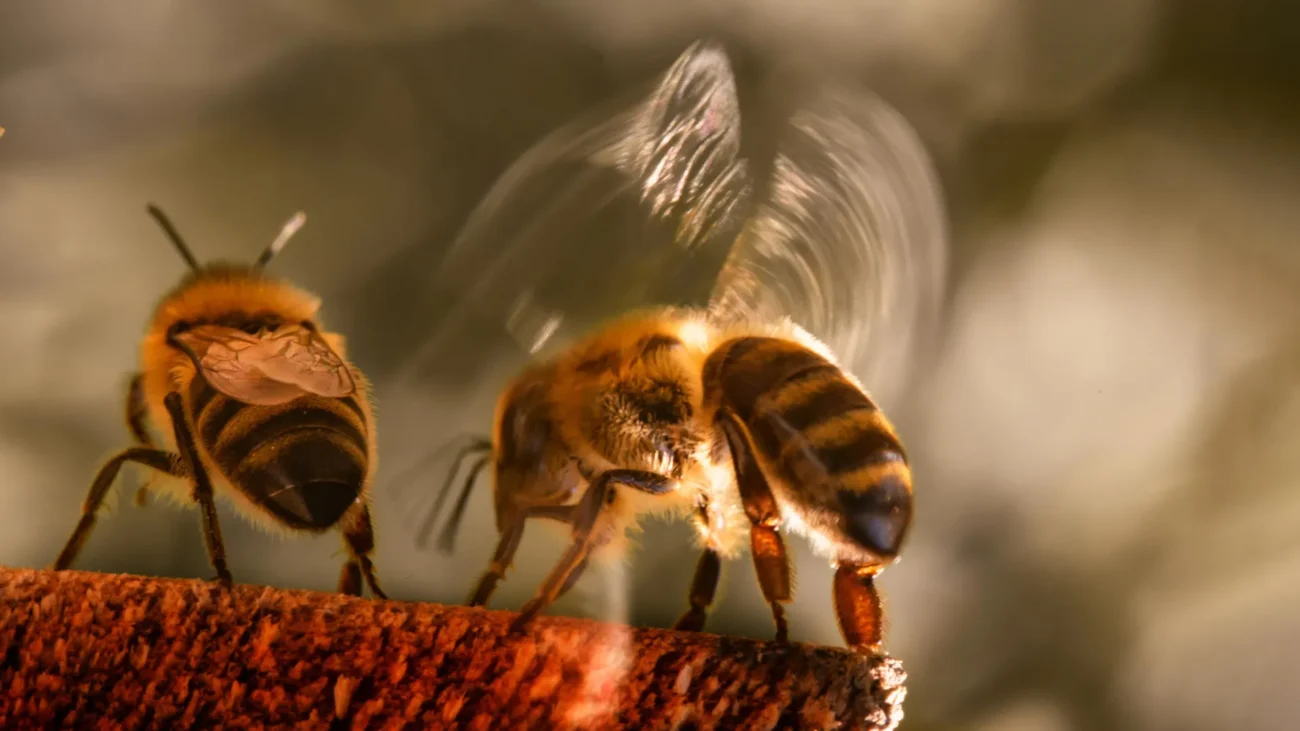
The picturesque image of a honey bee peacefully gathering nectar alongside bumblebees, butterflies, and hoverflies is a staple of British summertime. However, behind this tranquil pastoral scene, a fierce ecological struggle for survival is playing out across the fields, parks, and gardens of the United Kingdom. Recent scientific research has revealed that managed honey bees are acting as aggressive competitors for food resources, frequently deploying intimidation, physical displacement, and outright chases to drive rival pollinator species away from vital floral feeding grounds.
This detailed look at interspecies rivalry sheds new light on the hidden costs of booming beekeeping popularity. Published in the peer-reviewed journal Ecological Entomology, the study was conducted by a dedicated team of researchers at Anglia Ruskin University (ARU) in Cambridge, England. Their findings provide the first comprehensive, empirical documentation of how extensively managed honey bees interfere with the foraging success of wild pollinators, raising critical questions about biodiversity management, climate change, and the sustainable coexistence of diverse insect populations in a rapidly warming world.
Methodology and Chronology of the Cambridge Study
To uncover the mechanics of this avian and insect competition, the ARU research team established a rigorous observational framework. The study spanned a two-year chronology, meticulously tracking pollinator activity across five distinct locations situated in and around the historic city of Cambridge. To ensure a high likelihood of frequent interaction between managed and wild species, every chosen site was strategically located within 300 meters of an established, active honey bee colony.
Over the course of these two years, researchers focused their attention on two highly prolific flowering plants: bramble (Rubus fruticosus) and ivy (Hedera helix). Both plant species are ecologically vital, serving as massive seasonal powerhouses that provide abundant supplies of nectar and pollen. Because bramble and ivy bloom heavily and attract a dense, diverse congregation of insects, they represent ideal natural laboratories for investigating how different pollinators negotiate finite food supplies.
To systematically categorize the bustling activity on these floral patches, the scientific team divided the visiting insects into five distinct functional groups: honey bees, bumblebees, solitary bees, hoverflies, and a residual "other" category comprising butterflies, beetles, and wasps. Across the duration of the project, researchers accumulated over 93 hours of direct observation. Every single encounter where one insect interrupted another’s feeding attempt, blocked access to a blossom, or engaged in direct confrontation was recorded and classified by its ultimate outcome.
An interaction was deemed a "win" when an insect successfully gained access to a flower at the direct expense of a rival, which subsequently suffered a "loss" of feeding time and caloric intake. Conversely, a "share" was recorded when two insects managed to access the same floral resource cooperatively without overt conflict or displacement.
Quantitative Findings: Domination at the Blossom Level
The data gathered during the 93 hours of observation revealed an unequivocal and stark pattern: locations burdened with higher concentrations of honey bees invariably harbored lower densities of wild pollinators and exhibited significantly heightened levels of aggressive competition. Furthermore, honey bees consistently emerged victorious across a disproportionately high percentage of their encounters with other insect species.
The quantitative breakdown of the data highlights distinct ecological impacts on different plants. On bramble flowers, statistical analysis showed that doubling the local density of honey bees correlated directly with a 14% drop in the overall abundance of wild bumblebees. On ivy flowers, similarly elevated numbers of honey bees were tied to a noticeable reduction in the populations of local solitary bees and hoverflies.
Rather than merely utilizing superior speed or sheer numbers to arrive at flowers ahead of their competitors, honey bees actively asserted dominance. The study documented that rival pollinators exhibited preemptive avoidance behaviors, steering clear of honey bees in 28% of observed interactions on bramble and a striking 36% of interactions on ivy. Moreover, in at least one-fifth of all competitive encounters won by honey bees on either plant species, the bees physically shoved aside or aggressively chased away their rivals.
Aggressive behaviors initiated by insects other than honey bees proved to be exceptionally rare during the observations. However, the study did record one fascinating and resilient exception to the rule: the ivy bee (Colletes hederae). As a solitary, non-native species first officially documented in Britain in 2001, the ivy bee emerged as the sole pollinator capable of standing its ground. Unlike native wild insects that routinely retreated, ivy bees were occasionally observed actively defending their chosen feeding spots, chasing or displacing honey bees to successfully secure floral access.
The Broader Context: A Boom in Beekeeping and Environmental Pressures
To fully understand the weight of these findings, researchers emphasize the need to examine the broader socioeconomic and environmental context surrounding apiculture in the UK. Over the past decade and a half, beekeeping has experienced a massive surge in popularity among hobbyists, commercial operators, and environmental enthusiasts alike. Data from agricultural and environmental registries indicates that the number of registered beekeepers in the UK skyrocketed from approximately 19,000 in 2010 to an estimated 47,000 in recent years. This dramatic expansion has led to a corresponding proliferation of managed honey bee colonies across both rural landscapes and densely populated urban centers.
While the rise in beekeeping is often celebrated as a positive step for environmentalism—given the cultural perception that all bees are universally threatened—scientists increasingly caution that managed honey bees are livestock, much like sheep or cattle. When introduced in high densities, managed honey bees can easily saturate local ecosystems, creating an artificial over-competition for wild species that rely entirely on the same floral resources for survival.
Adding to this complex ecological puzzle is the looming, pervasive threat of global climate change. The ARU researchers noted a direct correlation between rising ambient temperatures and an increase in the frequency and intensity of competitive encounters between honey and wild bees. As thermometers tick upward, two distinct environmental mechanisms converge to intensify the struggle for sustenance.
First, rising temperatures can induce "heat stress" in flowering plants, physiologically altering their metabolic processes and frequently resulting in a significant reduction in nectar production. This creates a severe supply-and-demand mismatch: fewer resources are generated by plants while the metabolic energy demands of foraging insects rise.
Second, temperature exerts a differential physiological effect across various pollinator species. While wild bumblebees and many species of hoverflies are biologically sensitive to excessive heat and tend to forage more efficiently during cooler, temperate conditions, honey bees exhibit the opposite behavioral response. As temperatures rise, honey bee colonies unleash a surge of foragers. Previous scientific literature indicates that a mere 1.2-degree Celsius increase in temperature can trigger a tenfold increase in the volume of honey bees exiting their hives to forage. Consequently, ongoing climate warming threatens to confer an even greater, highly disproportionate competitive advantage to managed honey bees at the direct expense of vulnerable wild pollinators.
Expert Perspectives and Conservation Implications
As the scientific community digests these findings, lead author Victoria Buckle, a PhD researcher at Anglia Ruskin University in Cambridge, has been keen to frame the study through a constructive lens. She emphasizes that the primary objective of the research is to refine and strengthen modern conservation strategies, rather than to dishearten or discourage passionate individuals from keeping honey bees.
"The aim of our study was not to discourage beekeeping, but to better understand how competition happens between wild and managed pollinator species with the aim of helping to conserve our wild pollinators, which play such an important ecological role," Buckle explained following the publication of the paper.
Elaborating on the behavioral dynamics observed in the field, she noted the clear imbalance in foraging success. "We found that most interactions when competing for food were instigated by honey bees and they had a greater number of ‘wins’, resulting in a loss of forage for other pollinators. Bumblebees, solitary bees and hoverflies would avoid, be displaced by and on some occasions be chased off by honey bees."
Highlighting the unexpected resilience of the solitary immigrant species, Buckle added, "An interesting exception was the ivy bee, which would win contests more often against honey bees. It is the first time, to our knowledge, such behaviors have been observed and shows ivy bees are able to ‘hold their own’ in such encounters."
Nevertheless, Buckle struck a cautionary note regarding the macroscopic outlook for native British biodiversity. "However, honey bees outcompeted all other wild pollinators and based on our findings, future predicted warming in the UK is only likely to further exacerbate interference competition from dominant honey bees. Therefore, it’s important to find ways to ensure honey bees and wild pollinators can continue to coexist, particularly in locations with a high density of hives, such as urban areas."
Policy and Practical Steps Forward
Environmental analysts and conservationists suggest that the insights provided by the Anglia Ruskin University team must inform future urban planning, agricultural policy, and apiary management. As urban greening projects expand and rooftop beehives become increasingly fashionable in metropolitan centers, city planners and conservationists may need to incorporate targeted floral planting initiatives to boost overall nectar availability. By increasing the abundance and diversity of native, high-yield flowering plants in areas with high hive densities, land managers can help mitigate the acute pressure placed on wild populations of bumblebees, solitary bees, and hoverflies.
Ultimately, the research serves as a timely reminder that conservation is rarely a simple, one-size-fits-all endeavor. Protecting pollinator health requires a nuanced, science-driven approach that balances the agricultural and cultural value of managed honey bees with the delicate ecological needs of the UK’s native wild insect communities. Ensuring that both groups can thrive side-by-side will depend on proactive hive management, climate-resilient habitat restoration, and a deeper appreciation for the complex behavioral dynamics unfolding quietly on petals across the British countryside.

