


The release of the v2026 edition of the AviList marks a significant evolution in the field of ornithological science, solidifying a unified global checklist designed to harmonize how we categorize, track, and protect the world’s bird species. Following its inaugural 2025 launch—an ambitious project aimed at resolving decades of taxonomic discordance—this latest update establishes a precedent for annual revisions. By providing a single, consensus-based reference point, the scientific community is taking a decisive step toward eliminating the confusion that has long plagued conservation efforts, field guides, and academic research.
The Genesis of a Unified Taxonomy
For generations, ornithologists and conservationists navigated a fractured landscape of bird classification. Major taxonomies, most notably the International Ornithological Committee (IOC) list and the Clements checklist, often diverged in their handling of species boundaries. These discrepancies created significant hurdles for international conservation initiatives, such as the IUCN Red List and BirdLife International’s DataZone, where accurate species identification is the bedrock of risk assessment.
The launch of AviList in 2025 was born from the realization that effective biodiversity management requires a shared language. The project, a collaborative effort involving the world’s leading ornithological institutions, seeks to consolidate these disparate lists into one definitive source. By streamlining the "splits" (recognizing two species where one was previously identified) and "lumps" (combining two previously distinct species into one), AviList provides a stable framework for the global community.

Key Taxonomic Shifts in the 2026 Update
The v2026 iteration introduces several high-profile changes that reflect the latest advances in genetic research and morphological analysis. Among the most notable revisions are:
- Willet Diversification: The Willet (Tringa semipalmata), a shorebird iconic to the North American coastline, has been formally split. The species is now categorized as the Saltmarsh Willet (Tringa semipalmata) and the Prairie Willet (Tringa inornata). This taxonomic division recognizes significant behavioral and genetic differences between the two populations, which have distinct breeding ranges and migration patterns.
- Vireo Reclassification: The Warbling Vireo (Vireo gilvus) has been divided into the Eastern Warbling Vireo (Vireo gilvus) and the Western Warbling Vireo (Vireo swainsoni). This change follows years of research indicating that the populations represent separate evolutionary lineages.
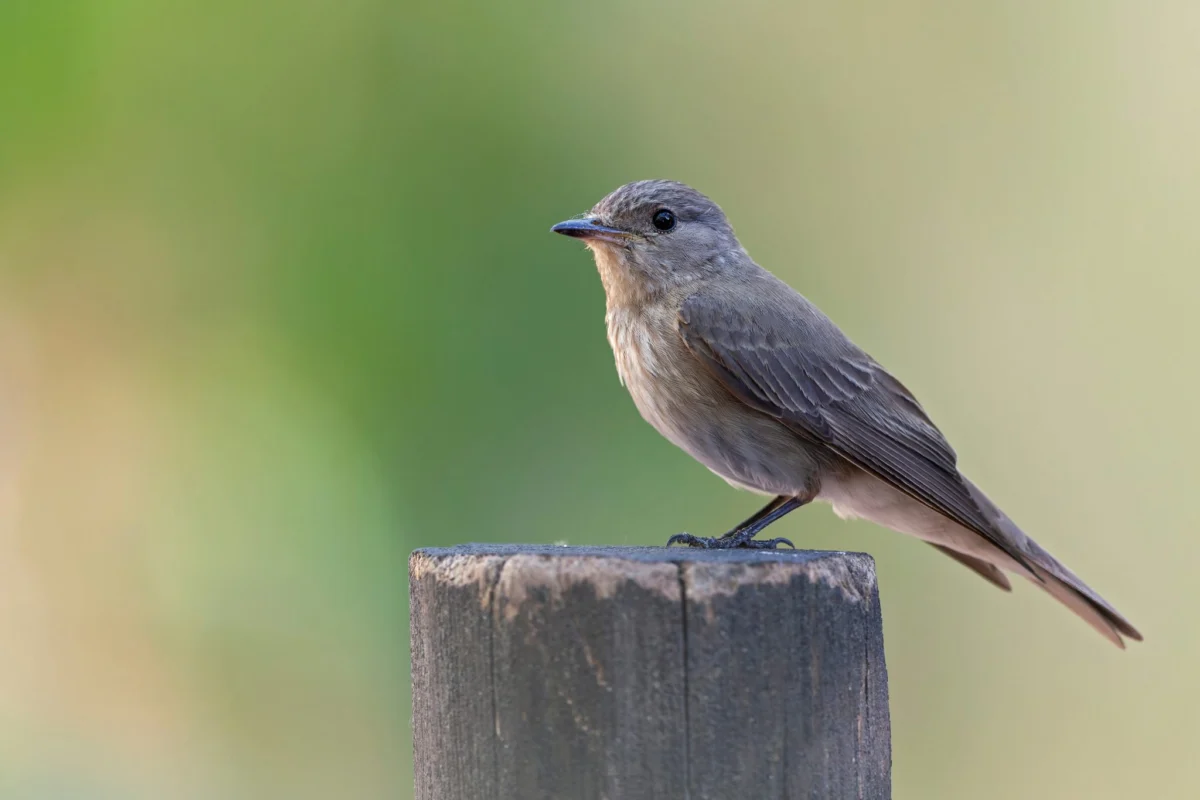
- The Mediterranean Flycatcher: Perhaps the most notable addition is the formal recognition of the Mediterranean Flycatcher (Muscicapa tyrrhenica) as a full species. Previously treated as a subspecies of the Spotted Flycatcher (Muscicapa striata), this island-dwelling bird has now been elevated, reflecting its distinct ecological niche in the Balearic Islands and adjacent mainland territories.
- The House and Little Swift Merger: Conversely, the AviList v2026 has "lumped" the House Swift (Apus nipalensis) with the Little Swift (Apus affinis). This reclassification under the name of the Little Swift reflects a broader consensus on the morphological overlap between these populations, effectively simplifying the diagnostic requirements for observers in the field.
Chronology of Integration and Implementation
The path to a unified taxonomy is a complex, multi-year process. The following timeline illustrates the current trajectory of this initiative:
- 2025: Official launch of the AviList, providing the first consensus-based global checklist.
- October 2026: Release of the v2026 update, establishing the cadence for annual revisions.
- Late 2026: The Cornell Lab of Ornithology is scheduled to update the eBird checklist to reflect the new taxonomy, achieving a 97.7% alignment with the AviList.
- 2026–2028: Ongoing transition period for the IUCN Red List and BirdLife International’s global assessments, during which datasets will be systematically updated to align with the new nomenclature.
The Role of Data and Institutional Alignment
The primary challenge of this taxonomic shift lies in the logistical burden of updating massive biological databases. The Cornell Lab of Ornithology and BirdLife International are currently the primary drivers of this alignment. By adjusting their respective datasets to match the AviList, these organizations ensure that observations recorded by citizen scientists in the field via platforms like eBird are accurately reflected in global conservation indices.
This alignment is not merely an academic exercise; it is a critical necessity for conservation policy. When a single species is "split" into two, the conservation status of each new species must be re-evaluated. For example, if a population once thought to be widespread is revealed to be two smaller, geographically restricted species, the risk of extinction for those groups may be higher than previously estimated. Consequently, the Red List categories for these birds may change, triggering new legal and environmental protections.

Official Responses and Technical Implementation
Proponents of the AviList emphasize that the system is designed for utility and accessibility. Recognizing that different stakeholders require different levels of detail, the v2026 data is available in several formats:
- Extended Excel Spreadsheets: Designed for researchers, these contain exhaustive nomenclature, bibliographic history, and taxonomic justification for each entry.
- Short Excel Spreadsheets: A streamlined version for practitioners needing quick access to core taxonomic data.
- Checklist Explorer: An interactive, web-based tool that allows users to filter by order, family, genus, or current IUCN status.
- Customized CSV Exports: A flexible tool for database managers to download subsets of the list tailored to specific research needs.
"The goal is to remove ambiguity from the study of avian life," noted a spokesperson for the project. By providing these tools, the AviList creators hope to bridge the gap between high-level taxonomic theory and day-to-day conservation work.
Implications for Global Conservation
The implications of a standardized taxonomy extend far beyond the pages of academic journals. In the realm of international policy, standardized naming conventions are vital for the enforcement of treaties such as the Convention on the Conservation of Migratory Species of Wild Animals (CMS) and the Convention on International Trade in Endangered Species (CITES). When species names vary across jurisdictions, legal loopholes can emerge that inadvertently jeopardize the protection of vulnerable populations.
Furthermore, the shift toward an annual update cycle is a response to the rapid pace of modern genetic science. As DNA sequencing becomes more affordable and accessible, our understanding of avian relationships is evolving faster than ever. By committing to an annual review, the AviList ensures that the scientific community does not fall behind these advancements, keeping global checklists relevant in the face of rapid environmental change.

Analysis of the "Split and Lump" Methodology
The process of "splitting" and "lumping" species remains a subject of rigorous debate within the ornithological community. While the AviList provides a consensus, it is the result of reconciling various taxonomic schools of thought—the biological species concept, the phylogenetic species concept, and the evolutionary species concept.
Critics have occasionally argued that overly aggressive splitting can complicate field identification and inflate species counts, potentially leading to "taxonomic inflation." Conversely, proponents argue that failing to recognize distinct lineages masks the true extent of biodiversity loss. The AviList approach attempts to balance these perspectives by requiring substantial, peer-reviewed evidence before any change to the checklist is ratified. This conservative, data-driven approach is designed to ensure that the taxonomy remains robust against the volatility of early-stage genetic findings.
Conclusion: A Foundation for the Future
The release of AviList v2026 is more than a list of names; it is a vital piece of infrastructure for 21st-century conservation. As humanity faces unprecedented challenges related to climate change, habitat loss, and species extinction, the ability to accurately monitor bird populations—and to agree on what constitutes a species—has never been more critical.
For researchers, the v2026 update provides the stability required for long-term longitudinal studies. For conservationists, it offers a reliable framework for prioritizing interventions. And for the birding community, it serves as a gateway to understanding the complexity and beauty of avian evolution. As the scientific community continues its work to reach full alignment across all global databases, the AviList stands as a testament to the power of international collaboration in the pursuit of a deeper understanding of the natural world. Those interested in the technical specifics or wishing to integrate the new taxonomy into their own research can access the full documentation and datasets at www.avilist.org.

