


The landscape of pet ownership, aviculture, and animal husbandry in the United States is undergoing a quiet yet profound transformation. Across local municipal councils, state legislatures, and federal agencies, lawmakers are continually introducing bills, ordinances, and regulatory changes that dictate how animals are kept, bred, and exhibited. For aviculturists, pet bird owners, and commercial breeders, understanding this legislative machinery is no longer optional; it is a critical requirement for safeguarding the future of bird keeping. The American Federation of Aviculture (AFA) Legislative Committee and allied animal-keeping organizations have consistently raised alarms about the surge in restrictive legislation. While many of these proposals are framed around noble objectives such as animal welfare, public safety, or population control, their underlying language often poses a direct, existential threat to the responsible keeping of birds.
The Anatomy of Modern Legislation: From Bills to Ordinances
To effectively navigate and counter restrictive policy proposals, bird owners must first understand how laws are created, modified, and enforced. Historically, legislation refers to the formal process of proposing a law or set of laws. In contemporary legislative bodies, this proposal almost always takes the form of a "Bill."
A Bill generally includes an introductory summary outlining the intended purpose of the new law, the designated enforcement agency, and the projected impact on the broader community. However, these summaries can frequently be misleading or intentionally vague. While bills are formally introduced by elected representatives, their genesis often traces back to specialized lobbying organizations. Animal rights and animal welfare groups with active lobbying arms frequently draft comprehensive legislative packages and present them to sympathetic representatives for introduction into local, state, or federal systems. Crucially, the ideological agendas of these organizations rarely align with the practical realities, historical traditions, or economic needs of the general public and specialized hobbyists.
The distinction between different types of legislative and regulatory tools is vital for understanding potential impacts. At the municipal level, local laws are typically referred to as "ordinances." Ordinances are civil matters rather than criminal ones. For example, if a local ordinance prohibits keeping an inoperable vehicle on residential property, the property owner is not immediately arrested or charged with a crime. Instead, municipal authorities assess civil fines. If the owner fails to comply or remove the vehicle, the matter escalates to a court appearance, where a judge may enforce compliance through additional financial penalties or threats of contempt of court.
Similarly, animal ordinances often begin as seemingly fair and standardized measures designed to regulate domestic pets. A typical municipal ordinance might list multiple species—such as dogs, cats, fish, birds, and primates—under a blanket regulatory framework. For instance, a city council might propose capping the number of dogs or cats permitted per residential household at six. While this may appear straightforward, subsequent amendments or broad definitions can easily incorporate other species, including aviary birds, canaries, finches, or psittacines. A canary breeder maintaining six pairs of breeding birds in a residential aviary could suddenly find themselves in direct violation of a modified ordinance, subjecting them to severe municipal fines, mandatory animal surrenders, or prolonged legal battles.
The Legislative and Regulatory Timeline: How Rules Change
The mechanisms by which laws and regulations are enacted vary significantly depending on the level of government, directly impacting how much notice and opportunity for public input aviculturists receive.
Primary laws—such as statutes passed by a city council, a county board of commissioners, a state General Assembly, the United States Senate, or the U.S. House of Representatives—cannot be amended or enacted without a formal legislative vote by elected officials. This legislative process generally includes public hearings, committee reviews, readings, and opportunities for constituent lobbying and testimony.
Conversely, administrative regulations—which are the specific rules and enforcement mechanisms enacted under the authority of an existing law—can often be altered without a direct vote by elected officials. While regulatory changes do follow a mandatory administrative process, including periods for public comment, they bypass the traditional legislative voting floor. A prime example of this is the U.S. Fish and Wildlife Service (USFWS) adding a new species to the Endangered Species Act or modifying the operational rules of the Lacey Act. These administrative shifts can dramatically alter the legality of interstate transport, breeding, or possession of specific bird species with comparatively little public awareness outside of specialized stakeholder groups.
Hidden Agendas: The Domino Effect of Restrictive Language
The AFA Legislative Committee, working alongside nationwide animal-keeping coalitions, monitors legislative efforts across the country to prevent the incremental erosion of avicultural rights. A frequent point of confusion for casual observers is why animal advocacy groups or aviculturists mobilize against proposed laws that seemingly have no direct connection to birds. For example, a municipality might introduce a local circus prohibition act or a ban on the public exhibition of exotic mammals.
Experienced legislative monitors recognize that these targeted bills often serve as trial balloons or contain intentionally broad definitions. Vague terminology can easily allow for unchecked future amendments that expand prohibitions to include other captive species, including pet birds, exhibition poultry, and captive-bred aviary birds. The volume of anti-animal-use legislation introduced at both the state and local levels has accelerated dramatically over the past decade. The verbiage utilized in these legislative proposals frequently insinuates a focus on eliminating inhumane treatment or addressing community overpopulation. Yet, the actual regulatory framework established beneath the umbrella of the new law often results in sweeping bans that prohibit the private ownership, breeding, or transport of birds entirely.
Furthermore, legislative trends do not remain isolated within individual municipalities or states. When a restrictive ordinance or state-level ban successfully passes in one jurisdiction, it provides a validated template for lobbying groups to replicate across the country. This domino effect means that a localized policy victory for animal rights lobbyists in one region quickly translates into copycat legislation nationwide, threatening the viability of aviculture on a broad scale.
Economic and Cultural Implications for Aviculture
The broader implications of unchecked, poorly drafted animal legislation extend far beyond individual hobbyists; they threaten a diverse ecosystem of breeders, conservationists, educational exhibitors, and pet supply businesses. Aviculture contributes significantly to the preservation of endangered and threatened avian species through captive breeding programs that maintain genetic insurance populations when natural habitats are compromised.
When legislation criminalizes or imposes cost-prohibitive permitting requirements on the keeping of common pet and breeder birds, the immediate consequence is often the displacement of animals into overburdened rescue systems or informal, unregulated markets. Ethical breeders who maintain meticulous health and genealogical records are forced out of operation, while the underground trade of unmonitored animals may inadvertently increase. Additionally, commercial enterprises—ranging from specialized feed manufacturers and avian veterinarians to local pet supply retailers—face severe economic contractions when local and state laws diminish the population of bird owners.
Proactive Engagement and Community Response
To counter these systemic threats, organizations like the AFA emphasize the necessity of proactive education and continuous monitoring. Bird owners, clubs, and commercial entities must transition from a reactive stance—scrambling to oppose a bill only after it has reached a voting floor—to an ongoing practice of tracking municipal agendas, county commission meetings, and state legislative calendars.
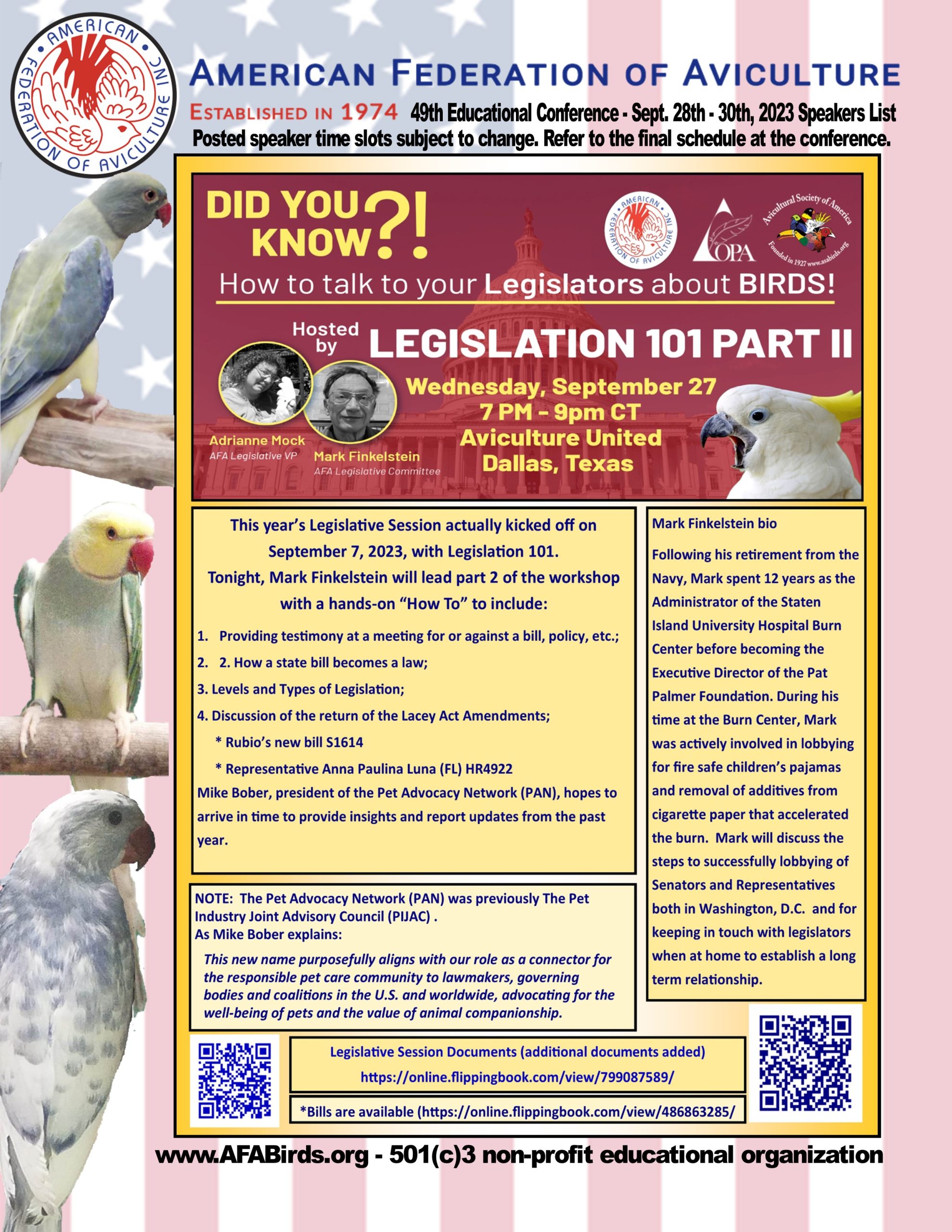
The AFA provides specialized educational resources, such as the Legislation 101: Training Course, designed to equip bird owners with the foundational knowledge needed to read legislative text, understand parliamentary procedures, and effectively communicate with elected representatives. Additionally, resources detailing federal oversight, such as guidelines on USDA Regulation under the Animal Welfare Act, help commercial breeders and exhibitors maintain compliance while understanding the boundaries of federal jurisdiction versus state and local authority.
Stakeholders are strongly encouraged to regularly consult dedicated tracking hubs, such as the Current Legislative Issues page hosted on the AFA platform, to stay informed about pending bills, localized ordinances, and emerging policy trends. By maintaining constant vigilance, submitting formal public comments during legislative review periods, and building constructive dialogues with local representatives, the avicultural community can ensure that future laws balance genuine animal welfare with the rights of responsible bird owners, breeders, and conservationists.

