


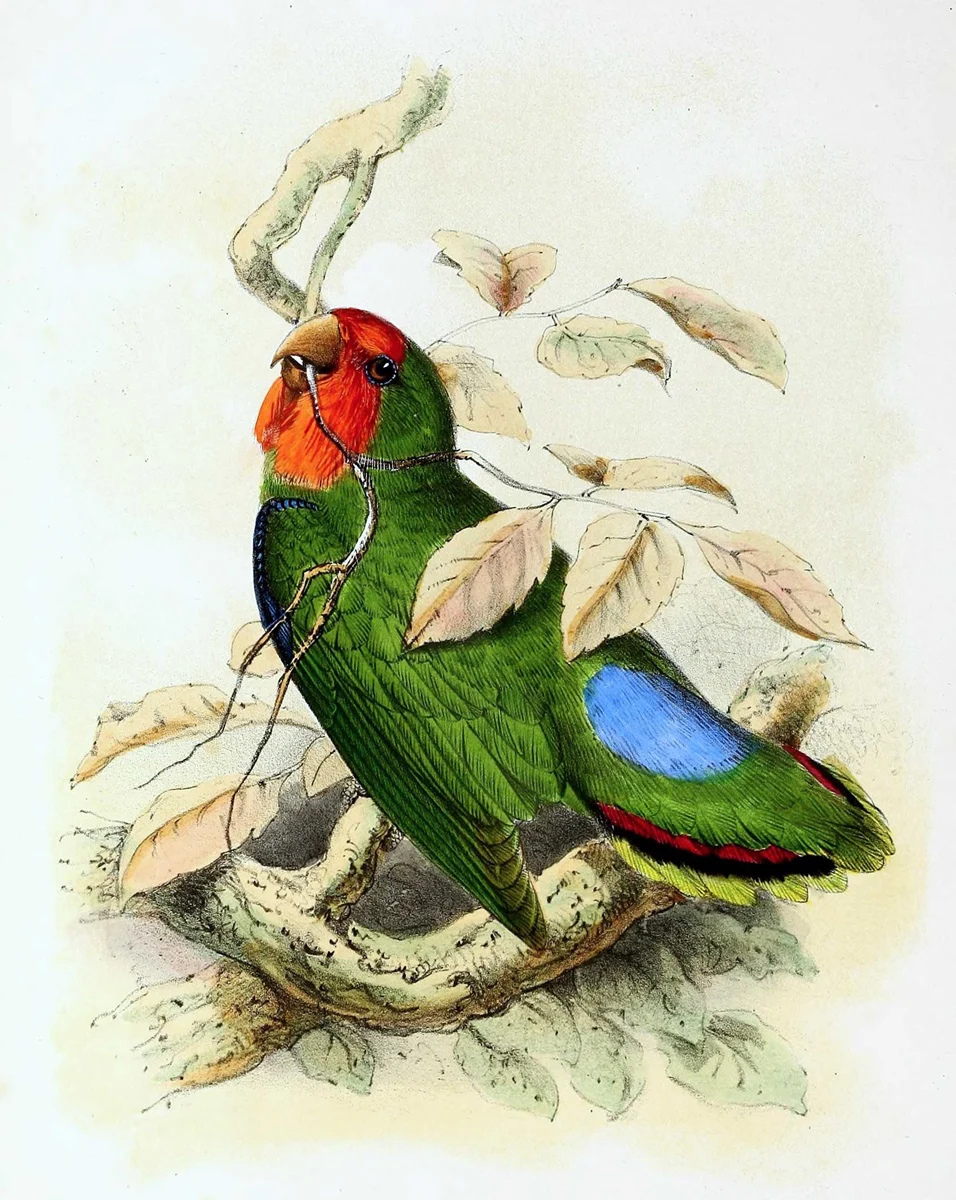
The red-headed lovebird, scientifically classified as Agapornis pullarius, remains one of the least understood and infrequently encountered species within the broader family of African parrots. While several of its taxonomic cousins—such as the peach-faced and Fischer’s lovebirds—have secured a permanent, highly visible foothold in the global pet trade, Agapornis pullarius has largely remained outside the domestic mainstream. Distinguished by its striking coloration, specific ecological requirements, and a notoriously delicate nervous system, the species presents a unique set of challenges for both field conservationists and specialized aviculturists.
To fully understand the status of the red-headed lovebird today, ornithologists examine its natural habitat across the tropical savannahs of sub-Saharan Africa, the historical pressures of the international bird trade, and the strict environmental parameters required to maintain the species in controlled settings.
Geographic Distribution and Natural Habitat
Like all recognized species within the genus Agapornis, the red-headed lovebird is native to the African continent. Its natural distribution forms a distinct, albeit patchy, horizontal band stretching from western sub-Saharan Africa through Central Africa. Geographically, the species ranges as far west as Guinea and extends eastward toward the highlands of Ethiopia.
Unlike nomadic avian species that constantly shift locations in search of ephemeral resources, Agapornis pullarius is predominantly sedentary. It exhibits a strong ecological preference for tropical lowland savannahs that feature a scattering of mature trees. However, the species actively avoids dense, primary tropical rainforests, favoring the open canopies and transitional boundaries typical of savannah ecosystems.
Field observations indicate that these lovebirds typically travel in pairs or small, cohesive flocks consisting of up to several dozen individuals. While they have been recorded inhabiting elevations of up to 2,000 meters (approximately 6,550 feet) above sea level, they are far more commonly encountered at lower altitudes.
Conservation Status and Population Pressures
According to the International Union for Conservation of Nature (IUCN) Red List, Agapornis pullarius is categorized as a species of Least Concern. Despite this baseline classification, conservation assessments frequently highlight that the bird is locally uncommon throughout the vast majority of its indigenous range.

Ornithological data suggests that overall population sizes are on a downward trajectory. This decline is driven by a convergence of anthropogenic factors, including systemic agricultural expansion, habitat destruction through deforestation, targeted culling by local farmers who view the flocks as crop pests, and historical capture for the international exotic pet trade.
Historical trade records underscore the scale of past commercial removal from the wild. A comprehensive 2018 ecological study tracking global wildlife exports documented that nearly 40,000 individual red-headed lovebirds had been legally exported from their native habitats since 1975. In their seminal 2010 reference text, Parrots: A Guide to Parrots of the World, renowned ornithologists Nigel Collar, Tony Juniper, and Mike Parr noted that while local abundance fluctuates due to natural behavioral patterns, a genuine, overarching population decline has materialized across multiple regions over the past century, largely fueled by the demands of the live bird trade.
Morphological Characteristics and Sexual Dimorphism
The red-headed lovebird is a visually striking, compact psittacine. An adult specimen typically reaches a maximum length of approximately 15 centimeters (6 inches) and maintains an average body weight of around 45 grams. The species boasts a vibrant plumage profile, characterized primarily by a bright green body contrasted sharply by a vivid red face and upper beak. Additional chromatic highlights include a subtle wash of iridescent blue across the lower back and a narrow band of red marking the tail feathers.
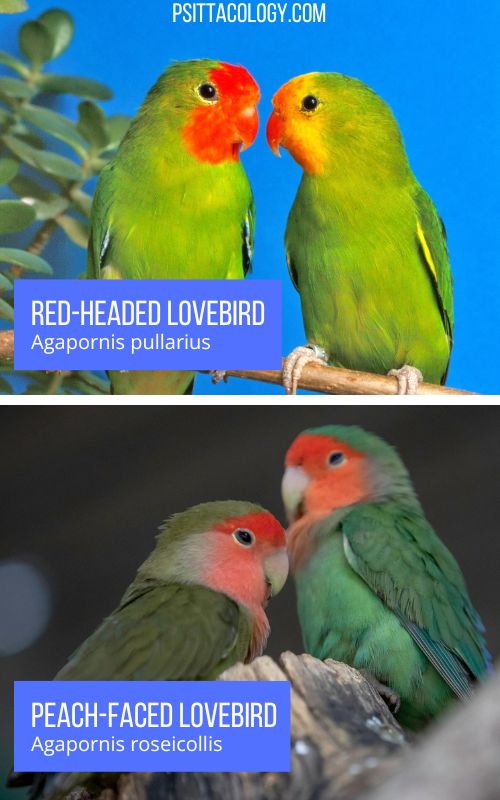
A common point of confusion among casual observers is distinguishing Agapornis pullarius from the highly prevalent peach-faced lovebird (Agapornis roseicollis). While both species share similar bodily dimensions and green-and-red facial motifs, a definitive morphological distinction lies in the coloration of the bill: the red-headed lovebird features a distinctively red beak, whereas the peach-faced lovebird possesses a pale, horn-colored or beige bill.
Ornithologists recognize distinct visual indicators of sexual dimorphism within the species. Male specimens exhibit a brilliant, scarlet-red coloration across the facial mask and beak. In contrast, females display a more subdued, orange-tinted facial coloration accompanied by a less intensely colored beak, allowing researchers and specialized breeders to differentiate the sexes visually.
Dietary Ecology in the Wild
In its natural environment, the red-headed lovebird functions primarily as a granivore, with its diet heavily oriented toward grass seeds. Because these birds routinely target agricultural crops, including commercially cultivated millet, they frequently intersect with human farming interests, occasionally earning the classification of agricultural pests in localized regions of Central and West Africa.
Beyond seeds, the species supplements its nutritional intake with wild-foraged fruits. Figs and wild guavas constitute major components of their seasonal diet when available, providing essential hydration, sugars, and vitamins necessary to sustain active flocks within the savannah.

Avicultural Realities and the Challenge of Captive Care
Maintaining Agapornis pullarius in captivity is an endeavor restricted almost exclusively to advanced, dedicated aviculturists. Unlike its hardy and gregarious relatives in the pet trade, the red-headed lovebird is exceptionally high-strung, nervous, and sensitive to environmental disruptions.
Wild-caught specimens, in particular, are known to be acutely susceptible to fatal stress reactions, occasionally succumbing to sudden auditory stimuli or refusing to feed when housed in communal aviaries alongside more assertive or vocal bird species. Consequently, the species is rarely kept as a traditional, interactive household pet. Best practices dictate that captive specimens are best observed rather than handled.
For experienced breeders who successfully acquire captive-bred stock, housing requirements demand careful planning. While the species can be maintained indoors, it requires a spacious enclosure—minimally 80 centimeters (30 inches) in width—with tight bar spacing of approximately 1.25 centimeters (0.5 inches) to prevent escape or injury. The interior must be outfitted with natural wood perches of varying diameters to promote foot health. Alternatively, specialized keepers frequently house established pairs in dedicated, heated outdoor aviaries isolated from mixed-species populations.
Captive Nutrition and Enrichment Protocols
Dietary management in aviculture has evolved alongside modern veterinary science. While traditional feeding regimens relied exclusively on dry or sprouted seeds, contemporary avian veterinarians recommend incorporating a high-quality pelleted base diet to ensure comprehensive nutritional balance.
To replicate their natural foraging habits, captive red-headed lovebirds are routinely provided with a diverse diet comprising high-grade seed mixtures, fresh leafy green vegetables, seasonal fruits, cooked grains, and safe foraged weeds. During specific seasonal cycles—particularly leading up to and during the reproductive phase—breeders often supplement this plant-based intake with protein sources such as boiled eggs or mealworms.
Cognitive stimulation is vital for maintaining the psychological well-being of the species. Because red-headed lovebirds are intelligent and prone to boredom, environmental enrichment must be introduced consistently. However, due to the species’ heightened anxiety and stress-prone nature, new toys, perches, or enclosure configurations must be integrated gradually to prevent startling the birds.
Acoustic Profile and Vocalization
In comparison to many other parrot species renowned for disruptive, high-decibel vocalizations, the red-headed lovebird is relatively quiet. Nevertheless, like all psittacines, it is capable of producing sound when agitated or communicating across distances. Its natural contact calls are notably shrill and high-pitched, a characteristic feature documented across field recordings and avian bioacoustics archives.
Reproduction and Nesting Behavior in the Wild and Captivity
The reproductive cycle of the red-headed lovebird in the wild is intrinsically linked to the seasonal rhythms of the African rainy season, a period when ecological resources and food supplies reach their peak availability.
Nesting habits of Agapornis pullarius diverge significantly from those of other lovebird species. Rather than constructing traditional cup nests in tree cavities using stripped bark, wild red-headed lovebirds typically excavate nesting chambers inside active arboreal termite or ant nests (termitaria). On occasion, the species will utilize subterranean ground burrows or occupy abandoned woodpecker holes.
The female bears the primary responsibility for nest construction, tunneling directly into the termitarium and reinforcing the interior walls with shredded plant matter and grass leaves. Once the chamber is prepared, the female typically deposits a clutch of up to six eggs.
Replicating these specialized nesting behaviors in a controlled environment has historically rendered captive breeding exceptionally challenging. Because the birds require the structural integrity of a dense substrate to trigger reproductive behavior, standard wooden nest boxes often fail. To overcome this hurdle, successful specialized breeders have pioneered the use of custom nest boxes manufactured from cork, simulating the dense, burrowable textures of natural termite mounds and allowing for successful captive propagation among elite avicultural specialists.

