


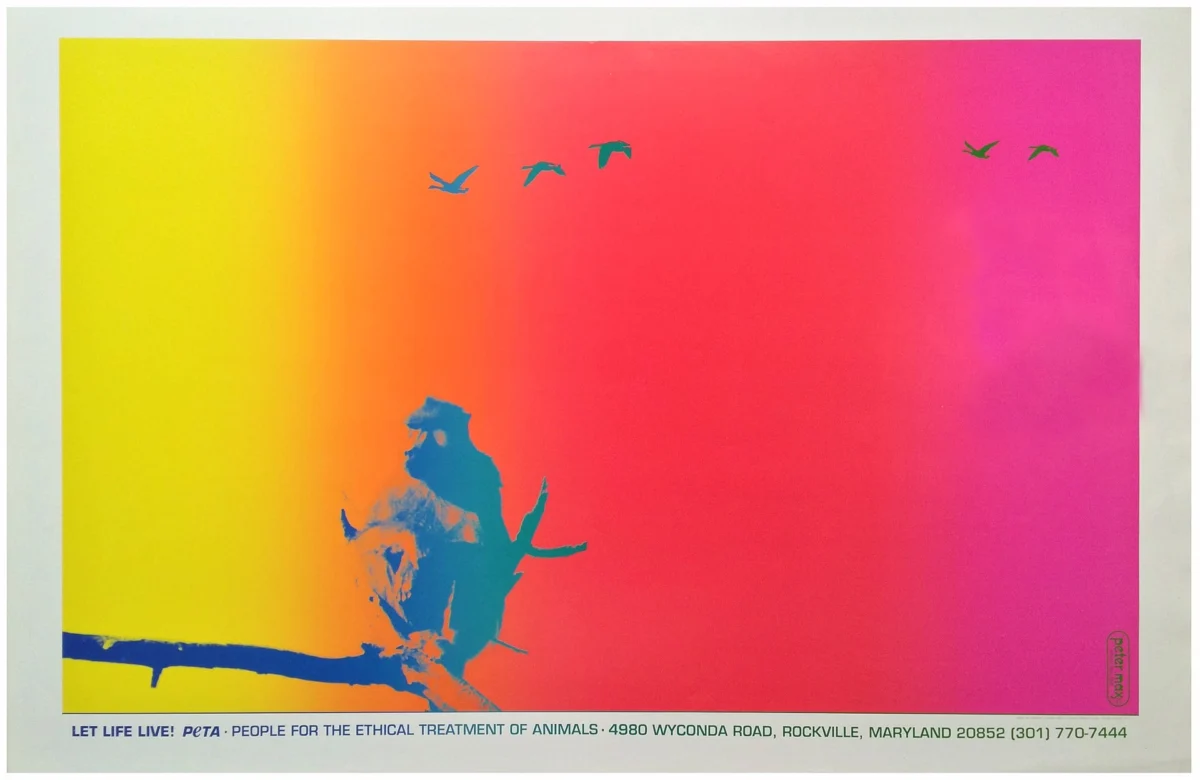
The intersection of fine art and social activism has long provided a powerful platform for cultural change, yet few creators merged these two worlds with the vibrant intensity of legendary pop artist Peter Max. Celebrated globally for his kaleidoscopic color palettes, defining contour lines, and optimistic, neo-expressionist aesthetic that came to define the counterculture movement of the 1960s, Max possessed a parallel vocation that remained a driving force throughout his life: an unwavering, lifelong commitment to animal rights. While his canvases hung in prestigious galleries, presidential libraries, and museums around the world, his private and public actions revealed a man whose empathy extended far beyond human society, encompassing every living creature from domestic companions to farm animals and insects.
Main Facts and Origins of an Activist
Peter Max’s dedication to animal welfare was not a transient philosophical pursuit, but a foundational worldview shaped by early childhood displacement and profound personal loss. Born in Germany in 1937 amidst the rising tide of European fascism, Max and his family were forced to flee Nazi persecution in 1938. Their arduous journey led them to Shanghai, China, where they lived as refugees for a transformative decade.
It was during this turbulent period of early displacement that Max experienced the emotional catalyst for his lifelong advocacy. When his family finally prepared to leave Shanghai, logistical constraints forced them to leave behind his most cherished childhood companion: a pet cat. The separation left an indelible mark on the young boy’s psyche. Max recounted the devastation of that parting in later years, noting the profound grief that accompanied the loss. "I cried for hours and hours," he recalled. "I was out of my mind with it, sad, sad, sad." This early trauma forged a deep, empathetic connection between Max’s own experiences of vulnerability as a refugee and the defenselessness of animals caught in human systems.
Evolution into Vegetarianism and Veganism
As Max matured and rose to prominence as a defining figure of American visual culture during the psychedelic art boom of the 1960s, his philosophical outlook deepened. In his twenties, his path crossed with the revered spiritual teacher Swami Satchidananda. Through this encounter, Max was introduced to contemplative traditions, yoga, and meditation—practices that emphasize ahimsa, the ancient Indian principle of non-violence and respect for all living things.
Embracing these teachings, Max made the personal decision to adopt a vegetarian lifestyle, aligning his daily habits with his core ethical beliefs. Decades later, his commitment to animal welfare evolved further after he met Dr. Joel Fuhrman, a prominent board-certified family physician, nutritional researcher, and author of the bestselling book Eat to Live. Inspired by Dr. Fuhrman’s scientific findings on plant-based nutrition and systemic health, Max transitioned fully to a vegan lifestyle, eliminating all animal products from his diet and daily consumption. This transition cemented his holistic view of stewardship, wherein artistic expression, personal health, and ecological responsibility operated as a unified philosophy.
The Microcosm of Compassion: From Insects to Mammals
Max’s philosophy of compassion was notable for its absolute inclusivity; no living organism was deemed too insignificant to warrant moral consideration. In an interview with Vegetarian Times magazine, the artist articulated a daily practice of mindfulness that illustrated his profound reverence for life in all its scales.
Describing his interactions with insects in his living space, Max detailed a deliberate, gentle intervention. "If I see a bug crawling on the floor, I rush to the bug before my kitties get to him," he explained. "I pick him up, take him to the park, and let him out where there are green plants and maybe a little bit of water so he doesn’t have to walk too far. I feel so good every time I do it. I tell you, it’s an overwhelming feeling. The bug is so small, and the feeling so huge."
This granular level of empathy translated seamlessly into large-scale philanthropic and direct-action campaigns. Max consistently leveraged his immense cultural capital, celebrity status, and artistic assets to intervene in institutional cruelty and rescue animals facing imminent peril.
Chronology of Key Advocacy Milestones
To understand the trajectory of Peter Max’s activism is to trace a decades-long chronology of public engagement, artistic contribution, and direct rescue operations.
- 1938: Fleeing Nazi Germany with his family, Max experiences the formative trauma of displacement and the loss of his childhood cat in Shanghai, laying the emotional groundwork for his future advocacy.
- 1960s: Max rises to international fame through his iconic pop art style while simultaneously embracing vegetarianism after studying under Swami Satchidananda and adopting contemplative yogic practices.
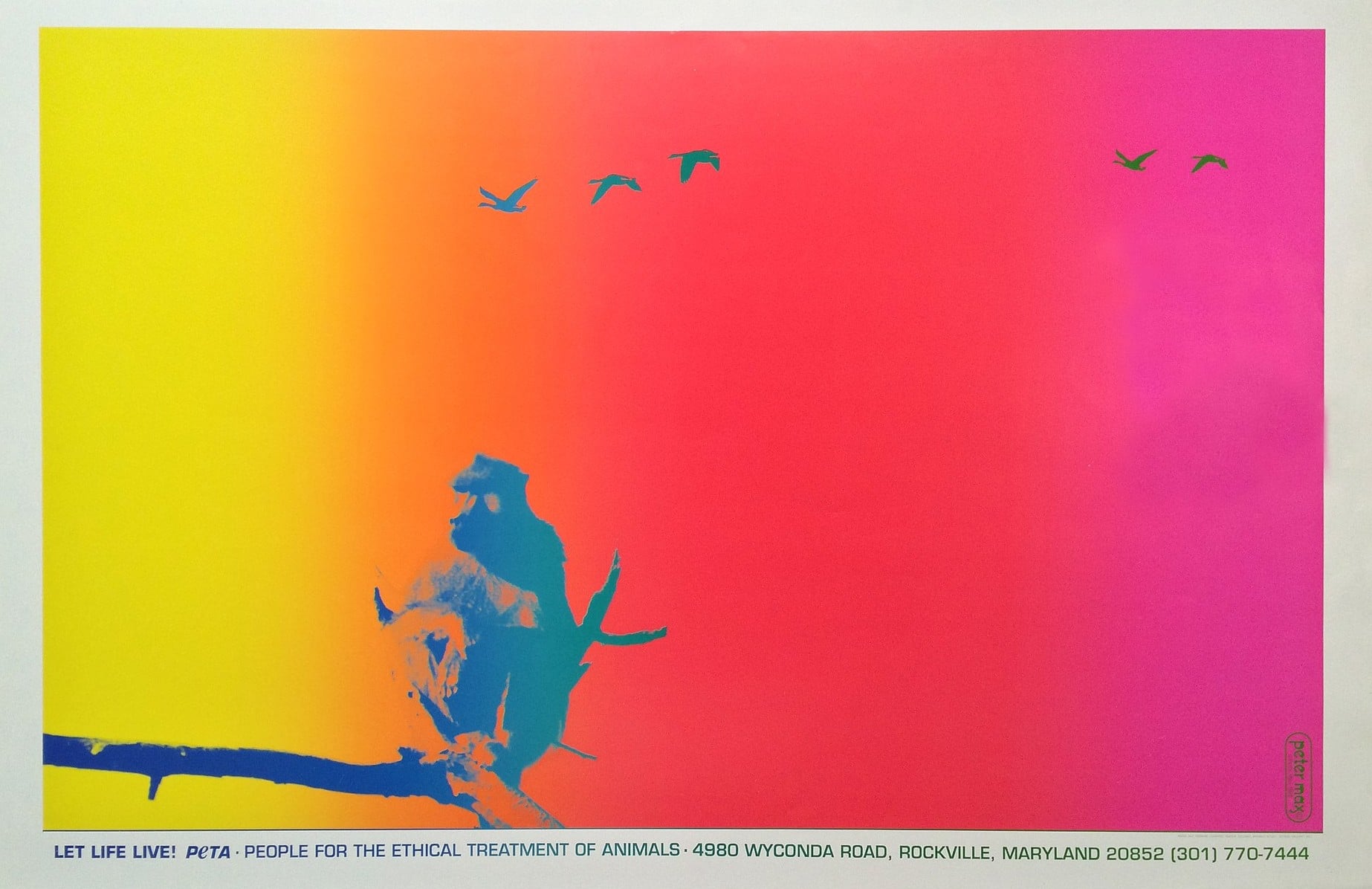
- 1988: Max collaborates extensively with People for the Ethical Treatment of Animals (PETA), designing a specialized commemorative poster for the organization’s Second Humanitarian Awards Gala. In recognition of his enduring dedication, PETA honors Max with a prestigious humanitarian award.
- 2002: Max orchestrates a high-profile rescue operation for a runaway cow in Ohio, utilizing his artistic output as diplomatic leverage to secure permanent sanctuary for the animal.
- Later Years: Max transitions fully to a vegan lifestyle influenced by Dr. Joel Fuhrman, continuing to champion animal rights across various artistic platforms until his passing.
The Saga of Cincinnati Freedom: A 2002 Rescue Operation
One of the most dramatic and widely publicized episodes of Max’s activist career occurred in the autumn of 2002, when his personal intervention saved the life of a doomed bovine in Ohio. The incident began when a resourceful cow scheduled for slaughter at a local facility leapt over a six-foot-tall fence, escaping into the surrounding community.
The animal quickly captured the public imagination, eluding capture attempts by local law enforcement and agriculture officials for 11 days while roaming through wooded areas and suburban outskirts. The media frenzy surrounding the fugitive cow—dubbed "Cincinnati Freedom" by sympathetic animal advocates—highlighted the stark reality of farmed animal sentience and the intense will to survive inherent in all sentient beings.
As pressure mounted regarding the animal’s ultimate fate upon recapture, Peter Max stepped into the fray. Recognizing an opportunity to leverage his global renown for a life-or-death cause, Max contacted the slaughterhouse operators directly. In an unprecedented offer, the artist pledged to donate an original piece of his high-value artwork in exchange for the unconditional release of the cow.
The proprietors accepted the trade, sparing the animal from the processing line. Thanks to Max’s decisive generosity, Cincinnati Freedom was safely transported to a specialized farmed animal sanctuary, where she spent the remainder of her natural life grazing in open pastures, completely shielded from industrial exploitation. The event demonstrated how fine art could be directly converted into tangible sanctuary and protection for individual animals.
Philanthropic Artistry and Institutional Recognition
Max’s rescue of Cincinnati Freedom was emblematic of a broader pattern of leveraging his commercial and fine art success for charitable causes. Throughout his career, Max viewed his studio not merely as a commercial enterprise, but as a vehicle for social good.
In 1988, his collaboration with People for the Ethical Treatment of Animals (PETA) marked a significant milestone in institutional animal advocacy. Invited to support PETA’s Second Humanitarian Awards Gala, Max created a vibrant, custom poster specifically for the event, with all financial proceeds directly supporting the organization’s investigative and educational campaigns. At the gala, PETA formally recognized Max’s lifelong dedication by presenting him with their annual humanitarian award. Representatives of the organization frequently lauded Max for bringing mainstream artistic prestige to a movement that was fighting for cultural visibility and institutional legitimacy during the late 20th century.
Broader Impact, Implications, and Legacy
When questioned by journalists and biographers regarding which philanthropic cause held the deepest place in his heart, Max’s response was unequivocal. Rejecting the notion of divided priorities, he stated plainly: "I’m completely an animal rights person. I would like animals not to suffer so much at the hands of humanity. I believe that in due time, human beings will respect other animals."
The implications of Max’s life and work extend far beyond the specific rescues he funded or the posters he designed. By weaving themes of universal empathy into the fabric of the pop art movement, Max challenged the traditional boundaries between high culture and social justice. In an era dominated by commercialism and industrial expansion, his philosophy anticipated contemporary sociological discourse concerning speciesism, environmental ethics, and the moral status of non-human animals.
Peter Max’s legacy remains twofold: he is remembered universally as a visionary painter whose bright colors and fluid lines defined an era of aesthetic liberation, but he is equally honored by the global animal rights community as a tireless protector of the vulnerable. From the microscopic rescue of a beetle on a studio floor to the headline-grabbing liberation of a runaway cow in Ohio, Max demonstrated that true artistic genius is measured not only by what an artist creates on canvas, but by the depth of compassion they extend to the living world around them.

