


The challenge of providing optimal nutrition to companion birds often hinges on a delicate balance: delivering essential vitamins, minerals, and joint-support supplements without triggering the natural neophobia—the fear of new things—inherent in many avian species. When owners notice their birds rejecting food treated with supplements, they are often facing a behavioral hurdle rather than a nutritional one. According to avian behaviorists and clinical experts, the key to overcoming this resistance lies in structured, positive reinforcement-based training rather than forced consumption.
The Biological Context of Avian Neophobia
In the wild, birds rely on a cautious approach to new food sources to avoid toxins and predators. This survival instinct is deeply hardwired, even in birds that have been raised in human care for generations. When a caregiver introduces a powdered supplement—which may alter the scent, texture, or color of a familiar meal—the bird’s natural reaction is to view the substance as a potential threat.
Diane Burroughs, a clinical social worker and avian care specialist with over 25 years of experience, emphasizes that this behavior should not be viewed as stubbornness, but as a standard biological response. "Birds notice minute changes in their environment," Burroughs notes. "When a caregiver sprinkles a fine powder over a favorite dish, the bird detects a sensory discrepancy that triggers a ‘stop and assess’ reflex."
A Structured Approach to Dietary Adaptation
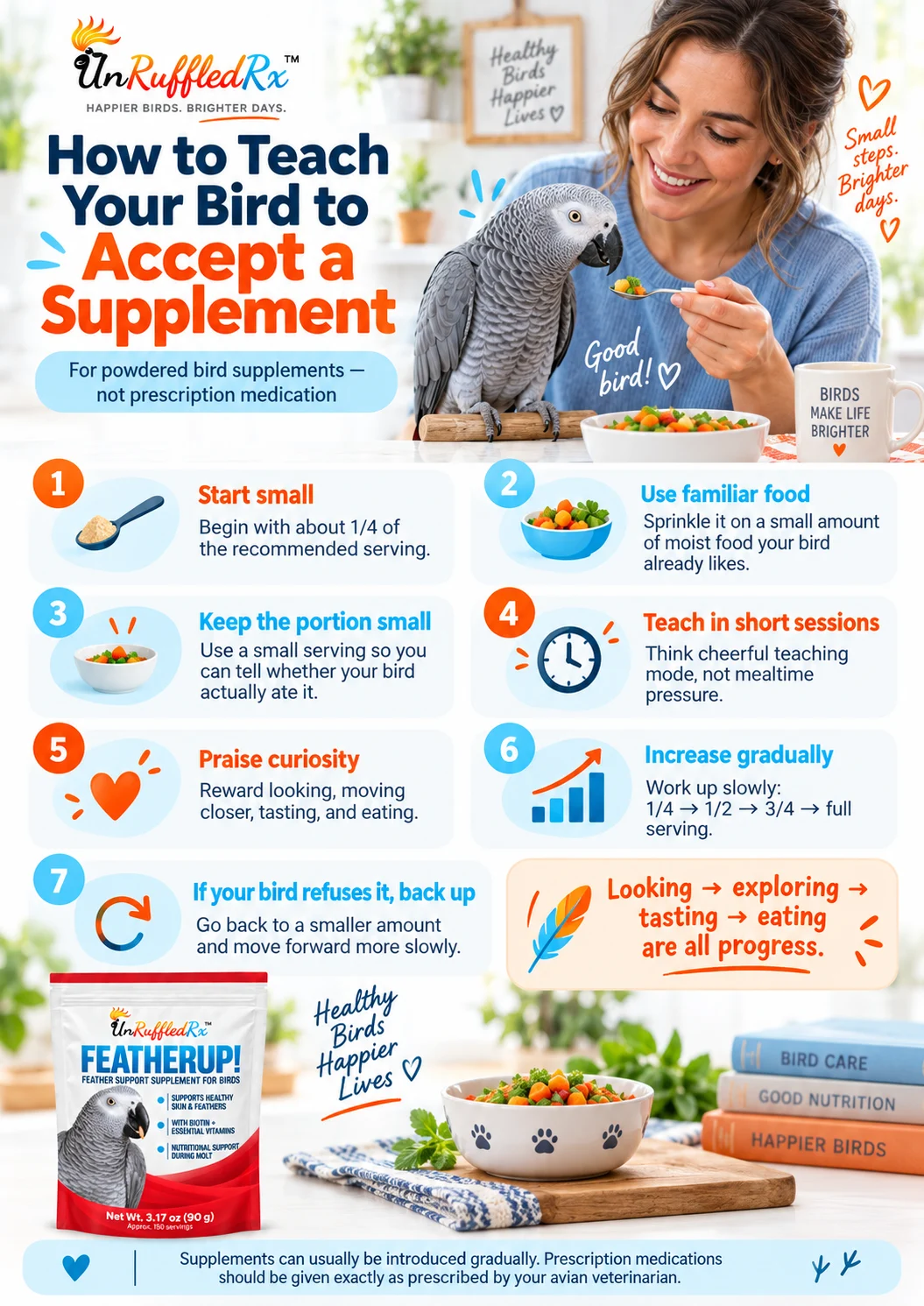
The industry standard for introducing supplements has shifted from "sneaking" ingredients into food to a transparent, training-based methodology. This approach treats the introduction of a supplement as a formal behavior modification session.
The process begins with the "micro-dosing" technique. By starting with as little as 25% of the recommended dosage, owners can bypass the bird’s initial sensory alarm. This small quantity is mixed into a highly palatable, moist base—such as finely chopped vegetables or a favorite mash—to ensure the supplement adheres to the food and cannot be easily sifted out.
The chronology of this process is essential for success:
- Initial Assessment (Days 1–3): Observe the bird’s reaction to the modified food. Praise any curiosity, even if the bird only approaches the dish without consuming it.
- Reinforcement (Days 4–7): Pair the consumption of the modified food with a high-value, non-supplemented treat to create a positive association.
- Incremental Scaling (Weeks 2–4): Gradually increase the supplement concentration in 25% increments only once the bird has demonstrated consistent, stress-free consumption at the current level.
Supporting Research and Behavioral Principles
The effectiveness of this method is bolstered by research into avian diet conversion. A notable 2022 study published in the Journal of Avian Medicine and Surgery by Cummings et al. explored the mechanics of transitioning psittacine birds from seed-based diets to pellet-based nutrition. While the study focused on primary diet, the underlying psychological findings are directly applicable to supplement introduction: birds respond significantly better to reward-based, gradual exposure than to sudden, forced changes.
The study underscored that when birds are given the autonomy to explore new textures and flavors within a controlled environment, they are more likely to accept those changes as safe. This transition is not merely about nutrition; it is about cognitive engagement. By turning the bowl into a learning site, the owner establishes a partnership with the bird, reducing the stress associated with changes to their daily routine.
Categorizing Supplement Delivery Methods
Not all supplements are designed for universal application. Avian medical professionals stress that owners must strictly adhere to the manufacturer’s instructions regarding delivery. Supplements generally fall into three categories:
- Topical (Food-based): These are formulated to be sprinkled on fresh produce or soft mashes. They rely on the moisture of the food to prevent the powder from settling at the bottom of the bowl.
- Water-soluble: These are specifically designed to be added to drinking water. Using these in food, or vice versa, can lead to improper dosing or the degradation of the supplement’s chemical stability.
- Direct Administration: Primarily used for prescription medications or specific high-potency health boosters, these require direct intervention and should only be performed under veterinary guidance.
The danger of self-prescribing or misusing these categories is significant. Improperly mixing supplements can lead to nutrient antagonism, where the excess of one vitamin blocks the absorption of another, particularly regarding calcium and fat-soluble vitamins like A, D, E, and K.
Professional Guidance and Safety Protocols
While training is effective for general wellness supplements, it must be clearly distinguished from the administration of veterinary-prescribed medications. If a bird requires a specific medication to manage a health crisis, there is no room for a gradual training period. In such instances, owners are advised to consult their avian veterinarian immediately to discuss safe, stress-reducing techniques for medication delivery, such as using specialized delivery devices or professional-grade compounding.
The broader implication for the avian care community is a move toward more "low-stress handling" practices. By standardizing the way supplements are introduced, the risk of "food-related trauma"—where a bird develops a phobia of its food bowl due to hidden, bitter-tasting medications—is significantly reduced.
Broader Impact on Avian Welfare
The adoption of these behavioral strategies has a ripple effect on long-term bird health. A bird that is not stressed by its diet is more likely to exhibit natural behaviors, maintain healthy plumage, and sustain a stronger immune system. Furthermore, the act of training strengthens the human-animal bond.
As noted by practitioners in the field, the shift in focus—from viewing the bird as a "patient to be dosed" to a "learner to be taught"—is a critical advancement in companion animal husbandry. It encourages owners to observe their birds more closely, noting subtle signs of comfort or anxiety, which in turn leads to earlier detection of potential health issues.
Summary of Best Practices for Caregivers
To ensure the best outcomes, caregivers are encouraged to maintain a log of the supplement transition. This log should include:
- The Baseline: The bird’s normal eating behavior without the supplement.
- The Introduction Phase: Dates when the 25% dosage was initiated.
- Behavioral Markers: Any signs of hesitation, such as "beaking" the food without swallowing or avoiding the bowl entirely.
- Success Milestones: The date the bird reached the full, veterinarian-recommended dose.
If at any point the bird refuses to eat, the protocol dictates an immediate "step back." By returning to a previous, successful level of the supplement, the owner can reset the bird’s comfort level. This is not a failure, but a necessary adjustment in the learning curve.
Ultimately, the goal of supplemental support is to improve the quality of life for the bird. By removing the pressure and the mystery from the process, owners can ensure that their birds receive the necessary nutritional support to thrive in a domestic environment, fostering a healthier, more confident, and less anxious companion. Through consistent, patient application of these training principles, the transition to a supplemented diet can be a seamless part of the daily care routine, ensuring that both the nutritional and behavioral needs of the bird are met with equal priority.

