


Every bird perch a parrot steps on holds profound significance for its physical and psychological well-being. Considering that parrots spend nearly all their waking hours perched, the quality and variety of these resting spots are not merely a matter of comfort but a cornerstone of their long-term health. Just as ergonomic footwear is vital for human foot health, a well-chosen and diverse array of perches is indispensable for preventing debilitating conditions in captive birds. This detailed guide, informed by leading avian experts and recent research, delves into the essential principles of selecting, arranging, and maintaining perches to foster optimal health, stimulate natural behaviors, and significantly enhance a parrot’s quality of life. Understanding these principles is paramount for responsible bird ownership, moving beyond rudimentary cage setups to create an enriched environment that mimics the natural complexities of their wild habitats.
Why Perch Selection is a Cornerstone of Avian Health
The seemingly simple act of perching is, in reality, a complex biomechanical process that profoundly impacts a bird’s musculature, skeletal system, and overall comfort. Inadequate perching options can lead to a cascade of health issues, collectively known as pododermatitis, or "bumblefoot." This painful condition, ranging from mild inflammation to severe infection and bone involvement, is often initiated by constant pressure on specific areas of the foot, exacerbated by uniform or inappropriate perch surfaces.
Beyond preventing bumblefoot, proper perch variety plays a crucial role in maintaining muscle tone, joint flexibility, and circulation in a bird’s feet and legs. In the wild, parrots navigate a dynamic environment, gripping branches of varying diameters, textures, and angles, which naturally exercises their foot muscles and joints. A static environment with uniform perches deprives them of this essential physical activity, leading to muscle atrophy, stiffness, and increased susceptibility to injury. Moreover, the tactile stimulation provided by diverse perches contributes to a bird’s mental well-being, offering novel sensations and encouraging exploratory behavior. This is true for a wide range of psittacine species, from the robust grip required by a large Macaw to the delicate balance of a smaller Cockatiel. Avian veterinary research consistently highlights that environmental enrichment, of which varied perching is a major component, significantly reduces stress-related behaviors and improves overall physiological markers of health in captive birds.
The Perilous Path of Inappropriate Perch Materials
The material composition of a perch is perhaps the most critical factor in its safety and efficacy. Avian veterinarians and behaviorists unequivocally advise against the use of treated, painted, or resin-coated perches due to the inherent toxicity of the chemicals involved. These substances, readily ingested as birds chew and preen on their perches, can lead to chronic illness, organ damage, and even acute poisoning. Therefore, only bird-safe, untreated materials should ever be introduced into a parrot’s environment.

Safe and Recommended Perch Materials
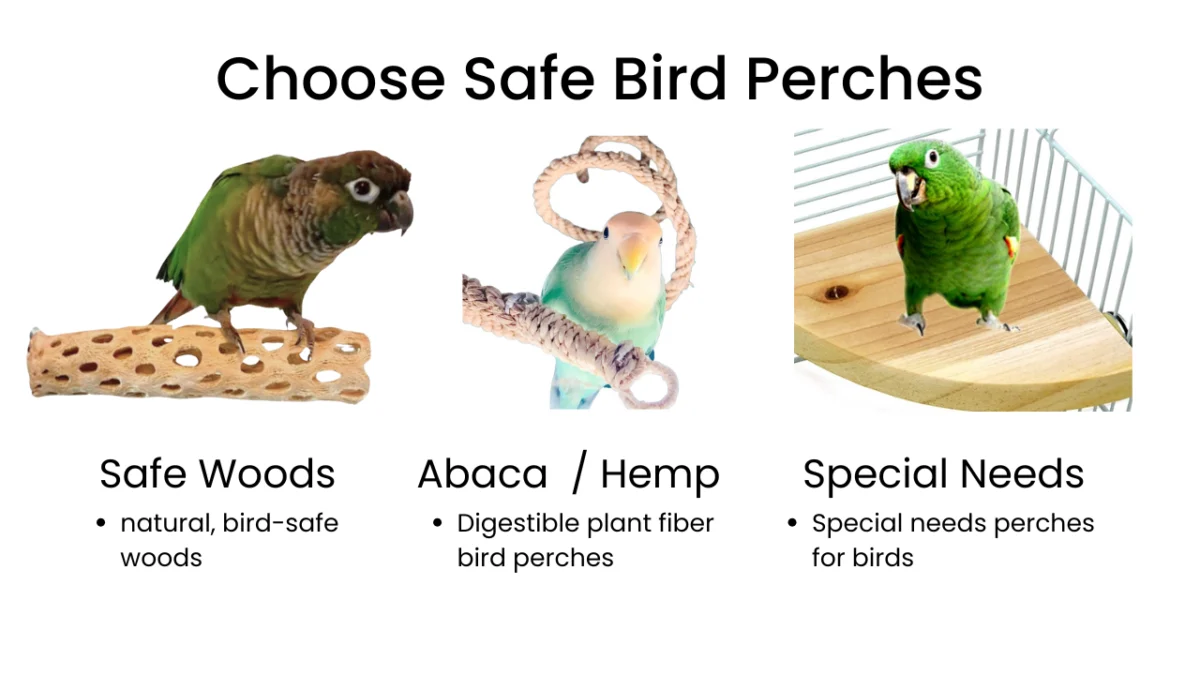
- Natural Wood Perches: These are generally considered the gold standard, provided they are sourced from bird-safe species and are free from pesticides and chemical treatments. Popular and safe choices include Manzanita, Java wood, Dragonwood, Grapevine, and various fruitwoods like apple and pear (ensure they are free of fruit pits/seeds which can be toxic). These woods offer natural variations in diameter and texture, promoting optimal foot health. The hardness of the wood should be appropriate for the bird’s size and chewing habits; harder woods like Manzanita are durable for larger parrots, while softer woods might be suitable for smaller species or as chew toys. The irregular contours of natural branches provide constant, subtle adjustments in grip, engaging different muscle groups and preventing localized pressure points.
- Abaca or Hemp Rope Perches: While traditional cotton rope carries significant risks, natural fiber ropes like abaca (hemp) or sisal, when properly selected and maintained, can offer additional climbing and resting surfaces. These fibers are generally less prone to catastrophic fraying than cotton and, if ingested in small amounts, are less likely to cause impaction. However, vigilant monitoring for any fraying is crucial, and replacement at the first sign of wear is mandatory. They should be considered supplementary perches, not primary ones.
- Mineral and Pumice Perches (with caution): These can offer some abrasive benefits for nail and beak conditioning. However, they must be used sparingly and placed strategically to prevent constant contact with the bird’s feet, as their abrasive nature can lead to sores if overused. They should never be the bird’s primary resting perch.
Materials to Strictly Avoid
- Treated, Painted, or Resin-Coated Perches: As highlighted by avian experts like Diane Burroughs, LCSW, these are highly dangerous. The chemicals used in treatment, paint, or resin can be toxic upon ingestion, leading to a range of severe health problems.
- Toxic Wood Species: Certain woods are known to be toxic or harmful. These include cherry, oak, redwood, cedar, and any pressure-treated lumber. Cedar, for instance, contains phenols that can cause respiratory issues, while some fruit woods (like cherry) have toxic compounds in their leaves and pits. It is imperative for owners to verify the safety of any wood before introducing it to their birds.
- Cotton Rope Perches: These pose significant health risks. Their fibers can fray, allowing birds to ingest strands that can accumulate in the crop, leading to impaction, bacterial infections, and, in severe cases, requiring surgical intervention. Avian veterinarians frequently encounter cases of crop foreign bodies caused by cotton.
- Concrete and Cement Perches: Often marketed for nail and beak conditioning, concrete or cement perches are widely discouraged by avian professionals. Their hard, abrasive surfaces can cause significant foot irritation, leading to pressure sores, calluses, and even contribute to the development of bumblefoot. Furthermore, they can be cold, depriving birds of the warmth often sought in natural perches. Alternative methods for nail and beak conditioning, such as regular grooming by a veterinarian or the provision of chewable toys, are far safer.
- Smooth Plastic Perches: While easy to clean, smooth plastic perches offer little in the way of tactile variation or grip challenge. They can lead to "slipperiness," forcing birds to grip harder and potentially causing foot strain. They also lack the chewability and natural feel that birds instinctively seek. If used, they should be limited and paired with a wide variety of natural options.
Optimizing Perch Configuration: Size, Shape, and Strategic Placement
Beyond material selection, the dimensions and arrangement of perches within a bird’s enclosure are critical for promoting natural behaviors and preventing musculoskeletal issues. A well-designed perch environment should offer a diverse "landscape" of options, much like the varied canopy of a natural forest.
The Importance of Diameter Diversity and Irregular Shapes
A common mistake in avian husbandry is providing perches of uniform diameter, often simple wooden dowels. This practice is now widely recognized as detrimental. The ideal perch allows a bird to comfortably wrap its toes around approximately two-thirds to three-quarters of the perch’s circumference, with each toe joint slightly bent. Crucially, birds require a variety of diameters within their cage. This ensures different foot muscles are engaged and pressure points are shifted, mimicking the natural variation found in trees. Without this, repetitive strain injuries and pressure sores become more likely. For a large parrot, perches might range from 1 to 3 inches in diameter, while a smaller bird like a budgie might need perches ranging from 0.5 to 1 inch.
Furthermore, natural, irregular branches are vastly superior to perfectly round dowel perches. The natural bumps, curves, and varying textures of real branches provide proprioceptive feedback and encourage continuous micro-adjustments in grip, which is vital for foot strength and agility. This constant, subtle exercise prevents the stagnation and localized pressure associated with smooth, uniform surfaces. This understanding has evolved from early 20th-century aviculture, which often prioritized aesthetics and simplicity, to modern practices informed by ethology and veterinary science that emphasize environmental complexity.
Strategic Placement for Activity Zones
Perches should be placed to create distinct "zones" within the cage, encouraging movement and exploration, and catering to a bird’s natural instincts.
- Sleeping Perch: A comfortable, secure perch, often positioned higher in the cage, where the bird feels safe and can rest undisturbed. This satisfies their instinct to seek higher ground for security.
- Feeding Perch: Located near food and water bowls, allowing easy access. Care must be taken to avoid placing perches directly above food or water to prevent contamination by droppings, a common source of bacterial growth.
- Play Perches: Integrated with toys and climbing opportunities, these perches can be more dynamic, encouraging interaction and mental stimulation. These might include spiral perches or those with attached chewable elements.
- Observation Perches: Positioned to allow the bird a good vantage point of its surroundings, satisfying its natural curiosity and allowing it to feel secure by monitoring its environment.
- Movement Flow: Perches should be staggered at different heights and angles, forcing the bird to climb, stretch, and flap its wings to move between them. This promotes physical exercise, strengthens wing muscles, and mimics natural arboreal movement. Avoid placing perches so close together that a bird can simply step across without effort, which limits physical activity.
The Practice of Perch Rotation
To maintain mental stimulation and prevent habituation, it is beneficial to periodically rotate or rearrange perches. This introduces novelty into the bird’s environment, encouraging exploration and adaptation, and further ensures that different foot muscles are utilized over time. This practice is supported by modern research into avian enrichment, which highlights the importance of environmental complexity for cognitive health and preventing boredom-induced behavioral issues. Changing the cage landscape every few weeks or months can significantly enhance a bird’s overall engagement and well-being.

Ensuring Safety and Hygiene: Protocols for Perch Maintenance
The longevity and health benefits of appropriate perches are entirely dependent on rigorous safety and cleaning protocols. A perch, however well-chosen, can become a hazard if not properly maintained.
Rigorous Cleaning Schedules
Perches accumulate droppings, food particles, and dander, creating a fertile ground for bacteria, fungi, and parasites. Therefore, perches should be cleaned weekly, or immediately whenever visibly soiled. Birds frequently wipe their beaks on perches, which can rapidly transfer bacteria. Neglecting perch hygiene can lead to significant bacterial and fungal growth, posing a direct threat to your bird’s health through ingestion or contact with skin. A thorough cleaning involves scrubbing with hot, soapy water, rinsing well, and then disinfecting with an avian-safe disinfectant (e.g., dilute bleach solution followed by thorough rinsing and drying, or specialized pet-safe disinfectants). Natural wood perches may require more frequent cleaning due to their porous nature and can sometimes benefit from baking at a low temperature after cleaning to ensure complete sterilization.
Thorough Inspection for Integrity and Security
Regular inspection of all perches is crucial for safety.
- Natural Branches: Check for signs of mold, rot, or insect infestation. Discard any compromised branches immediately. Cracks or splintering can also pose injury risks.
- Rope Perches: As previously noted, meticulously inspect for fraying. Any sign of loose strands necessitates immediate removal or repair to prevent ingestion and potential impaction.
- Hardware: Ensure all mounting hardware is secure and free from rust or sharp edges that could injure the bird. Loose hardware can lead to

