


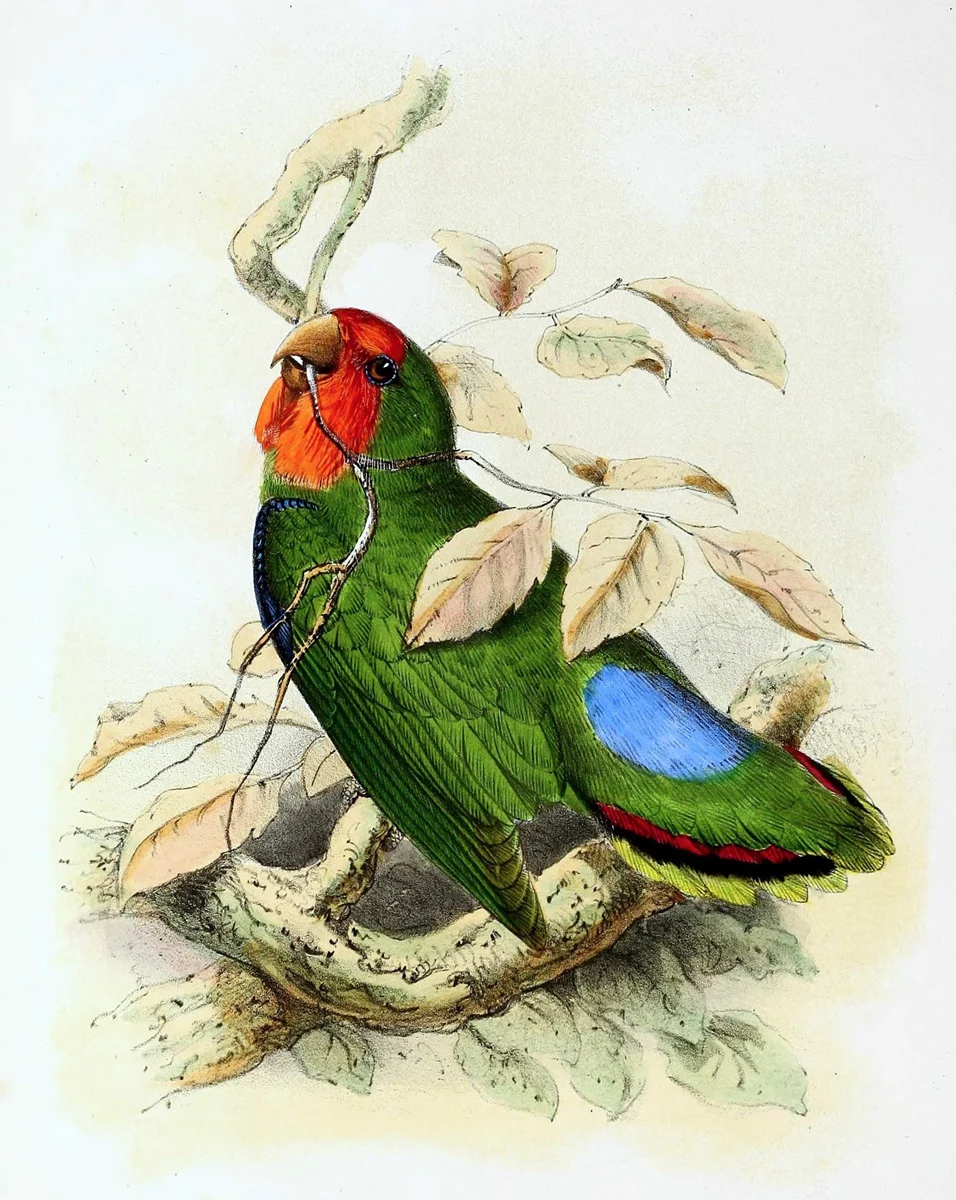
Agapornis pullarius, commonly known as the Red-headed Lovebird or Red-faced Lovebird, stands as a distinctive species within the popular Agapornis genus, yet remains a rarity in global aviculture. Unlike its more frequently encountered relatives, such as the Peach-faced Lovebird (Agapornis roseicollis) or Fischer’s Lovebird (Agapornis fischeri), this species exhibits a profound sensitivity to stress, making its successful maintenance and breeding in captivity a significant challenge for even the most dedicated parrot enthusiasts. This characteristic contributes to its lesser-known status among the general public, despite its striking appearance and intriguing natural history rooted deeply in the tropical savannahs of West and Central Africa.
Scientific Classification and Historical Context
The Red-headed Lovebird belongs to the order Psittaciformes, which encompasses all parrots, and the family Psittaculidae, commonly known as the Old World parrots. Within this family, it is classified under the genus Agapornis, a name derived from the Greek words agape (love) and ornis (bird), aptly reflecting the strong pair bonds typical of these small parrots. Agapornis pullarius was first formally described by the renowned Swedish naturalist Carl Linnaeus in 1766, solidifying its place in scientific taxonomy. The specific epithet pullarius likely refers to its "chicken-like" or "chick-like" appearance, perhaps alluding to its small size. This historical documentation marked the beginning of scientific understanding for a species that would later reveal complex ecological requirements and behavioral sensitivities, particularly concerning human interaction and captive environments.
Geographic Distribution and Habitat Ecology
Native exclusively to the African continent, the Red-headed Lovebird inhabits a broad, albeit patchy, band stretching across sub-Saharan Africa from the western reaches of Guinea eastward to Ethiopia. This distribution covers numerous countries, including Sierra Leone, Liberia, Côte d’Ivoire, Ghana, Togo, Benin, Nigeria, Cameroon, Central African Republic, Gabon, Congo, Democratic Republic of Congo, Uganda, and parts of Angola and Sudan. Within this extensive range, the species demonstrates a preference for tropical lowland savannahs, characterized by open grasslands interspersed with scattered trees. It avoids dense primary forests, indicating a specific ecological niche requirement for more open canopy environments, yet still relies on trees for roosting and foraging. Typically observed in pairs or small flocks comprising up to a few dozen individuals, these lovebirds are largely sedentary within their preferred territories, undertaking only localized movements. They are found at elevations ranging from sea level up to approximately 2,000 meters (6,550 feet), though they are more commonly encountered at lower altitudes.
Two recognized subspecies of Agapornis pullarius exist, each with a distinct geographic distribution and subtle morphological variations. The nominate subspecies, Agapornis pullarius pullarius, is found across the majority of the species’ western and central range. The second subspecies, Agapornis pullarius ugandae, is restricted to a smaller area in eastern Democratic Republic of Congo, Uganda, and western Ethiopia. These subspecies may exhibit minor differences in the intensity of their plumage coloration or slight variations in size, reflecting adaptations to their specific regional environments.
Distinctive Appearance and Sexual Dimorphism
The Red-headed Lovebird is celebrated for its striking plumage, a vibrant mosaic of colors that makes it visually captivating. The dominant color is a brilliant emerald green, covering the majority of its body, including the back, wings, and underparts. This green provides excellent camouflage within the leafy canopies of its natural habitat. The most distinguishing feature, from which it derives its common name, is the bright scarlet red that adorns its face and beak. This vivid red extends from the forehead down to the throat, creating a mask-like effect. A subtle dash of blue is often present on the lower back, and a small band of red can be observed on the tail feathers, adding further detail to its coloration. Adult birds typically measure up to 15 centimeters (6 inches) in length and weigh around 45 grams, making them compact and agile fliers.

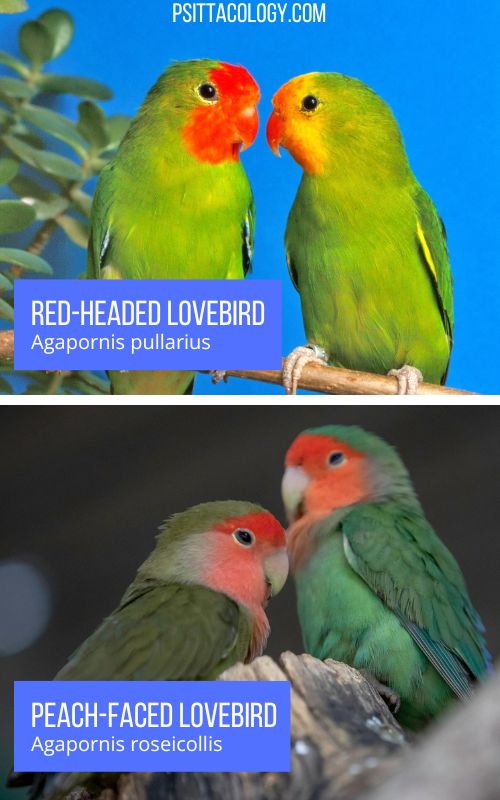
While sharing a general body shape and overall green plumage with the more common Peach-faced Lovebird (Agapornis roseicollis), a key distinguishing feature lies in the beak color. Agapornis pullarius possesses a bright red beak, while A. roseicollis has a pale, horn-colored or beige beak. This specific detail is crucial for identification, especially given the popularity of the Peach-faced Lovebird in aviculture. Furthermore, the Red-headed Lovebird exhibits clear sexual dimorphism, a characteristic not always pronounced in other lovebird species. The male’s facial coloration is a more intense, fiery scarlet, extending further down the throat, and his beak is a vibrant red. In contrast, the female’s facial mask is typically less brightly colored, often appearing more orange than scarlet, and her beak tends to be a duller, more muted red or orange-red. This visual distinction allows for relatively straightforward sexing, a valuable trait for both researchers and breeders.
Dietary Habits and Ecological Role
Like many parrot species, the Red-headed Lovebird’s diet primarily consists of seeds, with a strong preference for various grass seeds. In its natural savannah habitat, these birds are adept at foraging for seeds from numerous wild grasses. Their diet also includes agricultural crops such as millet, a staple grain cultivated in many parts of Africa. This dietary overlap with human agriculture has unfortunately led to the species being perceived as a crop pest by local farmers in some regions, resulting in conflict and persecution. Beyond seeds, Red-headed Lovebirds supplement their diet with wild fruits, including figs and guava, when available. They are also known to consume flower buds and young leaves, demonstrating a varied diet that adapts to seasonal availability. Their role as seed dispersers, particularly for wild grasses and fruit-bearing trees, contributes to the ecological balance of their savannah ecosystems, even as their consumption of cultivated crops creates challenges for human populations.
Conservation Status and Threats
The Red-headed Lovebird is currently listed as a species of "Least Concern" by the International Union for Conservation of Nature (IUCN) Red List. This classification, however, belies a more complex reality. The IUCN assessment acknowledges that the species is "locally uncommon" across much of its extensive natural range, suggesting a fragmented or declining population trend in specific areas. Experts in avian conservation frequently highlight the paradox of a widespread species being listed as Least Concern while experiencing significant localized declines, emphasizing the need for continuous monitoring and more detailed regional assessments.
A primary driver of population decline is pervasive habitat destruction. The tropical savannahs and open woodlands favored by Agapornis pullarius are increasingly threatened by deforestation for agricultural expansion, logging, and infrastructure development. The conversion of natural habitats into farmland directly reduces the available foraging and nesting grounds for these birds. Furthermore, the species faces direct persecution by farmers who view them as agricultural pests dueating to their consumption of millet and other crops. This human-wildlife conflict often leads to birds being killed to protect harvests.
Another significant threat is the capture of wild birds for the international pet trade. Despite the species’ stress-prone nature and difficulty in captivity, demand persists, particularly in certain specialized markets. A compelling study published in 2018 documented the export of almost 40,000 Red-headed Lovebirds since 1975, underscoring the substantial pressure exerted on wild populations by commercial trapping. This figure, though historical, indicates a persistent pattern of extraction that, when combined with habitat loss and direct killing, contributes to population reductions. Ornithologists Parr and Juniper, in their authoritative 2010 work "Parrots: A Guide to Parrots of the World," further elaborate on this issue, stating, "Abundance also varies owing to nomadic habits, but a genuine overall decline appears to have occurred in many areas this century. Trapped for live bird trade with large numbers in captivity outside range." This observation from a decade prior to the 2018 study reinforces the long-standing nature of these threats. Conservation implications are substantial; even if the overall global population remains stable enough for a "Least Concern" status, the loss of local populations can lead to genetic isolation, reduced biodiversity, and ecosystem instability. Effective conservation strategies would require a multi-faceted approach, addressing habitat preservation, mitigating human-wildlife conflict, and regulating the pet trade.
Challenges and Practices in Aviculture
The Red-headed Lovebird’s presence in aviculture is notably sparse compared to other Agapornis species. It is predominantly maintained by highly experienced parrot enthusiasts, often within specialized aviary settings rather than as a typical household pet. The core reason for its rarity in captivity is its inherently nervous and stress-prone disposition. These birds are extraordinarily sensitive to environmental disturbances, including sudden loud noises, rapid movements, and the presence of other boisterous bird species. Wild-caught individuals, in particular, are known to succumb to stress-induced shock, sometimes dying from seemingly minor disturbances or refusing to eat if they perceive their environment as threatening.

This acute sensitivity means that Agapornis pullarius is not suitable for the average pet owner seeking a tame companion bird. Interactions are generally limited to observation rather than hands-on handling. The focus in aviculture is often on providing a secure, calm environment that minimizes potential stressors. For those dedicated few who succeed in keeping them, the goal is typically breeding rather than pet companionship. Housing typically involves spacious, heated aviaries, ideally in solitary pairs to prevent stress from other birds. If kept indoors, a large cage, at least 80 cm (30 inches) wide with appropriate bar spacing (around 1.25 cm or 0.5 inches), is essential. The cage must be furnished with a variety of natural wood perches of varying diameters to promote foot health and provide enrichment. The ethical considerations of keeping such a sensitive species are paramount, requiring a deep understanding of avian psychology and a commitment to providing an environment that caters to its specific needs.
Nutritional Requirements in Captivity
The dietary approach for captive Red-headed Lovebirds has evolved over time, reflecting broader advancements in avian nutrition. While historically many lovebird keepers relied on dry or sprouted seed mixes, modern veterinary consensus increasingly advocates for a high-quality pelleted diet as the nutritional cornerstone for most parrot species. Pellets offer a balanced intake of vitamins, minerals, and macronutrients, which can be inconsistent in seed-based diets.
Alongside a premium pelleted diet, captive Red-headed Lovebirds should receive a diverse array of supplementary foods. This includes a high-quality seed mix offered in moderation, an abundance of fresh vegetables (especially leafy greens), and a selection of fresh fruits. Cooked grains, such as quinoa or brown rice, and appropriately foraged, non-toxic weeds can also provide additional nutrients and enrichment. For breeding pairs or birds requiring extra protein, supplements like boiled egg or mealworms are beneficial, supporting the physiological demands of reproduction and chick rearing. Clean, fresh water must always be available.
Enrichment and Behavioral Needs
As intelligent parrots, Red-headed Lovebirds require substantial environmental enrichment to prevent boredom and promote natural behaviors. Given their stress-prone nature, the introduction of new enrichment items must be handled cautiously and gradually to avoid alarming the birds. Essential enrichment elements include:
- Chewing and Shredding Toys: Parrots have an innate need to chew, which helps keep their beaks trimmed and provides mental stimulation. Toys made from natural wood, cardboard, or safe plant fibers are ideal.
- Foraging Opportunities: Hiding food in toys or in different parts of the enclosure encourages natural foraging behaviors, preventing sedentary habits.
- Bathing Opportunities: A shallow dish of water or a gentle misting spray allows birds to maintain their plumage and can be a source of enjoyment.
- Natural Branches: Providing fresh, non-toxic branches for perching and chewing mimics their natural environment.
Regular rotation of toys and perches, combined with a predictable routine, helps maintain interest without causing undue stress.
Reproduction and Breeding Difficulties
In their natural habitat, Red-headed Lovebirds time their breeding cycles with the rainy season, when food resources are abundant. Their nesting habits are particularly unique and contribute significantly to the challenges of captive breeding. Unlike many other parrots that utilize tree hollows, Agapornis pullarius predominantly nests in arboreal (tree-dwelling) termite or ant nests. The female meticulously burrows into these hard structures, excavating a chamber, which she then reinforces and lines with plant materials such as grass leaves. Occasionally, they may also use ground-level termite nests or existing tree hollows created by woodpeckers. A clutch typically consists of up to six eggs.
The species’ specific requirement for termite nests for breeding, combined with its nervous disposition, makes successful reproduction in captivity notoriously difficult. Standard nest boxes, which work for most lovebirds, are often rejected. Dedicated aviculturists, such as Dominique Veeckmans, have achieved success by innovating with nest boxes constructed from cork, which better mimics the texture and insulating properties of a termite mound. Even with specialized setups, factors like ambient temperature, humidity, and an absolute lack of disturbance are critical for successful pairing, egg-laying, incubation, and chick rearing. The sensitivity during breeding makes these birds one of the most challenging lovebirds to propagate in a controlled environment, highlighting the intricate balance required to replicate their natural conditions.
Noise Level and Vocalizations
Compared to many larger parrot species, the Red-headed Lovebird is generally considered to have a relatively low noise level. However, like all psittacines, they are capable of producing loud vocalizations, particularly if alarmed, excited, or attempting to communicate with a mate or flock members. Their calls are typically described as shrill and high-pitched. While not as overtly noisy as some of their larger cousins, their vocalizations can still be quite piercing. Bioacoustic resources, such as Xeno-Canto, provide recordings of Agapornis pullarius calls, offering valuable insights into their communication repertoire for researchers and enthusiasts.
Conclusion and Future Outlook
The Red-headed Lovebird, Agapornis pullarius, is a fascinating and beautiful avian species, embodying both the allure and the inherent challenges of biodiversity conservation and responsible aviculture. Its vibrant plumage, unique nesting behaviors, and specific ecological niche in the African savannahs make it a subject of considerable scientific interest. Yet, its extreme sensitivity to stress and the complexities of its reproductive biology mean it remains a rare sight in captivity, primarily limited to the domain of expert breeders.
The species’ "Least Concern" status on the IUCN Red List serves as a reminder that broad classifications can sometimes mask localized vulnerabilities. The cumulative pressures of habitat destruction, human-wildlife conflict, and the ongoing pet trade continue to pose significant threats to wild populations. A nuanced approach to conservation is imperative, one that integrates habitat protection, community engagement to mitigate conflict, and stringent regulation of the international bird trade. For the dedicated individuals who undertake the challenging endeavor of keeping and breeding Agapornis pullarius, their efforts contribute to a deeper understanding of the species and potentially to the establishment of stable captive populations, serving as an invaluable safeguard against future declines in the wild. The future of the Red-headed Lovebird depends on a continued commitment to research, responsible stewardship, and a balanced appreciation for its unique place in the natural world.

