


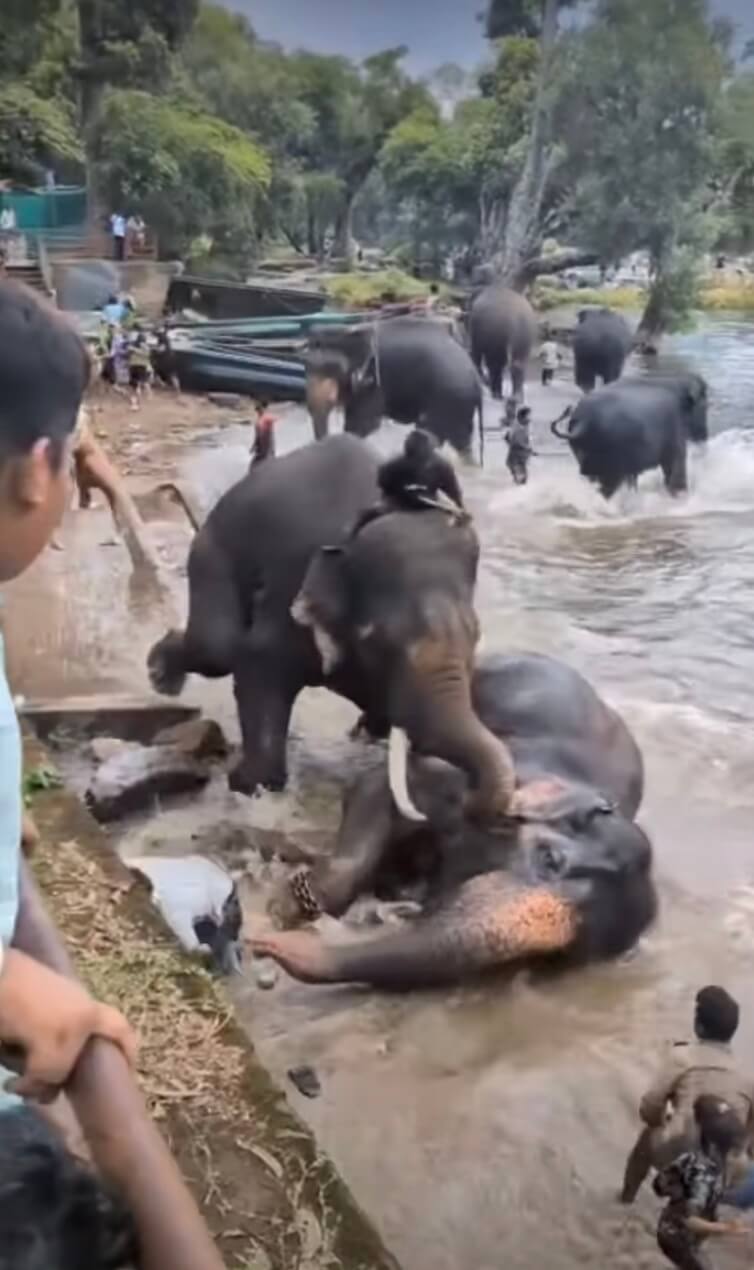
The recent death of a tourist at the Dubare Elephant Camp in Karnataka, India, has reignited a global debate regarding the safety and ethics of close-contact wildlife tourism. On May 21, 2026, a 33-year-old woman was reportedly crushed to death during a violent altercation between two captive elephants. The victim was participating in a popular "bathing" activity, where tourists are encouraged to interact closely with 6,000-pound animals. According to local reports, the victim was caught in the middle of a sudden clash between the elephants, one of whom fell onto her in front of her husband and young child. The incident also resulted in the subsequent death of one of the elephants, named Marthanda, who succumbed to injuries sustained during the fight. This tragedy is the latest in a series of fatal incidents involving animals used for entertainment, prompting calls for stricter regulations and a reevaluation of how wild animals are managed in the tourism sector.
The Dubare Incident and Immediate Aftermath
The Dubare Elephant Camp, located on the banks of the Kaveri River, has long been a major attraction for domestic and international travelers. Originally a training site for elephants used in the historic Mysore Dasara procession, it transitioned into a tourism-centric facility where visitors pay for up-close encounters, including feeding and bathing the animals.
Witnesses at the scene described a chaotic environment as the two bull elephants began to spar unexpectedly. The sheer size and power of the animals meant that handlers were unable to intervene before the victim was fatally struck. Following the incident, the Karnataka Forest Department ordered the temporary closure of the camp for 48 hours to conduct a safety audit and investigate the circumstances leading to the elephants’ aggression. Preliminary findings suggest that the stress of constant human interaction, combined with the physiological state of the animals, may have contributed to the sudden outburst.
A Pattern of Global Incidents
The tragedy in India is not an isolated event. Over the past year, several high-profile fatalities have occurred in different regions, each involving animals kept in high-stress, artificial environments for human amusement.
In Egypt, a male tourist recently died following a "snake-charming" performance at a luxury resort. The entertainer was placing snakes around the necks of guests when one of the reptiles slithered into the man’s clothing and delivered a fatal bite. Despite immediate medical intervention and attempts at resuscitation, the man succumbed to the venom at a local hospital. Herpetologists note that snakes, which are naturally solitary and avoid human contact, often react defensively when handled by crowds, making such performances inherently dangerous.
In Spain, the traditional San Marcos Festival in Beas de Segura turned fatal when a 33-year-old bull breeder was gored to death. During the event, bulls are released into streets filled with spectators. Reports indicate that the bull charged the man, inflicting multiple wounds to his chest and abdomen. Although he was rushed to emergency care, the severity of the internal injuries led to his death during transport. This incident has added pressure on European authorities to reconsider the safety protocols of "running of the bulls" events, which often result in dozens of injuries to both participants and animals.
Further incidents have been recorded in Thailand and China. In Thailand, a Scottish tourist was killed and his daughter injured when an elephant used for trekking turned on its handler and the riders. Witnesses reported that the handler had been using a bullhook—a sharp metal tool—to strike the animal shortly before it snapped. In Beijing, China, a woman was mauled to death by a Siberian tiger at the Badaling Wildlife Park after she exited her vehicle inside a drive-through enclosure. Her daughter was also seriously injured in the attack.
Chronology of Recent Wildlife Tourism Tragedies
To understand the scope of the issue, it is necessary to examine the timeline of these events, which suggests a recurring failure in safety management across various types of animal attractions:
- July 2025: A woman is killed at a drive-through safari park in China after violating safety protocols, highlighting the unpredictable nature of apex predators in semi-confined spaces.
- March 2026: A participant in a Spanish bull-running festival is fatally gored, sparking national debate over the continuation of animal-based cultural events.
- April 2026: The fatal snake bite in Egypt underscores the risks associated with "busking" and resort-based animal performances.
- May 2026: The double fatality at Dubare Elephant Camp (one human, one elephant) raises questions about the "sanctuary" status of commercial elephant camps in India.
The Science of Stress in Captive Wildlife
Biological and behavioral experts argue that these incidents are the predictable result of placing wild animals in high-stress environments. Unlike domesticated animals such as dogs or horses, elephants, tigers, and bulls retain their wild instincts. When confined to small enclosures or forced to interact with rotating crowds of strangers, these animals often experience chronic stress.
In the case of elephants, the "breaking" process—known in parts of Southeast Asia as phajaan—is often used to make them submissive enough for tourist rides and bathing. This involves separating calves from their mothers and using physical pain to establish dominance. While this may result in a period of docility, it also causes long-term psychological trauma. Experts suggest that "snapping" incidents occur when the animal’s flight-or-fight response is triggered by a perceived threat, noise, or physical discomfort.
Furthermore, bull elephants undergo a periodic hormonal state known as musth, characterized by highly aggressive behavior and a massive surge in testosterone. If facilities do not properly monitor and isolate elephants during this period, the risk to human life increases exponentially.

Statistical Context and Industry Data
The wildlife tourism industry is a multi-billion dollar global enterprise. According to data from World Animal Protection, approximately 3,000 elephants are currently used for tourism across Asia, with over 75% of them kept in "severely inadequate" conditions.
Safety statistics are equally concerning. In India alone, captive elephants have been responsible for hundreds of deaths over the last decade, particularly in states like Kerala and Karnataka where they are used for both tourism and religious festivals. A study of tiger-related incidents in "safari-style" parks shows that human error—such as exiting a vehicle or failing to secure a gate—is the leading cause of fatalities, yet the underlying issue remains the close proximity of humans to powerful predators.
From an economic perspective, the liability costs for these incidents are rising. Insurance companies are increasingly hesitant to provide coverage for "high-risk" animal encounters, leading some travel agencies to remove such activities from their itineraries entirely.
Official Responses and Regulatory Shifts
Following the Dubare tragedy, the Karnataka Forest Department has faced intense scrutiny. Animal welfare organizations have called for a total ban on tourist bathing and riding activities, suggesting that the camp should transition to a "look-but-don’t-touch" model.
In Thailand, the government has introduced more stringent licensing requirements for elephant camps, though enforcement remains a challenge in rural areas. In Europe, animal rights advocates continue to lobby the European Parliament to restrict funding for festivals that involve animal cruelty, citing both ethical concerns and public safety risks.
Official statements from tourism boards often emphasize that these incidents are "rare accidents." However, legal experts argue that the inherent unpredictability of wild animals makes "safe" close-contact encounters a logistical impossibility. They suggest that the burden of liability is shifting toward the operators who market these encounters as harmless.
Broader Impact and the Future of Travel
The recurring nature of these fatalities is driving a significant shift in consumer behavior. Modern travelers, particularly those from younger demographics, are increasingly seeking "ethical" and "sustainable" travel options. This has led to the rise of genuine sanctuaries—facilities where animals are observed from a distance, are not forced to perform, and are not subjected to physical contact with tourists.
The travel industry is responding to this shift. Major platforms like TripAdvisor and Expedia have restricted the sale of tickets to attractions that involve physical contact with wild animals or captive performances. For the tourism sector, the message is becoming clear: the traditional model of animal exploitation is not only ethically fraught but also poses a direct threat to the safety of guests and the long-term viability of the industry.
As the investigation into the Dubare incident continues, the deaths of both a young mother and a captive elephant serve as a somber reminder of the costs of the wildlife entertainment industry. The solution, according to conservationists, lies in a fundamental shift toward respecting the autonomy and natural boundaries of wild animals. For the global traveler, the directive is increasingly simple: the most respectful way to experience wildlife is to observe them in their natural habitat, where their freedom—and human safety—is preserved.

