


The avian world is replete with species of stunning beauty and intricate ecologies, yet some remain largely unknown to the general public, even within popular genera. Among these is Agapornis pullarius, more commonly recognized as the Red-headed Lovebird or Red-faced Lovebird. Unlike its more ubiquitous cousins, such as the Peach-faced Lovebird (Agapornis roseicollis) or Fischer’s Lovebird (Agapornis fischeri), which are celebrated as popular pet parrots globally, Agapornis pullarius is a rarity in captivity. Its notoriously stress-prone nature presents significant challenges for aviculturists, rendering it an exclusive subject for only the most dedicated and experienced parrot enthusiasts. This comprehensive exploration delves into the natural history, conservation status, distinctive characteristics, and complex avicultural considerations surrounding this unique African parrot.
Natural History and Geographical Distribution
Like all nine species within the genus Agapornis, the Red-headed Lovebird is indigenous to the African continent. Its natural range spans a distinctive, albeit patchy, band across West to Central Africa. This distribution extends from Guinea in the west, stretching eastward through sub-Saharan regions to reach as far as Ethiopia. Within this extensive territory, Agapornis pullarius primarily inhabits tropical lowland savannahs, demonstrating a preference for landscapes dotted with scattered trees and mature woodlands, while deliberately avoiding dense primary rainforests. This specific habitat choice is crucial for its survival, providing both shelter and food sources.
The species is largely sedentary throughout its range, meaning it does not undertake extensive nomadic migrations, though local movements may occur in response to food availability or seasonal changes. Red-headed Lovebirds are typically observed in pairs or small family groups, occasionally forming larger flocks of up to a few dozen individuals. This social structure is typical of many small parrot species, offering benefits in terms of foraging efficiency and predator vigilance. They can be found at altitudes reaching up to 2,000 meters (approximately 6,550 feet), though they are more commonly encountered at lower elevations where their preferred savannah habitats are more prevalent. The presence of specific tree species, such as acacias and baobabs, often defines their favored environments, providing nesting sites and foraging opportunities.
Conservation Status and Mounting Threats
Despite its limited presence in aviculture, the conservation status of Agapornis pullarius in the wild warrants close attention. The International Union for Conservation of Nature (IUCN) Red List currently classifies the Red-headed Lovebird as a species of "Least Concern." However, this broad classification can be misleading when viewed through a localized lens. The IUCN itself notes that the species is locally uncommon throughout much of its vast natural range, suggesting that its populations are not uniformly robust.
Furthermore, compelling evidence indicates a concerning downward trend in the species’ overall population size. This decline is attributed to a confluence of anthropogenic pressures. Primary among these is widespread habitat destruction, driven by expanding agricultural frontiers, logging operations, and increasing human settlement. As vital savannah and woodland habitats are cleared, the Red-headed Lovebird loses critical foraging grounds and nesting sites.
Another significant threat stems from human-wildlife conflict. Red-headed Lovebirds, like many granivorous parrots, are known to feed on agricultural crops, particularly millet. This dietary habit often leads to them being perceived as pests by local farmers, resulting in the killing of birds to protect harvests.
Perhaps one of the most historically impactful pressures on Agapornis pullarius populations has been capture for the international pet trade. A 2018 study highlighted a staggering statistic, revealing that almost 40,000 Red-headed Lovebirds were exported from their natural range since 1975. This substantial number of wild-caught birds undoubtedly exerted considerable pressure on wild populations, especially given the species’ already localized uncommonness. The renowned ornithological text, "Parrots: a guide to parrots of the world" (Parr & Juniper, 2010), corroborates these concerns, stating: "Abundance also varies owing to nomadic habits, but a genuine overall decline appears to have occurred in many areas this century. Trapped for live bird trade with large numbers in captivity outside range." This historical context underscores the ethical considerations surrounding the trade in wild-caught birds, particularly for species already facing ecological challenges.

Distinctive Appearance and Identification
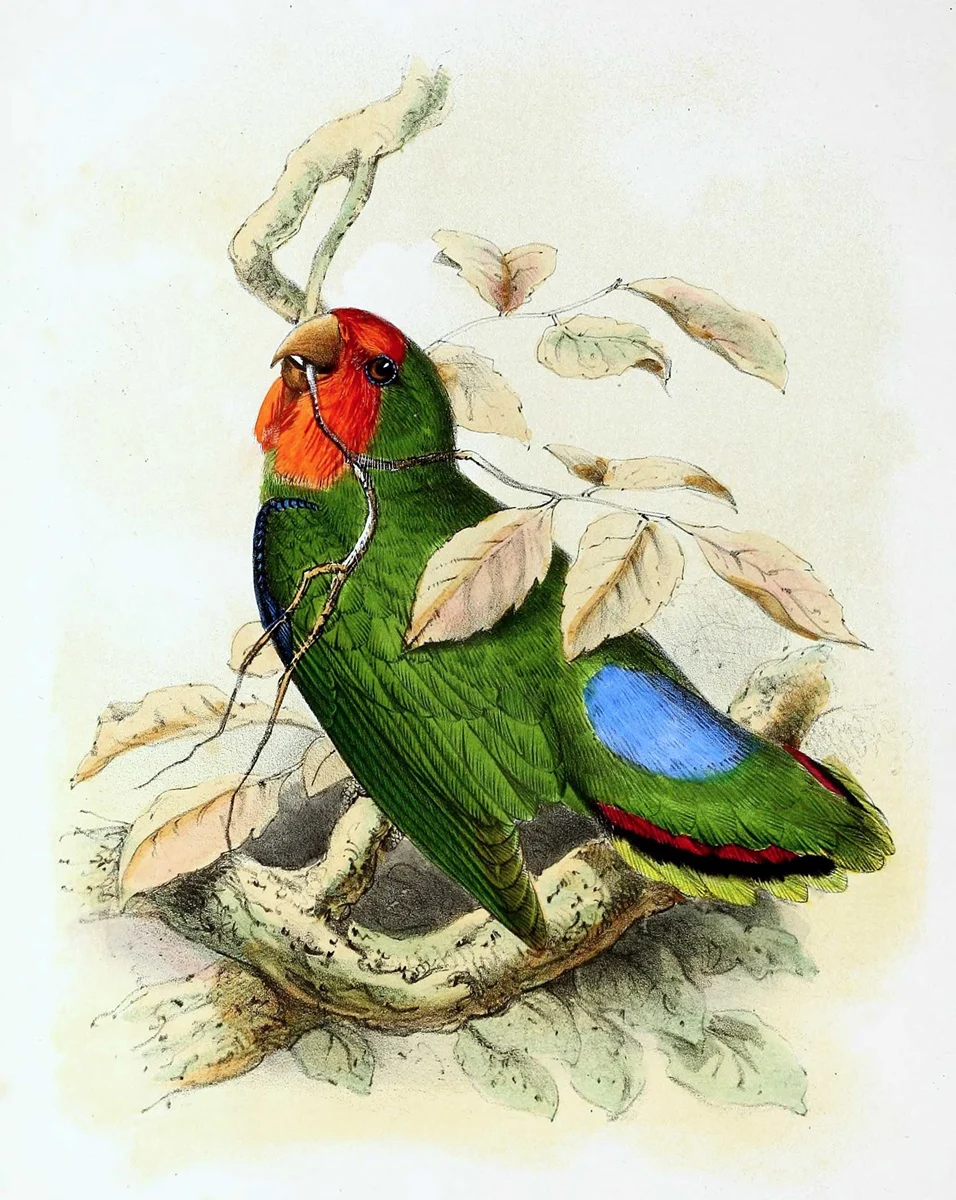
The Red-headed Lovebird is a visually striking small parrot, characterized by a vibrant and unmistakable plumage. Its body is predominantly a brilliant emerald green, providing excellent camouflage amidst the foliage of its natural habitat. The defining feature, from which it derives its common name, is a strikingly bright red face and beak. This vivid scarlet coloration extends from the forehead down to the throat, creating a mask-like effect. Adding further to its beauty, a dash of iridescent blue adorns the lower back, and a small band of red is visible on the tail feathers.
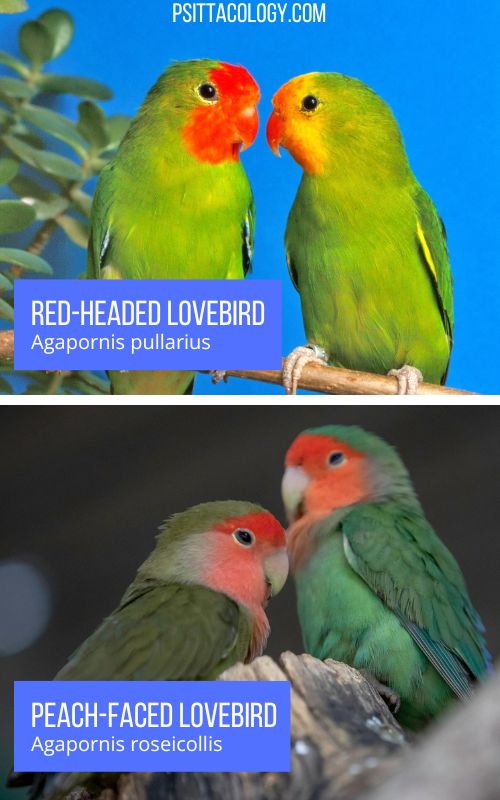
While sharing the general compact body plan and affectionate demeanor implied by the "lovebird" moniker, Agapornis pullarius possesses distinct features that differentiate it from other Agapornis species. It bears a superficial resemblance to the Peach-faced Lovebird (Agapornis roseicollis), a species far more prevalent in aviculture and arguably the most popular lovebird overall. However, a key diagnostic feature lies in the beak color: Agapornis pullarius boasts a bright red beak, contrasting sharply with the beige or horn-colored beak of A. roseicollis. Adult birds typically measure up to 15 cm (6 inches) in length and weigh around 45 grams, making them relatively small parrots. Their lifespan in optimal conditions can reach up to 20 years.
A subtle but discernible sexual dimorphism exists within the species, allowing experienced observers to visually distinguish between males and females. The male’s facial coloration is a more intense, vibrant scarlet, and his beak is a deeper red. In contrast, the female’s face tends to be a less brilliant orange-red, and her beak is a slightly paler shade. This subtle difference is often more pronounced in adult birds.
Two recognized subspecies of the Red-headed Lovebird exist, each with slight variations in coloration or size, though the core features remain consistent:
- Agapornis pullarius pullarius: The nominate subspecies.
- Agapornis pullarius ugandae: Generally found further east, with subtle differences in plumage saturation.
Ecological Role and Dietary Habits
In its natural savannah ecosystem, the Red-headed Lovebird plays a crucial role as a primary consumer, primarily foraging on seeds. Like many parrot species, it is predominantly granivorous, exhibiting a strong preference for grass seeds. This dietary inclination extends to agricultural crops such as millet, which, as previously mentioned, contributes to its classification as a potential crop pest in some regions and fuels human-wildlife conflict.
Beyond grasses, these adaptable lovebirds supplement their diet with a variety of wild fruits whenever available. Figs and guava are among the preferred choices, providing essential vitamins, minerals, and moisture. They also likely consume berries, flower buds, and possibly some insects or larvae, especially during breeding season when protein requirements increase. Their foraging activities, while sometimes clashing with human interests, contribute to seed dispersal, playing a minor but significant role in the regeneration and distribution of certain plant species within their habitat. Understanding their natural diet is paramount for successful captive care, aiming to replicate the nutritional diversity found in the wild.
The Red-Headed Lovebird in Aviculture: A Challenging Endeavor
The Red-headed Lovebird’s status in aviculture stands in stark contrast to its more widely kept relatives. It is an uncommon sight in private collections and zoos, almost exclusively maintained by highly dedicated parrot enthusiasts or specialized breeders who possess extensive experience with sensitive avian species. It is primarily kept as an aviary bird, rather than a conventional pet parrot.

The main obstacle to its widespread popularity and successful captive breeding lies in its exceptionally nervous and stress-prone disposition. Wild-caught specimens, in particular, are notoriously delicate; a sudden loud noise, an unfamiliar presence, or even the boisterous activity of neighboring birds in a shared aviary can induce such profound stress that it can lead to immediate refusal to eat, or even sudden death. This inherent sensitivity makes them incredibly challenging to acclimate to captive environments and prone to a range of stress-related health issues.
Consequently, individuals seeking a "tame" pet parrot that enjoys handling and interaction will find the Red-headed Lovebird unsuitable. These birds are best appreciated for their beauty and natural behaviors observed from a distance, embodying a "look, but don’t touch" philosophy. Any attempt to force interaction or provide an environment that does not cater to their specific psychological needs is likely to result in severe distress and poor welfare outcomes.
Optimizing Captive Environments: Housing, Diet, and Enrichment
For the experienced aviculturist fortunate enough to acquire captive-bred Red-headed Lovebirds – and the emphasis here is on captive-bred, given the ethical and practical difficulties of wild-caught birds – meticulous attention to environmental conditions is paramount.
Housing: These parrots thrive best in a heated aviary, where temperature fluctuations are minimized, and a stable, comfortable environment can be maintained. Due to their nervous temperament and potential for stress from interaction with other species, keeping them solo or in carefully selected, established pairs is generally recommended. If an outdoor aviary is used, it must be secure, predator-proof, and offer ample sheltered areas for retreat.
For indoor housing, a spacious cage is essential to allow for flight and exercise. A minimum width of 80 cm (approximately 30 inches) is advisable, with bar spacing no wider than 1.25 cm (0.5 inches) to prevent escape or injury. The cage should be furnished with a variety of natural wood perches of varying diameters, promoting foot health and exercise. Non-toxic branches from species like willow, apple, or citrus can also serve as enrichment, allowing the birds to chew and strip bark.
Captive Diet: While many traditional Red-headed Lovebird keepers have historically relied on dry or sprouted seed mixes, current veterinary consensus for parrots generally advocates for a high-quality pelleted diet as the nutritional cornerstone. Pellets provide a balanced intake of essential vitamins, minerals, and macronutrients, which can be difficult to achieve with seed-only diets.
A diverse supplementary diet is crucial. This should include a high-quality seed mix (offered in moderation), an abundance of fresh vegetables (especially leafy greens like kale, spinach, and romaine; cruciferous vegetables like broccoli; and root vegetables like carrots), and a small amount of fresh fruits (e.g., berries, melon, apple, in moderation due to sugar content). Cooked grains such as quinoa or brown rice, and select foraged weeds (e.g., dandelion, chickweed, ensuring they are pesticide-free), can further enhance nutritional variety. During breeding periods, an increase in protein sources, such as boiled egg or mealworms, is beneficial for reproductive health and chick development. Access to fresh, clean water at all times is non-negotiable.
Enrichment: As intelligent and active parrots, Red-headed Lovebirds require extensive environmental enrichment to prevent boredom, which can lead to stress-related behaviors like feather plucking or lethargy. However, due to their sensitive nature, new items must be introduced gradually and cautiously to avoid startling them.
Essential enrichment items include:
- Chew Toys: Untreated natural wood blocks, branches, and paper-based shreddable toys satisfy their natural urge to chew and maintain beak health.
- Foraging Opportunities: Hiding food in foraging toys or scattered within their enclosure encourages natural problem-solving behaviors.
- Natural Perches: Providing a variety of natural branches of different textures and diameters helps keep their feet healthy and exercised.
- Bathing Opportunities: A shallow dish of water or a fine misting can encourage bathing, which is vital for feather maintenance.
- Swings and Ladders: These provide opportunities for physical activity and exploration.
Noise Level: Compared to many other parrot species, the Red-headed Lovebird is generally considered relatively quiet. However, like all psittacines, it possesses the capacity for shrill calls, particularly when alarmed or seeking attention. Their calls, while not as deafening as those of larger parrots, can still be quite piercing. Audio recordings of their vocalizations, such as those available on platforms like Xeno-Canto, provide valuable insight into their typical sounds.
Reproductive Challenges and Successful Strategies
Reproduction in the wild for Red-headed Lovebirds is intrinsically linked to seasonal cycles, typically occurring during the rainy season when food resources are most abundant. A unique aspect of their breeding biology is their nesting preference: they primarily utilize arboreal (tree-dwelling) termite or ant nests. The female meticulously burrows into these robust structures, excavating a cavity that she then reinforces with plant materials, such as grass leaves, to create a secure nesting chamber. While termite nests are preferred, they are also opportunistic and may occasionally use ground nests or natural tree hollows excavated by woodpeckers. A clutch typically consists of up to six eggs.
In captivity, this distinctive nesting behavior, coupled with the species’ inherent nervousness, presents significant challenges for successful breeding. Replicating the precise conditions of a termite nest in an aviary environment is notoriously difficult. However, dedicated enthusiasts have made breakthroughs. Research and practical experience, as exemplified by breeders like Dominique Veeckmans, have demonstrated that specialized nest boxes constructed from cork can effectively mimic the texture and insulative properties of natural termite mounds, leading to successful breeding outcomes. These innovations underscore the commitment required to propagate this delicate species in human care.
Broader Implications and Future Outlook
The Red-headed Lovebird stands as a poignant example of a species that, while not facing immediate extinction, is navigating a complex web of environmental pressures and avicultural challenges. Its captivating beauty belies a fragile disposition, making it a demanding subject for captive care.
The implications for its future are multifaceted. Continued habitat loss and human-wildlife conflict pose ongoing threats to wild populations, necessitating robust conservation strategies that address land use, promote sustainable agriculture, and mitigate conflict. For the avicultural community, the Red-headed Lovebird serves as a reminder of the ethical imperative to prioritize captive-bred birds, minimizing the demand for wild-caught individuals that further deplete natural stocks. Successful captive breeding programs, though challenging, offer a vital safeguard and a source of genetic diversity should wild populations continue to decline.
Ultimately, the story of Agapornis pullarius is one of delicate balance—between its wild existence and human encroachment, between its natural beauty and its intrinsic fragility. Understanding and respecting its unique needs, both in its natural African habitats and in carefully managed captive environments, is crucial for ensuring the long-term survival and appreciation of this remarkable little parrot.

