



The fundamental challenge of photography lies in its inherent contradiction: it is a two-dimensional medium tasked with representing a three-dimensional world. While a camera sensor or a piece of film is a flat surface, the human brain is wired to perceive depth, volume, and distance. To bridge this gap, photographers utilize the principles of perspective—a term derived from the Latin word perspicere, meaning "to see through" or "to perceive clearly." Beyond its etymological roots, perspective serves as the primary bridge between the viewer’s eye and the spatial reality of the captured scene. In the modern era of high-resolution digital imaging and computational photography, the mastery of both true and illusory perspective remains the defining characteristic of professional visual storytelling.

The Dual Nature of Perspective: True vs. Illusory
In the realm of optics and visual arts, perspective is categorized into two distinct yet overlapping domains: true perspective and illusory perspective. True perspective is dictated by geometry and the physical laws of light. It refers strictly to the spatial relationship between objects based on the camera’s physical position in three-dimensional space. If a photographer stands in a specific spot, the relative sizes and angles of the objects in the frame are fixed by that location. No change in lens or focal length can alter these fundamental geometric relationships; only moving the camera—changing the "station point"—can modify true perspective.
Conversely, illusory perspective involves the manipulation of visual cues to trick the brain into perceiving more or less depth than the physical geometry might suggest. This is achieved through the strategic use of focal lengths, lighting, color contrast, and atmospheric conditions. While true perspective is a matter of physics, illusory perspective is a matter of psychology. By understanding how these two forces interact, photographers can adjust the perceived "depth" of an image, either expanding a landscape to look infinite or compressing a city street to look crowded and claustrophobic.

The Evolution of Spatial Representation
The pursuit of perspective is not a modern phenomenon but a continuation of a centuries-old artistic evolution. Prior to the Renaissance, much of human art was "flat," with size determined by the importance of a subject rather than its distance from the viewer. The breakthrough occurred in the early 15th century when Italian architect Filippo Brunelleschi demonstrated the principles of linear perspective. This mathematical approach allowed artists to create a "vanishing point" on a horizon line, where all parallel lines would eventually converge.
Photography inherited these rules and automated them. In the 19th and early 20th centuries, pioneers like Ansel Adams and Henri Cartier-Bresson refined these concepts, using foreground elements and the "Rule of Thirds" to guide the viewer’s eye through the frame. Today, the conversation has shifted toward how technology influences these classic rules. With the advent of drone photography and ultra-wide-angle mobile lenses, the ability to manipulate perspective has become more accessible, yet the underlying principles of geometry remain unchanged.

The Geometry of Vision: Camera Angles and Height
The height and angle of a camera are the most direct tools for influencing true perspective. These choices carry significant psychological weight, often dictating how a viewer feels about the subject.
Low-Angle and Worm’s-Eye View
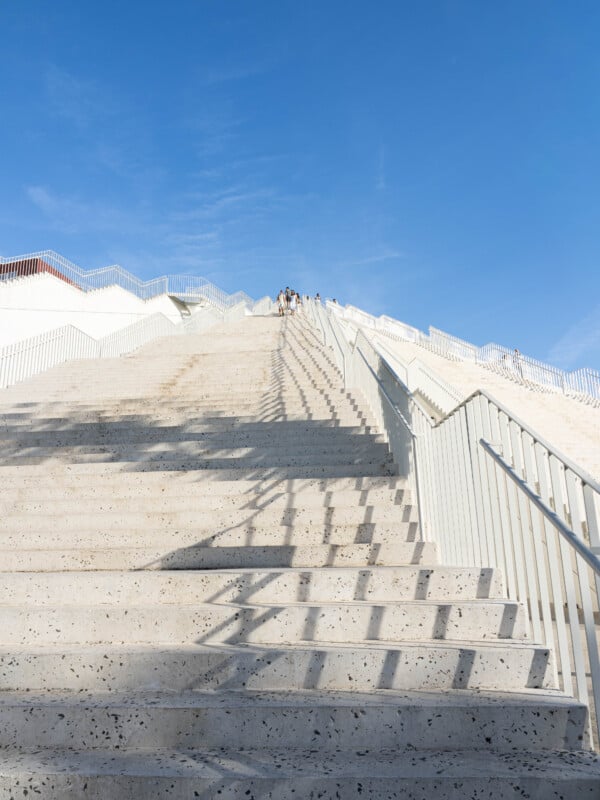
When a camera is positioned low to the ground and tilted upward, it creates "converging verticals." Buildings, trees, or people appear to loom over the viewer, gaining a sense of power, grandeur, or even intimidation. In political and editorial photography, this technique is frequently used to make subjects appear more "larger than life." From a geometric standpoint, a low vantage point causes parallel lines to converge at an obtuse angle, making the horizon appear closer and the foreground elements more dominant.
High-Angle and Bird’s-Eye View
Conversely, positioning the camera high above the subject and looking down creates a sense of vulnerability or insignificance. From a high vantage point, the horizon line moves further away, and the angle of convergence for parallel lines becomes more acute. In the extreme case of drone photography looking straight down (nadir), the vanishing point is lost entirely. The result is a flattening of the image, where the world is transformed into a two-dimensional map of patterns and textures.
The Role of Focal Length in Spatial Distortion
A common misconception in photography is that focal length changes perspective. In reality, focal length only changes the "crop" or field of view. However, focal length indirectly influences perspective because it forces the photographer to change their physical distance from the subject to maintain the desired framing.
Wide-Angle Lenses and Expansion
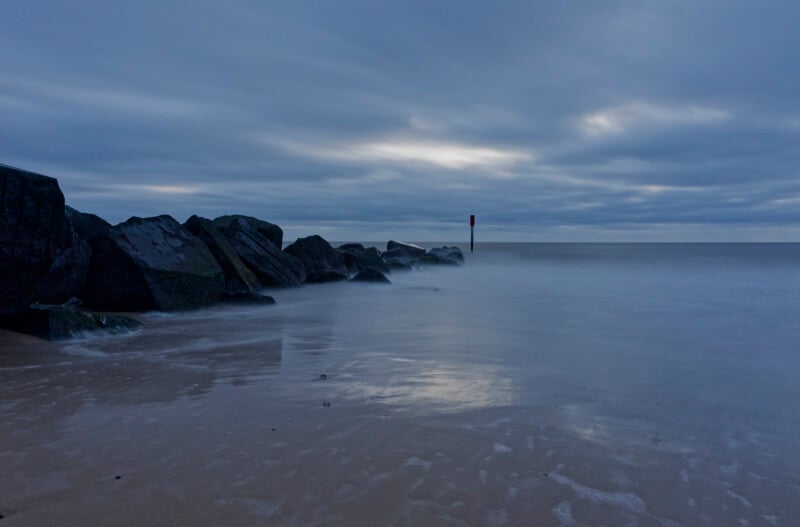
Wide-angle lenses (typically 14mm to 35mm) are the preferred tools for landscape photographers because they emphasize the distance between the foreground and the background. By allowing the photographer to get physically close to a foreground object—such as a rock on a shoreline or a flower in a field—the wide-angle lens exaggerates the size of that object relative to the distant background. This creates a powerful illusion of depth, pulling the viewer into the scene.
Telephoto Lenses and Compression
Telephoto lenses (85mm to 400mm and beyond) have the opposite effect, known as "lens compression." By standing far away from a subject and zooming in, the photographer minimizes the relative difference in distance between the subject and the background. This makes distant objects, like mountains or city skylines, appear much larger and closer to the foreground subject than they are in reality. This flattening effect is often used in portraiture to create a flattering look, as it prevents the "nose enlargement" effect common with wide-angle lenses used at close range.
Compositional Layering: Foreground, Middle Ground, and Background
To successfully translate 3D space onto a 2D surface, photographers often employ the concept of "layering." An image with a distinct foreground, middle ground, and background provides the brain with multiple points of reference to calculate distance.
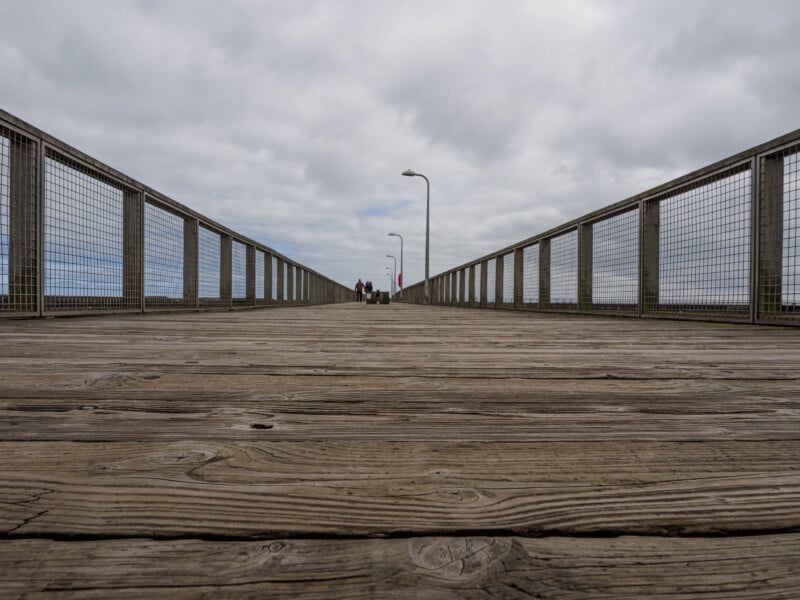
- Leading Lines: Roads, fences, or rivers that start in the foreground and lead toward the horizon act as visual paths. They guide the eye through the composition and establish a clear sense of journey and scale.
- Overlapping and Occlusion: When one object partially hides another, the brain immediately understands their relative positions in space. This "occlusion" is one of the strongest cues for depth.
- Recognizable Scale: Including an object of known size—such as a person, a car, or a house—in a vast landscape provides a "scale reference." Without this, the viewer may struggle to perceive the true depth and magnitude of a scene.
Atmospheric and Chromatic Perspective
Depth is not only a matter of lines and angles; it is also a matter of light and color. Atmospheric perspective, also known as aerial perspective, refers to how the atmosphere affects the appearance of distant objects. Because of Rayleigh scattering—the same phenomenon that makes the sky blue—light traveling through more air becomes more scattered.

As a result, distant mountains or buildings appear hazier, lighter in tone, and less saturated than objects in the foreground. Photographers can enhance this effect in post-processing by reducing the contrast of the background. Furthermore, color theory plays a vital role: warm colors (reds, oranges, yellows) are perceived by the human eye as "advancing" or coming closer, while cool colors (blues, greens, purples) are perceived as "receding." By placing a warm-toned subject against a cool-toned background, a photographer can create a striking three-dimensional pop.
The Impact of Modern Technology and AI
The photography industry is currently undergoing a shift as computational photography begins to simulate perspective and depth through software. Modern smartphones use dual lenses or LiDAR (Light Detection and Ranging) to create "depth maps," allowing them to artificially blur backgrounds (the "bokeh" effect) and simulate a shallow depth of field.

While these tools are becoming increasingly sophisticated, they still rely on the foundational rules of perspective. Industry experts suggest that while AI can mimic the look of a telephoto lens or a wide-angle expansion, it cannot yet perfectly replicate the complex geometric interactions of light in a physical space. For professional photographers, the ability to manually control these elements remains a critical skill that separates artistic expression from automated snapshots.
Psychological Implications and Narrative Power
Ultimately, perspective is an emotional tool. A photograph is more than a record of light; it is an interpretation of experience. A wide, deep perspective can evoke feelings of freedom, solitude, or the "sublime"—a term used by 18th-century philosophers to describe the mix of awe and terror felt when facing the vastness of nature. In contrast, a compressed, shallow perspective can create a sense of intimacy, focus, or even claustrophobia.

By consciously choosing how to represent depth, a photographer directs the viewer’s attention and shapes the narrative of the image. Whether it is the towering verticality of a skyscraper or the intimate closeness of a macro shot, the manipulation of the 2D plane to represent 3D space is the essence of the craft.
Conclusion
Perspective in photography is a multifaceted discipline that combines the rigid laws of physics with the fluid nature of human perception. It is the silent language of the image, providing the structure upon which light and color are draped. By mastering the relationship between camera position, focal length, and environmental cues, photographers move beyond the limitations of their equipment. They gain the ability to transform a flat, rectangular frame into a window—a portal that allows the viewer to step into another world and perceive its depth, its scale, and its soul. As technology continues to evolve, these fundamental principles will remain the bedrock of visual communication, ensuring that the art of "seeing through" continues to captivate the human imagination.

