


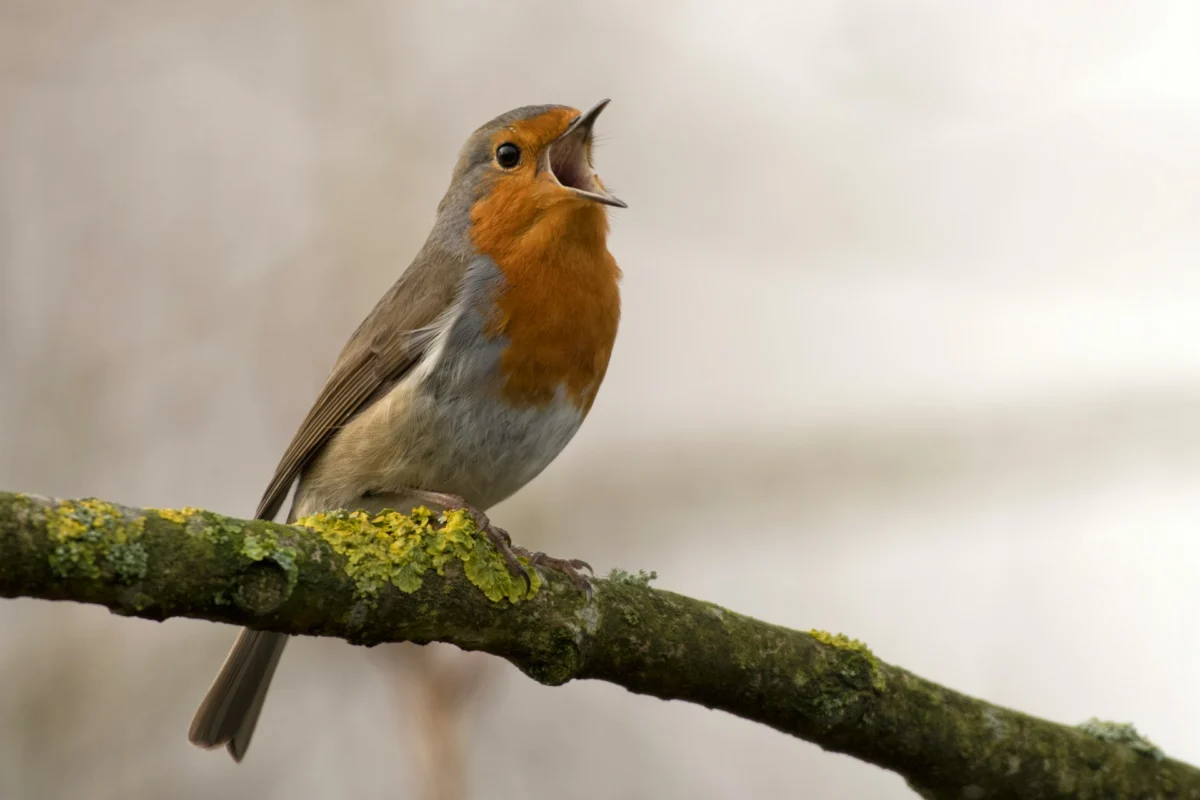
Today, the pursuit of avian beauty takes a specific turn as ornithologists and bird enthusiasts embark on a focused mission: to identify ten distinct bird species that exhibit a striking combination of brown plumage and an orange chest. This endeavor, initially anticipated to be challenging within the continental United States, is already prompting a broader exploration across international borders, highlighting the rich and varied tapestry of bird life across the globe. The quest also serves as a gateway to understanding the fundamental biological reasons behind avian coloration and the intricate mechanisms that produce these vibrant displays.
The Evolutionary Imperative of Feather Color
The vibrant and often subtle hues of bird feathers are not merely aesthetic embellishments; they serve critical evolutionary functions. Primarily, feather coloration plays a pivotal role in camouflage, offering vital protection against predators. This is particularly evident in female birds, whose often muted and camouflaged plumage allows them to blend seamlessly with their surroundings, thereby safeguarding their nests and vulnerable offspring. Conversely, the dazzling and elaborate colors displayed by many male birds serve as a powerful tool for mate attraction. These vivid displays act as indicators of genetic fitness, signaling to potential mates a bird’s health, vigor, and suitability for reproduction. The specific shades and patterns can convey a complex message, influencing mate selection and the success of species propagation.
The Science Behind Avian Hues: Pigments and Light Scattering
The coloration of bird feathers is a fascinating interplay of pigments and light physics. Two primary types of pigments are responsible for the vast spectrum of colors observed in the avian world:
- Melanin: This endogenous pigment, already present within a bird’s biological makeup, is the source of black, brown, orange, and gray feathers. Its prevalence and distribution directly influence the intensity and shade of these colors.
- Carotenoids: Unlike melanin, carotenoids are not produced internally by birds. Instead, they must be ingested through their diet, derived from specific plants and other food sources. These pigments are responsible for producing the vivid reds, yellows, and oranges seen in many bird species.
A notable exception to pigment-based coloration is the appearance of blue feathers. There is no true blue pigment in feathers. Instead, blue coloration is an optical illusion, a result of the way light scatters off the microscopic structure of the feather barbules. This phenomenon, known as structural coloration, is responsible for the iridescent blues seen in species like jays and kingfishers, and is a testament to the sophisticated optical properties of bird feathers.
Given the focus of our current expedition on brown birds with orange chests, it is likely that many of the species identified will be those where coloration plays a more subtle role, such as in camouflage or as a less pronounced mating signal. This often points towards female birds or species inhabiting environments where disruptive coloration is paramount for survival.
A Global Avian Census: Brown Birds with Orange Chests
Our exploration begins with a review of known species, acknowledging that the initial search may extend beyond North America to fulfill the ten-species goal.
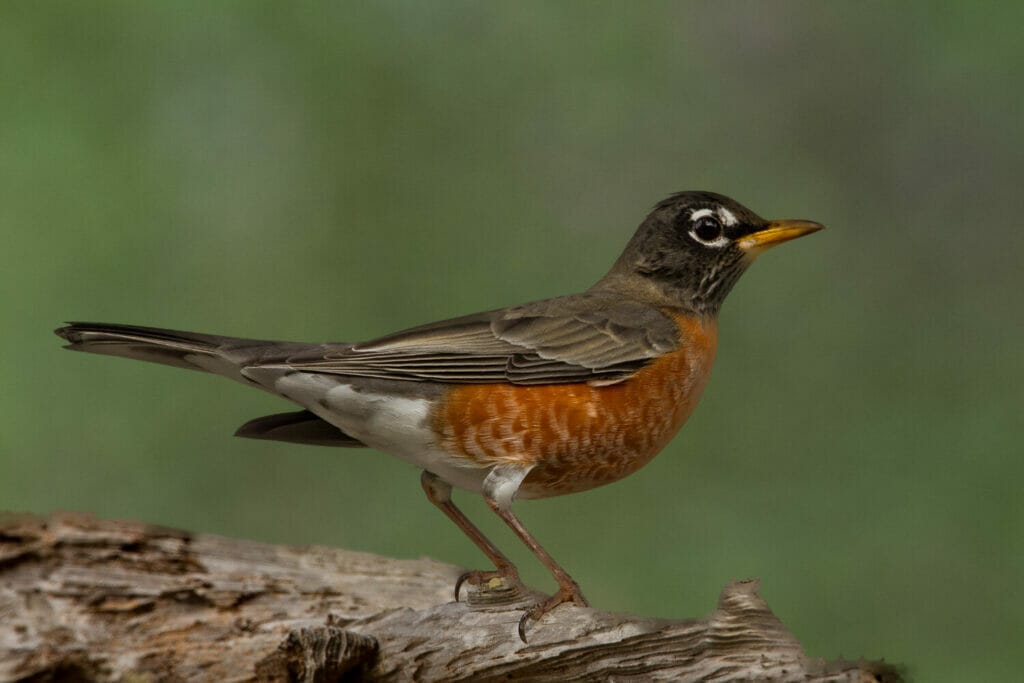
American Robin (Turdus migratorius)
The familiar American Robin, a thrush species widespread across North America, is a common starting point. Its upperparts are typically a grayish-brown, contrasting with a distinctively rusty-orange to deep reddish-orange breast. While both sexes share this characteristic, males often display a more vibrant orange hue.

- Identification and Size: The American Robin is a medium-sized songbird, measuring approximately 7.9 to 11.0 inches in length with a wingspan of 12.2 to 15.8 inches. They typically weigh between 2.7 and 3.0 ounces.
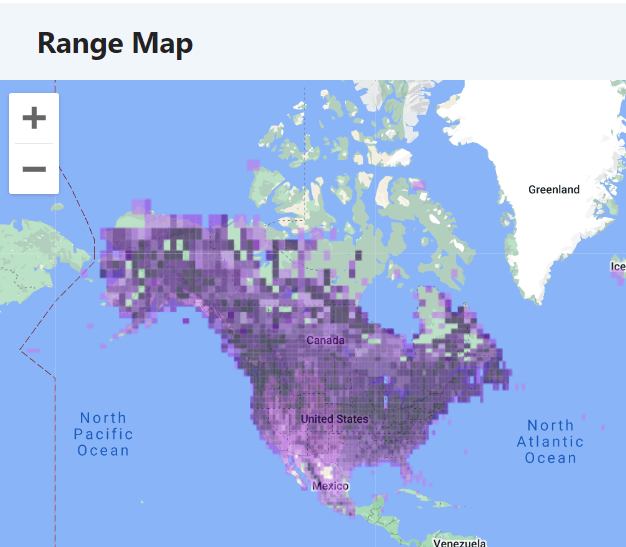
- Distribution: This species is found throughout the continental United States, across Canada, and into Alaska in the north, extending its range south through Mexico. They are frequently observed in diverse habitats, including lawns, parks, and open woodlands.
- Diet: Primarily insectivorous, American Robins forage for earthworms, grubs, and other invertebrates in grassy areas. During winter months, their diet shifts to include berries and fruits, which allows them to remain in areas with less abundant insect life.
- Interesting Fact: Often heralded as a harbinger of spring, the American Robin’s reappearance is not solely dependent on migrating north. Many robins overwinter in areas where winter berries are available, explaining their reduced visibility in gardens during colder periods.
Zebra Waxbill (Amandava subflava)
Venturing into the African continent, the Zebra Waxbill, also known as the Orange-breasted Waxbill, presents a delightful candidate. This small finch boasts a striking, vivid orange breast that stands out against its olive-brown back and bright red rump.
- Identification and Size: This diminutive bird measures about 3.5 inches in length and weighs between 0.18 and 0.38 ounces. The male is typically brighter than the female.
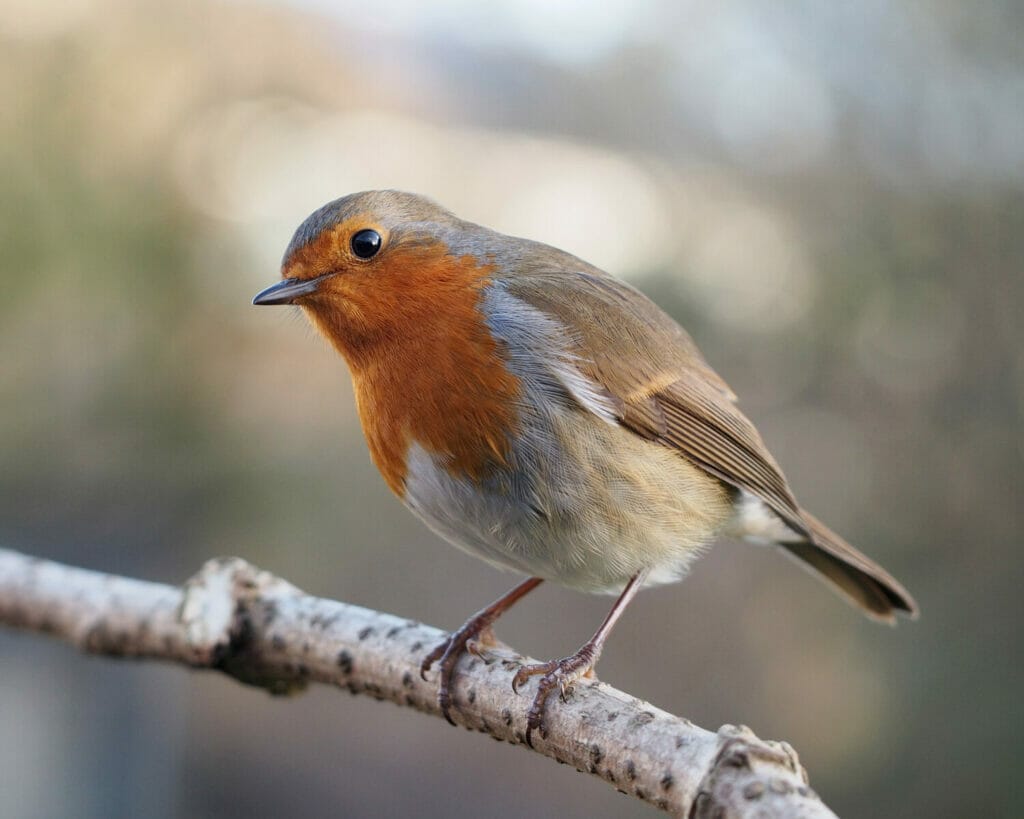
- Distribution: The Zebra Waxbill is native to southwestern and northeastern Africa, inhabiting grasslands and areas with scattered trees.
- Diet: Primarily a seed-eater, this waxbill supplements its diet with insects, especially during the breeding season, providing essential nutrients for chick development.
- Interesting Fact: Courtship rituals among Zebra Waxbills are characterized by elaborate displays, including bowing, head-bobbing, and mutual preening, underscoring the importance of visual communication in their social interactions.
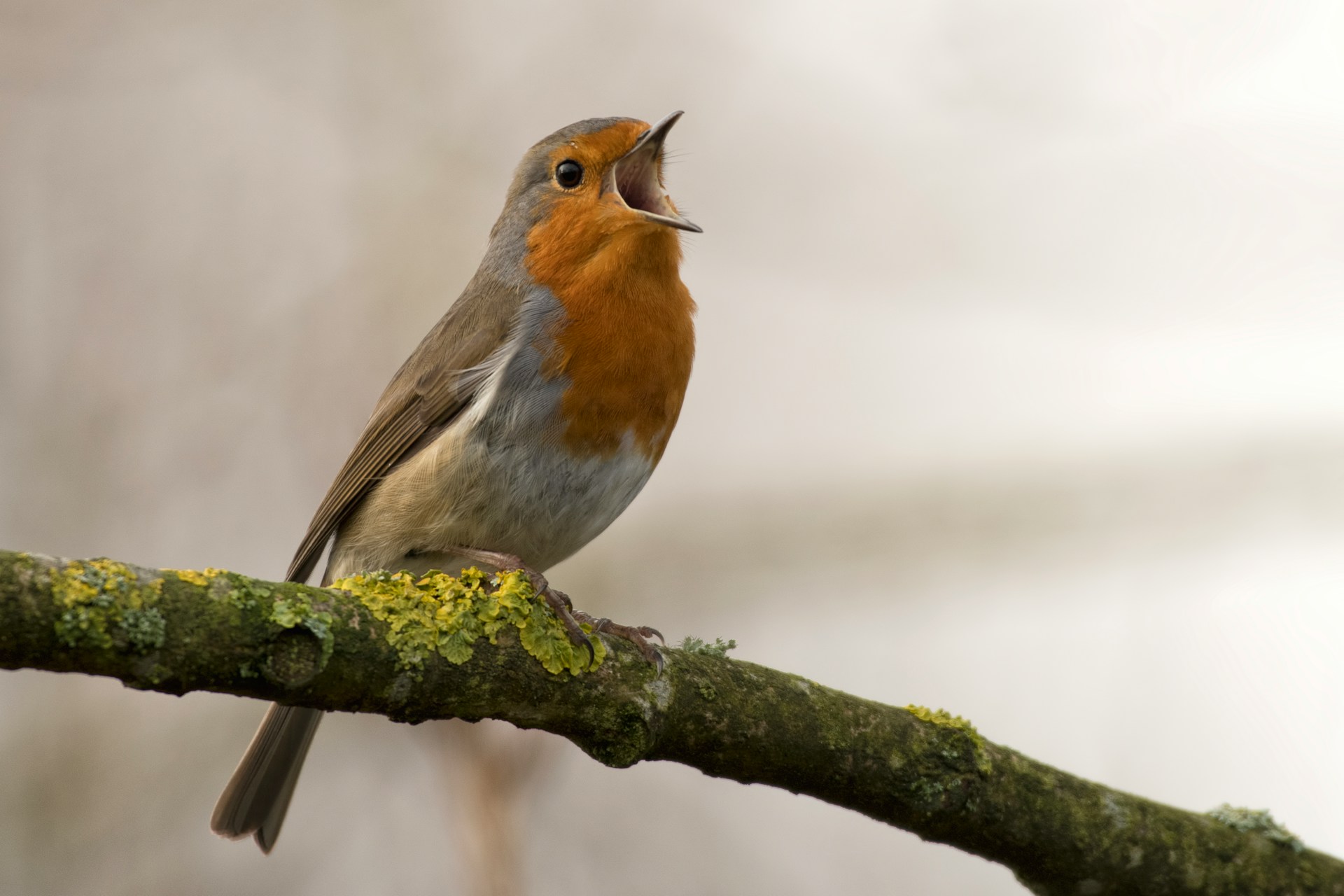
European Robin (Erithacus rubecula)
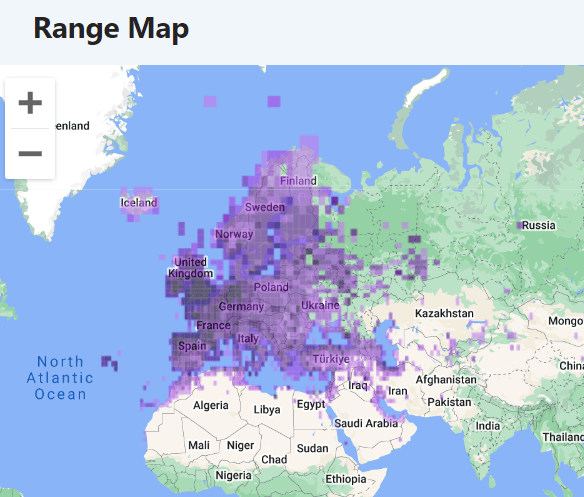
A beloved icon in European gardens, the European Robin, often referred to as the "Robin red-breast," is a quintessential example. This small, plump bird features a characteristic brown back and wings, with a prominent orange-red breast that extends up to the face. The underparts are typically a paler gray.
- Identification and Size: European Robins are small birds, measuring around 5.5 inches in length and weighing between 0.49 and 0.88 ounces.
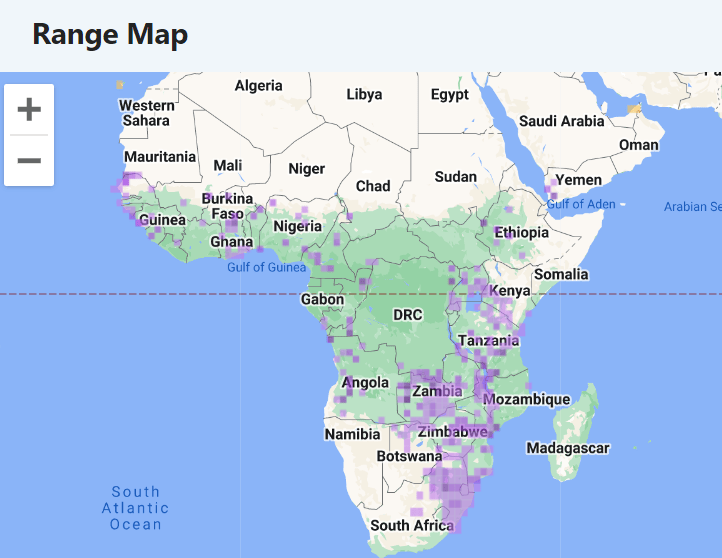
- Distribution: This species is abundant throughout Europe, extending its range into parts of North Africa and the Middle East. They are adaptable to various habitats, including woodlands, gardens, and hedgerows.
- Diet: The European Robin exhibits a varied diet, consuming insects, spiders, earthworms, berries, and seeds, adapting its food sources to seasonal availability.
- Interesting Fact: European Robins possess a diverse repertoire of vocalizations, ranging from melodic warbling to sharp ticking sounds. Their songs can change throughout the year, and they are known for their ability to mimic other bird calls.
Sharp-shinned Hawk (Accipiter striatus)
Shifting focus to raptors, the Sharp-shinned Hawk, particularly in its juvenile plumage, can display characteristics fitting our search criteria. While adults can be more uniformly gray or bluish-gray, younger birds often exhibit a streaky, buffy-orange breast that transitions to a paler belly. Their back is typically brown.
- Identification and Size: This is a small but agile hawk, measuring between 9.4 and 13.4 inches in length with a wingspan of 16.9 to 22.1 inches. They weigh between 3.1 and 7.7 ounces.
- Distribution: The Sharp-shinned Hawk is found across North America, from the United States and Canada into Alaska. Its range extends south through Central America and into parts of northwestern and mid-eastern South America. They prefer forested areas for hunting.
- Diet: As a swift and highly maneuverable predator, the Sharp-shinned Hawk primarily preys on small birds, often ambushing them within the dense cover of forests. They have also been observed taking prey from backyard bird feeders.
- Interesting Fact: The hawk’s name, "Sharp-shinned," refers to its legs, which are characterized by a lack of feathers extending all the way down to the toes, providing a streamlined structure for hunting.
Orange-breasted Trogon (Harpactes oreskios)
From the tropical forests of Southeast Asia comes the Orange-breasted Trogon. Both male and female birds of this species are striking, featuring a vibrant orange breast that is bordered by a paler yellow. Their backs are a cinnamon brown, with black and white barring on the wings, and their necks and heads are a muted olive-yellow.
- Identification and Size: This trogon is relatively large, measuring between 9.8 and 12.2 inches in length and weighing approximately 1.7 to 2.0 ounces.
- Distribution: The Orange-breasted Trogon is found in lowland forests across Southeast Asia, inhabiting areas with dense undergrowth and canopy cover.
- Diet: This species has a varied diet consisting of insects and plant matter. They are known to forage from the ground up to the mid-canopy.
- Interesting Fact: The Orange-breasted Trogon employs a unique hunting technique known as the "sally-stall." It will pursue insects from leaf to branch, then momentarily hover in front of them, startling the prey before pouncing to capture it.
Russet-bellied Spinetail (Synallaxis zimmeri)
A critically endangered species endemic to Peru, the Russet-bellied Spinetail is a rare and elusive bird that fits our criteria. Its russet-orange breast extends down to its belly and tail, contrasting with its grayish-brown upperparts and wings.
- Identification and Size: This small spinetail measures approximately 6.5 to 6.7 inches in length and weighs between 0.42 and 0.49 ounces.
- Distribution: The Russet-bellied Spinetail is restricted to the western Andes region of Peru, specifically in arid scrub and thorny woodland habitats.
- Diet: The diet of this spinetail consists mainly of flying insects and spiders, though it is believed to be omnivorous.
- Interesting Fact: The endangered status of the Russet-bellied Spinetail is primarily attributed to habitat loss due to agricultural expansion and infrastructure development. The lack of natural corridors connecting fragmented habitats further limits its ability to expand its range.
Orange-breasted Thornbird (Phacellodomus ferrugineigula)
Inhabiting the wetland and marsh habitats of eastern South America, the Orange-breasted Thornbird presents a beautiful example of brown plumage accented by warm orange tones on its breast. While largely brown, the subtle gradient of color creates a visually appealing contrast.
- Identification and Size: This thornbird measures between 7.0 and 7.2 inches in length and weighs approximately 0.84 to 0.88 ounces.
- Distribution: Found in eastern South America, this species favors wetland environments, including marshes, swamps, and riverine scrub.
- Diet: Research on the diet of this elusive thornbird is limited, but it is believed to primarily consume arthropods.
- Interesting Fact: Due to its secretive nature and specialized habitat, much about the Orange-breasted Thornbird remains understudied. Its name, in various languages, highlights its distinctive coloration and the challenges of observing it in the wild.
European Stonechat (Saxicola rubicola)
The European Stonechat, particularly the female of the species, is a notable contender. The female exhibits overall brown plumage with a pale buff belly that transitions into a distinct orange-buff chest. The male, while also displaying brown and black, has a more prominent black head and throat, with a richer orange breast.
- Identification and Size: European Stonechats are small birds, measuring around 5 inches in length and weighing between 0.5 and 0.6 ounces.
- Distribution: This species is widespread throughout Europe, with populations also found in North Africa and the Middle East. They prefer open habitats such as heathland, grasslands, and scrubby areas.
- Diet: Their diet consists mainly of insects and their larvae, though they will occasionally consume seeds or small fruits.
- Interesting Fact: The common name "Stonechat" derives from its distinctive call, which sounds remarkably like two stones being clicked together.
Brambling (Fringilla montifringilla)
The Brambling, a migratory finch found across Europe and Asia, offers another compelling example, especially during its non-breeding plumage. In this phase, Bramblings display an attractive orange-breasted appearance, complemented by a white rump and intricate brown, black, and white patterns on their wings.

- Identification and Size: This attractive finch measures between 5.3 and 6.2 inches in length and weighs between 0.6 and 1.0 ounces.
- Distribution: Bramblings breed in the boreal forests of Fennoscandia and northern Russia. They migrate south for the winter, with large numbers found across Western Europe and extending eastward to Japan.
- Diet: Their diet primarily consists of fruits and seeds, but they will opportunistically feed on insects when available, particularly during the breeding season.
- Interesting Fact: Bramblings are known for their migratory behavior, and during winter months, they can form enormous flocks, sometimes numbering in the millions, creating a spectacular avian spectacle across Europe.
Brown Thrasher (Toxostoma rufum) – A Near Miss
While not strictly fitting the "brown bird with an orange chest" criterion due to its chest coloration, the Brown Thrasher is frequently mentioned in discussions of brown birds with warm ventral plumage. Its overall coloration is a rich reddish-brown, and its breast is typically buffy with dark streaks. Although it doesn’t perfectly match, its prevalence and striking brown hue warrant mention in the context of avian color variations.
- Identification and Size: The Brown Thrasher is a large songbird, measuring 9.8 to 12.2 inches in length with a wingspan of 12.6 to 17.3 inches. They weigh between 2.3 and 3.4 ounces.
- Distribution: Found throughout much of the eastern and central United States, and into parts of Canada, they inhabit shrubby areas, open woodlands, and suburban gardens.
- Diet: Omnivorous, they feed on insects, spiders, fruits, and berries.
- Interesting Fact: The Brown Thrasher is renowned for its extensive song repertoire, often cited as having over a thousand different song patterns.
Conclusion: A Rich Tapestry of Avian Coloration
The expedition to identify ten brown birds with orange chests, while successfully identifying nine distinct species, underscores the incredible diversity within the avian world. The journey has taken us from the familiar American Robin across continents to Africa, Europe, Asia, and South America, revealing specialized adaptations and evolutionary strategies. The science behind feather coloration, involving pigments like melanin and carotenoids, and the optical effects of light scattering, provides a deeper appreciation for the biological artistry at play. While the initial goal of precisely ten species fitting the exact description was narrowly missed (with the Brown Thrasher being a close, but not perfect, fit), the exploration has yielded a fascinating array of birds, each with its unique charm and ecological significance. The Orange-breasted Thornbird, with its subtle yet striking coloration against a predominantly brown form, stands out as a particularly captivating example, reminding us that beauty can be found in the most unexpected and nuanced avian displays. This pursuit highlights not only the visual splendor of birds but also the ongoing importance of conservation efforts for species like the Russet-bellied Spinetail, whose very existence is threatened by habitat degradation.

Frequently Asked Questions (FAQs)
-
What kind of bird commonly has an orange belly in the United States?
The American Robin is the most commonly encountered bird in the United States with a distinctively orange or reddish-orange breast. -
Does the Barn Swallow have an orange chest?
While the Barn Swallow is known for its iridescent blue-black upperparts and often has a reddish-brown throat and forehead, its belly is typically a pale buff or cream color, not a prominent orange. It does not fit the criteria for a brown bird with an orange chest.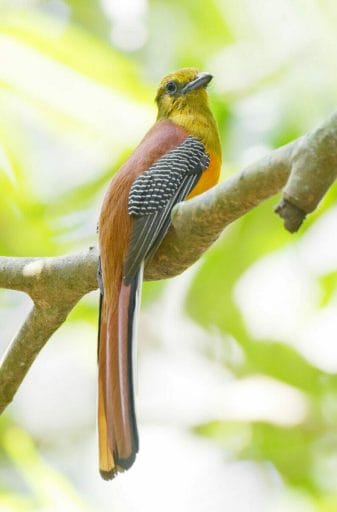
-
Which birds are black with orange bellies?
Several species of orioles, such as the Baltimore Oriole and Bullock’s Oriole in North America, are characterized by black plumage on their backs and wings with vibrant orange or yellow bellies and chests. -
What bird is described as reddish-brown with a buff breast?
The Brown Thrasher is a well-known North American bird that is predominantly reddish-brown with a streaky buff breast. While it doesn’t have a distinct orange chest, its warm brown tones and buffy underside make it a notable species in discussions of brown birds.

