


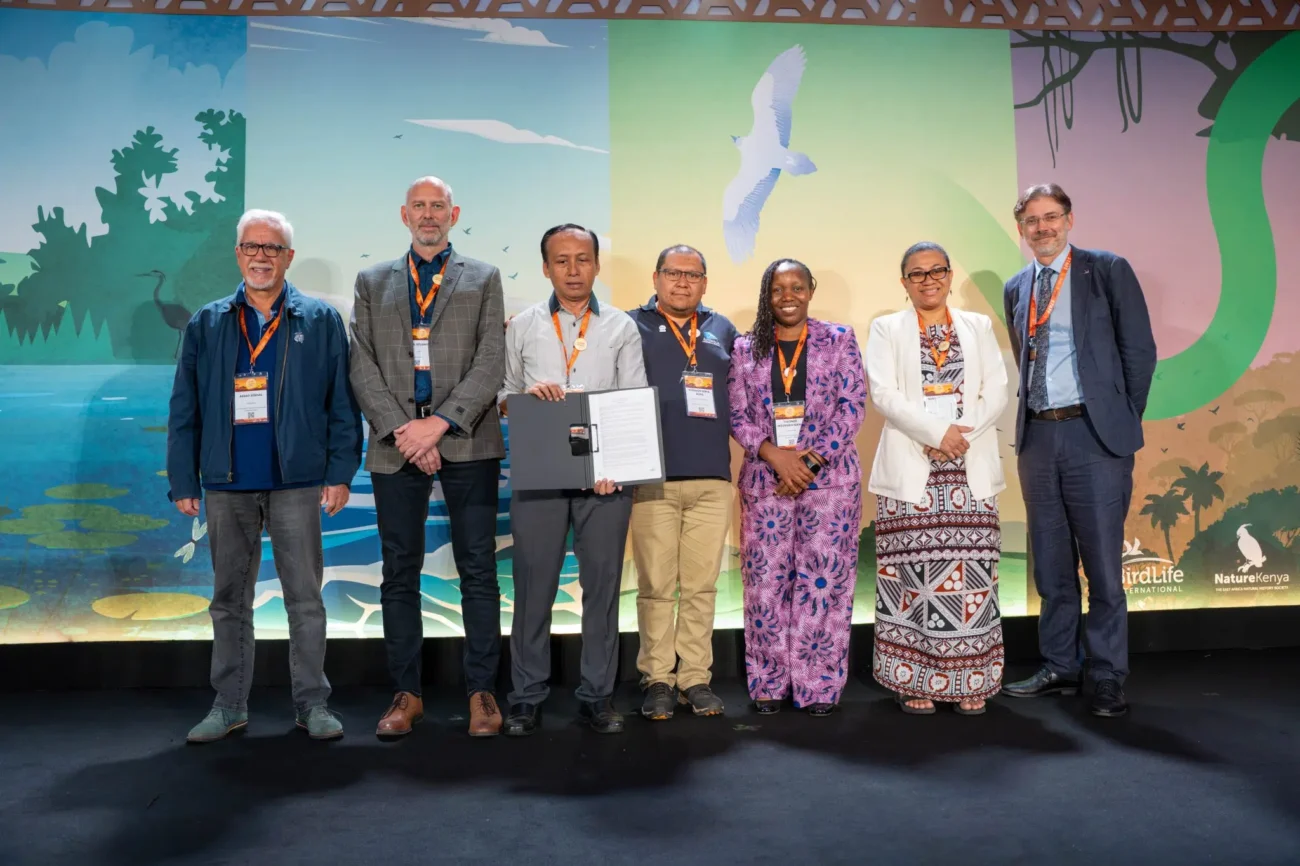
The international conservation community has concluded a landmark week in Nairobi, Kenya, marking a significant turning point in the global effort to protect migratory birds. From September 7 to 12, 2026, the Safari Park Hotel served as the hub for the Global Partnership Meeting and the subsequent Global Flyways Summit. The gathering, which brought together 125 partner organizations from across the globe, culminated in the signing of the Nairobi Flyways Declaration, a high-level commitment to treat migratory corridors as unified ecological systems rather than fragmented territories.

A Confluence of Science and Diplomacy
The event served a dual purpose: it functioned as the quadrennial governance meeting for the BirdLife International partnership and as a high-level forum to address the crisis facing the world’s migratory species. The importance of the location—Kenya, a vital nexus on the African-Eurasian Flyway—was highlighted by the presence of high-level government officials, including the Kenyan Cabinet Secretary for Tourism and Wildlife, Hon. Rebecca Miano, and Her Imperial Highness Princess Takamado, who has served as the organization’s Honorary President for over two decades.

The summit was anchored by the release of the sixth edition of the State of the World’s Birds report. The document serves as a sobering diagnostic of planetary health. Data presented by Dr. Stuart Butchart, Chief Scientist at BirdLife International, indicates that 45% of the 1,843 migratory bird species assessed are currently in decline. Perhaps most alarmingly, one in nine species—totaling 200 species—is threatened with extinction, with 32 classified as Critically Endangered. The report also highlights that 58% of the 1,099 key biodiversity sites monitored over the past decade are in poor or very poor condition, underscoring the urgency of the discussions held in Nairobi.

Chronology of the Week
The proceedings opened on September 7 with a formal welcome from the host nation. The subsequent days were structured to balance governance with technical workshops and high-level strategy sessions.

On Wednesday, the tone shifted from formal discourse to collaborative innovation with the premiere of the Global Birdsong Initiative. By weaving together audio recordings of bird species submitted by partners from more than 100 countries, producers Tim Arinaitwe and Axel Wild created a rhythmic, Afrobeat-infused composition. This artistic project served as a metaphor for the summit’s primary message: the interconnectedness of global ecosystems.

Thursday was dedicated to thematic working groups, covering complex issues ranging from the integration of Artificial Intelligence in biodiversity monitoring to the implementation of the High Seas Treaty and the management of grasslands. The day was punctuated by "60 Seconds for Conservation," a rapid-fire session where partners shared field experiences, highlighting both the successes and the profound anxieties of those working on the front lines of environmental protection.

The summit concluded on Friday with a shift toward external outreach and financial mobilization. The launch of the Nairobi Flyways Declaration provided the legal and political framework for future cooperation, while the unveiling of the Flyways Nature Bond Framework offered a tangible financial mechanism for conservation.

Financial Innovation for Biodiversity
One of the most consequential outcomes of the summit was the announcement of the Flyways Nature Bond Framework. Developed in collaboration with the National Audubon Society and the Development Bank of Latin America and the Caribbean (CAF), the framework introduces a rigorous methodology for evaluating the environmental impact of development projects.

By embedding bird science into the initial stages of project financing, the framework aims to ensure that infrastructure development does not come at the cost of migratory routes. This marks a departure from traditional "mitigation after the fact" strategies, moving instead toward a model where ecological health is a prerequisite for financial approval. This move is supported by a $10 million commitment from the Isdell Family Foundation, which established an endowment fund in memory of the late Pamela Isdell, specifically dedicated to strengthening grassroots leadership and vulture conservation across Africa.

The Nairobi Flyways Declaration: A Call to Action
The Nairobi Flyways Declaration represents the summit’s most significant political milestone. Signed by governments, development banks, NGOs, and indigenous representatives, the document establishes four core pillars for international action:

- Valuation: Recognizing the economic and intrinsic worth of healthy flyways.
- Cooperation: Strengthening cross-border and cross-sectoral governance.
- Implementation: Translating international climate and biodiversity commitments into national-level policy.
- Funding: Securing immediate, sustained capital for the protection of key migratory sites.
The declaration acknowledges that because migratory birds do not recognize national borders, the policies meant to protect them cannot afford to either. As signatories continue to add their names to the document, it is becoming a central point of reference for global environmental negotiations, particularly as countries attempt to align national efforts with the goals of the Kunming-Montreal Global Biodiversity Framework.

Broader Implications and Future Outlook
The implications of the Nairobi summit extend far beyond the ornithological community. Migratory birds serve as "sentinels" of planetary health; their population trends are often the first indicators of broader ecosystem collapse. The data presented in Nairobi confirms that the pressures causing avian declines—habitat loss, climate change, and pollution—are the same forces undermining global food security, water quality, and carbon sequestration.

Elizabeth Mrema, Deputy Executive Director of the UN Environment Programme, noted during her address that international environmental targets are only as effective as the organizations and individuals tasked with implementing them. Her participation signaled a growing recognition among multilateral institutions that local-to-global partnerships, like the one represented by the 125 organizations in Nairobi, are essential for achieving the world’s 2030 sustainability goals.

The summit also provided a platform for the upcoming "Global Flyways" film series, a collaborative project involving local crews across 21 countries. By focusing on the individuals holding migration routes open—from researchers in Mongolia to farmers in Kagera—the project aims to humanize the data and drive public engagement.

A Legacy of Resilience
The closing of the summit was marked by a poignant reflection from Honey Kohan, Head of Communications for BirdLife International Europe and Central Asia. She drew a parallel between the summit and the "resting sites" required by migratory birds. "These three days have been a gathering at a place along the way that makes the rest of the journey possible," she noted, acknowledging the courage of partners who continue their work despite conflict, natural disasters, and political instability.

As the participants departed Nairobi for their respective regions, the consensus remained clear: while the current trends for migratory species are grim, the mechanisms for reversal are better understood than ever before. The success of the summit will not be measured by the signatures on the declaration alone, but by the ability of these 125 partners to sustain their cooperation as they scatter across the globe.

The event concluded with a clear mandate for the next four years. With the adoption of a refreshed strategy to 2030 and the establishment of new financial instruments, the BirdLife Partnership has signaled a shift toward a more aggressive, scientifically-backed approach to conservation. Whether this "moonshot" for flyways will be sufficient to reverse the decline of the world’s migratory species remains the defining challenge of the decade. For now, the global network has the tools, the partnerships, and the mandate to move forward.

