


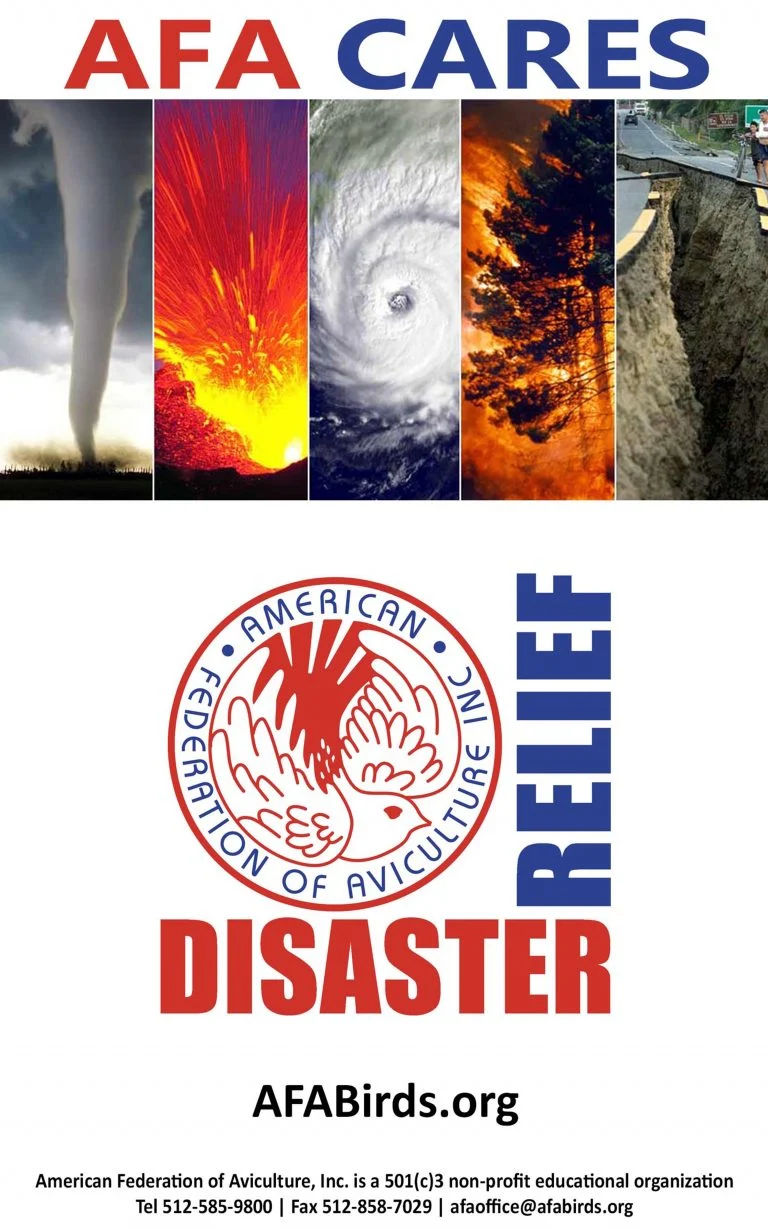
Natural disasters present an unpredictable and devastating threat not only to human communities but also to domestic animals, livestock, and captive bird populations. From hurricanes and torrential floods along coastal regions to wildfires, earthquakes, and severe winter ice storms across the interior, aviculturists face a diverse array of environmental hazards. The American Federation of Aviculture (AFA) Disaster Relief Team operates a nationwide network of regional directors and local volunteers designed to monitor weather patterns and coordinate rapid responses when emergencies strike. Spearheaded by seasoned emergency management professionals, including former CalFire Fire Chief Mary Ellen LePage, structured disaster planning remains the single most effective tool for mitigating loss of life among captive and aviary bird populations.
Main Facts and the AFA Rapid Response Framework
The AFA Disaster Relief Team is strategically distributed across the United States to ensure rapid mobilization during unfolding crises. By positioning regional directors and informed volunteers directly within local communities, the organization significantly reduces deployment latency. These local teams monitor developing meteorological threats, assess regional vulnerabilities, and act as a bridge between stranded bird owners and emergency rescue personnel.
When catastrophic events occur, aviculturists frequently encounter logistical nightmares, including gridlocked evacuation routes, law enforcement checkpoints restricting entry, and prolonged utility outages. To combat these challenges, the AFA provides direct operational assistance, emergency supplies, and logistical coordination for displaced birds. Owners and emergency responders requiring immediate intervention can contact the AFA main business office or reach out via their dedicated online disaster relief portal. However, organizational leaders emphasize that systemic preparedness at the individual level must precede any external rescue attempt.
Chronology of an Emergency: Phases of Disaster Management
Effective disaster management for aviculturists is divided into three distinct chronological phases: pre-disaster mitigation and planning, active crisis decision-making, and post-disaster recovery and reunification.

Phase 1: Pre-Disaster Mitigation (Months to Days Prior)
Months or weeks before disaster season peaks, bird owners must establish comprehensive emergency blueprints. This includes pre-assembling and storing collapsible transport carriers, stocking non-perishable feed and water supplies, and maintaining detailed ownership records. Furthermore, aviculturists must identify secondary relocation sites—such as out-of-zone barns, garages, or secure facilities—where birds can be safely housed if evacuation becomes mandatory.
Phase 2: Active Crisis Management (Hours Prior to Impact)
As a disaster approaches, the timeline accelerates rapidly. Decision-making during this window is critical. Owners must evaluate evacuation orders dynamically, balancing the physiological stress of capture and transport against the absolute lethality of an approaching wildfire or flood. If evacuation is chosen, departure must occur well before local authorities mandate road closures. Hesitation frequently results in catastrophic gridlock, fuel shortages, and impassable transit corridors.
Phase 3: Post-Disaster Recovery and Reunification (Days to Weeks Following)
Following the immediate impact of a disaster, the recovery phase begins. This period focuses on damage assessment, veterinary triage, clearing access routes with heavy tools like chainsaws, and initiating the reunification process between rescued birds and their rightful owners.
Supporting Data and Preparedness Metrics
Emergency management statistics consistently highlight that proactive planning reduces animal mortality rates by more than seventy percent during natural disasters. According to animal welfare and agricultural extension studies, more than forty percent of pet and aviary losses during major weather events stem from delayed evacuations and a lack of readily accessible transport infrastructure.
To combat these statistical risks, aviculturists are advised to maintain standardized inventory checklists. Essential equipment caches should include:
- Pre-assembled or collapsible transport cages equipped with secure perches and attached water dishes.
- Capture tools, including specialized bird nets, thick protective gloves, and heavy-duty towels for handling unaccustomed or flight-prone specimens.
- Specialized hardware toolboxes containing wire cutters, pliers, heavy-duty zip ties, and emergency chainsaws to clear fallen debris blocking aviary doors.
- Permanent identification markers, including leg bands, microchip registry documentation, and duplicate physical or digital records proving legal ownership.
- Written disaster portfolios posted in clear view, detailing specific feeding instructions, dietary requirements, veterinary contact information, and precise GPS coordinates to aid emergency rescue crews if street signs are destroyed.
Official Responses and Protocol for Avian Rescuers
Executing a successful bird rescue within an active disaster zone requires strict adherence to institutional protocols and government incident command structures. Large-scale disaster operations in the United States are governed by the Occupational Safety and Health Administration (OSHA) Incident Command System (ICS). Every disaster zone is managed by an Incident Commander who maintains absolute authority over all rescue, law enforcement, and fire suppression personnel.
Avian rescue volunteers seeking access to restricted zones must possess verifiable credentials to bypass police roadblocks. The AFA supplies official magnetic vehicle logos, identification name cards, and specialized apparel to designate legitimate rescue workers. When stopped by law enforcement, volunteers are instructed to calmly request contact with the Incident Commander or an authorized representative to secure official entry clearance. Under no circumstances should volunteers compromise their personal safety or bypass barricades through hazardous, unauthorized routes.
Once inside a disaster area, rescuers must prioritize human safety while executing targeted extractions. Volunteers should work in pairs, utilizing pre-drawn facility maps to locate avian housing structures quickly. If standard carriers are unavailable on-site, improvisational containers such as plastic storage bins with ventilation holes, secure cardboard boxes, or heavy-duty paper bags for smaller species may be utilized temporarily. Rescuers must meticulously document pair bonds using non-toxic markers on crates, ensure leg bands remain intact to prevent permanent loss of lineage data, and record precise relocation destinations.
Broader Impact and Implications for the Avicultural Community
The escalating frequency and intensity of extreme weather events driven by shifting climatic patterns underscore the urgent necessity for formalized avian disaster planning. Historically, disaster relief frameworks have prioritized household companion animals such as dogs and cats, frequently overlooking the specialized husbandry, dietary, and biosecurity requirements of exotic birds, psittacines, and aviary flocks.
The systematic integration of avicultural organizations into regional disaster planning holds profound implications for the broader animal welfare community. By establishing robust networks like the AFA Disaster Relief Team, the hobbyist and professional avicultural sectors demonstrate self-reliance and high standards of animal stewardship. Furthermore, these proactive measures mitigate the public health and economic risks associated with displaced exotic animals, ensuring that genetic lines are preserved and captive birds are safely returned to their custodians.
Ultimately, the success of any avian rescue operation hinges upon the collaborative efforts of individual breeders, local bird clubs, and centralized organizations. Through rigorous planning, adherence to incident command protocols, and unwavering community support, aviculturists can navigate the most severe natural disasters and safeguard the future of captive bird populations across the nation.

