


The complexity of communication often hinges on the ability to convey critical information across diverse linguistic and cultural barriers. In human society, non-verbal cues—such as a frantic wave or a piercing shout—serve as universal alarm signals that transcend native languages, effectively communicating imminent danger. Recent scientific inquiry has turned its attention to the avian world, where a groundbreaking 2025 study involving researchers from Cornell University and the Doñana Biological Station in Seville, Spain, suggests that birds possess a remarkably similar, innate capacity to communicate warnings across species boundaries. This discovery challenges long-held assumptions about the necessity of social learning in avian vocalization and suggests that evolution has hardwired certain survival-critical signals into the brains of diverse bird populations globally.
The Mechanism of Brood Parasitism as a Catalyst
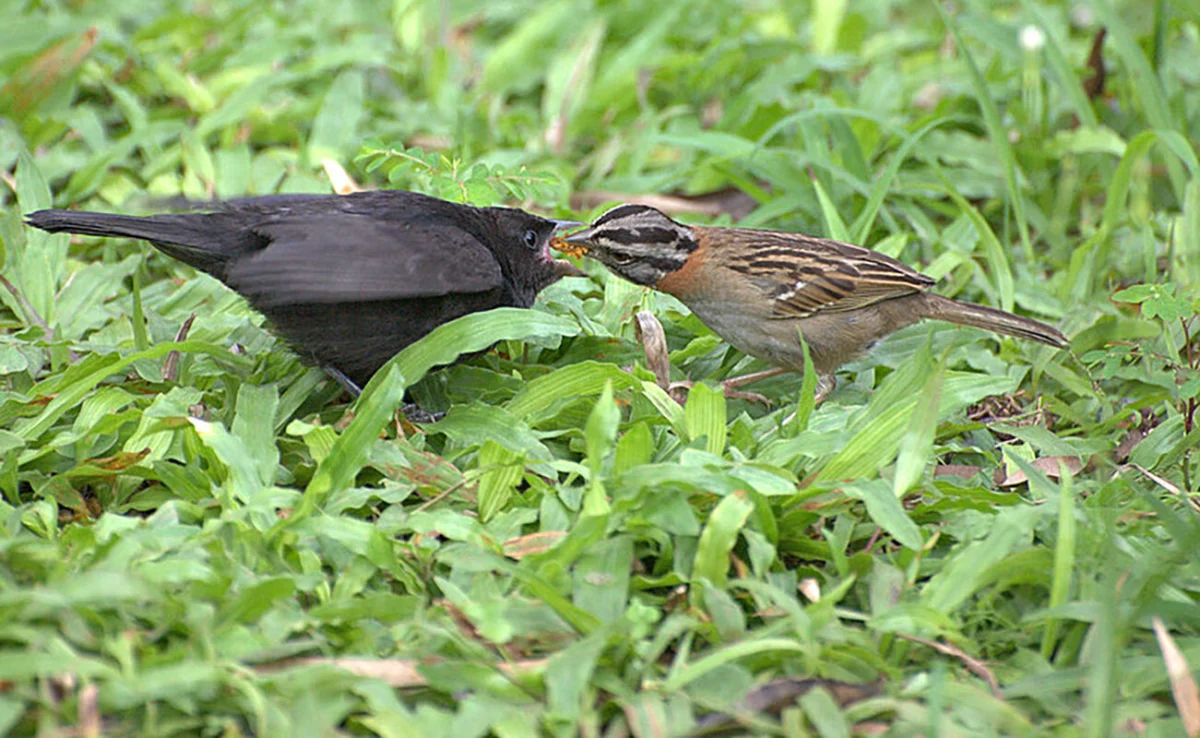
At the heart of this research lies the phenomenon of brood parasitism, a reproductive strategy that has long fascinated and troubled ornithologists. Brood parasites, such as the cowbird or the cuckoo, bypass the energy-intensive tasks of nest building, egg incubation, and chick rearing by depositing their eggs into the nests of unsuspecting host species. This interaction is not merely an inconvenience; it is often a catastrophic event for the host. Parasitic hatchlings frequently exhibit aggressive behaviors, such as pushing the host’s biological offspring out of the nest or outcompeting them for food.
Because the survival of the host species depends on identifying and rejecting these intruders, the pressure to detect parasitic threats is immense. Over evolutionary timescales, this pressure has necessitated the development of sophisticated warning systems. The study focused on 21 distinct bird species across disparate continents, all of which act as hosts to brood parasites. Despite these species never having shared a habitat or a common ancestral lineage in recent history, researchers observed a striking uniformity in their vocal responses to parasitic intruders.
Chronology of the 2025 Research Initiative
The project, which culminated in the 2025 publication, began several years prior as a multi-institutional effort to map the acoustic landscape of avian defense mechanisms.
- 2021–2022: Initial data collection began, involving the deployment of acoustic monitoring equipment in habitats across North America, Europe, and parts of Asia. Researchers aimed to record responses to simulated parasitic threats.
- 2023: Data synthesis began, with teams comparing the "whining" alarm calls of disparate species. The preliminary results indicated that the acoustic structure of these calls was mathematically similar, despite the lack of shared evolutionary history.
- 2024: Further behavioral experiments were conducted to confirm that the vocalizations were not merely learned behaviors passed down through direct social interaction, but were instead innate responses.
- 2025: The official report was published, positing that these warning signals represent an evolutionary baseline for interspecies communication.
Data and Acoustic Analysis
The research team utilized high-fidelity spectrographic analysis to compare the alarm calls. The study found that across the 21 species, the "whining" vocalization occupied similar frequency ranges and durations. In ornithology, alarm calls are generally categorized into two types: "seet" calls, which are high-pitched and difficult for predators to localize, and "mobbing" calls, which are loud, repetitive, and designed to draw attention to a threat.
The alarm calls identified in this study regarding brood parasites occupy a unique niche. They act as a "public signal" that serves two purposes: alerting the host’s own offspring to stay silent or hidden, and warning neighboring birds of a different species that an intruder is in the vicinity. The data indicated that birds in China, Australia, and the United States exhibited a "startle-and-scan" response when exposed to recordings of these universal whines, even when the recording was of a species they had never encountered. This suggests that the signal is "pre-installed," much like the human startle reflex.
Implications of Innate Communication
The findings hold profound implications for the study of neuro-ornithology and evolutionary biology. For decades, the dominant theory was that most avian communication is learned through mimicry or parental guidance. While this remains true for complex mating songs, the 2025 findings suggest that alarm vocalizations belong to a different neural architecture—one that is likely centered in the brainstem or the basal ganglia, rather than the regions responsible for complex song learning.

Dr. Elena Rossi, an evolutionary biologist associated with the Doñana Biological Station, noted in a post-study briefing that the results provide a rare glimpse into the "cognitive toolbox" of birds. "We are seeing that birds possess an underlying, innate ability to interpret sound as a proxy for danger. This is not just a learned behavior; it is a biological imperative that has been honed by the harsh realities of natural selection," Rossi stated. The research suggests that the human brain’s development, specifically in toddlers who instinctively understand vocal inflections of distress before they understand vocabulary, may share a parallel evolutionary trajectory with these avian mechanisms.
Broader Impact on Conservation and Ecosystem Dynamics
The existence of universal alarm signals has significant implications for conservation efforts. As climate change and habitat loss force different species into closer proximity, the ability of these birds to "speak" the same language of danger could be a critical factor in their survival. If species can communicate threats across traditional taxonomic lines, the resilience of an entire ecosystem may be bolstered.
However, researchers also caution that these signals are not foolproof. Parasitic species are also subject to evolutionary pressures and are continuously adapting to bypass these detection systems. This creates an ongoing "evolutionary arms race." In some instances, parasites have developed eggs that mimic the appearance of host eggs, or they have learned to time their visits when the host is away. The vocal alarm system serves as a primary, but not absolute, line of defense.
Future Directions in Avian Research
The 2025 study opens several avenues for future research. One primary question remains: how many other "universal" signals exist? While alarm calls are the most obvious candidates for cross-species understanding, scientists are now investigating whether other behavioral cues—such as food-sharing signals or territorial disputes—might also share common acoustic roots.
Furthermore, the study highlights the necessity of protecting acoustic habitats. If birds rely on these universal signals to survive, the introduction of anthropogenic noise—often referred to as "noise pollution"—could effectively "jam" their communication lines. Urbanization and industrial development create low-frequency noise that can mask the high-pitched warning calls, potentially leaving host species more vulnerable to brood parasitism.
Conclusion: A Universal Language of Survival
The 2025 study represents a significant milestone in our understanding of animal cognition. By demonstrating that birds across the globe share a common, innate vocabulary for identifying and responding to parasitic threats, the research elevates our appreciation for the complexity of the natural world. It underscores the idea that communication is not merely a social convenience, but a sophisticated, biological tool for survival.
As researchers continue to decode these signals, the parallels between human non-verbal communication and avian vocalizations become increasingly apparent. Both systems are designed to minimize the time between the detection of a threat and the mobilization of a response. In an era where biodiversity is under constant threat, understanding these universal languages may provide us with the tools necessary to better monitor and protect the intricate web of life that sustains our planet. The whine of a bird in a nest in the Spanish countryside, recognized by a bird in an urban park in China, is a testament to the power of evolution to forge common ground in the most challenging of circumstances. This research serves as a reminder that even in the absence of a shared culture or language, the fundamental drive for self-preservation creates a universal dialogue that resonates across the entire animal kingdom.

