


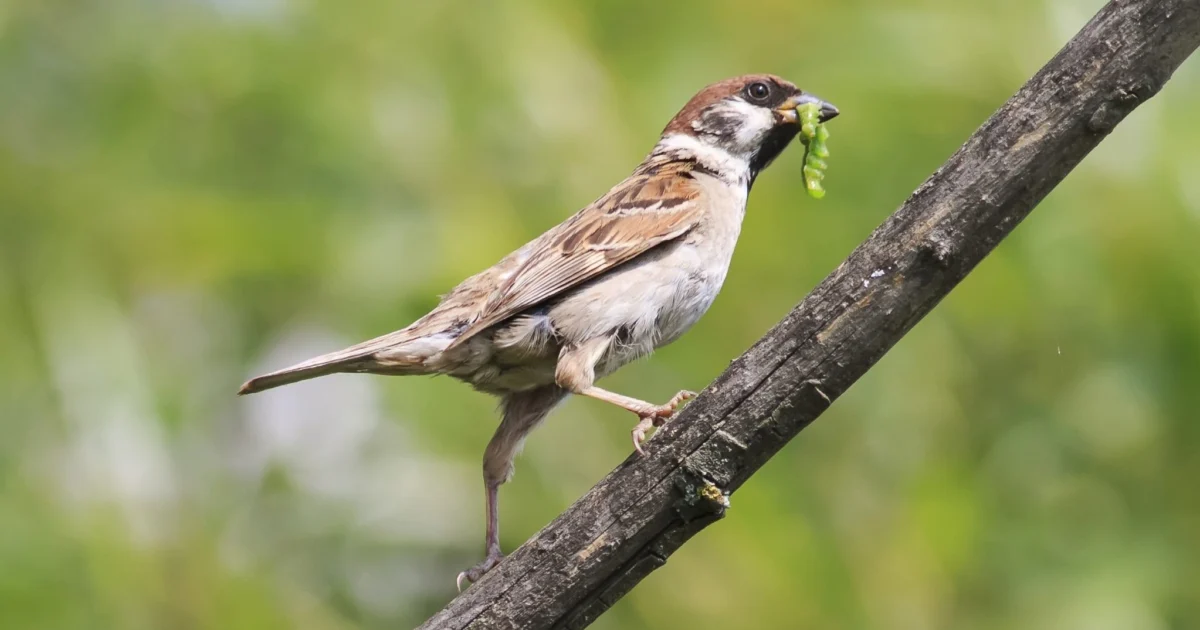
A Critical Bottleneck in the African-Eurasian Flyway
The Strait of Messina is not merely a geographic chasm; it is one of the most vital biological arteries on the planet. Spanning just three kilometers at its narrowest point, the Strait serves as a mandatory transit corridor for millions of birds traveling between their breeding grounds in Europe and their wintering habitats in sub-Saharan Africa. Alongside the Bosphorus in Turkey and the Strait of Gibraltar, the Messina corridor is recognized as one of the "big three" migration bottlenecks in the Western Palearctic.
For species such as the European Honey buzzard (Pernis apivorus), the Strait acts as a essential staging post. After navigating approximately 2,700 kilometers of inhospitable terrain across the Sahel and the Sahara Desert, and traversing at least 140 kilometers of open sea over the Sicily Channel, these birds rely on the Strait as a sanctuary to rebuild their energy reserves. Without this specific corridor, the biological feasibility of these long-distance migrations would be fundamentally compromised.
Chronology and Project Context
The concept of bridging the Strait of Messina is a decades-old ambition in Italian politics, often framed as a symbol of national modernization and economic integration. However, the project has historically stalled due to complex engineering challenges, geological instability—the region is seismically active—and intense scrutiny regarding its environmental footprint.
- 2000s–2010s: Various iterations of the bridge project are proposed and subsequently shelved, with environmental groups consistently highlighting the risk to migratory species and marine ecosystems.
- 2023: The current Italian government revives the project, declaring it a strategic infrastructure priority and accelerating the environmental impact assessment (EIA) process.
- September 2026: BirdLife International issues a formal challenge, citing new data from the project’s own EIA that suggests the ecological cost of the bridge has been severely underestimated by state-owned developers.
- Present Day: The European Commission faces increasing pressure to determine whether the construction project violates the EU Birds Directive (2009/147/EC) and the Habitats Directive (92/43/EEC), which mandate the protection of critical migratory routes.
The Quantifiable Cost of Infrastructure
The primary concern regarding the bridge is the physical barrier it presents to avian transit. The project’s own environmental impact assessment, conducted by the state-owned enterprise overseeing the construction, acknowledges significant risks under adverse weather conditions. Even by the developer’s conservative metrics, the mortality rate for migratory birds would be substantial.
The current projections indicate that the bridge would impact thousands of birds annually. However, internal reviews by Lipu-BirdLife Italy suggest that these figures represent only the "tip of the iceberg." According to the Italian Institute for Environmental Protection and Research (ISPRA), the state’s assessment fails to account for the cumulative mortality resulting from associated infrastructure. This secondary development includes the construction of new high-voltage power lines, expanded road and rail networks, and extensive water withdrawal requirements, all of which fragment the landscape and increase the risk of collision or habitat degradation.
The data models suggest a staggering toll:
- Direct Mortality: Projections indicate thousands of avian deaths due to collisions with structural elements.
- Physical Decline: An estimated 69,000 passerines and thousands of shorebirds are expected to suffer severe physical decline as a result of being forced into unscheduled stops, preventing them from completing their migratory journey.
- Disruption: Approximately 230,000 passerines and 28,000 shorebirds would be forced to abandon their flight paths, creating a ripple effect that compromises the survival rates of entire populations.
Official Responses and Legal Implications
The legal arguments against the bridge center on the concept of "irreparable damage." Anouk Puymartin, Head of Policy at BirdLife Europe, has framed the issue as a litmus test for the European Union’s commitment to the rule of law. "The Strait of Messina is not ours to gamble with," Puymartin stated. "Every spring and every autumn, it carries the fate of species that belong to no single country. If Brussels looks away now, it is failing the rule of law it asks the rest of the world to respect."
Giorgia Gaibani, Head of Natura 2000 at Lipu-BirdLife Italy, underscored the inadequacy of the mitigation measures proposed by the developers. "The construction of the bridge will cause irreparable damage, which no compensation measures could offset," Gaibani noted. She argued that Italy bears a profound responsibility for protecting the corridor between Eurasia and Africa, and that current economic decision-making appears to prioritize short-term infrastructure goals over long-term environmental stability.
Broader Environmental and Economic Impacts
The implications of this project extend far beyond the immediate vicinity of the Strait. Decades of conservation investment—funded by the EU, individual nations, and non-governmental organizations—have been poured into protecting the African-Eurasian Flyway. These investments have focused on habitat restoration, anti-poaching measures, and scientific monitoring. The construction of the Messina bridge threatens to undermine this multi-national effort, effectively negating years of progress in species recovery.
Species such as the Egyptian vulture (Neophron percnopterus) and the Pallid harrier (Circus macrourus) are already listed as species of concern, with populations in decline. The introduction of a man-made barrier of this scale acts as a significant "extinction accelerator." Furthermore, the loss of these birds has tangible economic consequences for the local communities that rely on eco-tourism and healthy ecosystems for agricultural stability and natural pest control.
Analytical Conclusion: The Compatibility Crisis
From a scientific perspective, the fundamental issue is one of coexistence. The migratory behavior of these species is a fixed evolutionary trait, honed over millennia. They cannot "re-route" around a three-kilometer obstacle without incurring massive energetic costs that lead to starvation or reproductive failure.
While the Italian government views the bridge as an essential link to foster economic growth in Sicily, the scientific consensus suggests that the ecological cost is disproportionate to the stated benefits. If the project proceeds, it will establish a precedent where large-scale infrastructure is permitted to override international conservation mandates, potentially weakening the legal protections of other critical bottlenecks globally.
As the matter moves to the European Commission, the decision will likely hinge on whether the Commission views the project as a violation of the "precautionary principle"—the idea that where there is a risk of severe or irreversible damage, the absence of full scientific certainty should not be used as a reason for postponing cost-effective measures to prevent environmental degradation. For the migratory birds of the African-Eurasian Flyway, the outcome of this dispute will determine whether the Strait of Messina remains a bridge for life or becomes a barrier to survival.

