


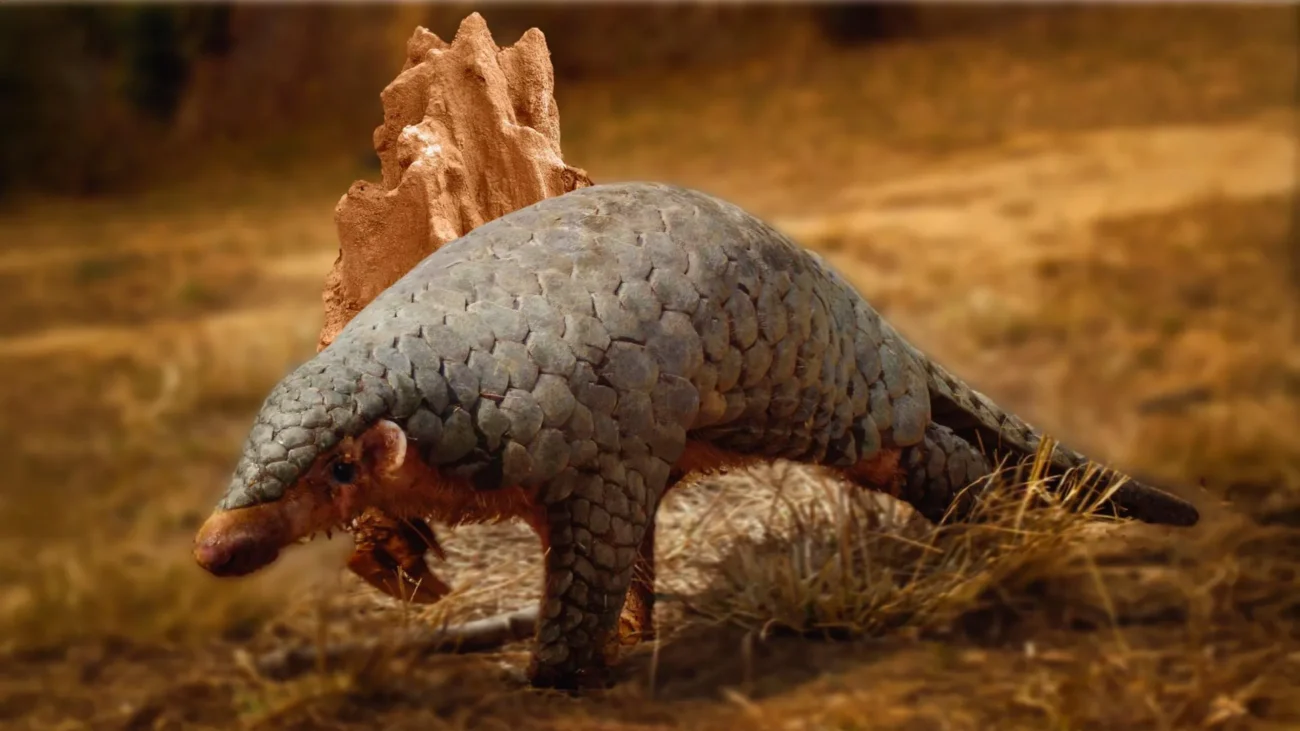
Resembling living pinecones wrapped in heavy, overlapping keratin scales, pangolins are among the most peculiar and ancient creatures on Earth. These medium-sized, nocturnal mammals—found exclusively across tropical and subtropical regions of Africa and Asia—are equipped with long, powerful tails and large, curved claws engineered for tearing into subterranean termite mounds. Yet, their most defining physical characteristic has also proven to be their greatest curse. Coveted deeply within the underground networks of traditional medicine, particularly in parts of East Asia, pangolins are relentlessly targeted by poachers. Today, conservationists widely recognize them as the most heavily trafficked mammals on the planet, with all eight recognized species facing elevated risks of extinction.
Now, an international team of scientists has confirmed the existence of a distinct, previously unrecognized Asian pangolin species residing in the remote Himalayan foothills of Nepal and Northern India. Formally identified as Manis aurita, this newly validated species brings critical clarity to the complex pangolin family tree. Published in the peer-reviewed journal Communications Biology, the breakthrough not only reshapes the taxonomy of these elusive creatures but also provides law enforcement and wildlife forensics experts with a vital new tool to combat illegal wildlife trafficking. By determining the precise genetic identity and geographic boundaries of M. aurita, researchers hope to track down poachers with unprecedented precision, shutting down supply chains that have pushed the animals to the brink.
Untangling the Pangolin Family Tree: A Taxonomic Puzzle
The journey toward recognizing Manis aurita as a distinct species has been long and fraught with scientific debate. For generations, morphological similarities made it difficult for taxonomists to separate regional variations within the Asian pangolin population. Traditionally, mountain-dwelling pangolins across the Himalayas were broadly lumped together with the more widely distributed Chinese pangolin (Manis pentadactyla). However, mounting genetic anomalies and localized physical differences hinted that a deeper biological story was being overlooked.
The first major structural crack in the old classification occurred in early 2025. During that period, a separate research collective determined that animals historically categorized under the umbrella of Chinese pangolins actually comprised two distinct species. While one lineage remained predominantly confined to China proper, the other occupied a separate ecological niche along the Himalayan foothills, stretching across segments of Nepal, India, Bhutan, and Myanmar. That mountain-dwelling population was temporarily designated Manis indoburmanica, commonly referred to as the Indo-Burmese pangolin.
However, formal scientific taxonomy is strictly governed by the principle of priority. Under this fundamental rule of biological nomenclature, if a single species has been described and named multiple times throughout history, the earliest valid name takes absolute precedence over any modern equivalents.
While the 2025 reclassification was underway, an independent, decade-long investigation into pangolin evolution was already being spearheaded by Anderson Feijó, the Negaunee Assistant Curator of Mammals at the Field Museum, alongside a broad coalition of global researchers. Their objective was comprehensive: combine modern DNA sequencing with meticulous physical characteristics to accurately map out how many pangolin species exist and precisely how they are related. During this extensive archival deep-dive, the research team stumbled upon historical records mentioning Manis aurita, a pangolin species originally described by naturalists in 1836. Over subsequent decades, however, M. aurita had been systematically stripped of its species status and reclassified merely as a subspecies of the Chinese pangolin.
This historical discovery presented the team with a complex taxonomic riddle. They needed to decipher the precise evolutionary relationship between the newly proposed indoburmanica and the archival aurita. Were they identical, or did they represent separate, valid evolutionary lineages?
Unlocking the Past: DNA Extraction from a 190-Year-Old Specimen
The definitive answer to the scientific riddle came from the heart of London. Kai He, a co-corresponding author of the study and a researcher at the South China Biodiversity Research Center at Guangzhou University, pointed to a pivotal breakthrough facilitated by the Natural History Museum in London. Thanks to advanced paleogenomic techniques and the careful curation of historical artifacts, scientists at the museum successfully extracted and sequenced DNA directly from the original type specimen of the 19th-century Nepalese subspecies (aurita).
Dating back to 1836, the fragile museum specimen was nearly 190 years old. Despite its age, the genetic material recovered from the historic sample provided pristine, readable sequences. When the researchers compared this ancient DNA to modern tissue samples collected from Himalayan pangolins, the results were unequivocal. The modern Himalayan populations matched the genetic signature of aurita perfectly, confirming that the animals briefly dubbed M. indoburmanica in 2025 were, in fact, members of the exact same species first documented and named nearly two centuries prior.
Because aurita was the older, original designation, it took taxonomic priority. Manis aurita was officially resurrected as the correct scientific name for the Himalayan pangolin.
"This taxonomic clarification provides a crucial scientific basis for combating illegal poaching and lays the groundwork for protecting this cryptic endangered species," noted Yan Hua, a co-corresponding author of the study and a researcher at the Guangdong Academy of Forestry.
Morphological and Geographic Distinction
With the species validity confirmed, researchers detailed the distinct traits that separate Manis aurita from its close relative, the Chinese pangolin. Although the differences can appear subtle to an untrained eye, they are distinct enough to be measured and categorized reliably.
According to Feijó, the Himalayan pangolin (M. aurita) features a noticeably larger overall body, a significantly longer tail, and markedly smaller external ears when compared to the Chinese pangolin. Ironically, the specific epithet aurita—derived from Latin roots relating to ears—serves as a permanent nod to these morphological peculiarities.
Furthermore, ecological and geographical mapping demonstrates that the two species do not overlap in their natural ranges. M. aurita remains strictly bound to the elevated, rugged terrain of the Himalayan foothills, whereas M. pentadactyla inhabits different lowland and upland ecosystems further east. For critically endangered animals under immense pressure from human interference, defining these absolute geographic boundaries is not merely an academic exercise; it is an essential prerequisite for targeted conservation management.
A New Forensic Weapon Against Global Wildlife Trafficking
The illegal wildlife trade operates in the shadows, driven by high financial incentives and a persistent global demand for traditional medicine. Within these illicit markets, pangolin scales are falsely believed to possess powerful medicinal properties and aphrodisiac qualities. Because international syndicates process and smuggle the animals in massive quantities, law enforcement officers rarely encounter live specimens during raids. Instead, authorities are typically left to sift through massive sacks of loose, dried scales.
This operational reality has historically crippled enforcement efforts. When authorities intercept a shipment of scales, determining the geographic origin of the contraband has been nearly impossible. Without knowing where the animals were poached, conservation groups and anti-trafficking task forces could do little to disrupt the local poaching rings operating on the ground.
"In the marketplaces you basically only find pangolin scales, not the whole animals, which makes it hard to know which species are being hunted and where they are coming from," Feijó explained.
The genetic framework established by the new study changes this dynamic entirely. By applying modern DNA extraction methods to confiscated scale shipments, wildlife forensic scientists can now accurately identify the species of origin. If a batch of scales tests positive for Manis aurita, enforcement agencies instantly know the contraband originated from the specific, restricted geographic band of the Himalayan foothills. This capability allows investigators to work backward from a seized urban marketplace directly to the exact rural populations facing immediate poaching threats.
In addition to bolstering law enforcement, precise taxonomy is vital for species reintroduction initiatives. Across Asia, various conservation agencies operate breeding and release programs designed to bolster dwindling wild populations. Previously, the inability to accurately differentiate between cryptic species carried a severe ecological risk. Conservationists might have inadvertently released Chinese pangolins into the high-altitude forests of Nepal, leading to hybridization or ecological failure due to mismatched environmental adaptations. With species boundaries clearly mapped, future reintroduction efforts can ensure the right animals are returned to their native habitats.
The Indispensable Value of Natural History Museums
The successful resurrection and validation of Manis aurita highlight a broader narrative within modern conservation science: the irreplaceable value of natural history collections. Without the institutional preservation of specimens dating back over a century, resolving complex evolutionary puzzles involving rare or depleted wildlife would be virtually impossible.
Because pangolins are exceptionally elusive, nocturnal, and severely depleted in the wild, gathering fresh, comprehensive field samples across their entire historic range is often logistically unfeasible. Museums bridge this critical gap, acting as biological time capsules that preserve genetic material from populations that may now be critically depleted or entirely extirpated locally.
"Using museum collections allows us to have access to more individuals across the species’ range," Feijó emphasized. "If you only rely on fresh material, since the animals are so rare to find in the wild, this greatly limits the information that you can gather. We used collections to have a more complete sampling of the species. It’s a big advantage to have this resource available as a repository of material that we can look back and keep learning from."
A Broad Collaborative Effort
The multi-year research project was a massive global undertaking, uniting expertise from a diverse array of academic, governmental, and international institutions. Contributors to the landmark study included researchers from Guangzhou University, Nepal Engineering College, Pokhara University, the Chinese Academy of Sciences, the University of Washington, the Smithsonian National Museum of Natural History, the University of Sevilla, the Guangdong Academy of Forestry, Tribhuvan University, Aspect Ecology Oxfordshire, the Chinese Wildlife Forensic Science Service, the Chengdu University of Traditional Chinese Medicine, and the Field Museum.
For Narayan Koju, a researcher at Nepal Engineering College at Pokhara University and the study’s first author, the findings represent the culmination of half a decade of painstaking field and laboratory work.
"This finding marks the culmination of more than five years of research that began in Nepal, where we first documented evidence suggesting that Himalayan pangolins represented a distinct evolutionary lineage," Koju reflected. "The confirmation of Manis aurita as a valid species demonstrates the importance of long-term research, international collaboration, and museum collections. Most importantly, it provides a strong scientific basis for conservation planning, wildlife forensics, and efforts to protect one of the world’s most trafficked mammals from extinction."
As conservationists look to the future, the integration of 19th-century museum archives with cutting-edge 21st-century genomics offers a powerful blueprint for biodiversity preservation. By understanding precisely who is out there in the wild, humanity stands a much stronger chance of ensuring that the ancient, scale-armored pangolin does not slip quietly into extinction.

