


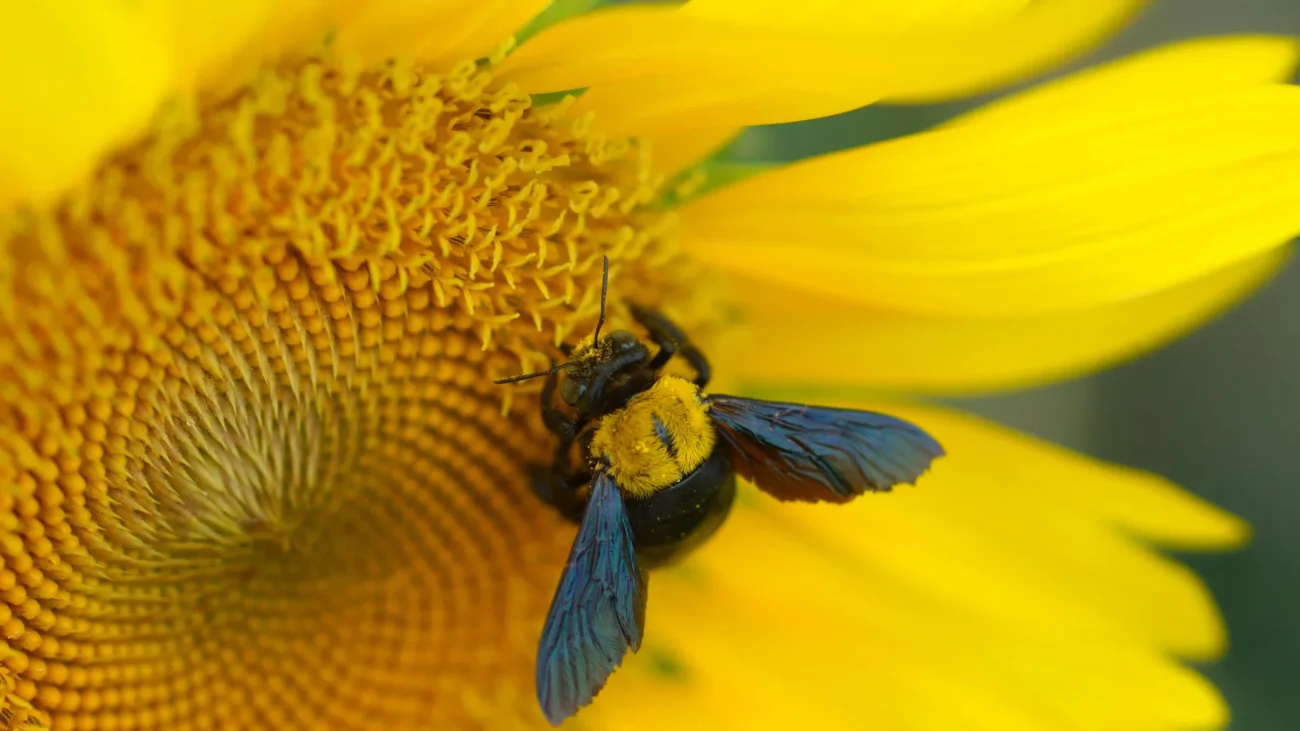
Recent scientific research indicates that native bee species relying on plant stems for their nesting habits face immediate and disproportionate dangers from escalating global temperatures, whereas subterranean species exhibit a superior capacity to evade lethal heat exposure. Published in the peer-reviewed journal Nature Communications, the comprehensive study investigated the physiological heat tolerance of 95 distinct native bee species across the eastern mainland of Australia, mapping vulnerability gradients from tropical northern territories down to cooler southern ecosystems.
The collaborative scientific initiative was spearheaded by researchers from a consortium of prominent Australian academic institutions, including Macquarie University, The University of Sydney, La Trobe University, Flinders University, the University of Wollongong, Adelaide University, and The University of Queensland. By analyzing how thermal tolerance has evolved among various lineages, the multi-university team set out to construct predictive models regarding how these vital pollinators will respond to ongoing anthropogenic climate disruption.
Nesting Architecture Dictates Thermal Exposure and Survival
Australia hosts an estimated 1,700 native bee species, displaying a rich diversity of ecological traits, including varied foraging preferences and distinct nesting architectures. Ecologically, these insects generally partition into three primary nesting categories: those that excavate subterranean burrows beneath the soil surface, those that occupy pre-existing cavities in dead wood such as tree hollows and fallen timber, and species that inhabit slender plant stems or narrow apertures within dry twigs.
According to the study’s lead author, Dr. Carmen da Silva, a Research Fellow within the Pollinator Futures Research Centre at Macquarie University in Sydney, microhabitat selection directly influences the thermal extremes these organisms endure. Subterranean bees possess an innate behavioral advantage, utilizing the thermal mass of the earth to buffer against surface temperature spikes. Conversely, insects residing above ground—particularly those utilizing thin-walled botanical structures—experience rapid thermal fluctuations.
"Bees that nest underground can hide from extreme heat – as a result, they don’t experience temperatures as high as those that live above ground, particularly species that live in thin plant stems that offer very little insulation from the heat outside," Dr. da Silva explained. "Stem-nesting species appear to have the lowest capacity to escape unfavorable environmental temperatures and are likely to be the most impacted by anthropogenic climate change in the near term."
These findings underscore the reality that microhabitat specialization acts as a primary mediator of climate vulnerability. While burrowing species can descend deeper into the soil profile to locate cooler thermal refugia, stem-nesting populations are constrained by the physical dimensions of their chosen plant architecture, leaving them entirely exposed to intense solar radiation and ambient atmospheric heating.
Geographical Vulnerability and the Tropical Paradox
Beyond architectural constraints, the research team identified a striking geographical pattern: species inhabiting equatorial and tropical latitudes face significantly elevated risks compared to their temperate-zone counterparts. This regional disparity introduces complex conservation challenges, particularly given the high biodiversity concentration in tropical northern Australia.
Dr. Vanessa Kellermann, a Senior Lecturer in the Department of Ecology, Plant and Animal Sciences at La Trobe University and a senior author on the research publication, noted that the investigation illuminates the intricate nature of ecological forecasting. Predicting precisely which taxonomic groups will succumb to rapid climate shifts remains one of the most formidable hurdles for modern conservation biologists.
"Predicting which species will be vulnerable to climate change is one of the biggest challenges in ecology," Dr. Kellermann stated. "We found bee species with the highest heat tolerance were not necessarily the safest from warming, because many of them already live in extremely hot environments."
This realization upends conventional conservation assumptions, which often presume that organisms possessing high thermal thresholds are inherently insulated from global warming. In practice, tropical species frequently operate near their physiological ceiling. Having already adapted to extreme baseline climates, these populations possess critically narrow thermal margins, leaving them virtually no evolutionary buffer to cope with incremental temperature increases.
Ecological Interdependence and Agricultural Imperatives
The implications of declining native bee populations extend far beyond natural biodiversity loss, threatening the economic stability of multi-billion-dollar agricultural sectors and the structural integrity of diverse ecosystems. Pollinators serve as foundational keystone species, facilitating the reproduction of flowering plants that form the base of terrestrial food webs.
Dr. da Silva emphasized the dual economic and ecological necessity of safeguarding these insects. "Bees are critical in ecosystems all over the world because of their role as pollinators, and they’re under threat from warming and drying climates," she noted. "Bees sustain native ecosystems and play a crucial role in agricultural crop production — tropical native bees are vital pollinators for crops like macadamia nuts, avocados, mangos, and lychees."
Commercial agriculture across Australia increasingly relies on native pollinators to maximize crop yields and quality. Horticultural industries centered on high-value produce—such as macadamias in coastal Queensland and northern New South Wales, alongside tropical fruit orchards—depend heavily on the efficient foraging behaviors of specialized native bee species. Any sustained decline in pollinator density or geographic range threatens direct economic ramifications for growers and could destabilize global supply chains for these commodities.
Historical Context and Research Chronology
The publication in Nature Communications represents the culmination of years of rigorous field sampling, physiological assaying, and phylogenetic analysis across diverse Australian landscapes. Historically, ecological research on climate change impacts has heavily focused on vertebrate fauna or marine ecosystems, leaving insect physiology—particularly among non-Apis bees—comparatively under-researched.
Over the past decade, accumulating meteorological data indicating accelerated warming across the Australian continent prompted the multi-institutional coalition to launch this targeted assessment. By combining historical climate records with contemporary physiological measurements of critical thermal limits ($CT_max$) across 95 species, the researchers systematically mapped how evolutionary history constrains physiological adaptability.
The chronological scope of the project involved gathering specimens from diverse climatic zones, ranging from the humid tropics of Cape York Peninsula to the temperate woodlands of southern Victoria and Tasmania. This exhaustive geographic sampling allowed the research team to evaluate how species distributed across varying thermal regimes have adapted to local ambient conditions over evolutionary time scales.
Expanding Knowledge on Native Bee Behavior
Despite their ecological prominence, native bees remain profoundly understudied compared to the introduced European honeybee (Apis mellifera). Australia boasts an extraordinarily rich and largely endemic bee fauna, the majority of which are solitary rather than social. These solitary species do not produce commercial honey, meaning their basic biology, nesting ecology, and population dynamics have historically received less scientific funding and public attention.
Dr. Ros Gloag, co-senior author of the study and a Senior Lecturer in Evolutionary Biology within the School of Life and Environmental Sciences at The University of Sydney, highlighted the pressing need for expanded natural history research.
"We still know so little about most of Australia’s amazing native bees," Dr. Gloag observed. "This study helps us recognise that having a better understanding of native bee behavior is key to identifying the greatest threats to their wild populations."
Understanding the nuanced behaviors of these organisms—ranging from micro-site selection during nest construction to flight phenology and floral specialization—is critical for designing targeted conservation interventions. Without baseline data on how individual species interact with their local thermal environments, wildlife managers remain poorly equipped to implement effective mitigation strategies.
Implications for Conservation Policy and Habitat Management
The insights generated by this multi-university study carry direct implications for environmental policy, land management, and ecological restoration initiatives. Traditional habitat conservation frameworks have historically focused on preserving floral resources and spatial acreage. However, the findings suggest that conservation strategies must increasingly incorporate micro-climatic considerations and structural habitat diversity.
For stem-nesting species, the thermal quality of above-ground microhabitats is heavily influenced by canopy cover, understory density, and the availability of shaded nesting substrates. Forestry practices, agricultural land-clearing, and urban development that remove standing dead timber, fallen branches, and native understory vegetation directly degrade the availability of insulated nesting sites. Consequently, conservation protocols designed to mitigate climate risks for above-ground nesters must prioritize the preservation and restoration of complex structural habitats that offer natural thermal buffers.
Furthermore, management interventions in agricultural landscapes could incorporate targeted habitat enhancements, such as retaining woody debris rows, planting diverse windbreaks, and establishing artificial ground-nesting or cavity-nesting structures designed to moderate extreme temperatures. By artificially augmenting available microhabitats with optimal thermal properties, land managers may help bridge the gap for vulnerable populations facing rapid local climate shifts.
Future Research Directions and Unresolved Questions
As anthropogenic greenhouse gas emissions continue to drive global temperature anomalies, the scientific community emphasizes the urgency of expanding physiological and ecological monitoring of insect populations. While the Nature Communications study successfully establishes a baseline correlation between nesting architecture, geography, and thermal tolerance across 95 species, researchers note that much work remains.
Future research phases will likely focus on assessing the potential for behavioral plasticity—such as shifting foraging times or altering nest orientation—to help vulnerable species cope with thermal stress. Additionally, scientists aim to investigate potential interactive effects between warming temperatures and other environmental stressors, such as prolonged drought, habitat fragmentation, and agricultural pesticide exposure.
Ultimately, the research provides a vital empirical foundation for anticipating ecological shifts in a warming world. By identifying precisely which native bee lineages face the highest immediate risk, conservation scientists and policymakers can better direct limited resources toward protecting the most vulnerable components of Australia’s biodiversity and safeguarding the ecological services upon which both natural habitats and human agriculture depend.

