


Migratory birds are the planet’s ultimate connectors, their epic journeys bridging continents and cultures. These feathered travelers navigate vast distances, relying on intricate routes known as flyways. In a significant conservation effort, BirdLife South Africa, in collaboration with the Royal Society for the Protection of Birds (RSPB) and with crucial support from the Ecological Restoration Fund (ERF), is undertaking an ambitious project to safeguard migratory birds along the African-Eurasian Flyway. This critical corridor stretches from the Arctic Circle to the southernmost reaches of Africa, highlighting the interconnectedness of global ecosystems. This initiative underscores the vital role of organizations like BirdLife South Africa in protecting these natural highways and the species that depend on them.

The Berg River Estuary: A Crucial Haven
At the heart of this endeavor lies the Berg River Estuary, a remarkable ecosystem situated approximately two hours north of Cape Town on South Africa’s west coast. This estuary is not merely a scenic landscape; it is a biodiversity hotspot, supporting over 270 bird species, including significant populations of globally threatened species. Giselle Murison, Western Cape Estuaries Programme Manager at BirdLife South Africa, elaborates on the estuary’s importance: "The estuary is a really important non-breeding site for birds to rest and refuel along the African-Eurasian Flyway." During the summer months, the estuary witnesses a substantial influx of migratory waders. These birds undertake extraordinary journeys from as far north as Europe, with species like the Curlew Sandpiper (Calidris ferruginea) and the Little Stint (Calidris minuta) being particularly abundant. Their reliance on this estuary for critical rest and nourishment underscores its irreplaceable value.
Beyond its significance for avian life, the Berg River Estuary plays a pivotal role in the local economy and ecology. It serves as a vital nursery area for a diverse array of fish, encompassing both estuarine and larger marine species. This ecological function directly supports the fishing industry, a cornerstone of the community. Furthermore, industries such as salt production and tourism are deeply intertwined with the health and vitality of the estuary, demonstrating the far-reaching economic benefits derived from this natural resource. The estuary’s complex mosaic of habitats—including intertidal mudflats, saltmarsh, sedge marsh, reed marsh, salt pans, and open water—is essential for maintaining the overall health of the system. Conserving each of these distinct elements is paramount to ensuring the long-term survival of the species that call it home.

A Collaborative Effort to Combat Habitat Loss
A primary challenge facing the Berg River Estuary is the degradation of its vital estuarine habitats, largely due to accelerated erosion. The ERF project, spearheaded by BirdLife South Africa and supported by the RSPB, is actively addressing this issue through innovative conservation strategies. "The loss of estuarine habitat is a big problem at the Berg," explains Murison. "One of the ways we’re losing important habitat is through accelerated erosion. So through the RSPB and ERF project, we’ve been looking at ways that we can actually combat erosion and help landowners restore habitats along their banks to slow that erosion process."
A cornerstone of this work involves the rehabilitation of degraded saltmarsh habitats and the meticulous monitoring of existing ones. This includes the crucial process of planting and re-seeding areas that have been lost or damaged. Furthermore, the project champions environmentally sound soft engineering techniques for bank stabilization, aiming to restore bank habitats and effectively mitigate the impacts of accelerated erosion. These interventions are designed to be sustainable and to work in harmony with the natural processes of the estuary, ensuring long-term ecological resilience.

Unraveling Migratory Mysteries Through Advanced Tracking
Complementing habitat restoration efforts, the ERF project has also enabled a groundbreaking satellite tagging and color-ringing initiative for migratory waders, specifically the Curlew Sandpiper and the Grey Plover (Pluvialis squatarola). Jessica Wilmot, Flyway & Migrants Project Manager at BirdLife South Africa, highlights the excitement surrounding this endeavor: "The ERF project has also helped fund a satellite tagging and colour-ringing project at the Berg for Curlew Sandpiper and Grey Plover. It’s a really exciting project that we’ve recently launched to understand not only the localised movements, so how connected estuarine sites are along the west coast, but also the wider picture right along the flyway."
This pioneering work aims to answer fundamental questions about the migratory patterns of these birds. Historically, such detailed tracking of migratory waders in South Africa has been limited. The project seeks to understand the complete migratory journey, from their non-breeding grounds in South Africa to their breeding grounds in the Arctic tundra. Identifying key stop-over sites along the African-Eurasian Flyway is a critical objective. These sites, where birds pause to rest and refuel, are essential for their survival. The protection of these intermediary habitats is as crucial as safeguarding their breeding and non-breeding grounds, as they form the indispensable links in the birds’ long-distance travel chains. Without them, birds may be forced to undertake longer, more arduous journeys or face insufficient nourishment, jeopardizing their migratory success.

The initial findings from this tagging project have been nothing short of astonishing. In February 2026, 20 Curlew Sandpipers and three Grey Plovers were fitted with tracking devices. Early data reveals remarkable migratory feats. One tracked Curlew Sandpiper journeyed as far as South Sudan in a mere matter of hours, demonstrating the incredible speed and determination of these birds. Others have traversed the Red Sea into Asia, while another individual embarked on a completely different route, crossing the Sahara Desert en route to Europe. These diverse migratory pathways underscore the complexity of the African-Eurasian Flyway and the need for a coordinated international approach to conservation.
The success of this sophisticated tagging work has also fostered vital international collaboration. "In South Africa, we don’t have that specific expertise in trapping waders and attaching the tiny trackers," Wilmot explains. This has led to partnerships with esteemed organizations such as Wetlands International and the Max Planck Institute for Biological Intelligence. These collaborations have provided invaluable upskilling opportunities for the South African team, enhancing their capacity to conduct cutting-edge research and contribute to global ornithological knowledge.

A Call for Global Stewardship and Awareness
The conservationists involved in this project are keen to impress upon the public the profound importance of migratory birds and the flyways they traverse. Wilmot expresses a strong desire for greater public appreciation: "I wish people here saw migratory birds coming to South Africa as a privilege. We are in a way custodians of the environment that they’re dependent on for an entire season of their lives. And without those habitats, they won’t survive." The sheer scale of the birds’ journeys—some traveling over 15,000 kilometers in two and a half months—is a testament to their resilience and a powerful reminder of our responsibility to protect their routes. The visual impact of tracking data, Wilmot believes, can powerfully illustrate these incredible feats and inspire action.
Murison emphasizes the collaborative nature of this critical work: "Protecting the African-Eurasian Flyway is a partnership effort. We are just one link in the chain and we all have to play our part to make sure that this important flyway is protected and the birds are conserved." This sentiment highlights the interconnectedness of conservation efforts across different regions and organizations.

Persistent Challenges and Emerging Hope
Despite the significant progress, the conservation of South Africa’s estuaries faces considerable challenges. Murison notes, "South Africa’s estuarine systems are amongst the most threatened ecosystems in the country. They are incredibly productive but unfortunately they have very little formal protection." Even the Berg River Estuary, declared a Ramsar site in 2022 due to its international importance for wildlife, lacks formal protection status, a situation mirrored in most South African estuaries. BirdLife South Africa is actively advocating for increased formal protection and improved management of these vital ecosystems, including the Berg River Estuary.
The Curlew Sandpiper, a species that has become a symbol of the flyway’s plight, was recently uplisted to Vulnerable status by the International Union for Conservation of Nature (IUCN). This designation underscores the urgency of conservation efforts. Wilmot reflects on the species’ remarkable adaptability: "This little bird weighs between 50 and 70 grams and they fly vast distances—one of our tracked birds flew over 3,100km in just 45hrs—incredible!" The resilience of these small birds, migrating from the snow-covered Arctic to the warmer climes of Africa, is truly astounding.

A Passionate Community Driving Conservation Forward
The field experiences of these conservationists are often filled with both challenges and moments of profound connection with nature. Wilmot humorously recounts incidents of getting vehicles stuck and having to dig them out, as well as engaging in solitary conversations with herself and passing mammals to combat the isolation of long solo drives. These anecdotes offer a glimpse into the dedication and perseverance required in conservation work.
The overarching sentiment from the project leaders is one of profound hope, largely fueled by the passion and dedication of individuals involved in conservation. "I think caring deeply about the natural world is both a privilege and a burden," Wilmot states. "But the people involved are some of the most passionate and inspiring individuals you’ll ever meet, and that gives me a lot of hope." This collective spirit and unwavering commitment to protecting the natural world are the driving forces behind the ongoing success of these vital conservation initiatives.

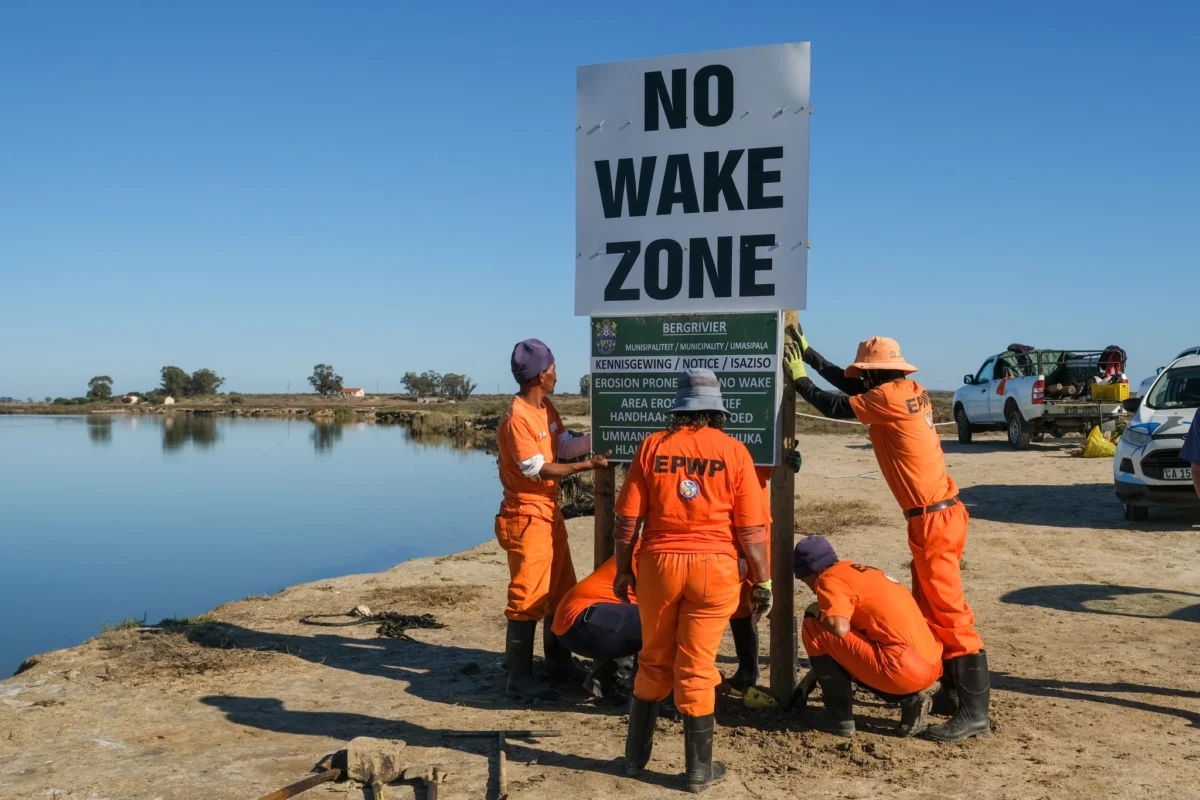
The Ecological Restoration Fund’s support is instrumental in this work, focusing on protecting biodiverse hotspots, rejuvenating degraded landscapes, and fostering local environmental activism. The ERF is committed to re-establishing nature’s interconnectedness while simultaneously promoting cultural, social, and economic opportunities for the communities that inhabit these vital landscapes. This holistic approach ensures that conservation efforts are not only ecologically sound but also socially and economically beneficial, creating a sustainable future for both people and wildlife. The installation of signage at the Berg Estuary, aimed at protecting resting birds, is a tangible example of the project’s on-the-ground impact.
The ongoing work at the Berg River Estuary serves as a powerful reminder of the global significance of migratory birds and the imperative to protect the critical habitats they rely upon. Through collaborative efforts, scientific innovation, and a deep-seated passion for the natural world, conservationists are forging a path towards a more secure future for these remarkable travelers and the vital flyways they navigate.

