


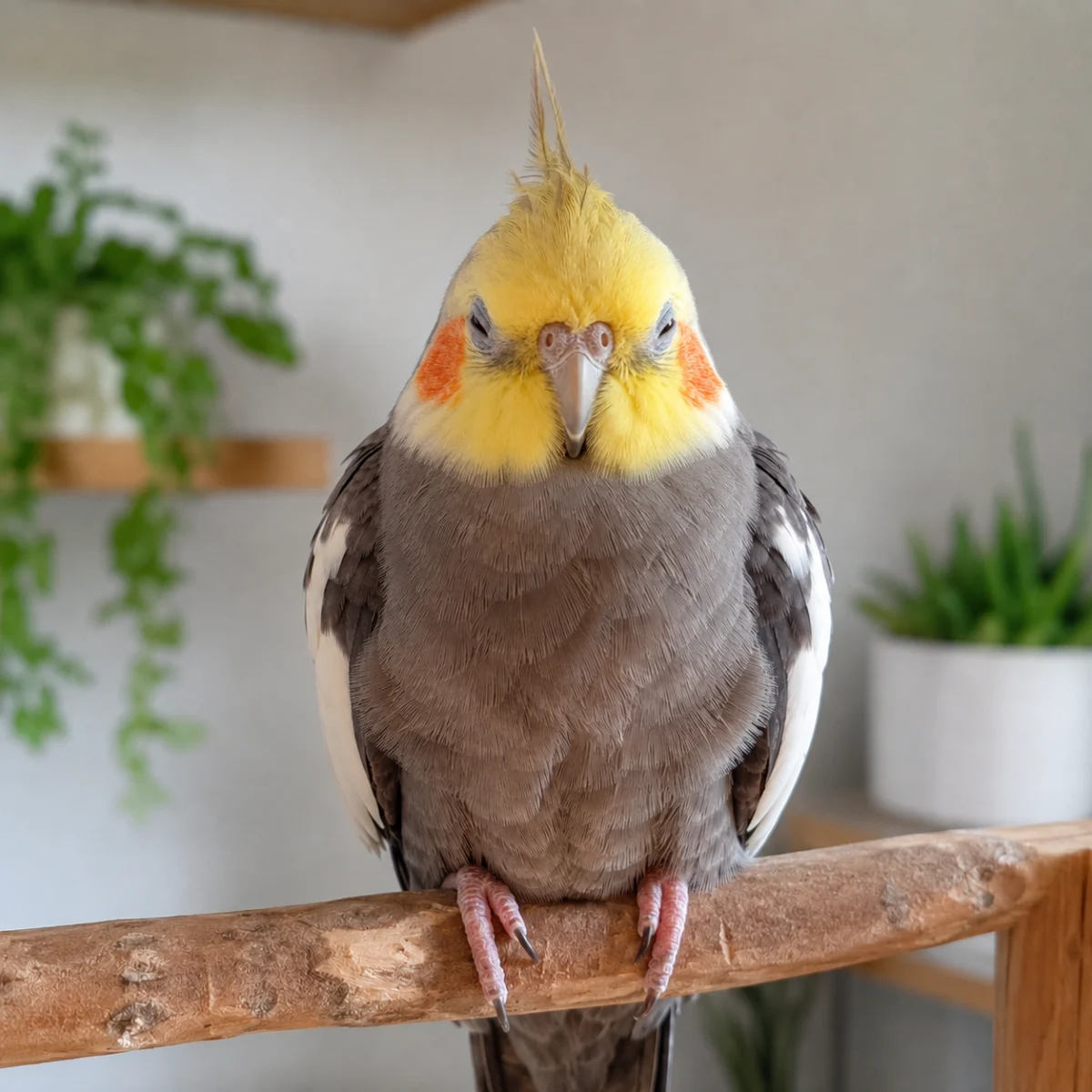
Birds possess a remarkable, evolutionary capacity to mask signs of physical distress. In the wild, appearing weak or lethargic is a death sentence, signaling to predators that an individual is vulnerable. Consequently, companion birds—parrots, canaries, finches, and others—often maintain an appearance of normalcy until their internal health reserves are critically depleted. One of the most common, yet frequently misunderstood, indicators of potential health decline is a persistent change in sleep patterns, specifically when a bird sits with both eyes half-closed during times they are typically active and alert.
Understanding the difference between a contented, healthy nap and a clinical manifestation of illness is a cornerstone of responsible avian husbandry. While healthy birds do engage in periods of rest, a deviation from established behavioral baselines warrants immediate attention from a qualified avian veterinarian.
The Physiology of Rest in Companion Birds
To evaluate the significance of a bird’s behavior, one must first establish a baseline for "normal." A healthy bird typically enjoys short, frequent naps throughout the day, often following periods of high activity, bathing, or ingestion of food. These naps are characterized by a brief duration and a rapid return to full alertness. A bird in a normal resting state will often tuck its head behind a wing, stand on one leg, or fluff its feathers slightly to conserve body heat. Crucially, this state is intermittent; the bird remains responsive to environmental stimuli, such as a familiar voice or the sound of activity in the room.
The concern arises when the pattern shifts from rhythmic, healthy rest to persistent lethargy. If a bird consistently remains with both eyes half-closed during hours of peak activity—such as the early morning or late afternoon—it may be experiencing a decline in health. This behavior is often symptomatic of underlying conditions ranging from nutritional deficiencies and chronic stress to metabolic disorders or infections.
Clinical Implications of Persistent Lethargy
When a bird exhibits excessive sleepiness, it is rarely an isolated symptom. Clinical observations indicate that prolonged closure of the eyes often correlates with a suite of subtle indicators that owners might initially overlook. Data from avian medical associations suggest that by the time an owner notices a bird sitting on the bottom of the cage, the animal may have been compensating for a significant illness for several days or even weeks.
The chronology of symptom progression typically begins with minor behavioral shifts. Initially, an owner might notice a slight reduction in vocalizations, a decrease in the variety of vocalizations, or a minor decline in the consumption of enrichment treats. As the condition advances, the bird may begin to spend more time in a specific, static location within the cage, often accompanied by the fluffed-up appearance known as "fluffing." This is a physiological attempt to trap air in the feathers for warmth, which is often necessary because the bird is struggling to maintain its core metabolic temperature due to illness.
The Fallacy of Appetite as a Health Metric
A frequent point of confusion among avian owners is the reliance on appetite as the sole indicator of wellness. It is a common misconception that if a bird is still consuming food, it cannot be significantly ill. However, veterinarians emphasize that the act of eating is a basic survival instinct that may persist long after a bird’s systemic health has been compromised.
"Eating is not a diagnostic tool for overall health," notes Dr. Diane Burroughs, an expert in avian care. "A bird can continue to visit its food dish, crack seeds, or nibble on pellets while suffering from severe respiratory distress, liver disease, or infection. Relying solely on the presence of appetite to rule out illness often leads to a dangerous delay in professional intervention."
An accurate assessment requires looking beyond the food bowl. Owners should monitor the frequency and consistency of droppings, the volume of water intake, and the bird’s ability to maintain its grip on a perch. A decrease in the number of droppings, for instance, is a quantifiable data point that, when combined with increased sleepiness, provides a much clearer picture of the bird’s internal status than appetite alone.
Assessing the Eyes: When the Symptom is Localized
While half-closed eyes are often a systemic symptom of general illness, they can also indicate localized ophthalmological issues. A bird experiencing eye discomfort may exhibit signs of redness, inflammation, or discharge. These signs demand a different diagnostic approach. When inspecting a bird, one should look for symmetry: do both eyes look identical? Are there signs of discharge, cloudiness, or matted feathers surrounding the orbital area?
If a bird persistently blinks, rubs its eye against a perch, or keeps one eye closed while the other remains open, it is likely suffering from an infection, foreign body, or injury. Because eye health in birds is closely linked to respiratory and sinus health, these symptoms should never be treated with over-the-counter ophthalmic drops without a veterinary examination. The risk of misdiagnosis is high, and the underlying cause—often a sinus or respiratory infection—requires targeted systemic treatment.
Emergency Protocols: Recognizing the Critical Threshold
There is a distinct, non-negotiable threshold between a situation that requires a scheduled appointment and one that necessitates emergency veterinary intervention. The latter is defined by any behavior that threatens the bird’s immediate ability to maintain basic homeostasis.
If a bird exhibits any of the following, the situation must be classified as a medical emergency:
- Respiratory Distress: Visible effort to breathe, tail-bobbing (where the tail moves up and down in sync with each breath), open-mouth breathing, or audible wheezing.
- Neurological or Muscular Failure: The inability to grip a perch, falling from the perch, or an inability to stand.
- Total Responsiveness Failure: The bird is lethargic to the point of being unresponsive to gentle stimulation or appears collapsed on the floor of the cage.
In these instances, time is the primary factor in prognosis. The avian metabolism is exceptionally fast, and the window for successful intervention in critical cases is narrow. Attempting to "wait and see" when a bird is exhibiting these signs frequently results in mortality.
The Role of Preventive Monitoring
The most effective strategy for managing avian health is the practice of daily, objective observation. Experts recommend that owners conduct a brief, standardized "health check" at least twice a day—once in the morning and once in the evening. During these checks, the owner should scan for evidence of consistent behavior: Has the bird moved around the cage? Are the toys being interacted with? Is the bird vocalizing?
Establishing this routine allows the owner to notice "subtle changes." In the context of avian health, the smallest deviation—such as a bird that usually chirps at 7:00 AM remaining silent until 9:00 AM—can be the first evidence of a brewing health issue. By documenting these changes and maintaining an open line of communication with an avian veterinarian, owners can transition from reactive care to proactive, life-saving management.
Conclusion and Professional Guidance
The observation of a bird sitting with both eyes half-closed is a vital piece of diagnostic information, but it is not an end in itself. It is a signal that the status quo has been disrupted. Whether this indicates a mild, temporary condition or a severe, systemic illness can only be determined by a professional evaluation.
When a bird shows persistent signs of unusual sleepiness, the most prudent course of action is to contact an avian veterinarian. Providing the veterinarian with a detailed, objective account of the changes observed—backed by data on appetite, droppings, and activity levels—will significantly improve the accuracy of the diagnosis and the efficacy of the treatment plan. Ultimately, the guardian’s role is to act as the primary observer, bridging the gap between the bird’s stoic, evolutionary silence and the necessary medical care required to ensure its longevity and well-being.

