


A groundbreaking study of exceptionally preserved dinosaur fossils, featuring intact feathers and their original coloration, has provided compelling evidence that some feathered dinosaurs, despite possessing the structures associated with flight, had already lost the ability to fly. This remarkable discovery, led by Dr. Yosef Kiat of Tel Aviv University in collaboration with international researchers, challenges previous understandings of avian evolution and the development of flight. The findings, published in the prestigious journal Communications Biology by Nature Portfolio, suggest that the evolutionary trajectory of flight in dinosaurs and birds was a far more intricate and dynamic process than previously assumed, with instances of flight being acquired and subsequently lost.
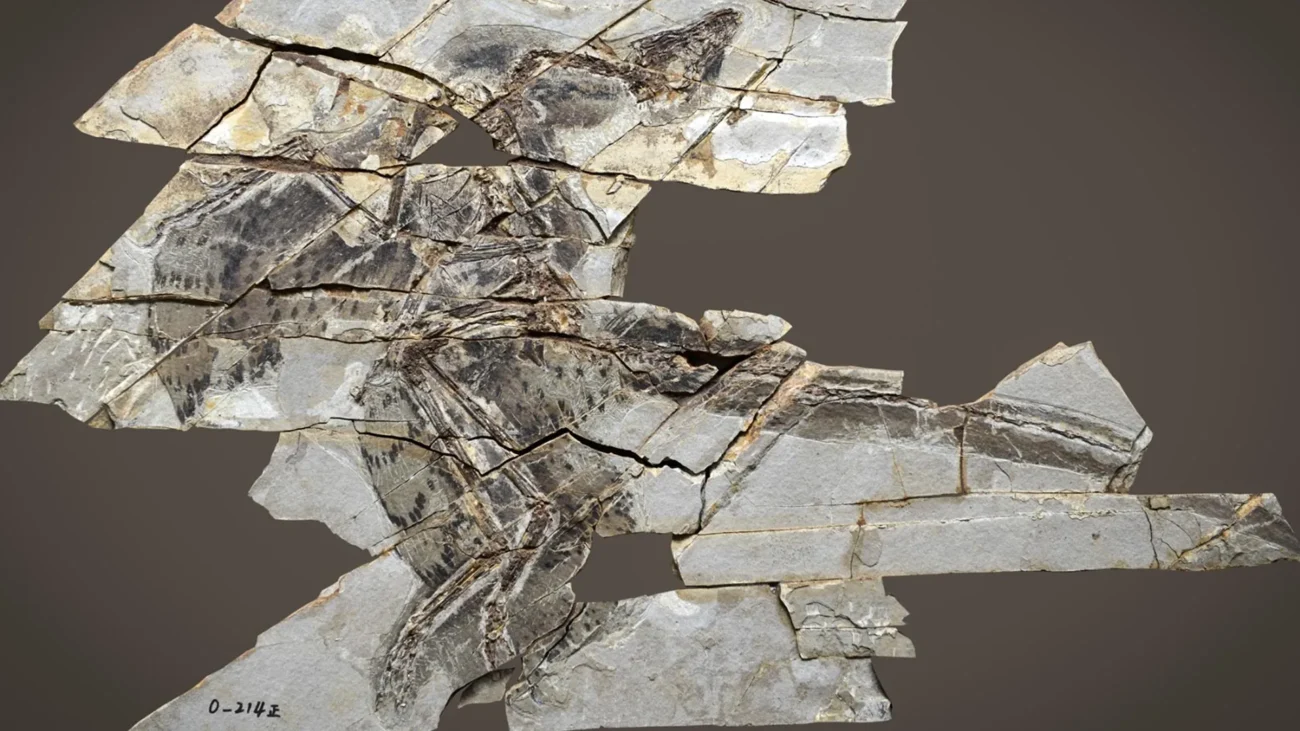
The research team’s meticulous analysis of nine fossil specimens from eastern China, belonging to the Pennaraptoran dinosaur Anchiornis, has opened a new window into the lives of these ancient creatures, dating back approximately 160 million years. The exceptional preservation of these fossils, a rarity in paleontology, not only showcases the delicate structure of feathers but also retains their original pigmentation, a detail that has proven crucial in unraveling the mysteries of their locomotion.
The Evolutionary Tapestry of Feathers and Flight
The evolutionary journey of dinosaurs, which diverged from other reptiles around 240 million years ago, saw the emergence of feathers as a significant adaptation. These lightweight, protein-based structures initially served purposes beyond flight, including thermoregulation. A pivotal moment in this evolutionary narrative occurred approximately 175 million years ago with the appearance of the Pennaraptora, a group of feathered dinosaurs recognized as the distant ancestors of modern birds. Uniquely, this lineage was the sole survivor of the devastating mass extinction event that marked the end of the Mesozoic era 66 million years ago.
While scientists have long posited that Pennaraptora evolved feathers primarily for aerial locomotion, the new research suggests a more nuanced reality. Environmental pressures and evolutionary shifts may have led certain species within this group to relinquish their flight capabilities over time. This phenomenon mirrors the existence of modern flightless birds, such as ostriches and penguins, which have adapted to terrestrial or aquatic lifestyles despite their avian heritage.
Dr. Kiat, an ornithologist with a specialized focus on feather morphology and function, explained the significance of this discovery. "Feathers are remarkable structures that evolved for a variety of reasons, and their development in dinosaurs was a key step in the lineage leading to birds," he stated. "However, our findings with Anchiornis demonstrate that having feathers did not automatically equate to flight. The evolutionary path was not a simple linear progression towards aerial mastery."
Unlocking Secrets Through Preserved Color and Structure
The Anchiornis fossils are not merely important for their feathered preservation; their extraordinary coloration, a testament to the unique fossilization conditions in their discovery locale, has provided an unprecedented level of detail. Each of the nine specimens examined revealed wing feathers adorned with a distinct white base and a prominent black spot at their tips. This preserved pigmentation allowed researchers to scrutinize the fine-grained structure and growth patterns of the feathers in a way that is typically impossible with less complete fossil records.
"The preservation of color in these fossils is like finding a hidden diary of the animal’s life," Dr. Kiat elaborated. "It allowed us to move beyond just the skeletal structure and infer functional traits that are usually lost to time. This level of detail is what makes these fossils so invaluable."
Molting Patterns: The Rosetta Stone of Flight
The core of the research hinges on the analysis of feather molting patterns, a biological process that, when examined in fossilized remains, can serve as a powerful indicator of an animal’s flight capability. Feathers, during their growth phase, are supplied with blood vessels and are living tissue. Once fully developed, they detach from this blood supply, becoming non-living material. Over time, these feathers wear out and are shed, replaced by new ones through molting.
Dr. Kiat elucidated the significance of this biological cycle: "Feathers grow over a period of about two to three weeks. Upon reaching their final size, they disconnect from the blood vessels that nourished them during growth, essentially becoming dead material. As they endure wear and tear, they are shed and subsequently replaced by new feathers in a process known as molting. This process tells a crucial story: birds that rely on flight, and thus on their feathers to maintain aerial locomotion, exhibit an orderly and gradual molting pattern. This pattern ensures symmetry between their wings, allowing them to continue flying even during the feather replacement period."
In stark contrast, flightless birds display a more erratic and irregular molting process. "In birds that have lost the ability to fly, molting is generally more random and less synchronized," Dr. Kiat continued. "Consequently, the molting pattern acts as a diagnostic tool, revealing whether a particular winged creature possessed the capacity for flight."
Anchiornis: A Case of Feathered Flightlessness
By meticulously examining the fossilized wing feathers of Anchiornis, the researchers identified a continuous line of black spots along the wing edges. More importantly, they observed developing feathers whose black spots were misaligned, indicating that they were in various stages of growth. This observation, coupled with a detailed analysis of the feather replacement sequence, revealed an irregular, rather than orderly, molting pattern.
This irregular pattern strongly suggests that Anchiornis did not engage in sustained flight. The asymmetrical shedding and regrowth of feathers would have compromised the aerodynamic efficiency of their wings, making flight impossible or at best, severely limited.
"Based on my extensive familiarity with the molting behaviors of modern birds, I was able to identify a molting pattern in these fossils that strongly indicates these dinosaurs were likely flightless," Dr. Kiat concluded. "This is an exceptionally rare and exciting finding. The preserved coloration of the feathers provided us with a unique opportunity to ascertain a functional trait of these ancient creatures, going beyond the usual preserved body structure of skeletons and bones."
He further emphasized the broader implications of this discovery: "Feather molting might seem like a minor, technical detail. However, when we can examine it in fossilized specimens, it has the power to fundamentally alter our understanding of the origins of flight. Anchiornis now joins a growing list of dinosaurs that were adorned with feathers but were not capable of true flight. This highlights the profound complexity and diversity of wing evolution throughout dinosaurian history."
Broader Implications for Understanding Avian Evolution
The findings regarding Anchiornis have significant ramifications for our understanding of the evolutionary pathways leading to modern birds. They underscore that the development of flight was not a singular event but rather a multifaceted process involving periods of acquisition, adaptation, and even loss of flight. This perspective challenges the long-held notion of a simple, linear progression from feathered dinosaurs to flying birds.
Supporting Data and Chronological Context
- ~240 Million Years Ago: Dinosaurs diverge from other reptilian lineages.
- ~200-175 Million Years Ago: Emergence and diversification of feathered dinosaurs.
- ~175 Million Years Ago: Appearance of Pennaraptora, a group of feathered dinosaurs considered ancestral to birds.
- ~160 Million Years Ago: The period during which Anchiornis lived and its fossils were formed.
- 66 Million Years Ago: The Cretaceous-Paleogene extinction event, which wiped out non-avian dinosaurs, with Pennaraptora being the sole surviving dinosaur lineage.
- Present Day: Publication of the study in Communications Biology.
The research team’s methodology involved advanced microscopic analysis of the feather structures and the patterns of their wear and replacement. By comparing these fossilized patterns to the known molting behaviors of hundreds of extant bird species, they were able to draw robust conclusions about the functional capabilities of Anchiornis.
Expert Reactions and Future Directions
While the study is groundbreaking, paleontologists and evolutionary biologists are likely to engage in further discussions and research to integrate these findings into the broader evolutionary narrative. Dr. Anya Sharma, a paleontologist specializing in Mesozoic birds at the Natural History Museum, commented, "This study is a testament to the power of incredibly well-preserved fossils. The ability to infer functional traits like flightlessness from feather molting is a significant advancement. It forces us to reconsider the diversity of feather functions and evolutionary trajectories within early bird lineages."
Future research will likely focus on identifying other feathered dinosaurs with similar exceptionally preserved fossils to see if this pattern of acquiring feathers and then losing flight is more widespread than currently understood. Investigating the environmental and ecological pressures that might have driven such evolutionary reversals will also be a key area of inquiry. The study also opens doors for exploring the biomechanics of these flightless, feathered dinosaurs and how their wing structures might have been adapted for other purposes, such as display or locomotion on the ground.
The discovery underscores the dynamic and often non-linear nature of evolution. It suggests that the evolution of flight was not a predetermined outcome but a complex interplay of genetic potential, environmental pressures, and selective forces that resulted in diverse outcomes, including the loss of abilities once acquired. This intricate dance of adaptation and exaptation continues to reveal the astonishing story of life on Earth.

