


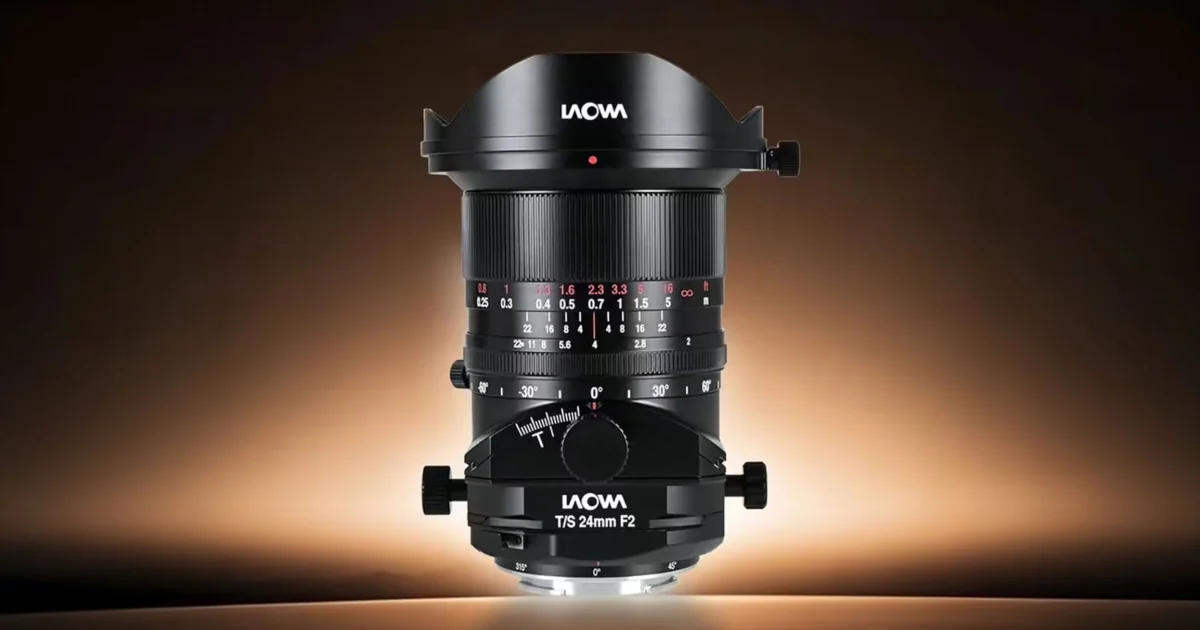
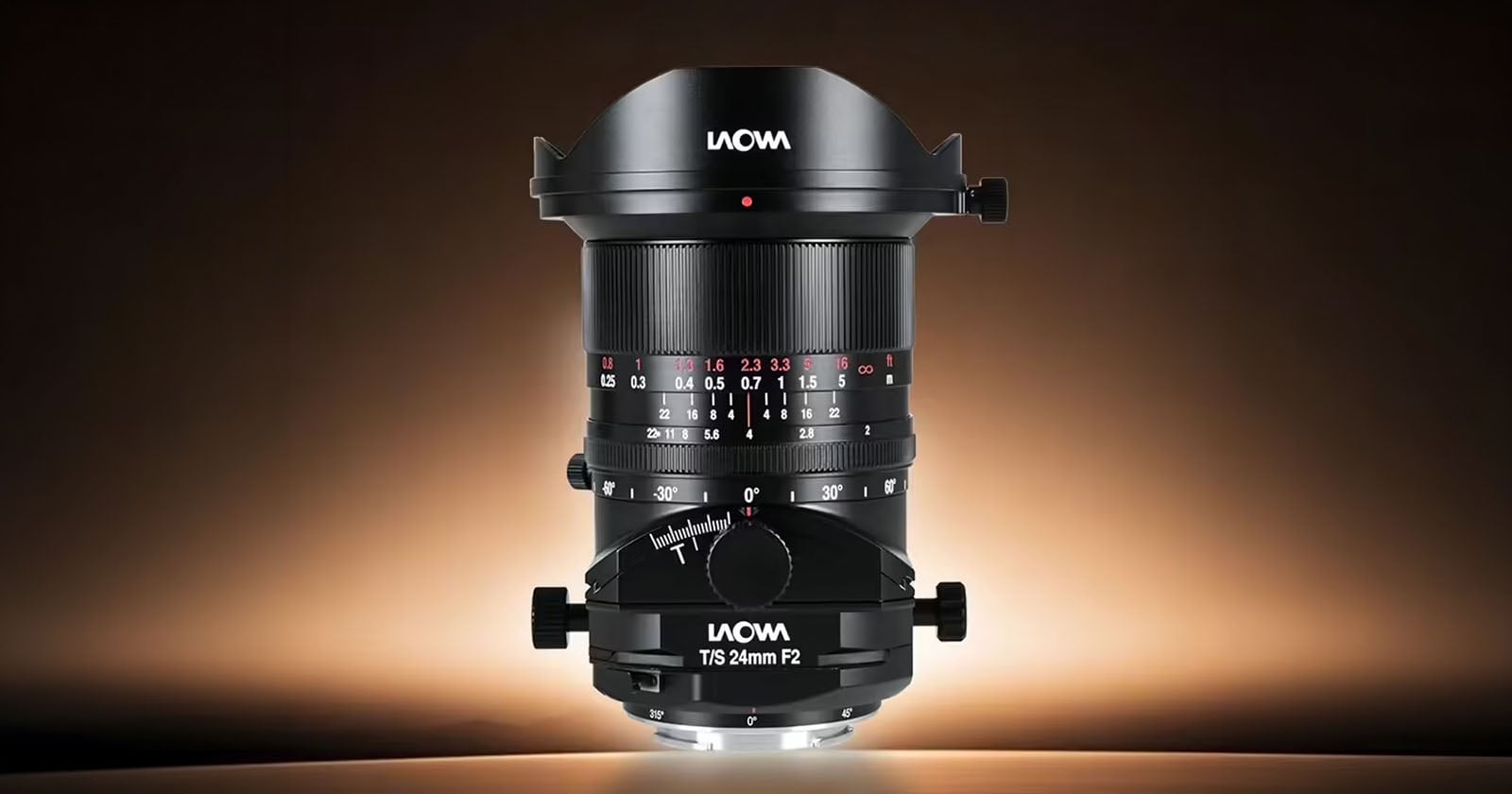
Venus Optics has officially expanded its specialized optics lineup with the introduction of the Laowa T/S 24mm f/2, a move that signals a significant shift in the accessibility and performance standards of tilt-shift photography. While the lens has debuted in the Chinese market, anticipation is mounting globally as photographers await an official international release. This lens represents more than just a new product; it serves as a technical milestone, offering a maximum aperture of f/2—a specification that effectively outpaces traditional industry standards held by legacy manufacturers for decades.
A New Standard in Optical Engineering
Tilt-shift lenses are essential tools for architectural, interior, and landscape photographers, allowing for the correction of perspective distortion and the manipulation of the plane of focus. Historically, these lenses have been characterized by relatively slow maximum apertures, usually settling at f/3.5 or f/4. By achieving an f/2 aperture, the Laowa T/S 24mm f/2 provides more than a full stop of additional light-gathering capability compared to its predecessors.
The optical construction of the lens is equally impressive. It incorporates a sophisticated array of 13 elements organized into 10 groups. Among these are five Extra-Low Dispersion (ED) elements, two aspherical elements, and four high-refractive-index glass elements. This configuration is designed to mitigate chromatic aberration and ensure edge-to-edge sharpness, a critical requirement for high-resolution sensors used in modern mirrorless and medium-format systems. Furthermore, the inclusion of a 14-bladed aperture diaphragm promises exceptionally smooth bokeh, which is particularly beneficial when the lens is utilized for creative focus-stacking or selective focus techniques.
Chronology of the Release
The trajectory of this product launch began with its quiet introduction in China, where it is currently available through domestic retailers. Shortly after, the lens began appearing on international gray-market platforms such as AliExpress. While these listings have provided the global community with an early look at the hardware, they are not representative of the official global rollout. Venus Optics has maintained a strategic silence regarding specific dates for the North American and European launches, though industry analysts suggest that a formal announcement is imminent given the lens’s current availability in East Asian markets.
This follows a broader trend for Venus Optics, which has steadily grown its market share by focusing on niche optical solutions that major camera manufacturers—such as Canon, Nikon, and Sony—have either neglected or de-prioritized. By consistently delivering specialized glass to a wide array of mounts, including E, Z, RF, and L-Mount, as well as medium-format options like GFX and XCD, Laowa has positioned itself as the primary alternative for photographers seeking unique optical performance.
Technical Specifications and Versatility
The physical design of the Laowa T/S 24mm f/2 demonstrates a high degree of utility for professional workflows. Weighing in at 860 grams (30.3 ounces), the lens is substantial but manageable for field work. It features a robust shift range of +/- 12mm and a tilt range of +/- 10mm. One of the standout features is the rotating lens mount, which allows the photographer to reorient the tilt-shift movement relative to the camera’s frame without the need to adjust the tripod head. This is a vital feature for architectural photography, where maintaining the horizon line while correcting perspective is paramount.
Compatibility remains a cornerstone of the Laowa philosophy. Unlike many proprietary lenses that are locked to a single mount system, the 24mm f/2 has been engineered to cover full-frame sensors while also maintaining full functionality on medium-format bodies. Unlike previous generations of tilt-shift lenses that suffered from reduced movement ranges when adapted to larger sensors, the new 24mm design is reported to retain its full operational capabilities, even on medium-format cameras.
Market Context and Economic Implications
The pricing strategy for the Laowa 24mm f/2 is aggressive, positioning it to disrupt the professional lens market. With an official Chinese retail price of approximately RMB 7,650—roughly $1,140 USD—the lens is positioned as a high-value alternative to existing options. For comparison, legacy tilt-shift lenses from major manufacturers often retail at significantly higher price points, sometimes exceeding $2,000.
However, the final price for global consumers may vary. Factors such as international shipping, import tariffs, and local distribution overhead will inevitably play a role in the MSRP once the product reaches Western markets. Even with these markups, the lens is expected to remain highly competitive. For reference, the existing Laowa 17mm f/4 Zero-D Tilt-Shift currently retails for approximately $1,249 in the United States, providing a clear benchmark for where the 24mm f/2 may land.
Broader Impact: The Resurgence of Tilt-Shift
The resurgence of tilt-shift photography is not merely a nostalgic trend; it is a response to the limitations of modern software-based perspective correction. While post-processing tools like Adobe Lightroom can digitally correct perspective, they do so at the cost of resolution and sensor real estate, as the image must be cropped and stretched to compensate for the distortion. A hardware-based solution, such as the Laowa 24mm f/2, allows photographers to capture the correct perspective in-camera, ensuring that 100% of the sensor’s resolution is preserved.
Furthermore, the f/2 aperture opens doors to astrophotography and low-light environmental portraiture—genres where tilt-shift lenses were previously considered unsuitable due to their slower light-gathering capabilities. By enabling a shallow depth of field combined with perspective control, Venus Optics has created a tool that invites photographers to experiment with "miniature-effect" photography in low-light conditions, or to isolate subjects within complex architectural environments with unprecedented ease.
Looking Toward the Future
The industry is currently awaiting an official statement from Venus Optics regarding the global launch schedule. While the company has not provided a specific roadmap, the technical specifications alone suggest that this lens will become a staple for professional photographers who prioritize image quality and creative control.
As mirrorless systems continue to dominate the market, the demand for specialized, high-performance manual focus glass is expected to grow. Laowa’s commitment to filling these gaps, particularly with the 24mm f/2, underscores a larger transformation in the optical industry. Independent manufacturers are no longer merely producing "budget" alternatives; they are now leading the charge in developing specialized, high-performance lenses that challenge the dominance of major camera brands.
For the professional photographer, the Laowa T/S 24mm f/2 is more than a new piece of kit; it is a potential disruptor that makes advanced optical techniques accessible to a wider demographic, ensuring that the art of tilt-shift photography remains a vibrant and evolving discipline in the digital age. As the lens makes its way to global markets, its performance in real-world scenarios will be the ultimate test of whether it can truly supplant the legacy tilt-shift giants that have defined the category for years.

