


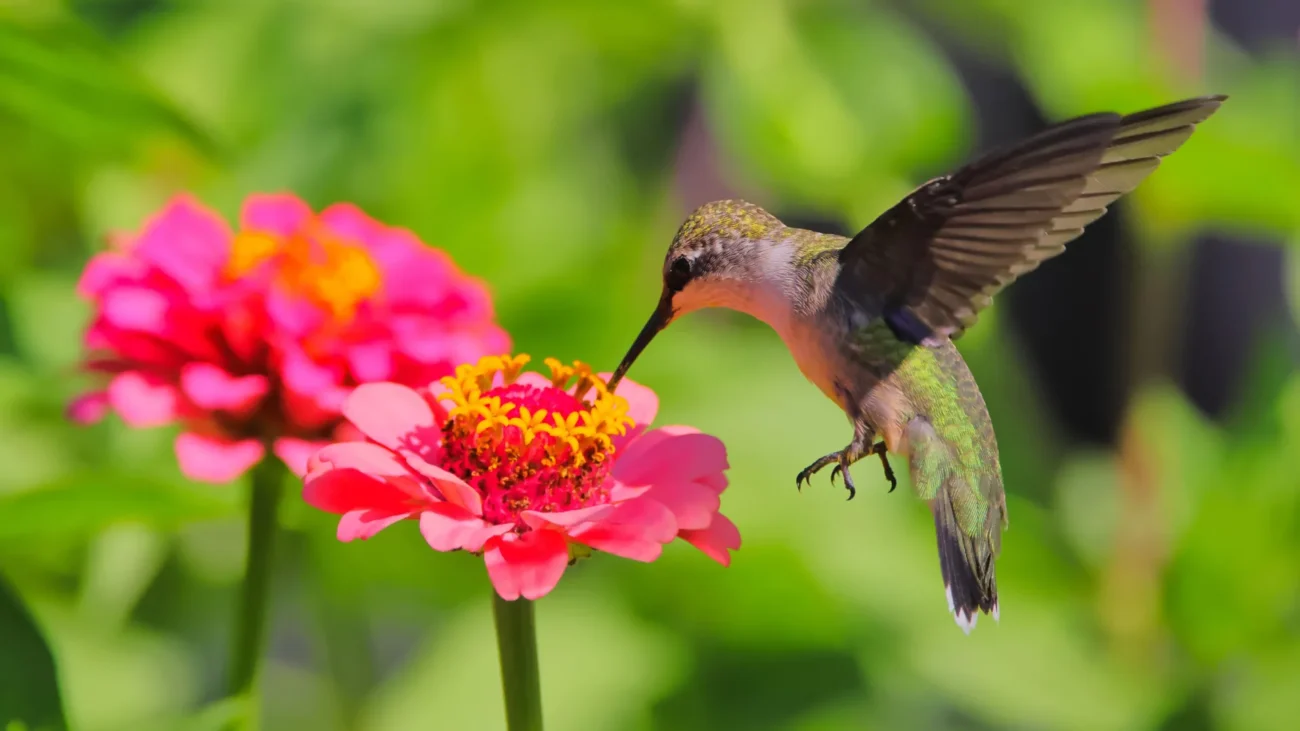
As bees and hummingbirds flit from blossom to blossom, diligently collecting nectar and in the process, facilitating the reproduction of countless plant species, they are inadvertently consuming something more potent than mere sugary sustenance: small quantities of alcohol. A groundbreaking study by biologists at the University of California, Berkeley, has revealed the widespread presence of ethanol in floral nectar, suggesting a previously unacknowledged dietary component for these vital pollinators. This discovery opens new avenues for understanding animal physiology, evolutionary adaptations, and the complex interplay between flora and fauna.
The Pervasive Presence of Ethanol in Nectar
The comprehensive survey, the first of its kind to systematically analyze alcohol content in floral nectar, detected ethanol in a significant majority of the plant species examined. Out of 29 distinct plant species investigated, nectar samples from 26 contained detectable levels of ethanol. While most samples exhibited only trace amounts, a byproduct of yeast fermenting the sugars naturally present in nectar, one particular sample registered an ethanol concentration of 0.056% by weight. This concentration, though minute by human standards, is notable given the sheer volume of nectar consumed by these pollinators.
The research, published on March 25th in the prestigious journal Royal Society Open Science, was spearheaded by doctoral student Aleksey Maro and postdoctoral fellow Ammon Corl, working under the guidance of UC Berkeley professor Robert Dudley. Colleagues Rauri Bowie and Jimmy McGuire, also professors of integrative biology and curators at the campus’s Museum of Vertebrate Zoology, contributed to the study.
Quantifying Pollinator Alcohol Consumption
While the detected ethanol levels may seem minuscule, the implications for nectar-feeding animals are substantial. Nectar serves as a primary energy source for many species, and their daily intake can be remarkably high. Hummingbirds, for instance, are known to consume between 50% and 150% of their body weight in nectar each day. For an Anna’s hummingbird (Calypte anna), a common species along the Pacific coast, the researchers estimate this daily nectar consumption translates to approximately 0.2 grams of ethanol per kilogram of body weight. This daily intake is surprisingly comparable to a human consuming about one standard alcoholic beverage.
Despite this regular exposure to ethanol, bees and birds do not typically exhibit overt signs of intoxication. This is attributed to several factors. Firstly, the alcohol is consumed gradually throughout the day, allowing for continuous metabolism. Secondly, previous research by the same UC Berkeley team indicated that hummingbirds can tolerate relatively high alcohol concentrations in sugar water, with studies showing they will readily drink solutions containing up to 1% alcohol. However, their preference shifts, and they begin to avoid feeders when concentrations exceed this threshold.
Beyond Intoxication: Subtle Behavioral and Physiological Effects
The presence of ethanol in nectar raises intriguing questions about its potential effects on pollinator behavior and physiology, extending beyond simple intoxication. Nectar is not solely composed of sugars; it often contains other bioactive compounds, such as nicotine and caffeine, which are known to influence animal behavior. Ethanol, even in small amounts, could exert similar subtle influences.
"Hummingbirds are like little furnaces. They burn through everything really quick, so you don’t expect anything to accumulate in their bloodstream," explained Aleksey Maro. "But we don’t know what kind of signaling or appetitive properties the alcohol has. There are other things that the ethanol could be doing aside from creating a buzz, like with humans."
Professor Robert Dudley elaborated on this point, suggesting that ethanol might offer other, potentially beneficial, effects related to foraging biology. "There may be other kinds of effects specific to the foraging biology of the species in question that could be beneficial," he stated. "They’re burning it so fast, I’m guessing that they probably aren’t suffering inebriating effects. But it may also have other consequences for their behavior."
Experimental Evidence of Alcohol Tolerance and Metabolism
To further investigate the interaction between pollinators and dietary alcohol, the UC Berkeley team conducted a series of experiments. In one notable study, hummingbirds at a feeder outside Dudley’s office demonstrated a clear preference for sugar water with low alcohol concentrations. They remained largely indifferent to solutions containing less than 1% alcohol by volume. However, when the concentration increased to 2%, their visits to the feeder dropped by approximately half.
"Somehow they are metering their intake, so maybe zero to 1% is a more likely concentration that they would find in the wild than anything higher," Professor Dudley observed, suggesting that the observed tolerance levels likely reflect natural exposure.
Further research by former graduate student Cynthia Wang-Claypool provided compelling evidence that birds not only ingest alcohol but also metabolize it. Her study found that ethyl glucuronide, a known byproduct of ethanol metabolism, was present in the feathers of various bird species, including Anna’s hummingbirds. This discovery suggests that birds process alcohol in a manner analogous to mammals, indicating a physiological capacity to handle ethanol exposure.
These combined findings—the widespread presence of ethanol in nectar, the experimental demonstration of tolerance, and the evidence of metabolism—collectively support the hypothesis that birds and other animals may have evolved a degree of tolerance, and potentially even a preference, for alcohol over evolutionary time.
"The laboratory experiment was showing that yes, they will drink ethanol in their nectar, though they have some aversion to it if it gets too high," Corl remarked. "The feathers are saying that, yes, they will metabolize it. And then this study is saying that ethanol is actually pretty widespread in the nectar they consume."
Comparative Analysis of Alcohol Intake Across Species
The UC Berkeley researchers employed an enzymatic assay to meticulously measure ethanol levels in nectar samples. Using this data, they estimated the daily alcohol intake for several nectar-feeding species, taking into account their varying caloric needs and feeding habits. Due to the limited availability of detailed feeding data for many species, their analysis focused primarily on two hummingbird species, including the Anna’s hummingbird, and three species of sunbirds. Sunbirds, found in South Africa, occupy a similar ecological niche to hummingbirds in the Americas, feeding on plants such as honeybush (Melianthus major).
To provide broader context, these estimated intakes were then compared with those of other animals, including the European honeybee, the pen-tailed tree shrew, fruit-eating chimpanzees, and humans consuming one standard drink per day (equating to approximately 0.14 grams per kilogram of body weight daily). The pen-tailed tree shrew emerged with the highest estimated daily intake at 1.4 g/kg/day, while the European honeybee had the lowest at 0.05 g/kg/day. The nectar-feeding birds, including hummingbirds and sunbirds, fell within a comparable range, consuming approximately 0.19 to 0.27 g/kg/day when feeding on native flowers.
Intriguingly, the feeder experiments suggested that Anna’s hummingbirds might ingest even higher quantities of alcohol when presented with fermented sugar water in artificial feeders, with an estimated intake of 0.30 g/kg/day, surpassing their intake from natural nectar sources. This observation highlights how artificial feeding stations might alter pollinator diets and their exposure to various compounds.
Evolutionary Roots and Future Research Directions
This ongoing research is an integral part of a larger, five-year National Science Foundation project. The broader initiative aims to collect extensive genetic data from hummingbirds and sunbirds to unravel the complex mechanisms of their adaptation to diverse environments and food sources. This includes adaptations to high altitudes, diets rich in sugar, and environments where nectar frequently undergoes fermentation.
The findings from this study have significant implications for our understanding of evolutionary biology and the widespread adaptations to dietary ethanol across the animal kingdom. "These studies suggest that there may be a broad range of physiological adaptations across the animal kingdom to the ubiquity of dietary ethanol, and that the responses we see in humans may not be representative of all primates or of all animals generally," Professor Dudley emphasized.
He further posited, "Maybe there are other physiological detoxification pathways or other kinds of nutritional effects of ethanol for animals that are consuming it every day of their lives. That’s the interesting thing—this is chronic through the course of the day, but that’s a lifetime exposure post-weaning. It just means that the comparative biology of ethanol ingestion deserves further study."
The research underscores that the human relationship with alcohol, often characterized by its potential for intoxication and addiction, may be just one facet of a much broader biological phenomenon. For many species, chronic, low-level exposure to ethanol from natural food sources might have led to the evolution of sophisticated physiological mechanisms for its detoxification and utilization, potentially even conferring subtle advantages in energy metabolism or foraging efficiency. Future research will likely delve deeper into these physiological pathways, exploring genetic variations, enzyme activity, and the potential role of ethanol in the broader nutritional ecology of nectar-feeding animals and other organisms that regularly encounter fermented food sources. The findings also serve as a reminder of the intricate and often surprising biochemical interactions that shape the natural world, urging a re-evaluation of seemingly simple biological processes.

