



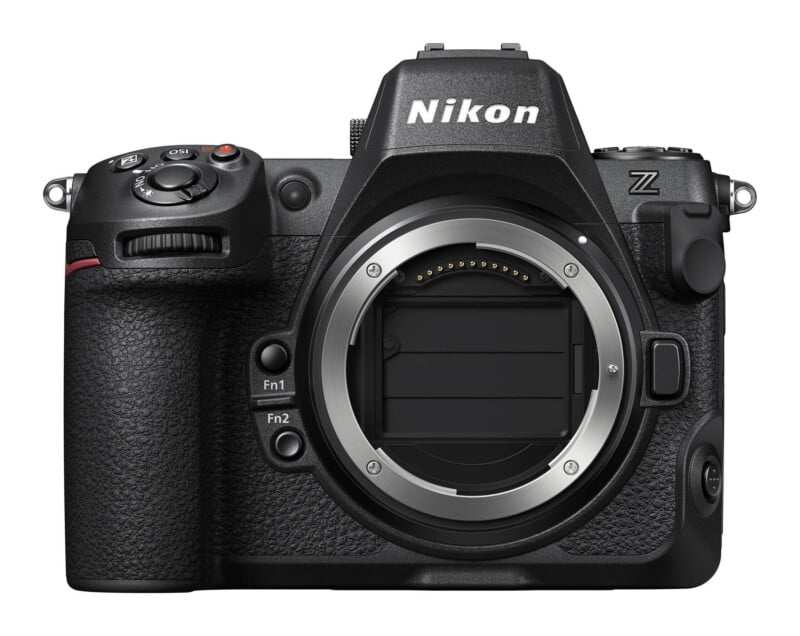
In a landmark decision that has sent shockwaves through the global photography industry, the China National Intellectual Property Administration (CNIPA) ruled this past summer in favor of the lens manufacturer Viltrox, effectively dismantling the core patent protections Nikon relied upon to maintain a closed Z-mount ecosystem. The ruling, which originated from a legal dispute initiated by Nikon in January 2026, has invalidated key design patents concerning the physical and electronic interface of the Z-mount. This outcome does not merely resolve a singular corporate disagreement; it establishes a legal precedent that potentially threatens the exclusivity of other proprietary camera mounts, most notably the Canon RF-mount, which remains the industry’s most strictly guarded system.
The trajectory of this conflict highlights the evolving power dynamic between legacy Japanese camera manufacturers and the rapid innovation occurring within the Chinese optical industry. For years, major camera brands have utilized patent litigation and cease-and-desist threats as a primary mechanism to restrict third-party autofocus lens development. However, the CNIPA’s decision suggests that the era of relying on minor engineering iterations as "inventive" patentable technology may be coming to an end.
A Chronology of the Conflict
The legal friction between Nikon and Viltrox began to escalate in early 2026. In January, Nikon formally launched a lawsuit in China, alleging that Viltrox had infringed upon its intellectual property regarding the Z-mount’s physical bayonet tabs, terminal pins, and specific electronic communication protocols. Nikon sought both financial damages and a permanent injunction against the production and distribution of Viltrox’s autofocus-equipped Z-mount lenses.

Throughout the spring, legal teams reviewed the technical specifications of the Z-mount against existing industry standards. The turning point arrived in July 2026, when the CNIPA issued its final judgment. The court rejected Nikon’s claims, asserting that the design elements in question—specifically the dimensions of the bayonet lugs and the arrangement of the electronic contact pins—did not represent a significant "inventive step." The court determined that these modifications, when compared to traditional F-mount designs, constituted routine engineering choices rather than novel technological breakthroughs. Consequently, the CNIPA invalidated the relevant portion of Nikon’s design patent, removing the legal foundation for the company’s claims.
The Technical Basis of the Ruling
The core of the dispute centered on what constitutes an "inventive step" under Chinese patent law, a concept analogous to the "non-obviousness" requirement in United States patent jurisprudence. The CNIPA’s reasoning was clear: the transition from DSLR mounts to mirrorless systems requires physical adjustments to flange focal distances and mount diameters, but these changes are largely dictated by optical physics and ergonomic necessity rather than unique, patentable creativity.
Industry experts note that this ruling effectively commoditizes the physical structure of camera mounts. By declaring that standard mechanical adjustments to bayonet geometry are not patentable, the court has signaled to the industry that legal barriers to entry for third-party manufacturers are significantly lower than previously assumed. This creates a difficult position for manufacturers who have long operated under the assumption that their proprietary mount designs were impenetrable fortresses.
Implications for the Industry and Canon
The most immediate question following the ruling is how this precedent will impact Canon. Unlike Sony, which has historically maintained a more open-licensing policy for its E-mount, Canon has remained steadfast in protecting its RF-mount. In 2022, Canon engaged in a series of aggressive legal maneuvers, issuing cease-and-desist notices to multiple third-party manufacturers, including Viltrox, forcing them to pull autofocus RF-mount lenses from the market.

At the time, the strategy proved successful, primarily because the affected companies lacked the resources to mount a protracted legal defense. However, the 2026 ruling demonstrates that the landscape has shifted. Chinese manufacturers like Viltrox are now significantly more capitalized, technologically sophisticated, and willing to challenge the status quo. If Canon were to attempt a similar strategy today, it would risk a repeat of the Nikon outcome—a legal defeat that could lead to the invalidation of its own patents within the Chinese market, which currently serves as the world’s second-largest camera consumer base.
Global Legal Risks and Strategic Responses
While the CNIPA ruling is technically limited to Chinese jurisdiction, it provides a "legal roadmap" that can be cited in patent disputes worldwide. If a manufacturer challenges a camera brand in the United States or Europe, they can now utilize the logic established in the CNIPA case to argue that similar patents should be invalidated as "routine engineering."
Faced with this reality, camera manufacturers are likely considering alternative strategies to maintain control over their ecosystems. One such strategy is the implementation of encrypted firmware. By requiring a secure "handshake" between the lens and the camera body via encrypted protocols, companies can theoretically block unauthorized lenses. However, this approach carries significant risks. Firmware-based blocks are often perceived negatively by consumers and professional photographers, who value the diversity and affordability that third-party lenses provide. Furthermore, history has shown that such software barriers are frequently bypassed by third-party developers within days or weeks, leading to a "cat-and-mouse" game that can damage brand reputation.
The Shift Toward Managed Licensing
The most pragmatic path forward for companies like Canon and Nikon may be a transition to a managed licensing program, similar to the model employed by Sony. Under such a system, third-party manufacturers are invited to become official partners. This allows the camera company to maintain a degree of control over the user experience—such as limiting certain high-speed performance features or ensuring quality standards—while collecting licensing fees.
This model serves the interests of both parties: the camera manufacturer secures a recurring revenue stream and retains a level of control, while the third-party manufacturer gains legitimate market access and the ability to market their products without the threat of litigation. Given that many major lens manufacturers, such as Sigma and Tamron, maintain close ties with Japanese camera brands through the Camera and Imaging Products Association (CIPA), a collaborative approach is not only possible but likely beneficial for the long-term health of the industry.
Conclusion
The ruling against Nikon marks a fundamental shift in the camera industry. The days when a manufacturer could rely solely on legal threats to maintain a closed ecosystem are waning. As the technical expertise of third-party lens manufacturers continues to rise, the sustainability of restrictive mount policies is being challenged by both the courts and the market.
For the consumer, this could lead to a more competitive landscape characterized by greater lens variety and more aggressive pricing. For the industry leaders, the focus must shift from defensive litigation to strategic partnerships. Whether Canon and other stakeholders will adapt to this new reality or continue to face the risks of further patent invalidation remains to be seen. What is certain, however, is that the balance of power has shifted, and the "closed-mount" model that has defined the early mirrorless era is under unprecedented pressure to evolve. As of late 2026, the industry remains in a period of cautious observation, waiting to see which manufacturer will be the first to navigate this new legal environment through negotiation rather than conflict.

