



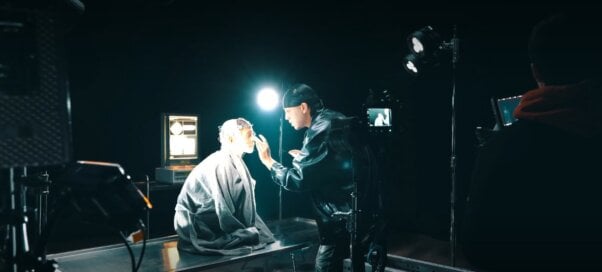
People for the Ethical Treatment of Animals (PETA) has officially launched a provocative new short film titled Bodies of Research, a cinematic endeavor designed to spark a global conversation regarding the ethics and scientific validity of animal experimentation. Directed by French filmmakers Favio Vinson and Andres Gomez Orellana, the film utilizes the "body horror" genre to depict the physical and psychological trauma associated with laboratory research. By placing human actors in the roles typically occupied by animals, the production aims to strip away the clinical detachment often associated with animal testing and force a direct confrontation with the suffering inherent in the practice.
The one-minute film opens with visceral imagery: prisoners thrashing against cage doors, individuals strapped to cold metal tables, and the administration of unknown chemical injections under the sterile, unforgiving glow of fluorescent lights. The atmosphere is intentionally disorienting, utilizing haunting music and sharp visual flashes to simulate the terror of confinement and experimentation. The narrative tension culminates in a sudden reveal—a message informing viewers that the subjects are professional actors. This revelation serves as a stark transition to the film’s core message: for the millions of animals currently held in global laboratories, there is no reprieve, no camera crew, and no end to the simulation.
The Cinematic Strategy: Using Body Horror to Address Animal Welfare
The choice of the body horror genre is a deliberate tactical move by PETA and the filmmakers. Historically, animal rights advocacy has relied heavily on undercover investigative footage. While effective, such footage can sometimes lead to "compassion fatigue" or be dismissed by viewers as outliers. By using high-production-value cinematography and human surrogates, Bodies of Research taps into a more immediate, visceral empathy.
Filmmakers Favio Vinson and Andres Gomez Orellana structured the film to highlight the "flip the script" narrative. By asking the audience to imagine humans in these conditions, the film challenges the concept of speciesism—the assumption of human superiority that provides the moral justification for animal exploitation. The production emphasizes that the physiological capacity for pain, fear, and distress is not unique to humans but is a shared biological trait among all sentient beings used in research, including mice, rats, rabbits, monkeys, dogs, and cats.
A History of Controversy: The Evolution of Animal Testing
Animal experimentation has been a cornerstone of biological research and toxicological testing for over a century. The practice gained significant regulatory traction in the mid-20th century, particularly following the Elixir Sulfanilamide tragedy of 1937 in the United States, which led to the Federal Food, Drug, and Cosmetic Act of 1938. This legislation mandated animal safety testing before drugs could be marketed to humans.

However, the ethical landscape began to shift in the 1960s and 70s. The passage of the Animal Welfare Act (AWA) in 1966 in the United States marked the first federal attempt to regulate the treatment of animals in research, though it notably excluded mice, rats, and birds—the species most commonly used in laboratories. Over the following decades, advocacy groups like PETA have campaigned to highlight the invasive nature of these tests, which include the Draize eye irritancy test, LD50 (lethal dose) toxicity tests, and maternal deprivation studies in primates.
In recent years, the debate has moved beyond morality and into the realm of scientific efficacy. Critics argue that while animal models were once the only available option, they have become an antiquated barrier to medical progress due to fundamental biological differences between species.
The Scientific Critique: Analyzing the 95 Percent Failure Rate
The most significant argument presented in the wake of the Bodies of Research release is not emotional, but statistical. PETA and a growing number of scientists point to data from the National Institutes of Health (NIH) indicating a profound disconnect between animal trials and human clinical outcomes.
Current data suggests that approximately 95 percent of all new drugs that pass animal testing as "safe and effective" ultimately fail in human clinical trials. These failures occur because the drugs either prove to be toxic in humans or simply do not provide the therapeutic benefit observed in animal models. Furthermore, roughly 90 percent of basic research—much of which involves animal experimentation—never results in any practical treatment for human patients.
The biological basis for this failure rate lies in the complexity of species-specific genetics and metabolic pathways. For example, a drug may be metabolized safely by a mouse’s liver but prove fatal to a human’s, or a treatment for a disease like Alzheimer’s may clear plaques in a transgenic mouse model but fail to address the cognitive decline in a human patient. This "translational gap" has led to billions of dollars in lost research funding and, more importantly, the potential abandonment of effective treatments that may have failed in an animal model despite being safe for humans.
Supporting Data: The Scale of Global Animal Research
While exact numbers are difficult to track due to varying reporting requirements across different nations, international estimates provide a sense of the scale of the industry. It is estimated that more than 115 million animals are used in experiments worldwide each year.
- United States: In 2022, the USDA reported that over 700,000 animals covered by the Animal Welfare Act were used in research. However, because mice and rats are excluded from these reports, the actual number is estimated to be closer to 12 to 25 million.
- European Union: The EU, which has some of the strictest reporting laws, recorded approximately 8 to 9 million uses of animals for scientific purposes annually in recent years.
- Common Species: Mice and rats make up the vast majority (approximately 95%) of research subjects. Non-human primates, dogs (specifically Beagles), and rabbits are also frequently used for specific neurological and toxicological studies.
The financial investment is equally staggering. The NIH, the largest funder of biomedical research in the world, spends nearly half of its annual budget—approximately $15 billion to $20 billion—on projects involving animal testing.
Legislative Shifts and the CARGO Act
The release of Bodies of Research coincides with a period of significant legislative activity. In the United States, animal rights advocates are currently lobbying for the passage of the CARGO Act (Accountability in Foreign Animal Research Act). This proposed legislation aims to prohibit the NIH from providing taxpayer funding to foreign laboratories that do not meet U.S. animal welfare standards. Proponents argue that millions of dollars are currently sent to overseas facilities that operate without adequate oversight, potentially violating basic animal protection principles.
This follows the landmark passage of the FDA Modernization Act 2.0 in late 2022. This law removed the federal mandate that required experimental drugs to be tested on animals before human clinical trials. By allowing drug developers to use modern, non-animal alternatives, the act signaled a major shift in the U.S. government’s stance on the necessity of animal models.
The Rise of New Approach Methodologies (NAMs)
As the limitations of animal testing become more apparent, the scientific community is increasingly turning toward "New Approach Methodologies" or NAMs. These technologies are often more human-relevant, as they utilize human cells and advanced computational power.
- Organs-on-Chips: These are microfluidic devices lined with living human cells that mimic the structure and function of human organs, such as the heart, lungs, or liver. They allow researchers to see how a human body might react to a drug in real-time.
- Organoids: Three-dimensional clusters of human cells grown from stem cells that can simulate the complexity of human tissue and disease progression.
- AI and In Silico Modeling: Advanced computer algorithms can now predict the toxicity of chemicals based on their molecular structure, often with higher accuracy than animal tests.
- Human-Patient Simulators: High-tech simulators used in medical training that react to drugs and trauma exactly as a human would, reducing the need for "live tissue" training on animals.
Official Responses and Broader Implications
While PETA’s film has been met with praise from animal welfare advocates and celebrities, the pharmaceutical and research industries maintain that animal testing remains a necessary component of medical safety. Groups such as the Foundation for Biomedical Research (FBR) argue that nearly every major medical breakthrough of the last century, including vaccines, antibiotics, and organ transplants, relied on animal models. They contend that while alternatives are improving, they cannot yet replicate the full complexity of a living circulatory and nervous system.
However, the narrative is shifting. Public opinion polls consistently show a decline in the acceptance of animal testing, particularly for cosmetics and non-essential research. The "body horror" approach of Bodies of Research reflects this cultural shift, focusing on the individual experience of the animal rather than the abstract "greater good" of science.

The broader implication of this movement is a fundamental restructuring of the biomedical industry. As regulatory agencies like the FDA and the European Medicines Agency (EMA) begin to accept data from non-animal methods, the economic incentive to move away from expensive, slow, and often inaccurate animal trials will only grow.
Conclusion
PETA’s Bodies of Research serves as both a creative provocation and a call to action. By highlighting the psychological and physical toll of experimentation through a cinematic lens, the film seeks to bridge the gap between public perception and laboratory reality. As the scientific community continues to grapple with the high failure rates of animal models and the emergence of superior technological alternatives, the film adds a visceral voice to the demand for a more ethical and scientifically sound approach to modern medicine.
The campaign encourages the public to support legislative efforts like the CARGO Act and to favor cruelty-free products, signaling a future where research progress is measured not by the number of cages filled, but by the precision of human-relevant science.

