



Sony’s official unveiling of the Xperia 1 VIII was intended to be a milestone for the company’s mobile division, reinforcing its reputation as the premier choice for professional photographers and enthusiast cinematographers. However, the launch has been overshadowed by a significant public relations challenge following the release of promotional materials for its new AI Camera Assistant. The feature, marketed under the "Xperia Intelligence" banner, was designed to showcase the power of artificial intelligence in enhancing mobile photography, but the initial examples shared by Sony have instead sparked a wave of criticism from the global tech community and imaging experts.
The Promise of Xperia Intelligence
The Xperia 1 VIII represents the eighth generation of Sony’s flagship smartphone line, a series that has increasingly distanced itself from mainstream consumer trends to cater to a niche "prosumer" market. Central to this year’s marketing campaign is the integration of "Xperia Intelligence," a suite of AI-driven tools reportedly "Powered by Alpha"—referencing Sony’s industry-leading mirrorless camera division. According to Sony’s official product literature, the AI Camera Assistant is intended to act as a real-time creative partner. By analyzing the subject, the scene, and even the ambient weather conditions, the software suggests "expressive options" involving adjustments to color, exposure, bokeh, and lens selection.
Sony’s value proposition for the Xperia 1 VIII rests on the synergy between high-end hardware and intelligent software. The device features a new telephoto camera sensor that is nearly four times larger than its predecessor, a technical leap that theoretically provides superior light-gathering capabilities and natural depth of field. Sony claimed that these hardware improvements, when combined with the AI Camera Assistant, would allow users to create "memorable photos" that they would want to keep and share. However, the visual evidence provided in the company’s initial marketing campaign suggested a significant disconnect between the technology’s intent and its output.

Chronology of the Marketing Controversy
The controversy began on May 13, 2026, when Sony officially unveiled the device. While the hardware specifications were met with general praise—particularly the massive telephoto sensor—the focus quickly shifted to the promotional images used to demonstrate the AI Camera Assistant. By May 14, social media platforms, specifically X (formerly Twitter), were flooded with side-by-side comparisons of "Original" versus "AI Enhanced" photos provided by Sony.
The backlash was immediate and widespread. Prominent tech critics and photographers pointed out that the AI-processed images appeared to degrade the quality of the original shots rather than improve them. By the evening of May 14, high-profile tech personalities, including YouTuber Marques Brownlee (MKBHD), had joined the discourse, using memes to highlight the perceived absurdity of the AI’s processing choices.
On May 15, 2026, Sony Xperia’s social media team issued a clarifying statement in an attempt to mitigate the damage. The update explained that the AI Camera Assistant does not automatically apply "destructive" edits after a photo is taken. Instead, it provides four real-time "creative directions" or presets that users can choose from or ignore entirely. Despite this clarification, the initial negative impression remained a focal point of the product’s launch week.
Analysis of the Disputed Visual Evidence
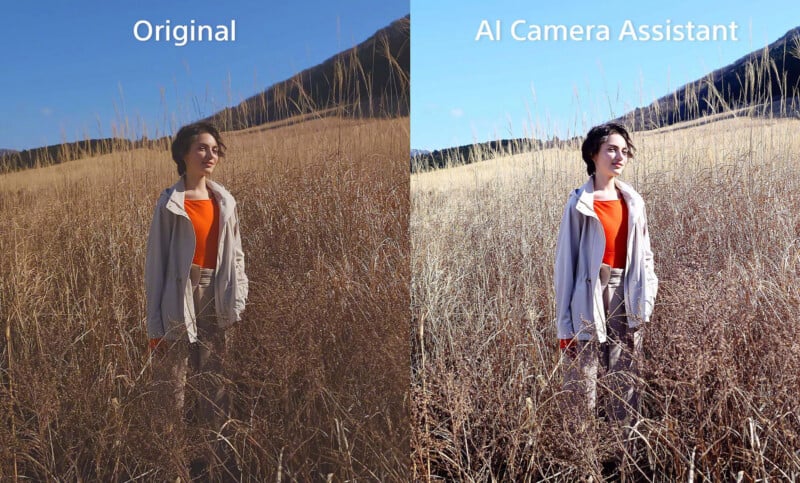
The criticism centered on three primary examples shared on Sony’s official product page. In the first instance, an outdoor portrait of a woman in tall grass, the original image featured a natural, slightly moody exposure. The AI-assisted version, however, exhibited what critics described as "crunchy" textures, excessive contrast, and a brightness level that washed out skin tones and fine details.

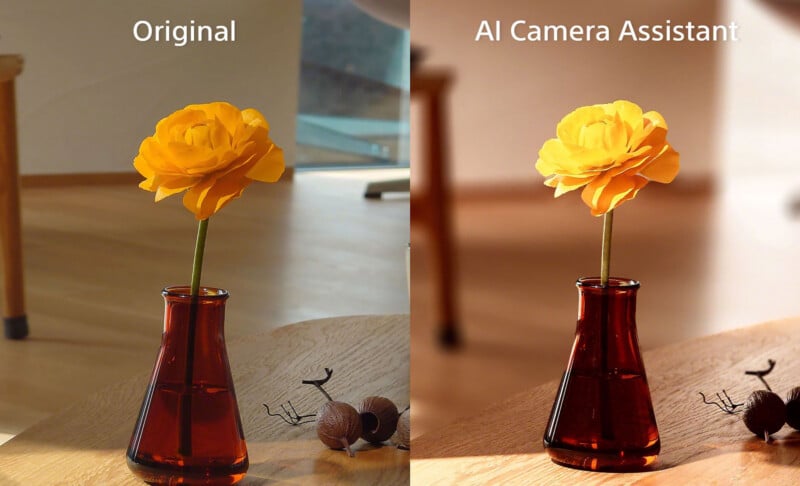
The second example featured an indoor still life of a yellow flower in a brown glass vase. While the original photo displayed a pleasing dynamic range, the AI-enhanced version significantly crushed the shadows. Specifically, reviewers noted that details in objects surrounding the vase—such as nuts on a wooden table—were rendered into "inky black" voids. The software also applied a digital bokeh effect that many found artificial compared to the natural optical blur the Xperia’s large sensors are capable of producing.
The most contentious image was a close-up of a croissant sandwich. The original photo was praised by observers for its accurate color reproduction and appetizing appearance. The AI Camera Assistant’s version, conversely, appeared flat and hazy. Critics described the result as looking as though the lens had been "fogged up," with a total loss of contrast that robbed the food of its texture and appeal. This specific example led David Imel, a well-known tech researcher and photographer, to describe the marketing failure as a "generational crashout" on social media.
Technical Specifications and the Role of AI in 2026
To understand the weight of this backlash, it is necessary to examine the technical context of the Xperia 1 VIII. Sony has long integrated its "BIONZ X" mobile processing engines and "Exmor T" for mobile sensors to maintain a "natural" look, often avoiding the aggressive computational photography favored by competitors like Google and Samsung.
The Xperia 1 VIII hardware includes:
- Telephoto Sensor: A new 1/1.4-inch type sensor for the zoom lens, a 4x increase in surface area over the Xperia 1 VII.
- Main Sensor: The latest iteration of the stacked CMOS sensor technology found in the Alpha 9 and Alpha 1 series cameras.
- Manual Controls: The "Photography Pro" and "Video Pro" apps, which offer a UI identical to Sony’s professional cameras.
The introduction of the AI Camera Assistant was Sony’s attempt to bridge the gap between its traditional manual-first philosophy and the modern demand for "one-tap" excellence. However, industry analysts suggest that the marketing team may have overcompensated by pushing the AI sliders to their extremes to make the "before and after" effect more dramatic for casual viewers. This strategy backfired with the device’s core audience: enthusiast photographers who value color accuracy and highlight retention.
Official Responses and Industry Reactions
In response to the viral criticism, "Insider Sony," a prominent account focused on the company’s ecosystem, argued that the management and marketing teams had "messed up" by selecting poor examples, rather than the technology itself being flawed. Reports from early briefings with The Verge suggested that when used in real-time, the tool acts more like a set of digital filters or "Look Up Tables" (LUTs) that can be adjusted in intensity.
Sony’s May 15 follow-up post aimed to clarify this "real-time" nature: "It doesn’t edit photos after shooting—it suggests 4 settings in different creative directions based on the scene and subject. You can choose any option or use your own settings." This distinction is crucial, as it positions the AI as a suggestion engine rather than a mandatory processing layer. However, for a brand that markets itself on "Xperia Intelligence," the fact that the initial "intelligent" suggestions were deemed unappealing by experts remains a significant hurdle.
Broader Implications for Mobile Photography
The Sony Xperia 1 VIII controversy highlights a growing tension in the smartphone industry: the struggle to balance AI automation with professional-grade authenticity. As AI becomes more pervasive, manufacturers are finding it increasingly difficult to market "enhancements" without alienating users who prefer the "organic" look of traditional optics.
For Sony, the stakes are particularly high. Unlike Apple or Samsung, Sony does not command a massive share of the global smartphone market. Instead, it relies on the loyalty of the "Alpha" community. By releasing marketing materials that suggest "over-processed" results, Sony risked damaging the very brand identity it has spent years building.
The incident also serves as a cautionary tale for the industry regarding the use of AI in promotional materials. As consumers become more sophisticated and skeptical of AI-generated or AI-altered content, the demand for transparency and "real-world" performance is at an all-time high. The Xperia 1 VIII may still prove to be an exceptional photographic tool once it reaches the hands of independent reviewers, but its launch will likely be remembered as a case study in the dangers of "over-marketing" artificial intelligence at the expense of optical reality.
Future Outlook
As the Xperia 1 VIII prepares for its staggered global release, including its eventual arrival in European and Asian markets, Sony will likely pivot its marketing to focus more on the "Pro" manual modes and the physical advantages of the 4x larger telephoto sensor. American consumers, who often face delays or limited availability for Xperia devices, may view this controversy as a sign of the brand’s ongoing struggle to find its footing in a market dominated by software-heavy competitors.
Whether the AI Camera Assistant becomes a celebrated feature or a forgotten gimmick will depend on how it performs in diverse, real-world conditions. For now, the "Xperia Intelligence" debut serves as a reminder that in the world of high-end photography, "smarter" is not always synonymous with "better," and the human eye remains the ultimate judge of a "memorable" photo.

