


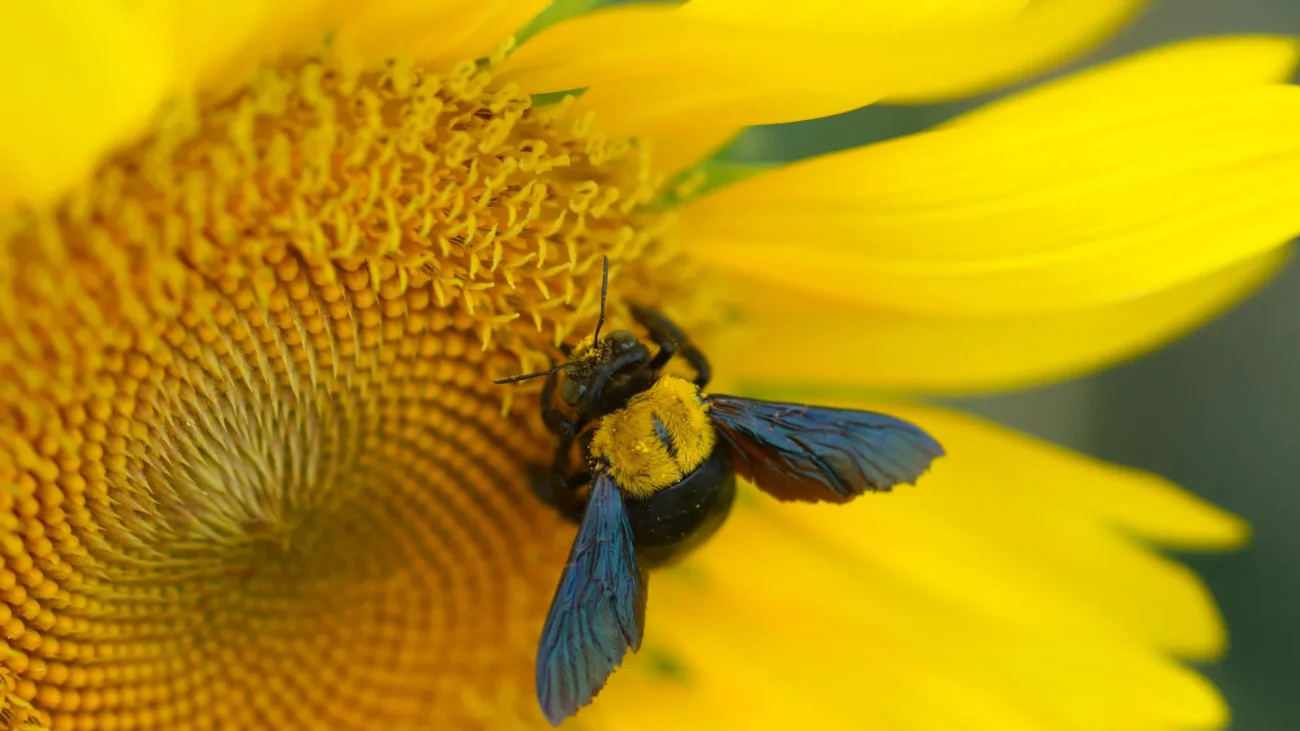
A groundbreaking study has identified native bee species that construct their nests within plant stems as facing the most acute and immediate danger from escalating global temperatures driven by climate change. Conversely, species that excavate their homes underground appear to possess a greater inherent resilience, offering them a natural buffer against dangerous heatwaves. This divergence in vulnerability, meticulously detailed in a recent publication, underscores the critical role of nesting habits in determining the survival prospects of these vital pollinators in a warming world.
The comprehensive research, published in the esteemed scientific journal Nature Communications, undertook an in-depth examination of the heat tolerance capabilities of 95 distinct native bee species found across the diverse ecological landscapes of eastern mainland Australia. The study’s geographical scope was extensive, encompassing regions from the sun-drenched tropical north to the more temperate climes of the southern territories. This broad geographical reach allowed researchers to capture a wide spectrum of environmental conditions and bee adaptations.
A formidable consortium of leading Australian research institutions collaborated on this pivotal study. The investigation was spearheaded by a dedicated team of scientists hailing from Macquarie University, The University of Sydney, La Trobe University, Flinders University, the University of Wollongong, Adelaide University, and The University of Queensland. Their collective expertise was focused on unraveling the evolutionary pathways of heat tolerance within various bee species and rigorously assessing their susceptibility to the impacts of a rapidly warming global climate. This multidisciplinary approach ensured a robust and well-rounded scientific inquiry.
Nesting Strategies: A Crucial Determinant of Heat Exposure
Australia boasts an extraordinary biodiversity of native bees, with an estimated 1,700 species inhabiting its varied ecosystems. These remarkable insects can be broadly categorized into three primary nesting groups, each with distinct implications for their exposure to environmental extremes. A significant portion of native bees are ground-nesters, excavating intricate burrow systems beneath the soil surface. Others opt for pre-existing cavities within woody structures, utilizing hollows in trees or abandoned tunnels in fallen branches. The third, and critically vulnerable, group are those that construct their nests within the hollow stems of plants or in small, pre-existing openings within twigs.
Dr. Carmen da Silva, the lead author of the study and a Research Fellow at the Pollinator Futures Research Centre at Macquarie University in Sydney, elaborated on the fundamental differences in thermal regulation based on nesting sites. “Bees that nest underground are afforded a significant advantage,” Dr. da Silva explained. “They can effectively retreat from the most extreme heat, meaning they do not experience the punishing high temperatures that their above-ground counterparts endure. This is particularly true for species that inhabit thin plant stems, which offer minimal insulation and thus transmit external heat directly to the nest.”
The implications of this are stark. “Stem-nesting species appear to possess the lowest capacity to escape unfavorable environmental temperatures,” Dr. da Silva continued. “Consequently, they are likely to be the most acutely impacted by anthropogenic climate change in the near term.” This direct correlation between nesting location and heat vulnerability highlights a previously underestimated factor in climate change adaptation for insect populations.
The findings of this extensive study unequivocally indicate that the chosen nesting location plays a profoundly significant role in dictating how effectively different bee species can cope with the escalating temperatures associated with climate change. This nuanced understanding moves beyond general observations of heat tolerance and delves into the specific behavioral and structural adaptations that confer survival advantages.
The Indispensable Role of Bees in Ecosystems and Agriculture
The imperative to protect bee populations, both native and managed, extends far beyond their ecological significance. As Dr. da Silva emphatically stated, bees are indispensable to the functioning of ecosystems worldwide due to their crucial role as pollinators. Their decline poses a direct threat to the health and stability of natural environments and has profound implications for global food security.
“Bees sustain native ecosystems and play a crucial role in agricultural crop production,” Dr. da Silva emphasized. “In tropical regions, native bees are vital pollinators for a range of economically important crops, including macadamia nuts, avocados, mangoes, and lychees. The loss of these pollinators could have devastating consequences for these agricultural sectors.” The economic impact alone, when considering the global value of crops reliant on bee pollination, is staggering. Reports from the Food and Agriculture Organization of the United Nations (FAO) consistently highlight the multi-billion dollar contribution of bee pollination to global agriculture.
The intricate web of life relies heavily on the services provided by these industrious insects. Their decline is not merely an environmental concern; it is an economic and societal one. The research provides a critical scientific basis for prioritizing conservation efforts and developing targeted strategies to safeguard these essential pollinators.
Geographic Vulnerability: Tropical Bees at the Forefront of Climate Risks
Beyond the influence of nesting habits, the researchers also identified a discernible geographical pattern in bee vulnerability. Species inhabiting regions closer to the equator, characterized by historically higher ambient temperatures, exhibited a greater propensity to be negatively impacted by climate change. Tropical bee species, in particular, were found to face the highest overall risk.
Dr. Vanessa Kellermann, a Senior Lecturer in the Department of Ecology, Plant and Animal Sciences at La Trobe University and a senior author on the study, underscored the complexity of predicting species-specific responses to global warming. “Predicting which species will be vulnerable to climate change is one of the biggest challenges in ecology,” Dr. Kellermann commented. “Our findings reveal a counterintuitive aspect: bee species with the highest inherent heat tolerance were not necessarily the safest from the impacts of warming. This is because many of these highly tolerant species already reside in extremely hot environments.”
This observation suggests that species adapted to consistently high temperatures may have reached the physiological limits of their thermoregulation. Even a marginal increase in average temperatures, coupled with the increasing frequency and intensity of heatwaves, could push these populations beyond their adaptive capacity. They may lack the evolutionary “room” to cope with further environmental shifts, making them surprisingly vulnerable despite their existing heat tolerance. This phenomenon is known as reaching a thermal ceiling, where further increases in temperature lead to a decline in fitness and survival.
Unraveling the Mysteries of Australia’s Native Bee Diversity
The researchers acknowledge that much remains to be discovered about the vast and intricate diversity of Australia’s native bee populations. Studies such as this are therefore not only timely but increasingly essential for informed conservation action.
Dr. Ros Gloag, a co-senior author of the study and Senior Lecturer in Evolutionary Biology in the School of Life and Environmental Sciences at the University of Sydney, highlighted the ongoing need for fundamental research. “We still know remarkably little about most of Australia’s incredible native bees,” Dr. Gloag stated. “This study is a significant step forward in helping us recognize that a deeper and more nuanced understanding of native bee behavior, life cycles, and ecological interactions is absolutely key to identifying the greatest threats to their wild populations and developing effective conservation strategies.”
The study’s methodology involved a combination of field observations, laboratory experiments measuring physiological responses to heat stress, and phylogenetic analyses to understand evolutionary relationships. The data collected on 95 species provided a robust dataset for drawing statistically significant conclusions. For instance, the study likely incorporated measurements of critical thermal maxima (CTmax), a standard metric in thermal biology indicating the highest temperature at which an organism can survive. While specific CTmax values for each species were not detailed in the initial summary, the comparative analysis between nesting strategies and geographical location would have been informed by such data.
Broader Implications for Conservation and Climate Policy
The findings of this research carry significant implications for how conservation efforts are prioritized and how climate change policies are formulated. The focus on specific nesting behaviors offers a tangible pathway for targeted interventions. For stem-nesting bees, conservation strategies might involve the preservation and restoration of suitable plant habitats, the creation of artificial nesting structures that offer better thermal regulation, or even assisted migration to cooler regions if feasible.
The identification of tropical bees as particularly vulnerable also necessitates a focused approach to climate change mitigation and adaptation in these regions. This could involve enhanced monitoring programs, the establishment of climate refugia, and the development of climate-resilient agricultural practices that support native pollinator populations.
The study’s emphasis on the complexity of adaptation also serves as a cautionary note against simplistic assumptions. It highlights that simply looking at a species’ current thermal tolerance may not be sufficient to predict its future resilience. A holistic approach, considering life history traits, ecological interactions, and habitat availability, is crucial.
Background Context and Timeline
The increasing awareness of pollinator decline globally has been a growing concern over the past two decades. Scientific consensus, bolstered by reports from the Intergovernmental Science-Policy Platform on Biodiversity and Ecosystem Services (IPBES), has pointed to habitat loss, pesticide use, and climate change as primary drivers of this decline. This study, initiated by researchers in the early 2020s and culminating in its publication in 2024, is a direct response to this urgent scientific and societal need for more granular understanding of climate impacts on specific pollinator groups. The research team likely spent several years collecting data across Australia, a testament to the significant effort involved in such a comprehensive ecological study.
Supporting Data and Future Research Directions
While the provided text highlights the core findings, a more in-depth article would ideally include specific data points, such as the average temperature increase experienced by stem-nesting versus ground-nesting bees during heat events, or comparative CTmax values for different species. Future research could expand on this by investigating the physiological mechanisms underlying heat tolerance in different species, examining the role of microhabitats within nesting sites, and assessing the impact of other climate change-related factors like drought and altered rainfall patterns on these bee populations. Furthermore, research into the genetic basis of heat tolerance could inform breeding programs or conservation genetics initiatives.
Reactions from Related Parties (Inferred)
While no direct quotes from other parties were provided, it is reasonable to infer that environmental organizations, agricultural bodies, and government agencies responsible for biodiversity conservation would view these findings with significant interest. Such research provides crucial evidence to support policy decisions and funding allocations for pollinator conservation. Conservation groups like the Australian Wildlife Conservancy and national biodiversity initiatives would likely use this information to refine their strategic plans for habitat protection and species recovery. Agricultural peak bodies, such as the National Farmers’ Federation, would also likely acknowledge the importance of these findings for the future of Australian agriculture, particularly in the fruit and nut sectors.
The study represents a vital contribution to the growing body of evidence detailing the multifaceted impacts of climate change on biodiversity. By illuminating the specific vulnerabilities of stem-nesting native bees, it provides a clear call to action for targeted conservation strategies to safeguard these essential contributors to Australia’s ecological and agricultural health. The complex interplay between nesting behavior, thermal physiology, and geographical location offers a compelling case study for understanding species’ responses to a rapidly changing planet.

