


In a significant shift for the specialty coffee industry, The Coffee Bean & Tea Leaf has announced it will officially discontinue surcharges for plant-based milk alternatives across its locations starting June 3, 2026. The decision marks the end of a long-standing pricing policy that required customers to pay extra for vegan options such as soy, almond, and oat milk. The policy change comes after a concentrated advocacy campaign led by People for the Ethical Treatment of Animals (PETA), highlighting a growing trend among global food and beverage retailers to align pricing with evolving consumer ethics and environmental concerns.
The Los Angeles-based coffee chain, which operates hundreds of stores globally, confirmed that the move is intended to make animal-friendly and sustainable choices more accessible to its diverse customer base. By removing the "vegan tax," the company joins a burgeoning list of industry leaders that have recognized the shifting demands of a market increasingly focused on animal welfare, climate change mitigation, and health-conscious consumption.
The Advocacy Campaign and Chronology of Change
The transition to fee-free vegan milk was not an overnight development but the result of sustained pressure from animal rights activists and the general public. According to internal reports and statements from PETA, the campaign involved more than 20,000 supporters who sent emails to the company’s executive leadership expressing dissatisfaction with the surcharge.
The momentum for change peaked following a series of high-level discussions. PETA President Tracy Reiman issued a personal plea to the company’s decision-makers, arguing that the surcharge acted as a financial barrier to ethical consumption. Furthermore, a pivotal meeting took place between Amit Dhuleshia, the founder of Activists for Animals and a prominent PETA ally, and The Coffee Bean & Tea Leaf’s vice president of marketing. This direct engagement allowed activists to present data regarding consumer sentiment and the competitive landscape of the coffee industry.
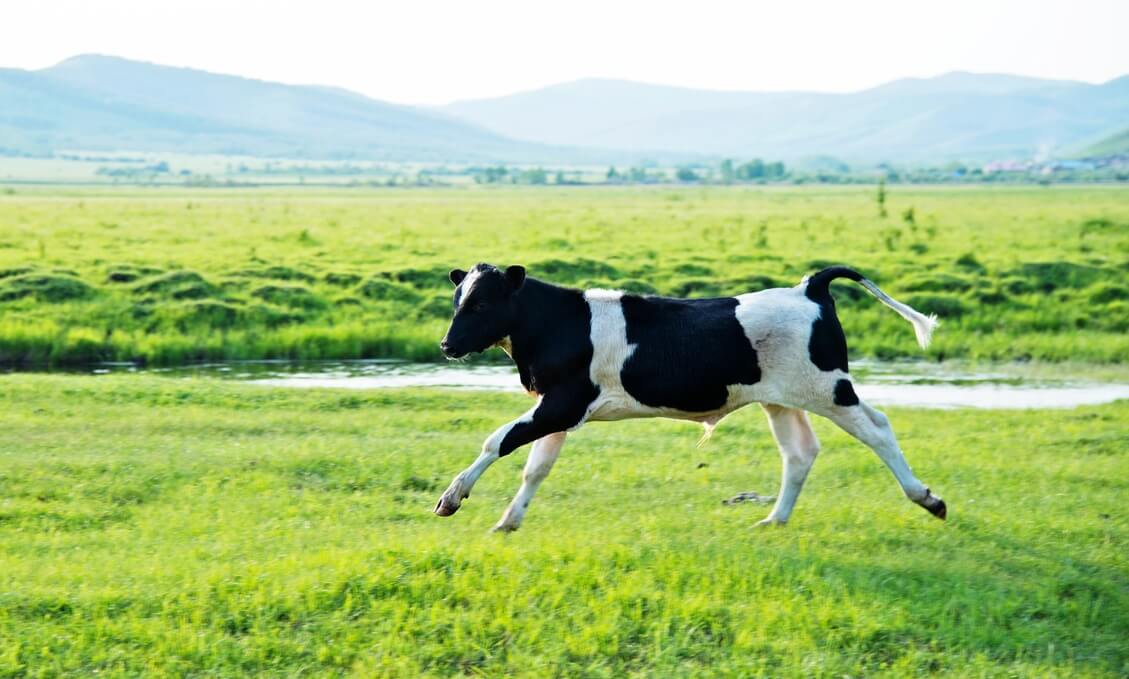
In recognition of the company’s decision, PETA announced it would send cow-shaped vegan chocolates to the chain’s headquarters as a gesture of gratitude. This resolution follows similar successful campaigns directed at other major retailers, signaling a broader victory for activists who have spent years targeting the pricing structures of the fast-casual dining sector.
Animal Welfare and the Ethical Case for Plant-Based Milk
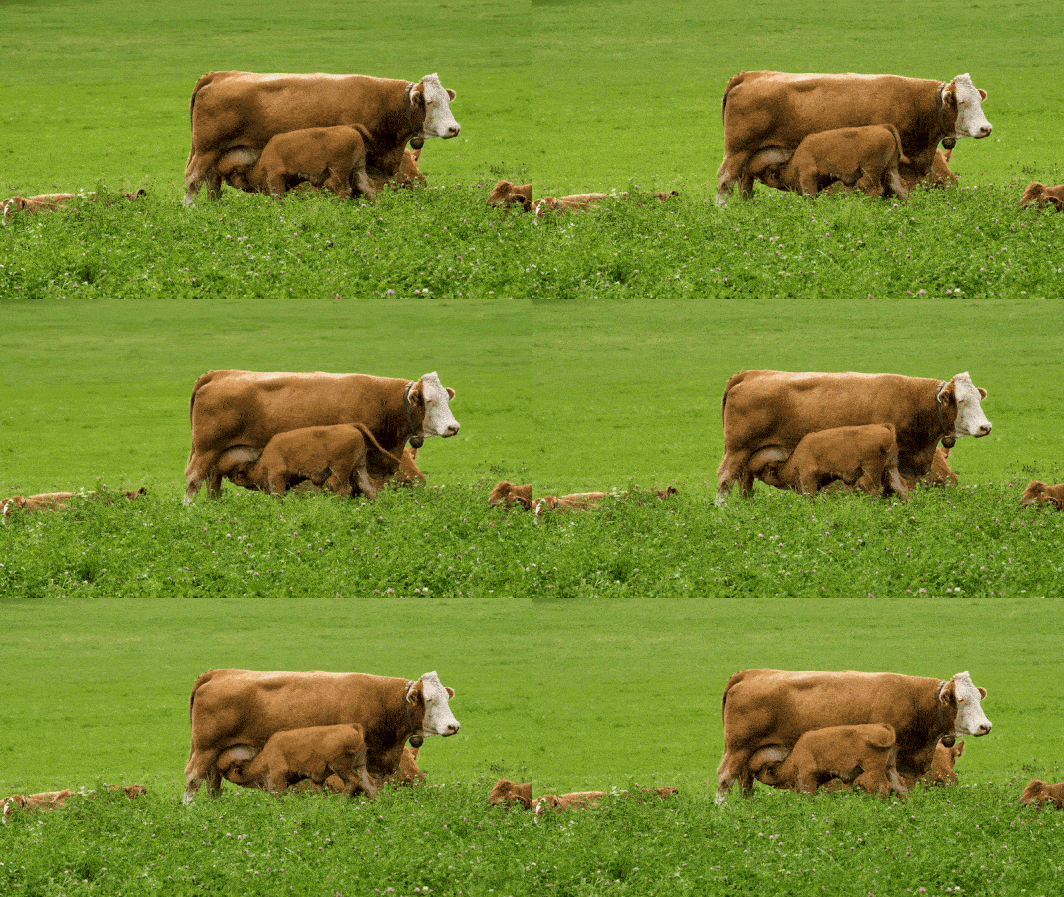
At the heart of the campaign against milk surcharges is a deep-seated concern for the treatment of animals within the industrial dairy complex. Activists have long argued that the production of dairy milk involves practices that are inherently stressful to cattle. Biological studies and animal behaviorists have noted that cows are highly social animals with complex emotional lives. They possess strong maternal instincts and, like all mammals, produce milk specifically to nourish their offspring.
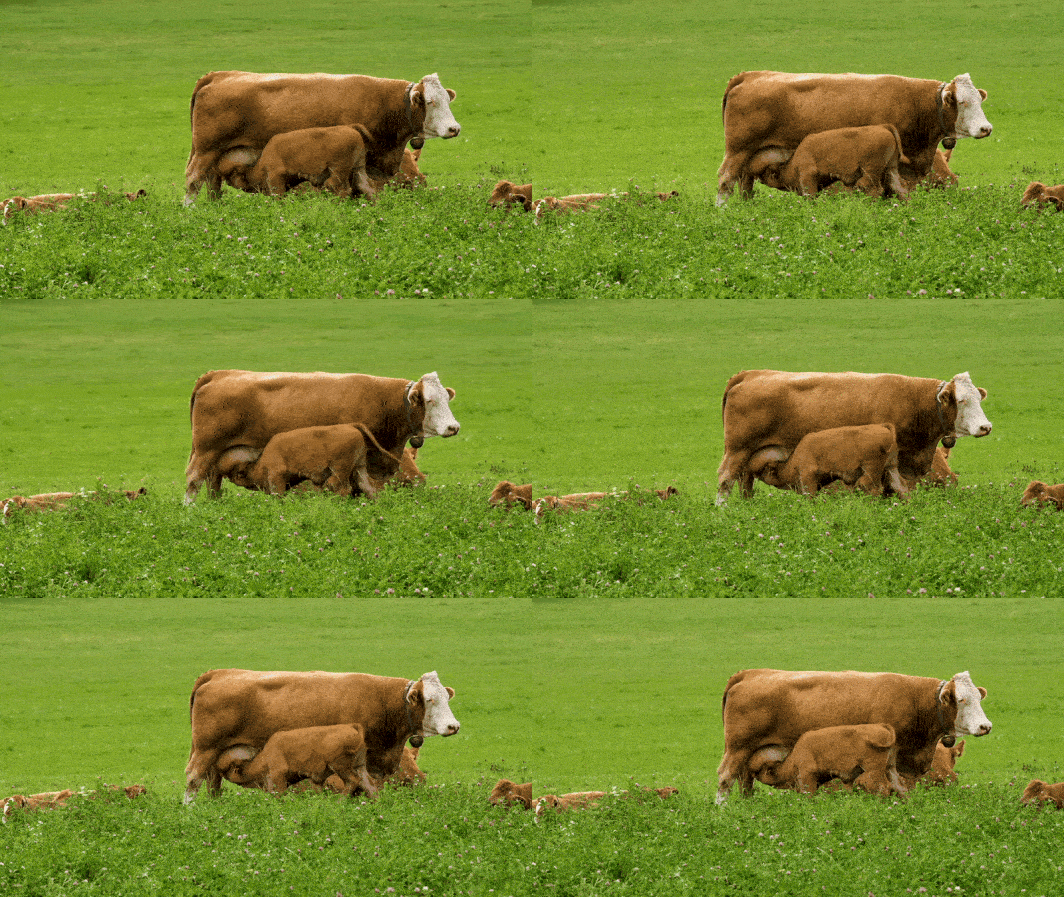
In the commercial dairy industry, cows are typically subjected to a cycle of repeated impregnation to maintain milk production levels. Standard industry practice involves the separation of calves from their mothers shortly after birth—often within 24 hours. This separation is frequently cited by animal welfare advocates as a source of significant distress for both the cow and the calf. Observers have documented mother cows vocalizing for days after their calves are removed, and some instances suggest that cows will attempt to breach enclosures to reunite with their young.
By removing the financial penalty for choosing plant-based milk, The Coffee Bean & Tea Leaf is effectively lowering the barrier for consumers who wish to avoid supporting these industrial practices. This move is seen as a step toward a more compassionate supply chain, where the economic incentives for dairy production are gradually balanced by the rising popularity of animal-free alternatives.
The Environmental Impact: Dairy vs. Plant-Based Alternatives
Beyond ethical considerations, the environmental footprint of the dairy industry has become a primary driver for corporate policy changes. The production of traditional dairy milk is a resource-intensive process that contributes significantly to global greenhouse gas emissions.
A landmark 2018 study conducted by researchers at the University of Oxford, published in the journal Science, provides a comprehensive look at the environmental costs of different food types. The study found that producing a glass of dairy milk results in almost three times the greenhouse gas emissions of any non-dairy milk alternative. Furthermore, dairy farming requires roughly nine times more land than the production of plant-based milks. For example, one liter of cow’s milk requires approximately 8.9 square meters of land, whereas a liter of oat milk requires only 0.8 square meters and soy milk requires 0.7 square meters.
Water scarcity is another critical factor. While some plant milks, such as almond milk, have been criticized for their water usage, they still generally outperform dairy. Producing one liter of dairy milk requires approximately 628 liters of water, compared to 371 liters for almond milk and significantly lower amounts for soy and oat milk. By incentivizing the switch to these alternatives through price parity, The Coffee Bean & Tea Leaf is contributing to a reduction in the overall ecological strain caused by its supply chain.
Industry Trends and the Competitive Landscape
The Coffee Bean & Tea Leaf’s decision is part of a "domino effect" currently sweeping through the coffee and quick-service restaurant (QSR) industries. For years, the surcharge for non-dairy milk—often ranging from $0.50 to $1.25—was a standard industry practice, justified by the higher wholesale costs of plant-based products. However, as the production of oat, almond, and soy milk has scaled, the price gap has narrowed, and consumer patience for the extra fee has waned.
Major competitors have already moved in this direction. Starbucks, Dunkin’, Peet’s Coffee, and Caribou Coffee have all implemented various versions of fee-free or reduced-fee structures for plant-based milks in different markets. In many cases, these changes were also the result of active campaigning by PETA and other advocacy groups.
The shift is also driven by demographic changes. Gen Z and Millennial consumers are significantly more likely to identify as "flexitarian" or vegan than older generations. Market research indicates that these younger cohorts prioritize corporate social responsibility (CSR) and are willing to shift their brand loyalty to companies that reflect their values. For The Coffee Bean & Tea Leaf, removing the surcharge is not just an ethical move but a strategic one designed to retain and attract a younger, more socially conscious demographic.
Social Equity and Health Considerations
An often-overlooked aspect of the vegan milk surcharge is its impact on social equity and public health. A significant portion of the global population is lactose intolerant, with the condition being particularly prevalent among People of Color. Studies suggest that up to 95% of East Asians, 60% to 80% of African Americans and Ashkenazi Jews, and 50% to 80% of Hispanics are lactose intolerant.
Critics of the surcharge have argued that charging more for non-dairy milk amounts to a "dietary tax" on individuals who cannot consume dairy for medical or genetic reasons. By eliminating the fee, The Coffee Bean & Tea Leaf is fostering a more inclusive environment for customers who require dairy alternatives to avoid adverse health effects. This move aligns with broader corporate goals of diversity, equity, and inclusion (DEI), ensuring that a basic customization of a beverage does not result in a financial penalty for those with specific dietary needs.
Future Outlook: The Remaining Outliers
With The Coffee Bean & Tea Leaf joining the ranks of chains offering price parity for plant-based milks, attention has turned to the remaining holdouts in the industry. PETA and other advocacy groups have identified BIGGBY Coffee as one of the last major U.S.-based chains to maintain a surcharge for vegan milk options.
The success of the campaign against The Coffee Bean & Tea Leaf is expected to intensify pressure on BIGGBY and other smaller regional chains. As price parity becomes the industry standard, companies that continue to charge extra for non-dairy alternatives risk being viewed as archaic or out of touch with modern consumer expectations.
The broader implications of this trend suggest a future where plant-based milks are no longer treated as "specialty" or "alternative" items but as standard offerings. As the global plant-based milk market continues to grow—projected to reach over $30 billion by 2030—the logistical and economic barriers to price parity are expected to vanish entirely.

Conclusion
The Coffee Bean & Tea Leaf’s announcement to end vegan milk surcharges effective June 3, 2026, represents a milestone in the intersection of corporate policy and social activism. By responding to the concerns raised by PETA and thousands of consumers, the company has positioned itself as a leader in the movement toward a more ethical and sustainable food system.
This policy change addresses three critical areas: animal welfare, environmental sustainability, and social equity. As the coffee industry continues to evolve, the removal of such financial barriers serves as a blueprint for how major corporations can adapt to a world that increasingly values compassion and ecological responsibility over traditional profit-margin protections. For the "kind coffee drinker," the news provides a clear path to enjoying a daily routine that aligns with their personal values, without the burden of an unfair upcharge.

