


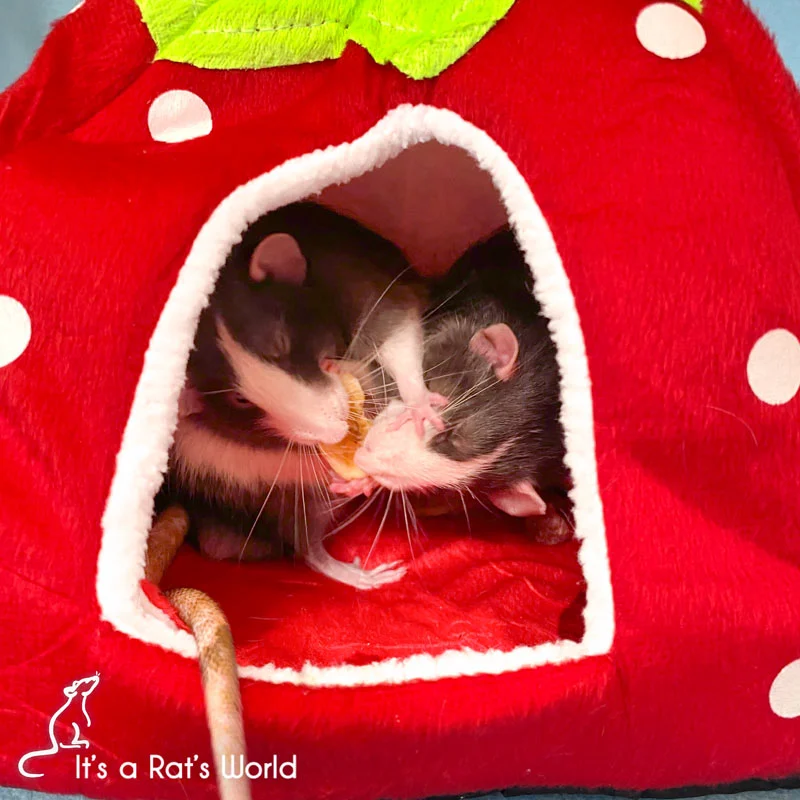
When individuals new to the world of rat ownership encounter this passion, they are often met with surprise, frequently followed by a cascade of questions. While the depth of their curiosity might be limited, the sheer volume of fascinating, often amusing, behaviors exhibited by these intelligent rodents warrants exploration beyond brief answers. Fortunately, this platform allows for a comprehensive examination of the delightful eccentricities that make rats uniquely captivating companions. This article delves into some of the most endearing and peculiar habits of domestic rats, revealing layers of complexity that underscore their appeal. It is important to note that while some behaviors are most readily observed during supervised out-of-cage time, their inherent adorableness remains constant.
The Symphony of Bruxing and Boggling: Indicators of Rat Contentment
Among the most recognized and cherished idiosyncrasies of pet rats is the phenomenon of "bruxing" and "eye boggling." These behaviors, often occurring in tandem, serve as profound indicators of a rat’s emotional state, primarily signaling happiness and contentment.

Bruxing, in its simplest definition, is the grinding of teeth. While this action serves a vital biological purpose – keeping their continuously growing incisors trimmed – it also functions as a sophisticated form of emotional expression for rats. Similar to a cat’s purr, bruxing is frequently observed when rats are relaxed, comfortable, and content. However, it can also manifest when a rat is experiencing stress or fear, though the sound and context usually differentiate these states. For rat owners, the gentle, rhythmic clicking sound of bruxing is a welcome auditory cue, signifying a happy and well-adjusted pet.
Eye boggling, a more visually striking behavior, involves the rapid, involuntary bulging of the eyes. This movement causes the eyeballs to vibrate or "boggle" within their sockets, creating a surreal, almost cartoonish effect. The visual spectacle is often described as if the rat were a character from an animated classic. This behavior is not a standalone occurrence; it is intrinsically linked to bruxing. The musculature responsible for the jaw movements during bruxing is located behind the eyes. When a rat is experiencing intense positive emotion and engaging in vigorous bruxing, these muscles vibrate, causing the eyes to bulge. Therefore, seeing a rat’s eyes boggle is a clear indication of profound happiness and relaxation.
The author’s personal experience highlights the initial alarm that can accompany witnessing this behavior for the first time, particularly in an era before widespread internet access and readily available information on rat care. A rat named Rory, exhibiting what appeared to be his eyeballs popping out, caused significant concern. A veterinary visit, based on a description of these startling symptoms, was met with disbelief, with the veterinarian suggesting the owner had imagined the event. This anecdote underscores a historical lack of comprehensive knowledge about common rat behaviors within veterinary education, a gap that has since been significantly bridged by online resources and a growing community of experienced rat owners.

The Meticulous World of Rat Grooming: Beyond Stereotypes
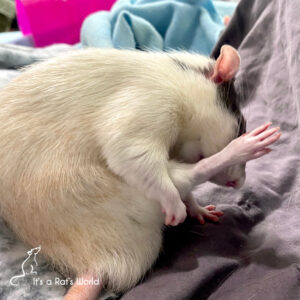
Contrary to the common perception of rats as unsanitary creatures, both wild and domestic rats are remarkably fastidious groomers. This innate cleanliness is readily observable by their owners, who witness extensive and dedicated self-maintenance routines.
Rats dedicate significant portions of their day to grooming, meticulously cleaning nearly every inch of their bodies multiple times. This process involves using their paws to smooth and wipe down their fur and their teeth to nibble away any dirt or debris. Their dedication to cleanliness often leads them to perform astonishing feats of flexibility, contorting their bodies to reach even the most inaccessible areas. A particularly fascinating aspect of their grooming is their thoroughness, which can even extend to seemingly unusual practices, such as using their hind legs to meticulously clean their ears and then examining their toes for any residual earwax.
While most of their body receives consistent attention, the rat tail is notably an exception. In the author’s extensive experience spanning three decades, witnessing a rat groom its tail is a rare event, often prompting a double-take. This infrequent grooming of the tail adds another layer of peculiarity to their otherwise meticulous hygiene practices. Owners who observe their rats regularly cleaning their tails might indeed have a particularly unique and fastidious pet.
Allogrooming: Social Bonding and Unsolicited Spa Treatments
The concept of grooming extends beyond self-care for rats; they are also highly social animals that engage in allogrooming, the act of grooming another individual. This behavior is crucial for strengthening social bonds within rat colonies and extends to their human companions.
Rats are known to groom their cagemates affectionately, and this behavior often transfers to their owners. However, rat allogrooming can sometimes be characterized by an enthusiastic intensity that might be perceived as pushy. Rats can develop favorite grooming targets on their humans, with hair and faces being common areas of interest. Some rats will persistently lick or even gently chew on their owner’s hair, while others may focus on grooming the owner’s face, including cheeks and eyelids. While this behavior stems from a desire to care for their human, the "gentle" nibbles can feel surprisingly firm on sensitive facial areas.
A particularly notable and often amusing aspect of allogrooming involves the rat’s fixation on their owner’s fingers and fingernails. Many rats will meticulously clean their owner’s nails, and some even develop a habit of "nail biting," not their own, but their human’s. This behavior, while potentially startling, can be interpreted as the rat’s attempt to provide a "nail trim" or "rat-icure," an unsolicited act of care and affection.
Rodentistry: The Extreme Case of Dental Devotion
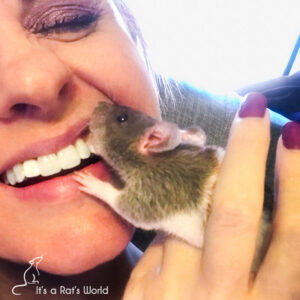
Among the most peculiar manifestations of allogrooming is a behavior so distinctive that it has earned its own specialized term within the rat-keeping community: "rodentistry." A rat exhibiting this trait is known as a "rodentist," characterized by an intense fascination with grooming its owner’s teeth.
These dedicated rodentists will not hesitate to insert their heads into their human’s mouth, driven by an inexplicable urge to clean. The exact nature of what they are attempting to remove or clean remains a subject of humorous speculation, but their persistence is unwavering. The author recounts the experience with Rory, the previously mentioned eye-boggler, who was also a devoted rodentist. Rory’s daily ritual involved forcefully prying open the author’s mouth with his small paws, despite protests and muffled laughter, to meticulously clean his teeth. While this resulted in minor scratches around the mouth, the author found the rat’s unwavering determination to be both amusing and endearing. This level of focused dedication to oral hygiene, however unconventional, highlights the remarkable and often surprising depth of rat behavior.
Taste-Testers: The Unapologetic Pursuit of Food
When it comes to food, rats exhibit a distinct lack of table manners. If given the opportunity to be out of their cage while their human is eating, they will often expect to share, if not claim, the entire meal. Their approach is direct and without preamble; they do not politely request food or employ puppy-dog eyes. Instead, upon detecting the aroma of food, rats within a significant radius will converge with a swift and brazen dash, aiming to snatch morsels directly from plates or fingers. Even the act of quickly stuffing food into one’s mouth is no guarantee of security, as rats are known to dive for it or, at the very least, lick lips clean.
This behavior is not a sign of disrespect towards humans but rather a reflection of their natural social dynamics. Rats are equally assertive with each other, frequently stealing food from their cage mates, even directly from their mouths. This instinctual drive for food acquisition means that shared dining experiences, whether with a bowl of ice cream or a beverage, often involve the enthusiastic participation of one or more rats, who may perch on the edge of glasses and mugs to help themselves.
The Art of Back-Sleeping: A Display of Ultimate Trust
While a sleeping rat is generally considered an adorable sight, some rats elevate this cuteness to an extraordinary level by sleeping on their backs. Typically, rats are hesitant to adopt this vulnerable position, as it exposes their soft underbellies. However, some rats, displaying a profound sense of security and trust in their environment, will sprawl out belly-up, resembling a chalk outline at a crime scene.
The author shares a particularly charming anecdote about twin rats, Moffett and Brinley, who not only shared a penchant for back-sleeping but also managed to teach their unrelated cagemate, Kelton, to adopt the same sleeping posture. This familial and social transmission of a seemingly unusual behavior highlights the complex social learning that occurs within rat groups.

Drinking in Tandem: The Codependent Thirst Quenchers
The quirkiness of rat behavior is further exemplified by their tendency to engage in communal drinking. One rat, named Potter, became renowned for his unique approach to hydration. He would often sleep on his back directly beneath the water bottle, a position that effectively deterred his cagemates from accessing water without waking him. Potter reportedly disliked drinking alone and viewed it as a group activity. If another rat approached the water bottle while Potter was awake and not at his perch, he would abandon his current activity to join them.
This behavior proved to be contagious within his group, with all four rats eventually drinking simultaneously from the single nozzle. Adding an extra layer of peculiarity, Potter would often perform his drinking while still lying on his back, even as his upright cagemates drank alongside him. While tandem drinking is not exclusive to Potter, his codependent and dramatic approach to hydration made him a particularly memorable example of this unusual social dynamic.
Uncovering a World of Enduring Quirks
The behaviors discussed herein represent only a fraction of the amusing and surprising traits that domestic rats possess. These intelligent and adaptable creatures continually find new ways to entertain and endear themselves to their owners. Each rat has the capacity to imbue even common habits with a unique personality, ensuring that the journey of rat ownership is one of constant discovery and delight. The moment an owner believes they have encountered every conceivable strange habit, their rat is likely to find a novel way to prove them wrong, solidifying their status as truly fascinating and beloved companions.

