


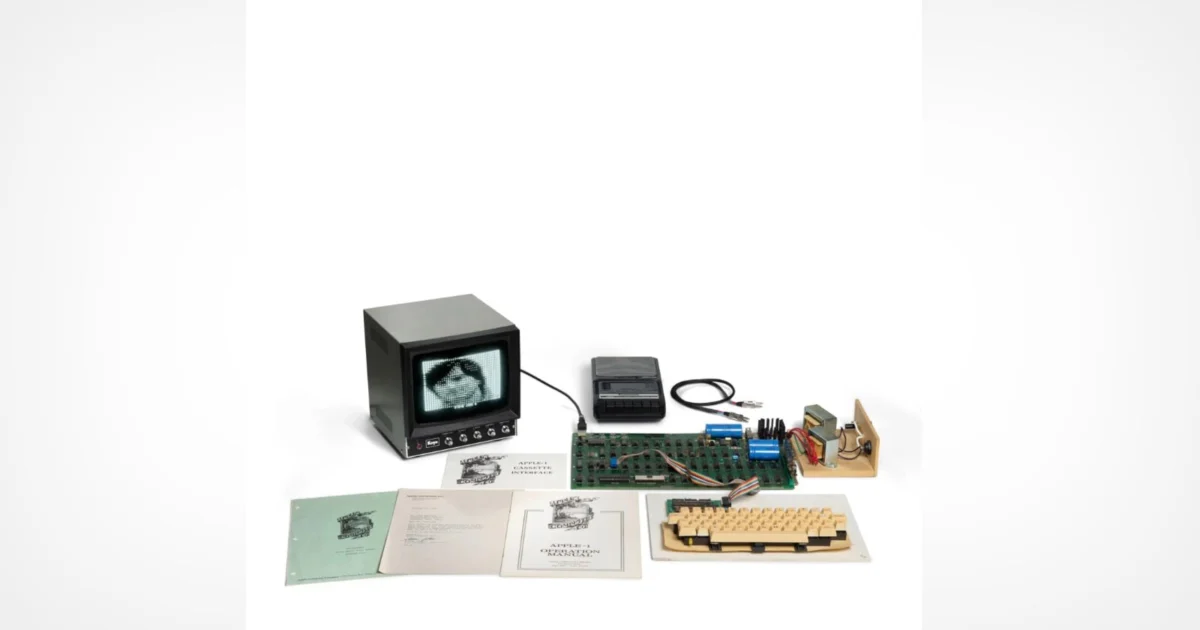
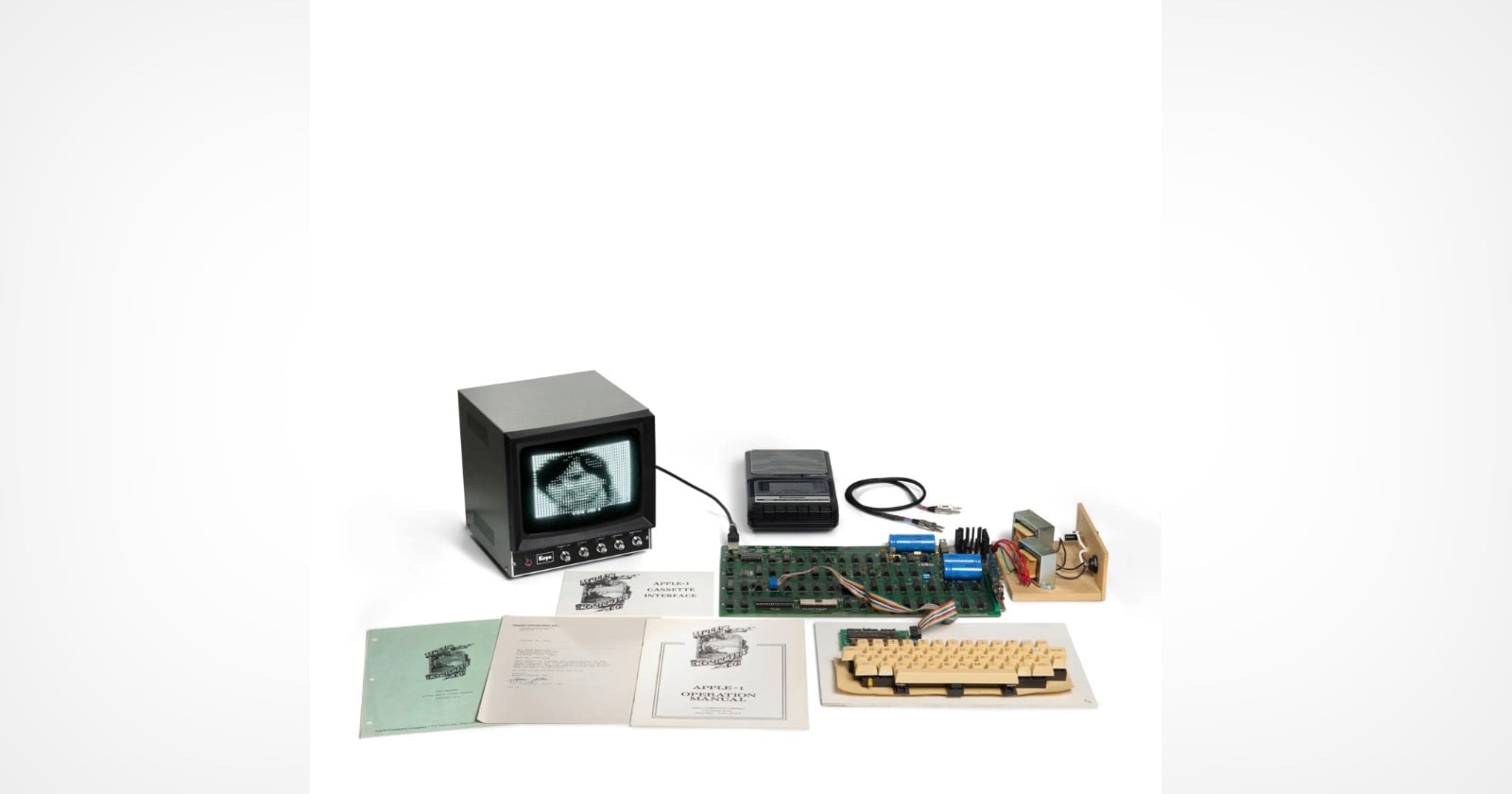
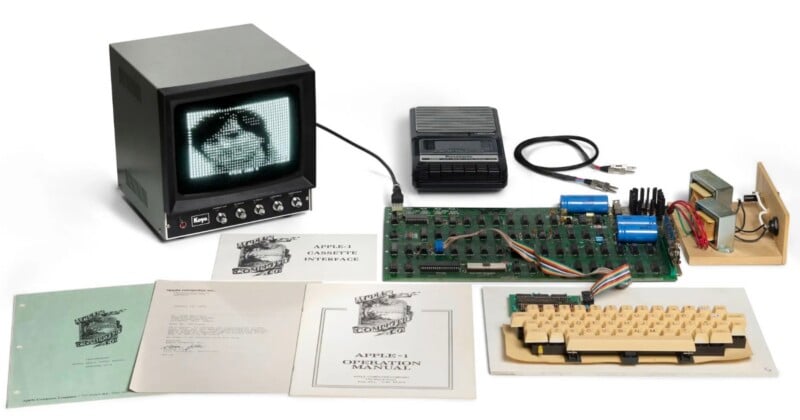
A relic of computing history, the so-called “Hatfield” Apple-1 computer, is set to headline the upcoming “History of Science, Technology & Computing” auction hosted by Bonhams in New York. Scheduled to run online from October 4 through October 14, this specific machine is not merely a piece of hardware; it is a meticulously preserved artifact of the Silicon Valley revolution. With an estimated valuation between $500,000 and $800,000, the unit represents one of the most significant intersections of early computing hardware and personal history, being one of only 74 known surviving examples of the original 200 Apple-1 machines produced.
The provenance of this particular unit is what elevates it from a collectible to a historical document. It is not only fully operational—a rarity for 1976-era circuit boards—but it also bears the signature of Steve Wozniak, the man who single-handedly designed the board, and includes a typewritten letter signed by Steve Jobs. This correspondence, dated January 18, 1978, provides a window into the transition from the garage-based hobbyist culture of the mid-1970s to the structured corporate era of Apple Computer Inc.
A Chronology of the Apple-1 Revolution
To understand the value of the Hatfield Apple-1, one must place it within the timeline of the personal computer movement. In 1976, Steve Wozniak and Steve Jobs were operating out of the Jobs family garage in Los Altos, California. The Apple-1 was born from the Homebrew Computer Club, a group of enthusiasts who sought to democratize computing.
- 1976 (Early): Steve Wozniak designs the Apple-1 motherboard.
- 1976 (July): The Apple-1 is officially introduced at the Homebrew Computer Club.
- 1976 (Summer): The Byte Shop, a retailer in Mountain View, California, places an order for 50 fully assembled units, forcing Jobs and Wozniak to ramp up production.
- 1976 (Late): Approximately 200 units are produced in total.
- 1977: The Apple II is released, signaling the end of the Apple-1’s production cycle and the beginning of a more consumer-friendly era for the company.
- 1978 (January): Steve Jobs writes to Fred Hatfield regarding the trade-in program for the newer Apple II.
The Hatfield unit was acquired by Fred Hatfield, an employee at Computer Data Systems. During the late 1970s, as the Apple II arrived with its integrated keyboard, color graphics, and expansion capabilities, the Apple-1 became functionally obsolete for most users. Hatfield, seeking a more capable machine, contacted Apple to express his frustrations with the Apple-1’s limitations. The ensuing correspondence between Hatfield and Jobs illustrates the nascent customer service department of a company that was, at the time, still finding its footing.
The Significance of the Jobs-Hatfield Correspondence
The letter included in this auction lot is a vital piece of ephemera. In it, Steve Jobs, serving as the Vice President of Operations for Apple Computer Inc., acknowledges Hatfield’s concerns and outlines the terms for a trade-in. The offer permitted the exchange of the original Apple-1 for an Apple II 4K board.
Interestingly, the deal never materialized. Hatfield, despite his desire for an upgrade, ultimately decided against the transaction because the trade-in required an additional payment of $400—a significant sum for a computer enthusiast at the time. By keeping the Apple-1 and declining the upgrade, Hatfield inadvertently preserved a piece of history that would eventually become a high-value asset in the luxury auction market.
Technical Specifications and Rarity
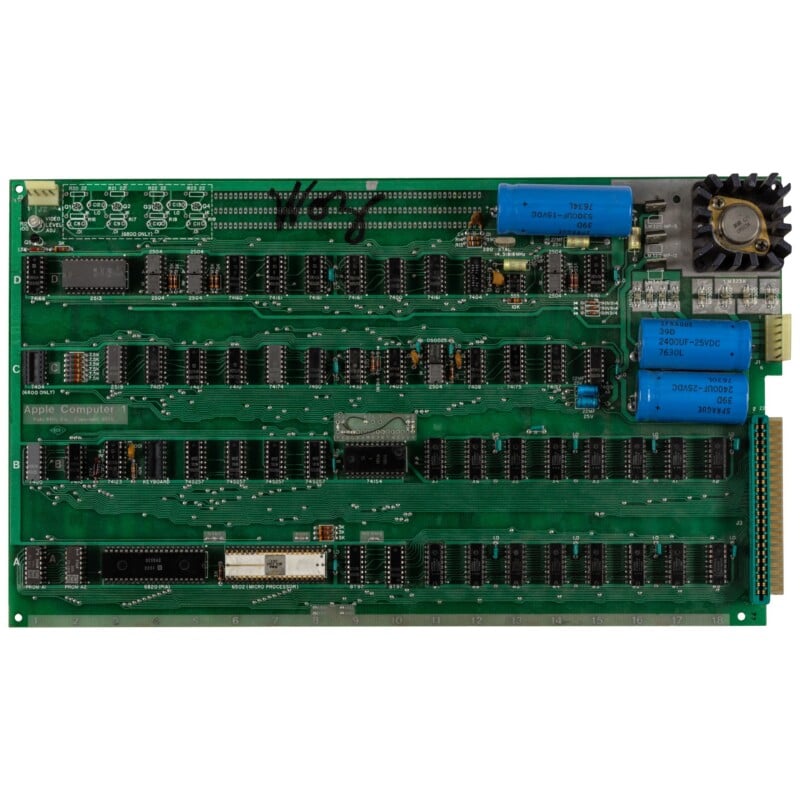
The Hatfield Apple-1 is a "second-batch" board, featuring the distinct NTI stamp on the underside, which denotes its place in the production run. It is a testament to Wozniak’s engineering that the board remains in working condition nearly 50 years later. The system includes:
- Processor: The original white ceramic MOS Technology 6502 microprocessor (dated 1977).
- Interface: The original Apple Cassette Interface board, essential for data storage in the 1970s.
- Components: The board retains its original "Big Blue" Sprague capacitors and the 8KB RAM expansion connector.
- Registry Status: Listed as number 48 in the official Apple-1 Registry, a database managed by enthusiasts to track the survival of these rare machines.
The scarcity of these units cannot be overstated. Of the 200 produced, only about 175 were sold before the line was discontinued. Today, only 74 are verified to exist, and even fewer are confirmed to be in working order. The inclusion of the Wozniak signature on the motherboard itself is a secondary layer of authentication that significantly bolsters the item’s market value.
Market Trends and Investment Analysis
The market for vintage computing hardware has matured into a robust sector of the fine arts and historical collectibles industry. In the last decade, high-profile auctions have consistently seen Apple-1 units sell for six-figure sums.
The volatility of these prices often correlates with the "completeness" of the lot. Units that include original documentation, packaging, or direct links to the founders—such as the Jobs-signed letter—routinely command prices at the higher end of their estimates. Investors and museums view these items as "blue-chip" assets, similar to early film posters, rare stamps, or first-edition literature.
From a historical perspective, the Apple-1 represents the "Big Bang" of the modern tech economy. The fact that an item sold for $666.66 in 1976 is now expected to fetch nearly a million dollars is a reflection of the profound societal impact Apple has had on global culture. Analysts suggest that as the generation that grew up during the advent of personal computing enters its prime wealth-gathering years, the demand for "foundational" artifacts will likely continue to climb.
The Broader Impact of the Sale
For Bonhams, the Hatfield Apple-1 is the centerpiece of a wider auction focused on the evolution of science and technology. By placing this unit alongside other scientific instruments, the auction house aims to contextualize the computer not just as an electronic device, but as the successor to the printing press and the industrial machine.
The sale of the Hatfield Apple-1 serves as a reminder of the fragility of technological history. Because these boards were originally sold as kits for hobbyists, many were modified, cannibalized for parts, or discarded once they became obsolete. The preservation of the Hatfield unit is an exception to the rule of planned obsolescence.
Collectors interested in this lot are not merely buying a motherboard and a set of capacitors; they are acquiring the physical evidence of a transition point in human history—the moment when computing shifted from a niche laboratory pursuit to a household reality. As the auction approaches, the technology community will be watching closely to see if the final bid reflects the growing recognition of the Apple-1 as an essential piece of global heritage.
Whether the hammer falls at the lower end of the $500,000 estimate or surpasses the $800,000 ceiling, the Hatfield Apple-1 remains a tangible link to the vision of two individuals whose work in a Los Altos garage permanently altered the trajectory of the 21st century. The documentation accompanying the device ensures that, regardless of its future owner, the story of its original user—and his decision to keep the machine rather than trade it away—will remain etched into the annals of computing history.

