


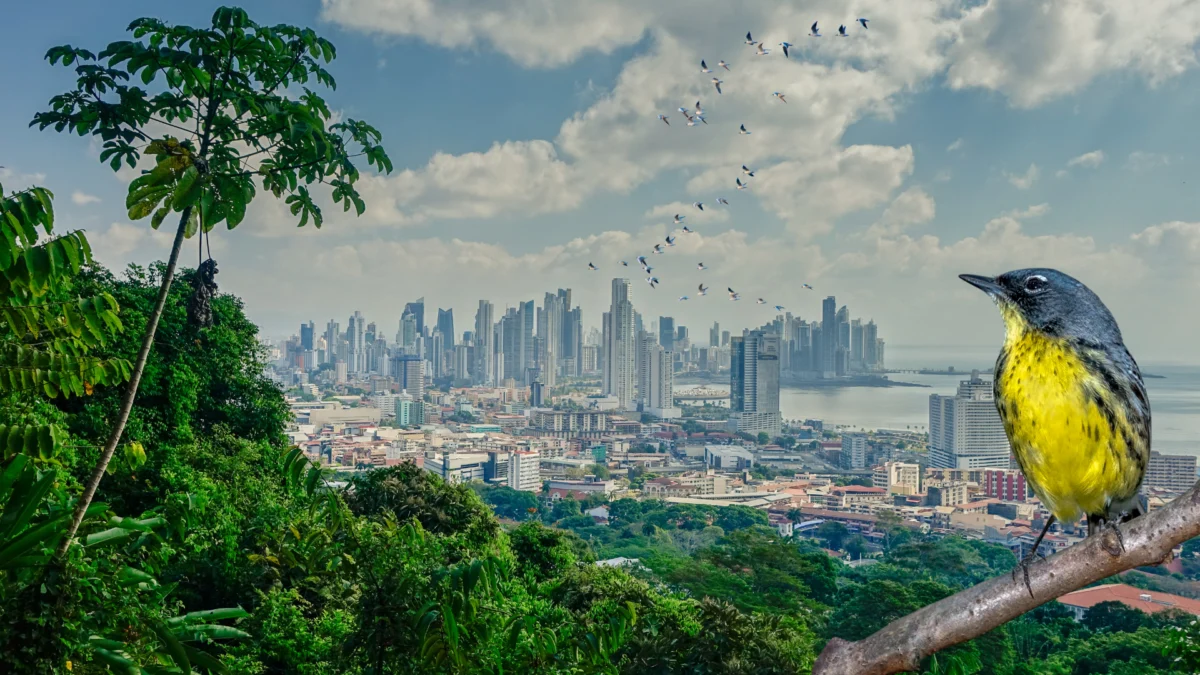
Migratory birds act as the living threads of our global ecosystem, stitching together continents through extraordinary annual journeys that span thousands of kilometers. These avian travelers rely on a delicate, interconnected network of habitats—known as flyways—where they stop to rest and refuel. However, as urbanization expands across the Americas, these critical corridors are increasingly obstructed by the built environment. In a groundbreaking shift for sustainable development, the Development Bank of Latin America and the Caribbean (CAF), in partnership with BirdLife International and the National Audubon Society, has launched the Americas Flyways Initiative (AFI). At the heart of this collaboration is the construction of Hub Norte in Panama City, a project poised to become the region’s first major piece of infrastructure designed explicitly to protect migratory birds without sacrificing modern engineering efficiency.
The Americas Flyway is one of the most significant avian migration routes in the world. Species like the Western Sandpiper rely on stopover points like Panama Bay, which supports approximately one-third of their global population. When such vital habitats are encroached upon by urban development, the mortality rate for migrating birds spikes, largely due to collisions with glass facades and windows—structures that birds often fail to perceive as barriers. Estimates suggest that billions of birds perish annually worldwide due to building collisions, making the integration of bird-friendly design an urgent environmental imperative.

A New Standard for Infrastructure: The Hub Norte Project
The Hub Norte project represents more than just a new office facility for CAF; it is a proof-of-concept for how financial institutions can weave biodiversity into their core development strategies. By prioritizing nature-based solutions alongside traditional architectural goals like energy efficiency and structural resilience, CAF is setting a precedent for future regional development.
The initiative emerged from a realization that modern, high-performance buildings—often characterized by expansive glass surfaces for daylighting and energy optimization—can be lethal to local and migratory wildlife. Through the AFI collaboration, engineers and conservationists have worked in tandem to ensure that the building’s aesthetic and environmental footprint does not come at the cost of avian life.
Luisa Plaza Urrutia, a civil engineer and executive at CAF’s Directorate of Corporate Infrastructure Management, has been a central figure in this process. According to Urrutia, the project’s success hinges on the early integration of ecological data into the planning phase. "Biodiversity should be part of the sustainability conversation from the earliest stages of planning," Urrutia notes. By collaborating with experts from BirdLife and Audubon, the design team was able to identify high-risk collision zones on the facade and implement specialized treatments—such as bird-friendly glazing patterns—that remain largely invisible to the human eye while significantly increasing visibility for birds.

Chronology of the Americas Flyways Initiative
The formal inception of the AFI represents a milestone in hemispheric environmental cooperation. The partnership, signed by the leadership of CAF, BirdLife International, and the National Audubon Society, signaled a commitment to aligning large-scale investment with the conservation of migratory corridors.
- Initial Planning Phase: CAF identified the need for a new regional hub in Panama City, aiming to set a benchmark for LEED-certified, sustainable corporate infrastructure.
- Partnership Formation: CAF, BirdLife International, and the National Audubon Society entered into a strategic alliance to form the Americas Flyways Initiative, focusing on the intersection of urban development and biodiversity.
- Design Integration: During the architectural planning for Hub Norte, the team began assessing site-specific migratory risks. This involved analyzing the building’s proximity to coastal vegetation and its placement within the Panama City flight path.
- Technical Implementation: Throughout the construction phase, contractors and facade specialists worked with conservationists to integrate anti-collision glass treatments. This phase involved rigorous quality control to ensure that the treatment did not diminish the building’s thermal performance or energy efficiency.
- Ongoing Monitoring: Post-construction, the project includes commitments to monitor the building’s impact on local bird populations, providing a data set that will inform future projects across the CAF portfolio.
Economic and Technical Feasibility
One of the most persistent myths regarding sustainable design is the idea that it is prohibitively expensive. The Hub Norte project challenges this by providing transparency regarding the costs of bird-friendly interventions. For a total facade area of approximately 4,967 square meters, only 44% consisted of glass, and of that, only 24% required specific bird-friendly treatment.
The additional cost for this treatment—approximately USD $46.50 per square meter—is marginal when compared to the overall building investment. This data provides a strong argument for developers, proving that biodiversity protection does not require a significant budget increase if the design is approached strategically from the start. By avoiding "late-stage adjustments," which are often costly and disruptive, the project demonstrates that ecological responsibility is economically viable.

The Role of Global Partnerships in Conservation
The success of Hub Norte is a testament to the power of cross-disciplinary collaboration. In the past, the silos between civil engineering and environmental conservation often prevented the exchange of crucial knowledge. The AFI model breaks these silos, bringing together architects, energy consultants, and ornithologists to create a cohesive vision of "responsible infrastructure."
From the perspective of conservation organizations, this collaboration is a vital step toward protecting the future of migratory species. By embedding conservation into the financial and infrastructure sectors, the initiative ensures that bird-friendly practices are not viewed as an "exception" but as a baseline expectation.
"The more successful projects we can showcase, the easier it becomes to demonstrate that these measures are practical, effective, and compatible with high-performance buildings," says Urrutia. The involvement of global manufacturers in certifying bird-safe glass products is the next necessary step to scaling this model beyond a single building.

Broader Implications and Future Outlook
The implications of the Hub Norte project extend well beyond the borders of Panama. As the world faces the twin crises of rapid urbanization and biodiversity loss, the need for cities to become "bird-friendly" has never been more pressing. Infrastructure projects, particularly those funded by development banks, carry a weight of responsibility to serve the public and the environment alike.
The shift toward nature-inclusive design is gaining momentum. Institutions that incorporate biodiversity into their ESG (Environmental, Social, and Governance) criteria are better positioned to mitigate long-term environmental risks and build resilience into their assets. For CAF, the Hub Norte project is not just a building; it is a manifesto for the future of development in Latin America and the Caribbean.
As construction concludes and the building becomes operational, the ongoing monitoring of avian interactions with the facility will provide valuable empirical data. This data will be instrumental in refining future design guidelines and helping to normalize bird-friendly features in the architecture of cities throughout the Americas.

Conclusion: A Blueprint for the Future
The story of Hub Norte serves as a powerful reminder that human advancement and ecological conservation are not mutually exclusive. By applying sound engineering, early-stage planning, and cross-sectoral collaboration, it is entirely possible to create environments that are both highly efficient and respectful of the natural world.
As we move forward, the challenge remains to scale these practices. This requires a shift in mindset across the development sector—from architects and contractors to investors and policymakers. The work done by CAF, BirdLife International, and the National Audubon Society provides the blueprint. When we recognize that our buildings are part of a larger environmental system, we don’t just build better structures; we build a more sustainable future for every inhabitant of the planet, both human and avian.

