


Virginia, a state celebrated for its breathtaking landscapes and rich cultural tapestry, also offers a remarkable haven for bird enthusiasts, particularly those captivated by the diverse world of woodpeckers. With their distinct appearances, varied sizes, and fluctuating population dynamics, these avian artisans contribute significantly to the ecological richness of the Old Dominion. This comprehensive guide delves into the eight most common woodpecker species found in Virginia, providing detailed insights into their identification, behaviors, habitats, and conservation status.
Understanding the Appeal of Virginia’s Woodpeckers
The appeal of woodpeckers extends beyond their visual diversity. These birds play a crucial role in forest ecosystems, acting as natural pest controllers and contributing to the health of trees. Their drumming, a distinctive characteristic, serves multiple purposes, from communication and territorial defense to excavating nests and foraging for food. Virginia’s varied topography, from the Appalachian Mountains to the Atlantic coastal plain, supports a wide array of habitats, making it an ideal environment for numerous woodpecker species.
The Red-Cockaded Woodpecker: A Beacon of Conservation Efforts
1. Red-Cockaded Woodpecker (Picoides borealis)
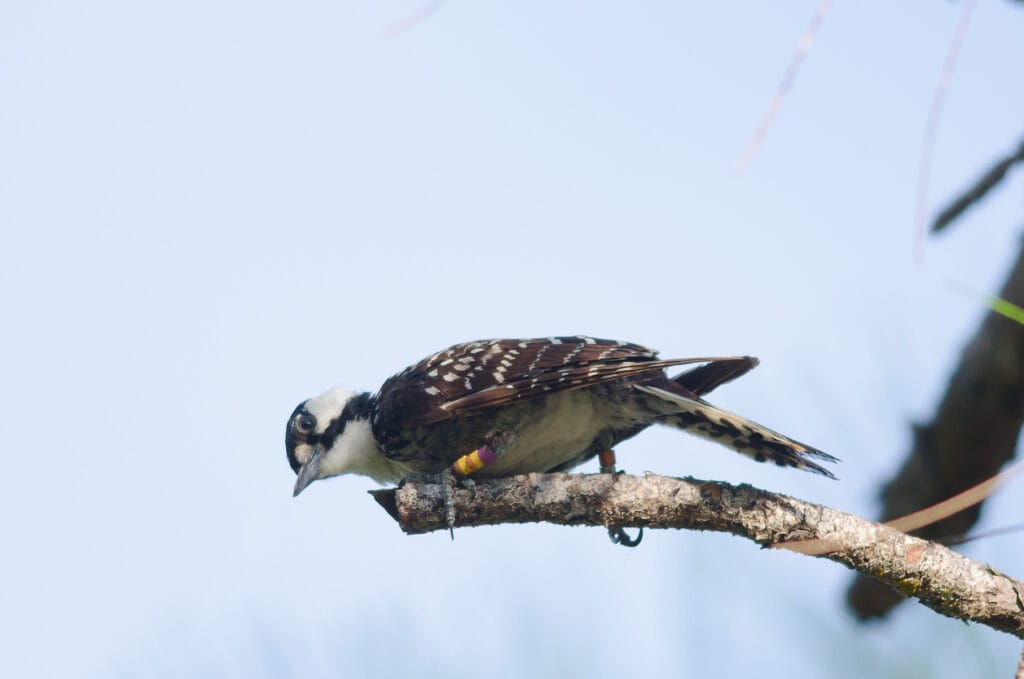
Despite its name, the Red-cockaded Woodpecker is not characterized by a prominent red head. Instead, its most distinguishing features are its striking black capes, pristine white cheeks, and intricate black and white barring on its back. The "red-cockaded" descriptor refers to a small, often barely visible, red spot on the side of the male’s black cape. Females lack this patch entirely, while juveniles may exhibit a red spot in the center of their heads.
Identification and Characteristics:
- Size: 7.9–9.1 inches in length.
- Weight: Approximately 1.5–1.8 ounces.
- Wingspan: 13–16 inches.
- Plumage: Black capes, white cheeks, black and white barred backs. Males have a subtle red spot on their cape; females do not. Juveniles may have a central red spot on their crown.
Habitat and Ecology:
Historically, Red-cockaded Woodpeckers thrived in mature pine forests with open understories, environments that naturally experienced periodic fires. However, habitat fragmentation and aggressive fire suppression have drastically altered their preferred ecosystems. Today, these birds are most likely to be found in protected national forests and wildlife refuges, where habitat management efforts are in place.
Conservation Status and Threats:
The Red-cockaded Woodpecker is a federally listed endangered species. Its population has plummeted from an estimated 1.5 million individuals to a mere 10,000. The primary threats include habitat loss and degradation due to logging and fire suppression, which have reduced the availability of suitable nesting sites and foraging grounds. The species requires living pine trees with red-heart disease to excavate their roosting and nesting cavities.
Diet:
Their diet consists primarily of insects and arthropods, including ants, beetles, and wood roaches. They also supplement their diet with fruits and seeds.
Conservation Initiatives:
In recent years, significant conservation efforts have been undertaken to protect and restore the Red-cockaded Woodpecker population. These initiatives often involve prescribed burning to mimic natural fire regimes and the installation of artificial nest cavities to provide alternative nesting sites. These ongoing efforts represent a critical commitment to preserving this iconic species.
The Striking Red-Headed Woodpecker: A Tale of Nesting Site Competition
2. Red-Headed Woodpecker (Melanerpes erythrocephalus)
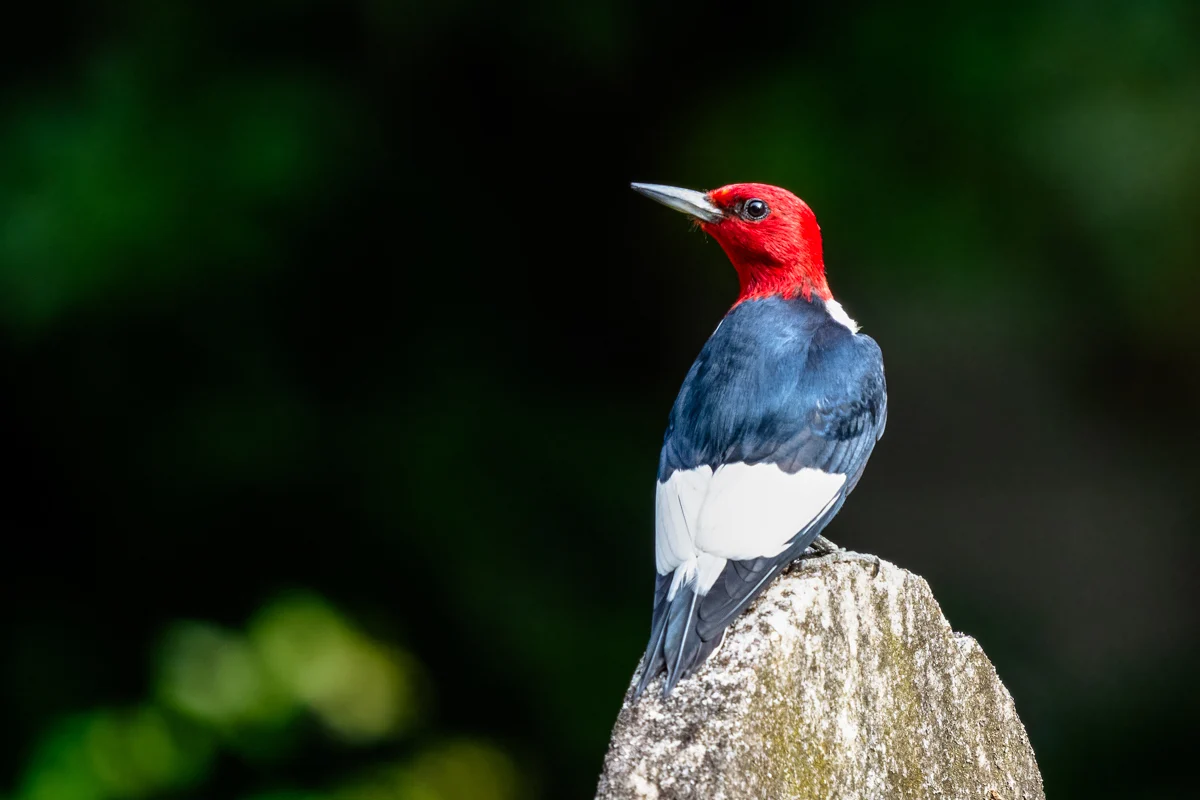
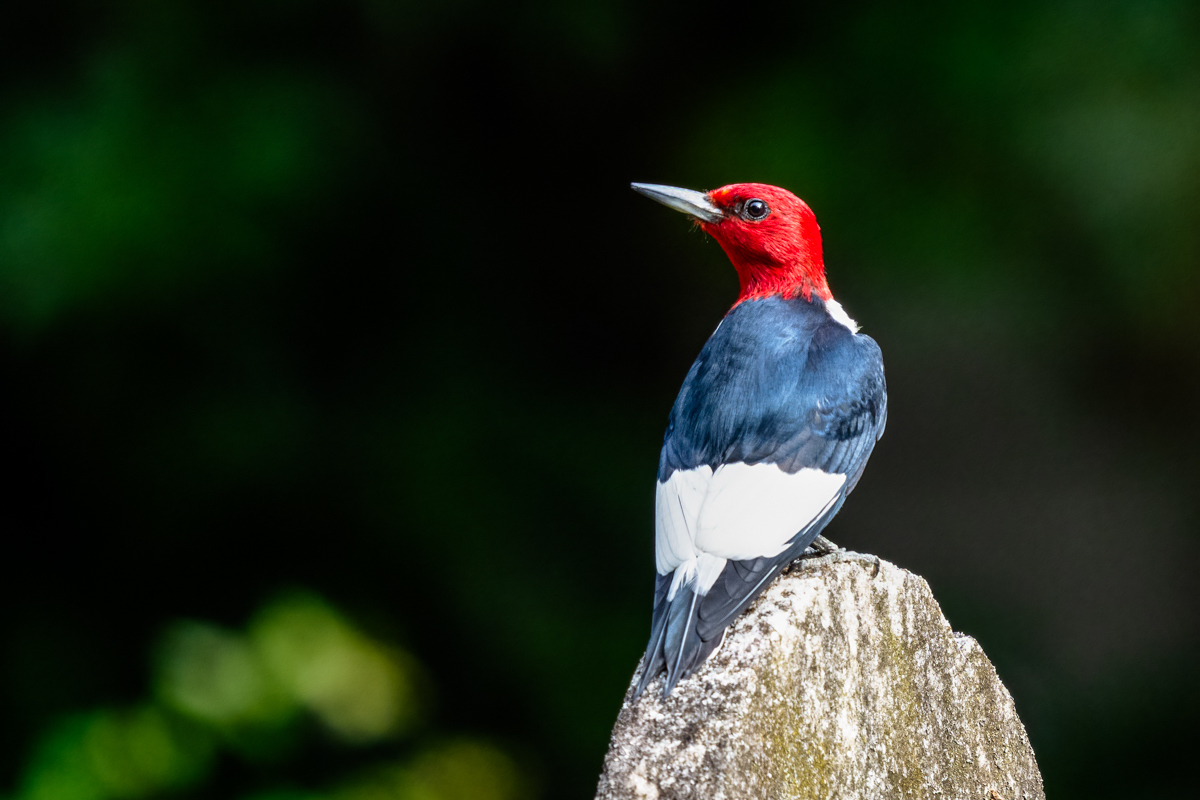
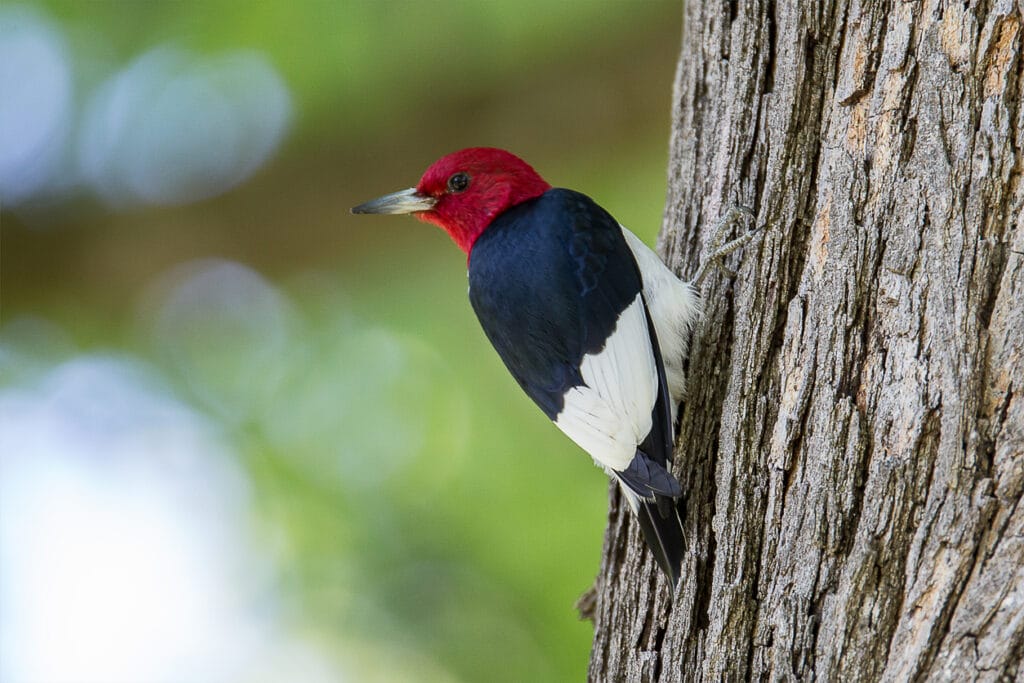
The Red-headed Woodpecker is instantly recognizable by its entirely red head, contrasting sharply with its black wings adorned with white patches and a clean white belly. Immature birds are born with brown heads, which gradually transform into the characteristic vibrant red as they mature.
Identification and Characteristics:
- Size: 7.5–9.8 inches in length.
- Weight: 2–3.2 ounces.
- Wingspan: 16.5–16.7 inches.
- Plumage: Striking red head, black wings with white patches, white belly.
Sexual Dimorphism:
Distinguishing between male and female Red-headed Woodpeckers by appearance alone is challenging. Behavioral observations, particularly during the nesting season, can provide clues. While both sexes collaborate on nest building, males tend to undertake the majority of the excavation. Both parents share incubation duties, with the male typically taking the night shift.
Habitat and Ecology:
These woodpeckers prefer forest edges, open pine woods, and orchards, with a critical requirement for dead trees. These dead snags are essential for their nesting activities.
Conservation Status and Threats:
The decline in Red-headed Woodpecker populations is largely attributed to the removal of dead trees by landowners who may find them aesthetically unappealing. This reduction in nesting sites has intensified competition with other bird species for suitable locations. The loss of these natural cavities has significantly impacted their reproductive success and contributed to a noticeable population decrease.
Diet:
Their diet is varied, including insects such as beetles and grasshoppers, as well as fruits, seeds, and nuts.
The Adaptable Red-Bellied Woodpecker: A Success Story of Resilience
3. Red-Bellied Woodpecker (Melanerpes carolinus)
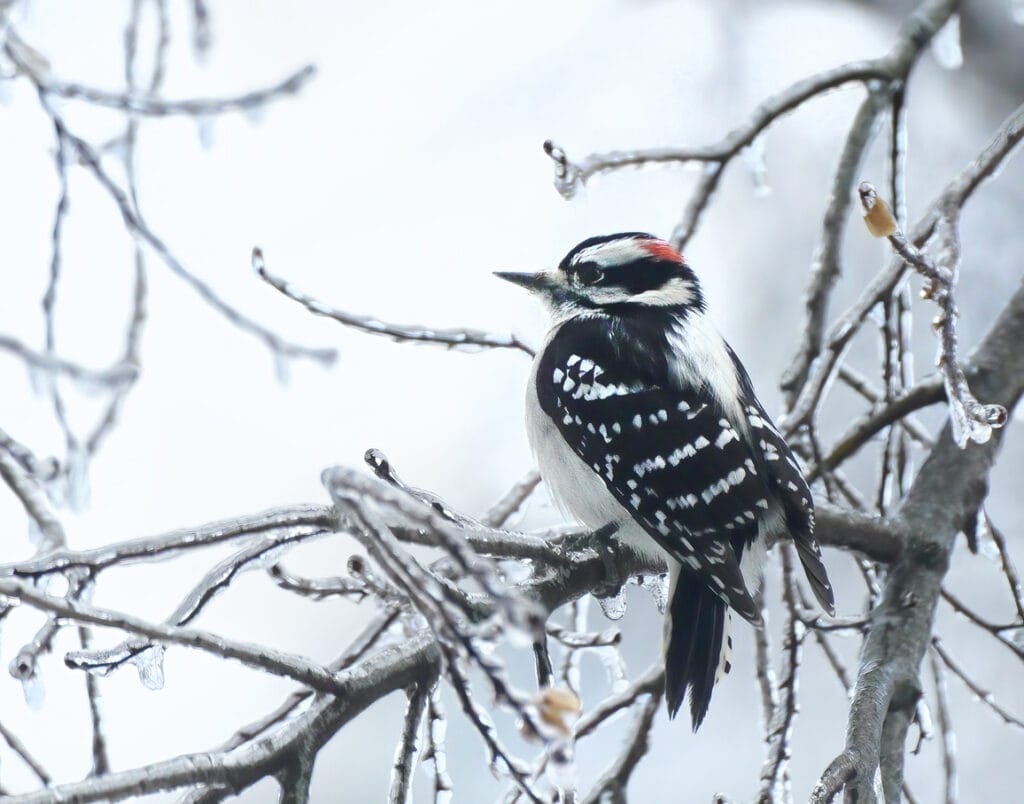
Often confused with the Red-headed Woodpecker, the Red-bellied Woodpecker is distinguished by a red nape and crown (cape), rather than a fully red head. Its back features the typical black and white stripes common to many woodpecker species, and a faint crimson wash on its underbelly, which is not always readily apparent.
Identification and Characteristics:
- Size: 9–10.5 inches in length.
- Weight: 2–3.2 ounces.
- Wingspan: 13–16.5 inches.
- Plumage: Red cape and nape, black and white barred back, faint crimson wash on the underbelly. Males exhibit a more extensive red coloration on the head and bill compared to females, who have red only on the nape and a small patch above the bill.
Habitat and Ecology:
Red-bellied Woodpeckers are highly adaptable and can be found in a variety of woodland environments, including hardwood forests, mixed pine-hardwood forests, and pine flatwoods.
Conservation Status and Trends:
Unlike some of its relatives, the Red-bellied Woodpecker has demonstrated remarkable adaptability, which has contributed to its expanding range and increasing population in recent years. Its Continental Concern Score of 7/20 indicates a relatively low level of concern for its long-term viability.
Diet:
They forage for a diverse range of invertebrates, including flies, ants, and caterpillars, and also consume fruits, nuts, and seeds.
The Unique Northern Flicker: Ground-Foraging Specialists
4. Northern Flicker (Colaptes auratus)
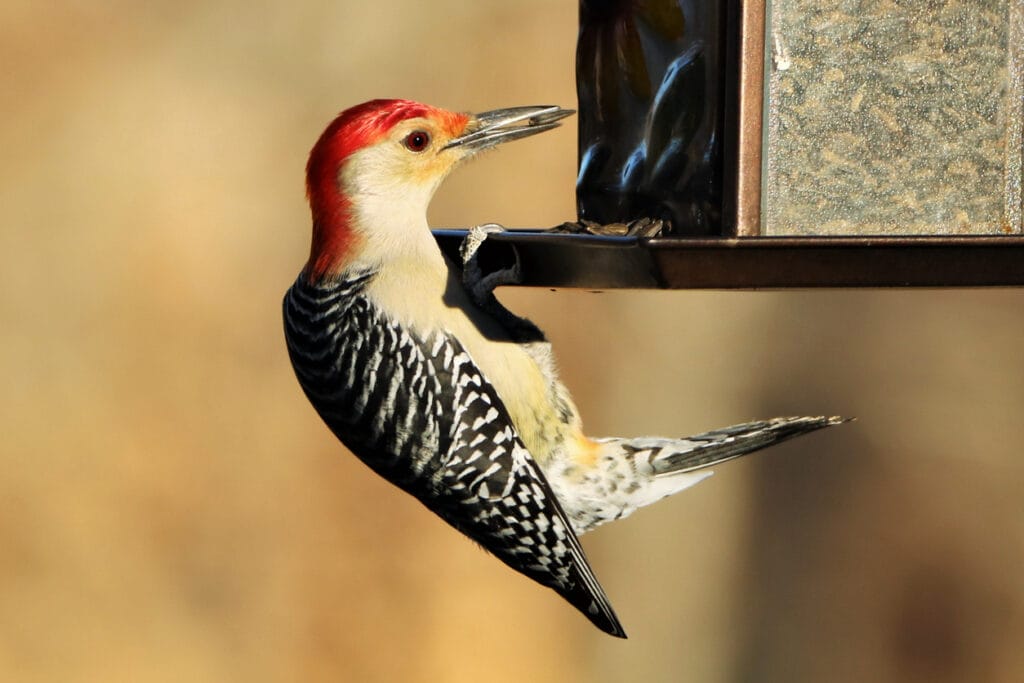
The Northern Flicker presents a departure from the typical black and white plumage of many woodpeckers. They are characterized by brown feathers, distinctive black spots on their underparts, and black barring across their backs. Virginia primarily hosts the Yellow-shafted Flicker subspecies.
Identification and Characteristics:
- Size: 11–14 inches in length.
- Weight: 3.9–5.6 ounces.
- Wingspan: 16.5–20.1 inches.
- Plumage (Yellow-shafted): Brown face and throat, gray upper head with a red nape. Males possess a distinct black "mustache," which is absent in females. Both sexes display yellow shafts on their flight feathers, visible in flight.
Habitat and Ecology:
Northern Flickers are found in open areas with scattered trees, including parks, groves, and forest edges. A unique behavioral trait is their tendency to forage on the ground for ants, which is less common among woodpecker species.
Diet:
Their diet is predominantly composed of ants, but they also consume other insects like beetles and caterpillars, along with fruits, seeds, and nuts.
Conservation Status and Trends:
While not facing immediate endangerment, Northern Flicker populations have been experiencing a decline, largely due to habitat loss driven by human development. Their Continental Concern Score of 10/20 suggests a moderate level of concern.
The Majestic Pileated Woodpecker: A Forest Giant
5. Pileated Woodpecker (Dryocopus pileatus)
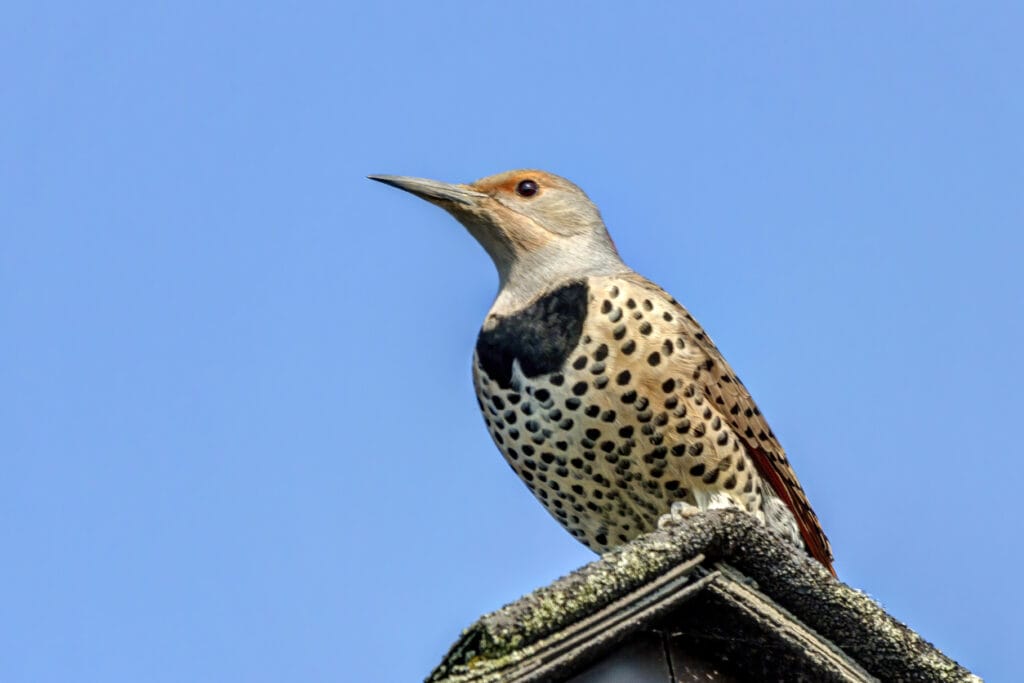
The Pileated Woodpecker is the largest woodpecker species on this list, commanding attention with its impressive size and striking appearance. It features black plumage accented by a prominent white stripe running down its cheeks and throat. The most defining features are its vivid red crest and a distinctive red mustache.
Identification and Characteristics:
- Size: 15.8–19.3 inches in length.
- Weight: 8.8–12.3 ounces.
- Wingspan: 26–29.5 inches.
- Plumage: Black body, white cheek and throat stripes, prominent red crest. Males have a red mustache; females have a black mustache and a shorter crest.
Habitat and Ecology:
These large woodpeckers inhabit deciduous forests, such as maple forests and cypress swamps, and can also be found in suburban areas, parks, and any forest with large, mature, and often dead trees. They rely heavily on dead or decaying trees for both nesting and foraging.
Conservation Status and Trends:
While not currently listed as endangered, the Pileated Woodpecker’s reliance on mature forests makes it vulnerable to habitat destruction. Their Continental Concern Score of 7/20 indicates a stable population for now, but the ongoing loss of old-growth forests poses a long-term threat.
Diet:
Their diet is specialized, with a strong preference for carpenter ants, but they also consume other insects like larvae and caterpillars, along with fruits and nuts.
The Small but Mighty Downy Woodpecker: A Backyard Favorite
6. Downy Woodpecker (Dryobates pubescens)
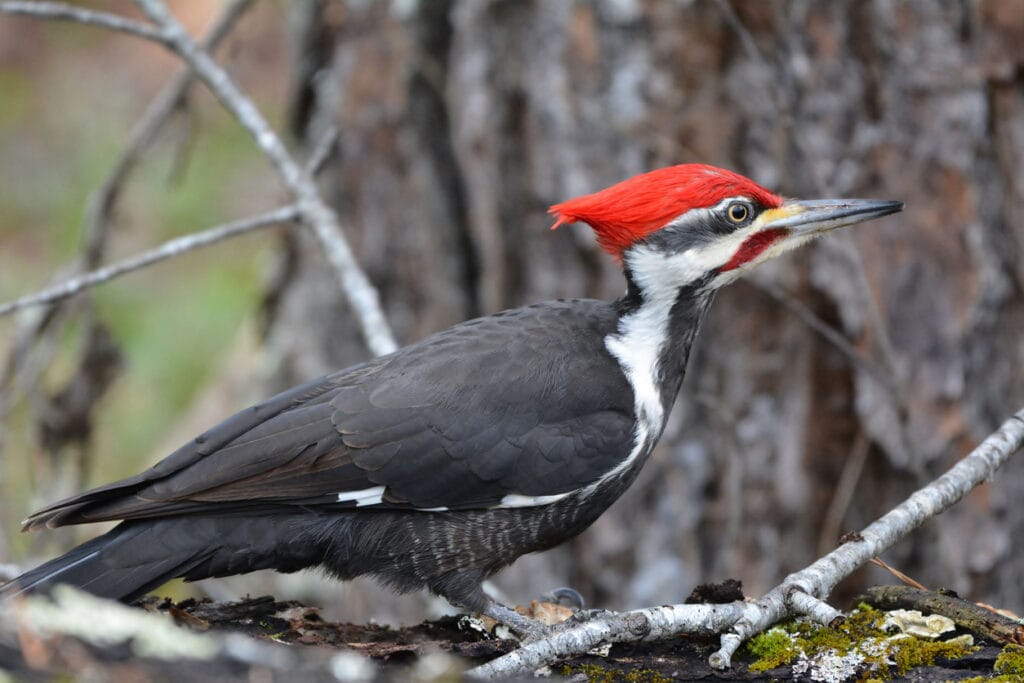
The Downy Woodpecker is the smallest woodpecker species in North America and a common sight in Virginia’s woodlands, parks, and even suburban backyards. Its plumage is characterized by classic black and white patterns: black wings with white spots, a black back with bold white stripes, and a black head.
Identification and Characteristics:
- Size: 5.5–6.7 inches in length.
- Weight: 0.7–1 ounce.
- Wingspan: 9.8–11.8 inches.
- Plumage: Black and white patterned wings and back, black head. Males possess a distinctive red patch on the back of their head; females lack this red mark.
Habitat and Ecology:
Downy Woodpeckers are found in deciduous woods, forest edges, clearings, parks, orchards, and suburban yards. Their small size can make them elusive, but they are often attracted to suet feeders.
Diet:
Their primary food source consists of insects such as ants, caterpillars, and beetles. They also eat fruits and seeds, including berries and grains.
Conservation Status and Trends:
With an estimated population of 13–14 million individuals, the Downy Woodpecker is classified as "Least Concern" on the IUCN Red List. Its population is considered stable, and there are no immediate threats to its endangered status.
The Similar Hairy Woodpecker: Distinguishing Features
7. Hairy Woodpecker (Dryobates villosus)
The Hairy Woodpecker bears a striking resemblance to the Downy Woodpecker, often leading to confusion. Both species share black wings with white spots, black heads with white cheeks, and thick white stripes running down their backs. However, several key differences help in their identification.
Identification and Characteristics:
- Size: 7.1–10.2 inches in length.
- Weight: 1.4–3.4 ounces.
- Wingspan: 13–16.1 inches.
- Plumage: Similar black and white pattern to the Downy Woodpecker. Males have a red spot on their crown; females do not.
Key Distinguishing Features from Downy Woodpecker:
- Size: Hairy Woodpeckers are significantly larger than Downy Woodpeckers.
- Bill Length: The Hairy Woodpecker possesses a longer, more robust bill, nearly as long as its head, whereas the Downy’s bill is considerably shorter than its head.
- Outer Tail Feathers: Hairy Woodpeckers have plain white outer tail feathers, while Downy Woodpeckers exhibit black barring on their outer tail feathers.
Habitat and Ecology:
These woodpeckers inhabit deciduous forests with large trees and can also be found in burned forests, orchards, and suburban areas.
Diet:
Their diet consists mainly of insects, with a particular focus on the larvae of bark beetles and wood-boring beetles. They also consume ants, caterpillars, fruits, and nuts.
Conservation Status and Trends:
With an estimated population of 9 million and a Continental Concern Score of 6/20, the Hairy Woodpecker is considered to be in a stable and healthy condition.
The Distinctive Yellow-Bellied Sapsucker: Sap-Drinking Specialists
8. Yellow-Bellied Sapsucker (Sphyrapicus varius)
The Yellow-bellied Sapsucker stands out with its unique feeding habits and distinctive plumage. Adults typically have white bellies with a noticeable yellow wash, black backs, and wings marked by white barring. Their striking features include red crests and white stripes that frame their faces.
Identification and Characteristics:
- Size: 7.1–8.7 inches in length.
- Weight: 1.5–1.9 ounces.
- Wingspan: 13.4–15.8 inches.
- Plumage: Yellowish-white belly, black back and wings with white barring, red crests, and white facial stripes. Males have a red throat, while females have a white throat. Juvenile sapsuckers have a predominantly brown plumage.
Habitat and Ecology:
Unlike many other woodpecker species, Yellow-bellied Sapsuckers do not exclusively rely on dead trees for survival. They inhabit various wooded environments, including orchards, forest edges, and pastures. They have a particular affinity for maple and fruit trees, from which they extract sap.
Diet:
As their name suggests, these woodpeckers create small, neat holes in tree trunks to feed on the sap. They also supplement their diet with spiders and ants, as well as fruits.
Conservation Status and Trends:
With a stable population estimated at 10 million and a Continental Concern Score of 7/20, the Yellow-bellied Sapsucker is not considered to be at any significant risk.
Fundamental Characteristics of Woodpeckers
Woodpeckers possess a suite of specialized adaptations that enable their arboreal lifestyle:
Zygodactyl Feet: The Key to Climbing
Woodpeckers exhibit zygodactyl feet, meaning they have two toes pointing forward and two pointing backward. This arrangement provides exceptional grip, allowing them to cling securely to tree trunks and branches in various orientations, facilitating both foraging and nest excavation.

Sharp Beaks and Sticky Tongues: Tools for Survival
Their strong, sharp beaks are perfectly adapted for drilling into wood to access insects and excavate nesting cavities. Complementing this is their long, sticky tongue, which can be extended to probe into crevices and extract insects from deep within the wood.
The Hyoid Bone: A Natural Shock Absorber and Extension Mechanism
The hyoid bone, located within the woodpecker’s skull, plays a dual role. Its unique structure helps protect the bird’s brain from the intense vibrations and impacts associated with their constant drumming. Furthermore, the hyoid bone wraps around the skull and extends to the base of the beak, allowing for the remarkable extension of the tongue to reach insects hidden in bark and wood.
Conclusion: A Rich Avian Heritage
Virginia’s diverse avian population, particularly its woodpecker species, offers a compelling testament to the state’s ecological wealth. From the conservation-dependent Red-cockaded Woodpecker to the ubiquitous Downy Woodpecker, each species contributes uniquely to the natural heritage of the Old Dominion. Understanding their specific characteristics, habitats, and conservation needs is vital for ensuring their continued presence and the health of the ecosystems they inhabit. Birdwatchers and nature enthusiasts alike can find immense satisfaction in observing and appreciating the remarkable adaptations and ecological roles of these fascinating birds across the varied landscapes of Virginia.
Frequently Asked Questions About Virginia’s Woodpeckers
Are woodpeckers common in Virginia?
Yes, woodpeckers are indeed common throughout Virginia’s wooded areas. Species like the Downy and Hairy Woodpeckers are frequently observed, and the larger Pileated Woodpecker is also quite common and widespread.
What is the rarest woodpecker in Virginia?
The Red-cockaded Woodpecker is considered one of the rarest woodpeckers in Virginia. Sightings are infrequent, with fewer than a thousand reported on platforms like eBird, highlighting its vulnerable status.
Are woodpeckers protected in Virginia?
Woodpeckers are protected under federal law across the United States, including in Virginia. It is illegal to harm them, hunt them, or remove their nests, ensuring their conservation and the preservation of their habitats.

