


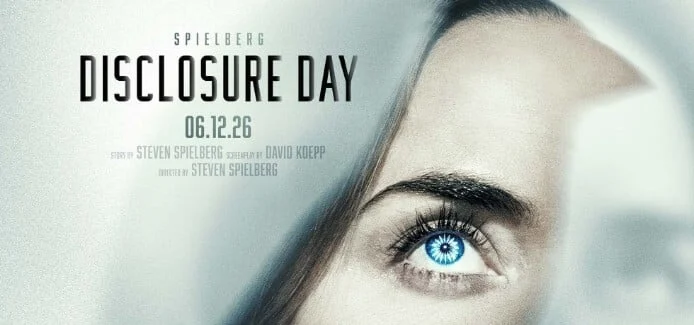
The release of Steven Spielberg’s latest science-fiction magnum opus, Disclosure Day, has transcended the boundaries of traditional cinematic entertainment, igniting a fierce international discourse regarding the ethics of scientific experimentation and the treatment of non-human entities. Starring Academy Award winner Emily Blunt and Josh O’Connor, the film arrived in theaters in June 2026, quickly establishing itself as a seminal work that challenges the moral foundations of modern research and government secrecy. While the film operates on the surface as a high-stakes conspiracy thriller, its deeper narrative explores the psychological and physical trauma inflicted upon beings that exist outside the human experience. This thematic focus has prompted major advocacy groups, most notably People for the Ethical Treatment of Animals (PETA), to draw direct parallels between the fictional treatment of extraterrestrial life and the real-world treatment of laboratory animals.
Narrative Overview and Thematic Foundations
Disclosure Day follows the journey of Daniel Kellner (Josh O’Connor), a high-level cybersecurity expert, and Margaret Fairchild (Emily Blunt), a meteorologist, as they uncover evidence of a long-standing government operation involving contact with extraterrestrial visitors. Unlike previous Spielberg entries in the genre, such as Close Encounters of the Third Kind or E.T. the Extra-Terrestrial, which often emphasized wonder and the possibility of cosmic friendship, Disclosure Day adopts a starker, more clinical tone. The plot centers on the discovery of a clandestine facility where extraterrestrial individuals are held in captivity for the purpose of biological and technological study.
The emotional pivot of the film occurs when Daniel presents Jane (Eve Hewson) with classified video footage documenting the internal operations of this facility. The footage depicts an extraterrestrial being undergoing invasive procedures without consent. In a particularly harrowing sequence, the being is seen visibly distressed, physically resisting its human captors and pushing away a researcher in a desperate attempt to avoid further pain. This scene has been cited by critics and audiences alike as the most impactful moment in the film, shifting the narrative from a search for truth to an indictment of institutionalized cruelty.
Chronology of Production and Release
The journey of Disclosure Day from concept to global release followed a highly publicized timeline that reflected the growing cultural sensitivity toward ethical science:
- August 2024: Amblin Entertainment announces a "top-secret" project directed by Steven Spielberg, described as a "reimagining of the contact narrative."
- January 2025: Emily Blunt and Josh O’Connor are confirmed for lead roles. Reports surface that the film will utilize groundbreaking practical effects to ensure the "aliens" possess a palpable, empathetic presence.
- September 2025: Production concludes in various locations across the United States and the United Kingdom. Rumors begin to circulate regarding the film’s "disturbing" depiction of government laboratories.
- March 2026: The first teaser trailer is released, focusing on the mystery of "The Disclosure." It receives over 100 million views in 24 hours.
- June 15, 2026: Disclosure Day premieres at a major global event, receiving a standing ovation for its performances and its unflinching look at ethical dilemmas.
- June 18, 2026: PETA issues a public statement and delivers a vegan cake to the production team to thank them for highlighting the horrors of non-consensual experimentation.
- June 23, 2026: The film reaches a critical box office milestone, as public debates regarding animal rights and research modernization begin to trend globally.
The Scientific Mirror: Animal Testing and Data Analysis
The central conflict of Disclosure Day—the subjection of sentient beings to painful experiments for "the greater good"—is a direct reflection of contemporary debates surrounding animal testing. According to data cited by animal rights organizations and reflected in recent scientific reviews, the reliance on animal models in biomedical research has come under increasing scrutiny.
Statistical evidence indicates that approximately 90% of basic research involving animals—including those on mice, monkeys, and dogs—fails to lead to human treatments. Furthermore, a significant percentage of drugs that appear safe and effective in animal trials fail during human clinical trials, often due to unforeseen toxicity or lack of efficacy. The film’s depiction of an alien resisting a "vivisector" serves as a cinematic metaphor for the thousands of animals that annually exhibit signs of "learned helplessness," terror, and physical resistance in laboratory settings.
In the United States alone, millions of animals are used in experiments each year. Critics of these practices argue that the psychological and physiological differences between species make animal models an unreliable surrogate for human biology. The "harder truth" suggested by the film is that society’s tolerance for these experiments is predicated on the "othering" of the victims—a process of dismissing the pain of those who do not look, speak, or originate from the same background as the observer.

Institutional and Advocacy Responses
The response to Disclosure Day has not been limited to film critics. Advocacy groups have seized the cultural moment to push for legislative reform. PETA, in a statement released shortly after the film’s debut, argued that "how you treat animals is the greatest measure of your humanity." The organization has leveraged the film’s popularity to promote the Research Modernization Deal, a comprehensive strategy aimed at phasing out animal-based experiments in favor of human-relevant, non-animal methods.
These modern methods include:
- Organs-on-a-chip: Microchips that mimic the structure and function of human organs.
- In silico modeling: Advanced computer simulations that predict human responses to drugs.
- Human-derived stem cell research: Utilizing human cells to study disease progression and drug interactions.
In the United States, the film has invigorated support for the Research Modernization Act. This proposed legislation seeks to redirect federal funding away from traditional animal testing and toward these sophisticated, animal-free technologies. Proponents of the bill argue that this shift is not only a moral imperative—as highlighted by the emotional resonance of Disclosure Day—but also a scientific necessity to improve the success rate of human medicine.
Cultural and Philosophical Implications
The success of Disclosure Day suggests a shift in public consciousness. By presenting an "alien" as a victim of human domination rather than a threat to human survival, Spielberg has tapped into a growing global empathy for the "other." Film scholars suggest that the movie functions as an accidental mirror, forcing viewers to confront the rationalizations used to justify violence against those who cannot give consent.
The film’s protagonists, Daniel and Margaret, represent a new type of hero: individuals who risk their safety not to destroy a foreign invader, but to expose the systemic abuse of a vulnerable population. This narrative arc mirrors the work of undercover investigators who expose conditions in factory farms and research laboratories. The film posits that empathy is a disruptive force—one capable of interrupting cycles of violence and conquest.
Analysis of Global Impact
As Disclosure Day continues its theatrical run, its impact is being felt in diverse sectors. Educational institutions have begun using the film as a case study in bioethics, and social media platforms are flooded with discussions under the hashtag #ResearchModernization. The film’s ability to generate visceral horror from a scene of a being simply "resisting experimentation" has proven more effective than decades of traditional activism for some demographics.
The broader implication is that the "Disclosure" in the film’s title refers to more than just the existence of extraterrestrial life; it refers to the disclosure of human cruelty and the high cost of scientific progress when it is detached from morality. The film challenges the viewer to recognize that a being does not need to be human to deserve the right to exist for their own reasons, free from cages and scalpels.
In conclusion, Disclosure Day has evolved from a summer blockbuster into a catalyst for legislative and ethical change. By bridging the gap between science fiction and the reality of laboratory experimentation, the film has forced a global audience to reconsider the boundaries of compassion. Whether this cultural moment will translate into the passage of the Research Modernization Act remains to be seen, but the conversation sparked by Spielberg, Blunt, and O’Connor has ensured that the plight of those "without a voice" remains at the forefront of the public’s mind. For many, the true "Contact" in the film is not between humans and aliens, but between the viewer and their own conscience.

