


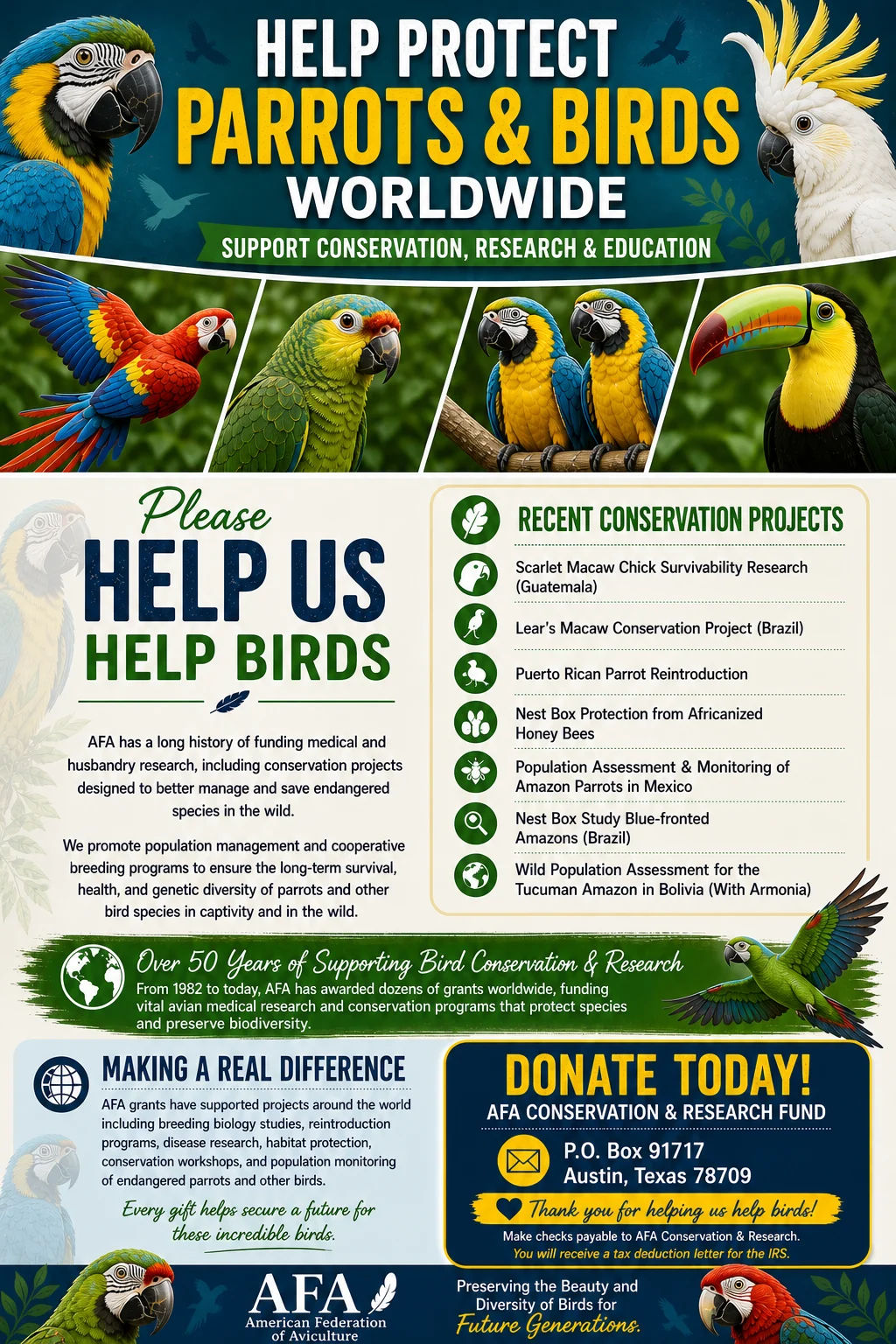
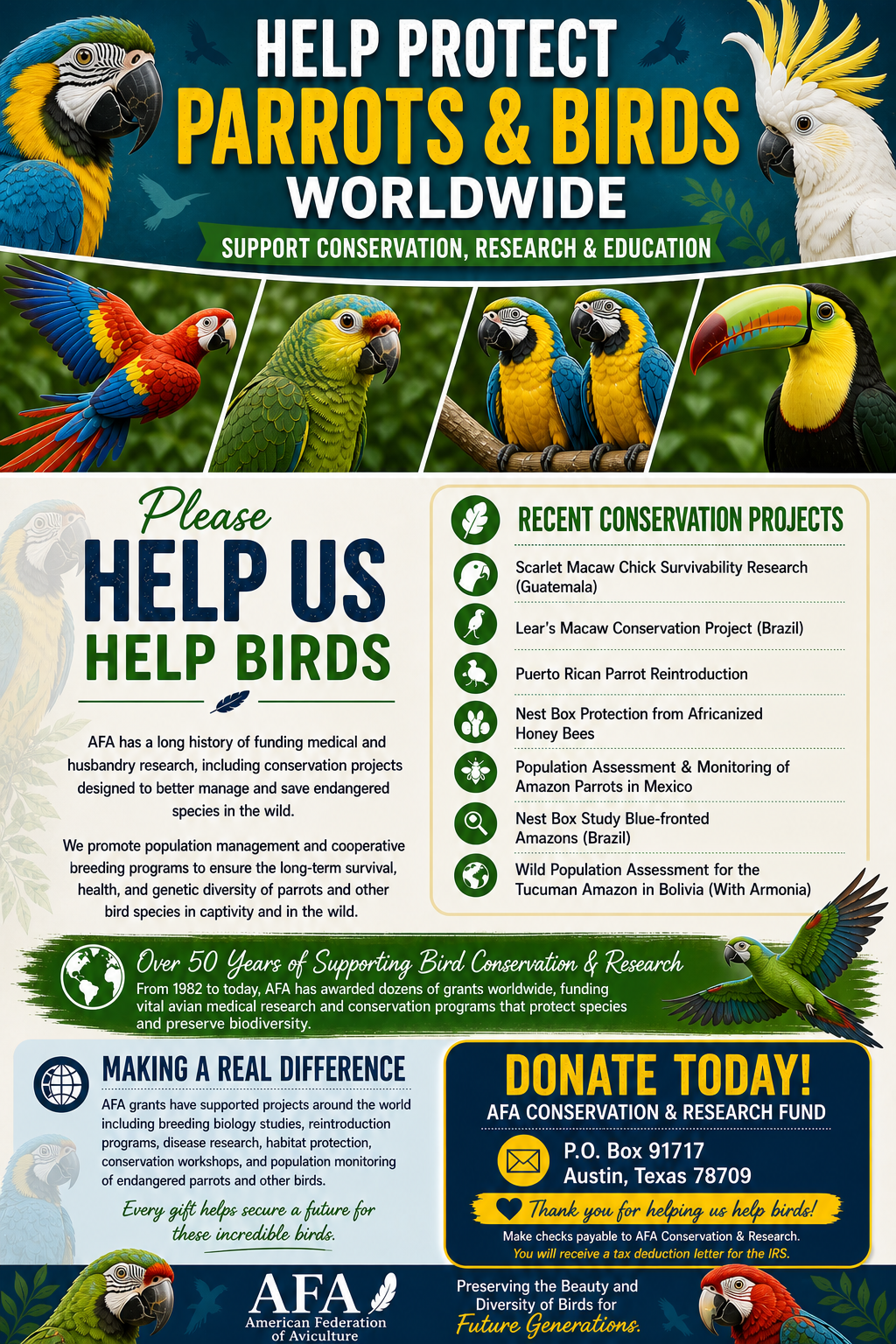
The American Federation of Aviculture (AFA) has officially launched its conservation and research agenda for the 2024-2025 cycle, bolstered by a significant $25,000 contribution from Harrison’s Bird Foods. This partnership aims to provide critical financial and logistical support to wild parrot conservation projects within their native habitats, reflecting a continued commitment to avian welfare and environmental stewardship. By offering small-scale grants to researchers and field biologists, the AFA seeks to bridge the gap between captive aviculture and the protection of wild populations, ensuring the long-term survival of endangered psittacine species across the globe.
Strategic Partnership and Financial Stewardship
The cornerstone of this year’s conservation effort is the collaboration between the AFA and Harrison’s Bird Foods. Representatives from the premium avian nutrition company recently presented a check for $25,000 to AFA Chief Financial Officer Janice Lang. These funds are designated for the AFA’s small-grant program, which assists projects that demonstrate a direct impact on wild parrot populations and their ecosystems.
The AFA Conservation Committee, overseen by veteran aviculturist Rick Jordan, manages the distribution of these funds. While the organization typically awards modest grants—often around $500—larger amounts are considered for projects with exceptional goals and proven methodologies. This tiered funding approach allows the AFA to support a diverse array of grassroots initiatives that might otherwise lack the resources to maintain field operations.
Priority Field Projects for 2024-2025
Several ongoing projects have been identified as high-priority for the current funding cycle, ranging from nest protection in Mexico to physiological research in the Amazon basin.
Scarlet Macaw Conservation at Chajul Biology Station, Mexico
The Lacandon rain forest in southern Mexico remains a critical battleground for the survival of the wild Scarlet Macaw. The Chajul Biology Station, operated by Natura Mexicana, has reported that without direct human intervention, the fledgling rate for these birds is nearly zero percent due to rampant poaching for the illegal pet trade.
Biologists at the station engage in intensive nest monitoring, identifying hatchlings and, when necessary, hand-rearing and releasing birds back into the forest. To date, the program has successfully fledged over 150 Scarlet Macaws. For the 2024 season, the AFA has set a fundraising goal of $5,000 to provide the station with essential medical and husbandry equipment, including brooders, incubators, gram scales, and portable medical supplies.
Selva Maya Living Landscape Program, Guatemala
In the Maya Biosphere Reserve of Guatemala, the Wildlife Conservation Society (WCS) is spearheading research into Scarlet Macaw chick survivability. Since 2002, the WCS has implemented experimental interventions designed to increase recruitment—the process by which new individuals are added to a population. This program utilizes a mix of threat-based interventions and direct population enhancements, maintaining the Scarlet Macaw as a flagship species for the broader Selva Maya ecosystem.
Mitigation of Africanized Honey Bee Colonization
A unique threat to parrot conservation is the competition for nesting sites from Africanized honey bees. Principal Investigator Caroline A. Efstathion has developed a "push-pull" prevention protocol. This method involves treating parrot nest boxes with permethrin—a bird-safe insecticide—to repel scout bees (the "push") while simultaneously attracting them to pheromone-baited traps (the "pull"). This research is vital for ensuring that endangered parrots have access to safe nesting cavities without the risk of swarm-related mortality.
Physiological Research in Tambopata, Peru
In the Tambopata region of Peru, investigators J. Jill Heatley, Lizzie Ortiz-cam, and Donald Brightsmith are conducting groundbreaking research on wild parrot blood chemistry. Using i-STAT analyzers in the field, the team collects data on electrolytes, blood gases, and lactate levels in both nestlings and free-flighted adults. This data provides a physiological baseline that is invaluable for avian veterinarians and conservationists alike. Furthermore, the study investigates the theoretical reasons behind "clay lick" use, exploring whether these sites provide necessary electrolytes for reproductive health.
Historical Context: The Origins of the AFA
The American Federation of Aviculture was born out of crisis. In the early 1970s, an outbreak of Exotic Newcastle Disease in California led the United States Department of Agriculture (USDA) to euthanize thousands of healthy exotic birds in private collections to prevent the spread of the virus. In response, the State of California proposed legislation that would have severely restricted or banned the private ownership of exotic birds.
In March 1974, bird owners and clubs formed the AFA as an "umbrella organization" to serve as a unified voice for the avicultural community. Today, as a 501(c)3 non-profit based in Austin, Texas, the AFA represents thousands of individual members and affiliated bird clubs worldwide. Its mission has expanded from legislative defense to include education, research, and the promotion of sustainable breeding practices.

Navigating the Legal Landscape of Aviculture
A significant portion of the AFA’s mission involves educating its members on the complex web of federal and international laws that govern the movement and possession of exotic birds.
The Convention on International Trade in Endangered Species (CITES)
CITES is an international treaty designed to ensure that international trade in wild animals and plants does not threaten their survival. The AFA holds official Non-Governmental Observer (NGO) status at CITES meetings, providing "ground-level" expertise to the U.S. Fish and Wildlife Service (USFWS).
The treaty operates through three "Appendices":
- Appendix I: Includes species threatened with extinction. Trade is permitted only in exceptional circumstances.
- Appendix II: Includes species not necessarily threatened with extinction but in which trade must be controlled.
- Appendix III: Includes species protected in at least one country that has asked for assistance in controlling trade.
The Wild Bird Conservation Act (WBCA) of 1992
The WBCA effectively halted the mass importation of wild-caught birds into the United States for the pet trade. While it served to protect wild populations, it also created significant hurdles for aviculturists seeking to diversify the genetic stock of captive populations. The law allows for exceptions only under approved "Cooperative Breeding Programs" (CBPs) or for species on a specific "Clean List" of captive-bred birds.

The Endangered Species Act (ESA) of 1973
The ESA is domestic U.S. legislation that protects species identified as endangered or threatened. Under the ESA, it is generally illegal to sell listed species across state lines without an Interstate Commerce Permit or a Captive-bred Wildlife Permit. Recent updates have added several species of macaws and cockatoos to the ESA list, reflecting their declining numbers in the wild.
Cooperative Breeding Programs: A Path for Sustainable Importation
To address the genetic stagnation that can occur in closed populations, the AFA oversees several Cooperative Breeding Programs. These programs allow for the limited importation of species that are underrepresented in U.S. aviculture.
A notable success is the Blue-eyed Cockatoo (Cacatua ophthalmica) CBP, which has seen the successful importation and initial breeding of several pairs. This program has recently been expanded to include other rare black cockatoos, such as the Gang-gang and the Red-tailed Black Cockatoo. These programs are strictly regulated by the USFWS, requiring biannual status reports and ensuring that imported birds are used solely for breeding purposes rather than immediate commercial resale.
Global Collaboration and Future Outlook
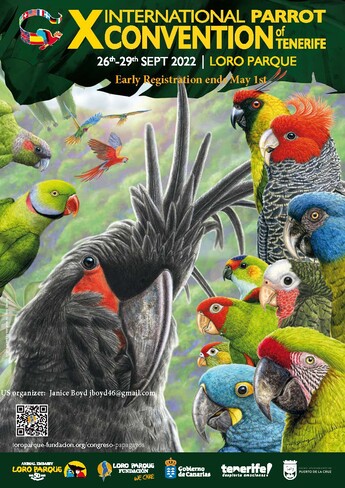
The AFA continues to look outward, encouraging its members to engage with the international conservation community. The organization highlighted the upcoming International Parrot Conference in the Canary Islands as a key venue for sharing research and husbandry techniques.
The broader impact of the AFA’s work lies in its dual-track approach: protecting birds in their native ranges while maintaining healthy, genetically diverse populations in captivity. By funding research into wild parrot health and nesting success, the AFA provides data that informs both field conservation and clinical avian medicine.
As the 2024-2025 season progresses, the AFA remains a vital link between the hobbyist, the scientist, and the legislator. The $25,000 commitment from Harrison’s Bird Foods serves as a catalyst for these efforts, but the organization emphasizes that continued support from individual donors is essential to meet the $5,000 goal for the Chajul project and to sustain the Lear’s Macaw corn subsidy program in Brazil. Through these multifaceted efforts, the AFA seeks to ensure that the vibrant diversity of the world’s psittacines remains for future generations to admire and study.

