


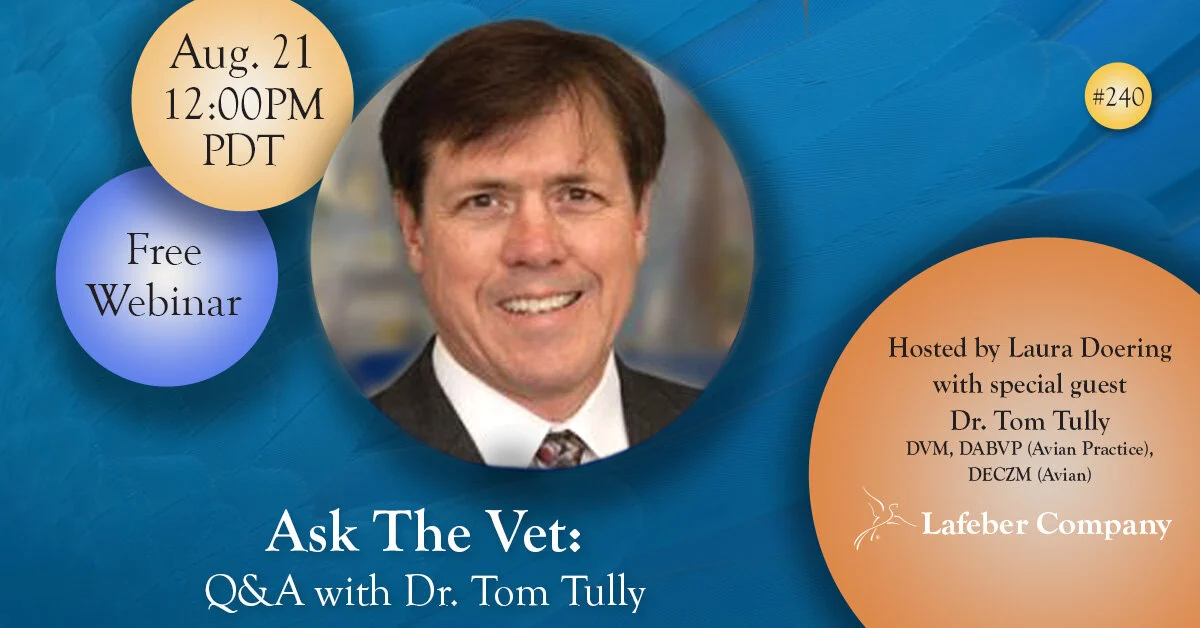
The landscape of avian medicine continues to evolve as pet bird owners increasingly seek evidence-based guidance to ensure the longevity and welfare of their companions. On Friday, August 21, 2026, at 12:00 p.m. PDT, a significant opportunity for direct engagement between the public and veterinary expertise will take place through a live, interactive webinar titled "Ask the Vet." The event will feature Dr. Tom Tully, DVM, DABVP (Avian Practice), DECZM (Avian), a globally recognized authority in the field, moderated by Laura Doering, the former editor of both Bird Talk magazine and Birds USA magazine. This session aims to bridge the gap between clinical veterinary science and daily husbandry practices, providing a platform for owners to address concerns ranging from physiological health to behavioral nuances.
The Role of Specialized Avian Veterinary Care
The necessity for such webinars is underscored by the unique biological requirements of psittacines and other pet birds. Unlike domesticated mammals, birds are masters of masking illness, an evolutionary survival strategy designed to prevent them from appearing vulnerable to predators in the wild. By the time a bird exhibits clear clinical symptoms of illness, the condition is often in an advanced stage. Dr. Tully’s participation is specifically intended to address this diagnostic challenge by educating owners on early warning signs and the critical role of preventative nutrition.
Dr. Tully’s credentials are a central draw for the upcoming event. As a Diplomate of the American Board of Veterinary Practitioners (Avian Practice) and the European College of Zoological Medicine (Avian), he represents the pinnacle of specialized care. His philosophy—that an educated owner is the most effective steward of avian welfare—serves as the event’s guiding principle. By providing direct access to a specialist of his caliber, the webinar seeks to mitigate the spread of anecdotal and often incorrect husbandry advice frequently found in unmoderated online forums.
Chronology of Avian Health Advocacy
The movement to formalize and professionalize pet bird care has seen a steady progression over the last two decades. In the early 2000s, avian veterinary care was largely relegated to general practitioners who often lacked the specific training required for exotic species. The formation of specialized boards, such as the ABVP, changed this trajectory.
The history of the "Ask the Vet" series aligns with a broader shift in digital education. With the rise of high-bandwidth internet, veterinary organizations began pivoting from physical seminars to digital broadcasts to reach a global audience. This transition has been critical, as avian specialists are geographically dispersed, making in-person consultations difficult for many bird owners living in rural or underserved areas. The 2026 session represents the culmination of years of iterative development in digital pedagogy, utilizing platforms like Zoom to create a real-time, interactive experience that mirrors a clinical consultation.
Supporting Data on Avian Husbandry Challenges
Data from avian welfare organizations suggests that the leading causes of morbidity in pet birds remain rooted in preventable husbandry errors. Nutritional deficiencies, specifically hypovitaminosis A and calcium imbalances, account for a significant portion of clinical visits. Furthermore, a 2024 longitudinal study on parrot health indicated that nearly 40% of health issues reported in home environments were linked to improper diet and inadequate exposure to natural light or environmental enrichment.
Behavioral issues also constitute a major factor in the rehoming of birds. Aggression, feather destructive behavior, and screaming are often mischaracterized as "personality traits," when in many cases, they are manifestations of underlying medical conditions or stress responses to inadequate captive environments. By dedicating time to live Q&A, the webinar provides a data-driven approach to deciphering these behaviors, allowing owners to determine whether they are dealing with a medical emergency or a need for environmental modification.

Perspectives on Clinical Communication
Laura Doering, in her capacity as the event moderator, has long advocated for the democratization of veterinary knowledge. Her tenure at Bird Talk allowed her to observe the shift in reader demographics from hobbyists to "avian parents." In recent communications regarding the event, organizers have emphasized that the webinar is not a substitute for an in-person veterinary exam, but rather a tool for empowerment.
"The goal is not to diagnose specific cases in a vacuum," noted an industry representative close to the event planning, "but to provide the framework for owners to know when to seek help and how to communicate effectively with their local veterinarian." This distinction is vital for liability and ethical reasons. The professional consensus among veterinary associations is that while remote education is invaluable for public health, it cannot replace the physical diagnostic tools—such as blood panels, radiographs, and physical examinations—required to treat individual animals.
Broader Implications for the Avian Industry
The implications of this webinar extend beyond the individual participants. As the human-animal bond continues to deepen, the standard of care expected for birds is rising to meet that of canine and feline companions. This shift is driving demand for specialized veterinary training and high-quality, scientifically backed nutritional products.
Furthermore, the integration of experts like Dr. Tully into the digital space creates a repository of credible information. By recording and potentially archiving such sessions, the avian community builds a library of institutional knowledge that remains accessible to future generations of bird owners. This is particularly relevant as the population of pet birds grows; according to recent pet industry census data, the number of households keeping birds has seen a consistent uptick, necessitating a scalable solution for education.
Technical Logistics and Participation
For those wishing to attend, registration is managed via a dedicated portal, ensuring that the session remains interactive and secure. The use of a time zone converter is highly recommended, as the global nature of the avian community means participants will be joining from disparate time zones.
The format of the session will likely involve a brief presentation on a specific topic followed by a structured Q&A. Dr. Tully’s methodology typically involves addressing the "why" behind a health issue, explaining the physiology of the bird before suggesting corrective actions. This deep-dive approach distinguishes the event from typical surface-level advice columns.
Conclusion and Future Outlook
As we move toward the August 21, 2026, date, the expectation is that the webinar will serve as a bellwether for the future of digital veterinary outreach. The success of such programs is typically measured not just by attendance, but by the subsequent improvement in the questions and interactions between owners and their local veterinarians in the months following the event.
The professionalization of pet bird care is a collaborative effort. It requires the expertise of specialists like Dr. Tully, the organizational support of platforms like the one hosting this webinar, and the commitment of the owners themselves to seek out and apply evidence-based knowledge. In an era of misinformation, providing direct access to verified, high-level veterinary expertise is perhaps the most significant contribution to the welfare of the captive avian population. Interested parties are encouraged to register promptly, as capacity for interactive sessions is often limited to ensure the quality of the engagement. By prioritizing education, the avian community continues to improve the quality of life for millions of birds worldwide, fostering a more informed and capable generation of guardians.

