


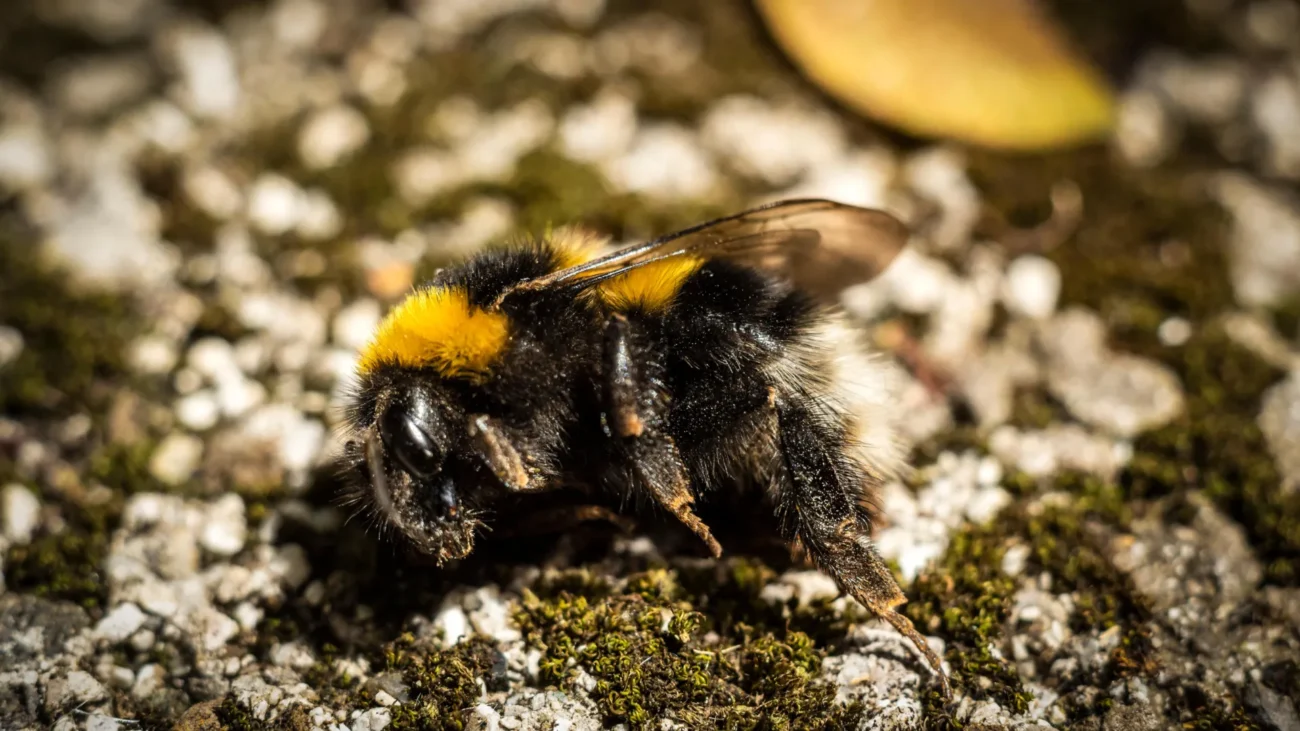
Walking down urban pavements and suburban walkways during the height of summer, observant pedestrians frequently encounter a disheartening sight: the motionless bodies of dead or dying bumblebees. While the natural lifecycle of these critical pollinators accounts for some of these casualties, a complex web of anthropogenic pressures, extreme weather events, and ecological disruptions are driving alarming mortality rates among wild bee populations globally. Understanding the multi-faceted causes behind this seasonal phenomenon is essential for implementing effective conservation strategies before declining pollinator numbers trigger a wider ecological and agricultural crisis.
To comprehend the immediate presence of deceased bees on paved surfaces, one must first examine the social structure and lifecycle of bumblebees. Unlike solitary bee species, bumblebees live in organized colonies established and maintained by a caste of active female worker bees. These workers possess a remarkably brief lifespan, typically living for only four to six weeks. Consequently, as a colony reaches its peak population and advances through the summer months, a natural wave of older worker bees reaches the end of their biological cycle and dies off.
However, natural attrition does not fully explain why these bodies frequently end up on footpaths far from their subterranean nests. Entomologists note that colony hygiene is a paramount priority for social insects. To prevent the spread of pathogens, parasites, and disease through the hive, healthy young worker bees actively remove their deceased nestmates. They transport the bodies away from the nesting site, often dropping them along open pathways, lawns, and pavements during their foraging flights.
Beyond the natural turnover of colony members, severe meteorological pressures are exerting unprecedented thermal stress on insect populations. The environmental reality of a warming planet has brought increasingly intense heatwaves to the United Kingdom and continental Europe. Records indicate that England experienced its warmest June on record in 2026, a milestone accompanied by soaring temperatures across the wider UK. Meteorological agencies project further prolonged periods of extreme heat throughout the summer months, directly impacting cold-blooded organisms that rely heavily on stable ambient temperatures to regulate their biological processes.
Thermal stress alters the fundamental development of bees and threatens the long-term stability of their populations. Prolonged exposure to high temperatures severely disrupts vital physiological functions, including flight capacity, reproductive success, and the ability to forage effectively for food. Social insects utilize sophisticated cooling mechanisms to buffer their hives against extreme environments, such as fanning their wings to circulate air and reduce internal temperatures. Nevertheless, these behavioral adaptations have strict physical limits. When ambient temperatures surpass critical thresholds, these cooling strategies fail, leading to exhaustion, dehydration, and eventual mortality.
Furthermore, as temperatures rise, bees must increase their foraging activity and travel significantly greater distances to locate diminishing food resources. While bees possess remarkable physiological adaptations—such as the ability to thermoregulate by shifting internal heat through their bodies during flight—extended exposure to severe heatwaves pushes their biological limits to a breaking point, leaving many exhausted on pavements where they succumb to the elements.
Compounding the crisis of extreme weather is the persistent application of chemical pesticides and herbicides in agricultural landscapes and domestic gardens. Chemical treatments remain a historically primary driver in the widespread loss of global insect biodiversity. Although regulatory bodies in the United Kingdom and the European Union have implemented strict bans on the most hazardous neonicotinoid pesticides, agricultural and horticultural sectors continue to rely routinely on alternative chemical treatments. Insecticides such as organophosphates, synthetic pyrethroids, and phenylpyrazoles are frequently deployed to manage crop pests. Ironically, these chemicals target and decimate the very insect populations responsible for pollinating those same agricultural yields.
Exposure to sublethal and lethal doses of these chemical agents impairs the fitness, navigational capacity, and neurological functions of bees, frequently inducing paralysis and death. Moreover, herbicides targeting common wild plants—such as dandelions—systematically eliminate vital early-season and summer nectar sources. Dandelions are often mischaracterized as invasive weeds and targeted with chemical eradication, yet they serve as an indispensable nutritional lifeline for bees emerging from hibernation or struggling to find sustenance during resource-scarce periods. When chemical weed control strips landscapes of these resilient flowering plants, foraging bees face starvation alongside direct chemical toxicity.
Habitat fragmentation and loss represent another formidable threat to wild pollinators. Rapid urbanization, the continuous expansion of housing developments, intensive agricultural intensification, and the proliferation of impermeable human infrastructure—including road networks and industrial parks—have systematically fractured natural ecosystems. Without diverse, interconnected habitats capable of providing continuous nesting sites and floral resources throughout the active season, regional bee populations experience severe genetic bottlenecks and localized extinctions.
Climate change is also triggering complex phenological mismatches between dependent species. Phenological mismatch occurs when two interdependent organisms, such as flowering plants and their specialized pollinators, fall out of sync due to shifts in seasonal temperatures. As winters shorten and spring arrives prematurely, certain plant species bloom earlier or later than their historical averages. If flora begins flowering before emerging bees finish hibernation, or conversely, if bees wake from dormancy only to find their primary nectar sources depleted or finished, the resulting ecological disconnect spells disaster for both plant reproduction and insect survival.
Insects constitute the most diverse and abundant group of animals on the planet, dominating terrestrial ecosystems by sheer volume of species and biomass. Yet, despite this ecological dominance, comprehensive scientific assessments reveal that insects are concurrently the most threatened fauna on Earth.
The decline of wild bee populations is accelerating at a rate that has raised alarm bells within the international scientific community. According to data compiled on the International Union for Conservation of Nature (IUCN) Red List, the number of wild European bee species classified as facing a high risk of extinction has more than doubled in recent years, escalating from 77 evaluated species in 2014 to at least 172 species today. This figure accounts for approximately 10 percent of all systematically assessed bee species in Europe, signaling a profound environmental degradation across the continent.
The potential loss of these pollinators carries severe implications for global ecological stability and human food security. Bees, alongside other insects, provide indispensable ecosystem services that maintain the health of natural systems. These services encompass organic decomposition, natural pest control, soil aeration, and serving as a foundational food source for higher trophic levels such as birds, amphibians, and small mammals.
However, one specific ecosystem service carried out disproportionately by bees is vital to human civilization: agricultural crop pollination. Scientific inventories recognize roughly 21,000 distinct species of bees worldwide, with thousands more yet to be formally described. This diverse group of insects is directly responsible for supporting an estimated 75 percent of global crop pollination and nearly 90 percent of all wild flowering plants. While wind and alternative animal vectors account for the remainder, the agricultural yield of fruits, vegetables, nuts, and oilseeds relies overwhelmingly on insect-mediated pollination. Agricultural economists and environmental scientists warn that an unchecked collapse of pollinator populations could trigger a catastrophic global food crisis, undermining nutritional security and inflating the cost of essential foodstuffs worldwide.
Mitigating this unfolding ecological crisis requires coordinated action at both macro and micro levels. Policymakers face mounting pressure from conservation organizations to enforce rigorous restrictions on harmful chemical pesticides, mandate wildlife corridors within intensive agricultural zones, and heavily penalize unauthorized environmental degradation.
Individual property owners and consumers also possess significant agency to effect positive change. When purchasing food, consumers can adopt a thoughtful and informed approach by supporting local, sustainably produced agriculture and sourcing goods from farmers who utilize nature-friendly, regenerative practices. This does not necessarily require purchasing strictly certified organic goods, but rather encouraging farming methods that prioritize soil health, minimize chemical runoff, and preserve surrounding field margins for wildlife.
At the residential level, homeowners can directly combat habitat loss by transforming manicured, sterile lawns into biodiverse refuges for native species. Planting a wide variety of native, nectar-rich flowering plants and committing to leaving designated patches of grass unmown creates vital foraging havens and nesting grounds for struggling wild bees. Furthermore, avoiding chemical weedkillers and insecticides in domestic gardens prevents accidental poisoning and preserves essential food sources like dandelions.
For concerned individuals who encounter a seemingly lifeless or exhausted bumblebee on a pavement during a hot summer day, immediate, practical intervention can make a difference. Thermal exhaustion and dehydration frequently cause foragers to drop from exhaustion mid-flight. To revive a struggling bee, conservation experts recommend preparing a simple restorative mixture of granular sugar and water mixed at a precise two-to-one ratio of sugar to water. Placing a single drop of this solution near the bee on a safe surface can provide the rapid energy boost required for the insect to recover and resume flight.
If the bee is located in a high-traffic pedestrian area, safely relocating it onto a nearby flowering plant or into a shaded patch of vegetation is strongly advised, provided the handler is free from insect allergies and confident they will not be stung. Through a combination of mindful gardening practices, reduced chemical dependence, and small acts of direct assistance, communities can begin to turn the tide against the decline of these indispensable environmental stewards.

