


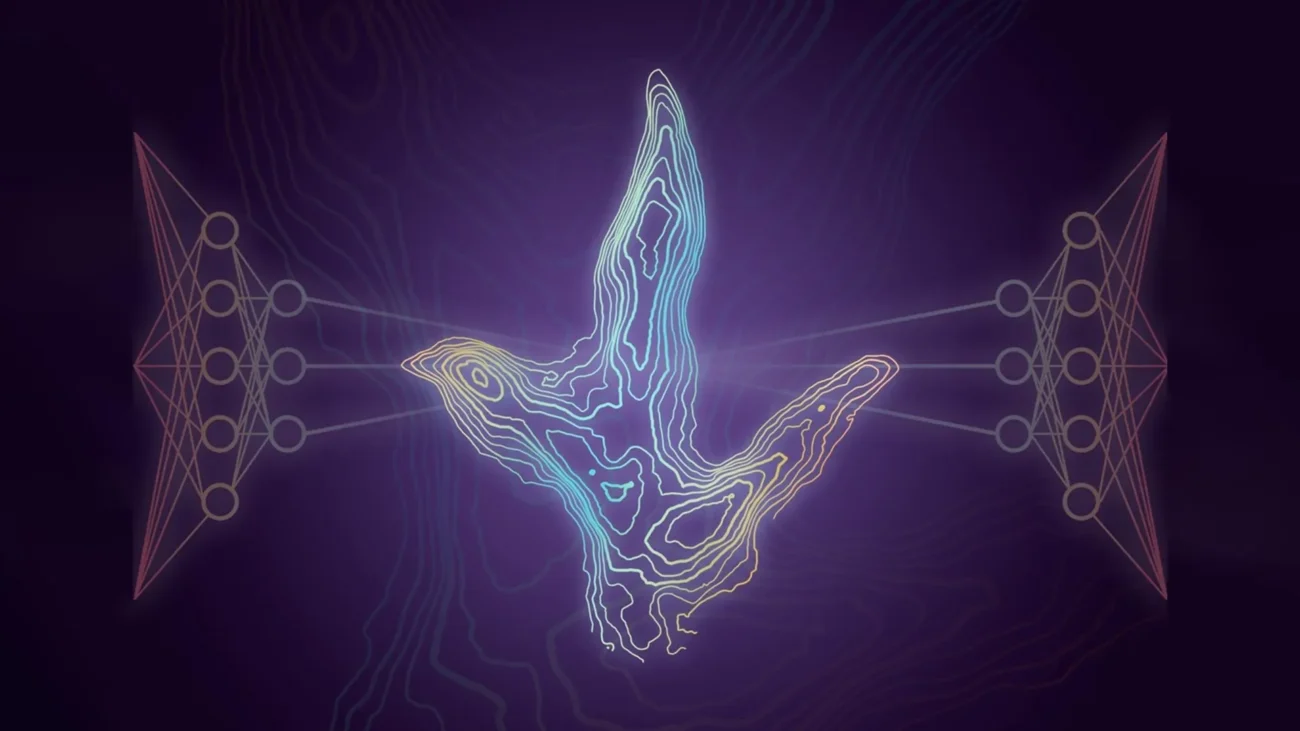
A groundbreaking new application, powered by advanced artificial intelligence (AI), is transforming the field of paleontology by offering scientists and the public an unprecedented ability to identify dinosaur footprints, potentially rewriting our understanding of prehistoric life. This innovative technology, detailed in a recent study, promises to demystify fossilized tracks that have long presented formidable challenges to researchers, offering a more objective and accessible method for deciphering these ancient clues.
The Enduring Enigma of Fossilized Tracks
For generations, paleontologists have meticulously studied the fossilized imprints left by creatures that roamed the Earth millions of years ago. These tracks, etched into rock and sediment, offer a unique window into the locomotion, behavior, and even the evolutionary pathways of extinct animals. However, the interpretation of these fossilized footprints has often been a subject of intense debate and scholarly contention. The sheer diversity of shapes and sizes, coupled with the inevitable alterations wrought by geological processes over eons, has made definitive identification a complex and often subjective endeavor.
Traditionally, researchers have grappled with questions surrounding the identity of the trackmakers. Were these prints the heavy treads of colossal meat-eating predators, the delicate impressions of herbivorous dinosaurs, or perhaps even the early steps of avian ancestors? The ambiguity inherent in many fossil track sites has fueled decades of scientific discussion, with proposed identifications frequently subject to revision and re-evaluation. This ongoing challenge underscores the need for more robust and objective analytical tools.
DinoTracker: Transforming Photos into Instant Paleontological Analysis
The advent of the DinoTracker app marks a significant leap forward in addressing these long-standing challenges. This user-friendly application empowers both seasoned paleontologists and enthusiastic amateur dinosaur aficionados to contribute to scientific understanding. By simply uploading a photograph or even a detailed drawing of a dinosaur footprint via a mobile device, users can instantly receive an AI-driven analysis. The app meticulously evaluates the intricate details of the track’s shape, structure, and morphology to generate an educated estimation of the dinosaur species most likely responsible.
Fossilized dinosaur footprints are invaluable reservoirs of information, providing crucial insights into the locomotion, biomechanics, and social behaviors of these magnificent creatures. They allow scientists to reconstruct migration routes, estimate population densities, and infer predatory-prey dynamics. However, a persistent hurdle in their interpretation has been the significant distortion and alteration that footprints undergo during the fossilization process. Factors such as the type of sediment, the impact of weathering, and the sheer passage of geological time can dramatically alter the pristine impression left by an animal’s foot, rendering direct comparison with modern analogues or even skeletal remains difficult. This is where the sophisticated algorithms of DinoTracker come into play, designed to account for these pervasive forms of degradation.
Advancing Beyond Manual Classification: The AI Revolution in Paleontology
Historically, paleontologists have relied on the painstaking manual construction of comprehensive computer databases. These databases typically linked specific footprint morphologies to known dinosaur genera and species. While these efforts laid essential groundwork, experts have long acknowledged the inherent limitations and potential for bias in such a manual approach. When the identity of a fossil track is uncertain or has been subject to differing expert opinions, the human element can inadvertently introduce subjective interpretations, potentially skewing the classification process. This reliance on individual expert judgment, while valuable, could lead to inconsistencies and hinder the development of a universally agreed-upon taxonomy for fossil footprints.
To surmount these challenges, a dedicated research team, spearheaded by the prestigious Helmholtz-Zentrum research centre in Berlin, in close collaboration with the University of Edinburgh, embarked on the ambitious development of advanced AI algorithms. These algorithms are engineered to possess a remarkable capacity for self-learning, enabling computers to independently discern the subtle variations in dinosaur footprint shapes without explicit human programming for every permutation. This represents a paradigm shift from rule-based systems to data-driven learning, allowing the AI to discover patterns and features that might elude human observation.
The AI system underwent an extensive training regimen, ingesting a vast dataset comprising nearly 2,000 meticulously documented real fossil footprints. This foundational data was then augmented by millions of additional simulated examples. These simulated tracks were crucial for exposing the AI to the wide spectrum of alterations that footprints can experience during preservation. The researchers deliberately incorporated variations designed to mimic realistic geological transformations, such as the effects of compression, sediment displacement around the edges, and erosion, thereby equipping the AI with a robust understanding of how original impressions can be modified over millions of years.
Deconstructing Dino-Prints: The AI’s Analytical Framework
The sophisticated AI model was trained to recognize eight critical features that serve as distinguishing characteristics between different types of dinosaur footprints. These key parameters include:
- Digit Spread: The degree to which the toes splayed outwards from the central axis of the foot.
- Heel Position: The relative placement and prominence of the heel impression, which can vary significantly between different dinosaur groups.
- Ground Contact Area: The total surface area of the foot that made contact with the substrate, indicating whether the dinosaur was a digitigrade (walking on toes), plantigrade (walking on the sole of the foot), or somewhere in between.
- Weight Distribution: The pattern of pressure distribution across different parts of the foot, offering clues about the animal’s gait and posture.
- Claw Marks: The presence, size, and shape of claw impressions, which can be diagnostic for certain predatory species.
- Stride Length and Width: The distance between successive footprints and the lateral separation of tracks, providing insights into locomotion speed and gait.
- Symmetry and Asymmetry: The degree to which a footprint is symmetrical or exhibits deliberate asymmetry, which can be indicative of specific movements or injury.
- Substrate Interaction: Subtle variations in how the substrate was displaced or compressed by the foot, providing information about the dinosaur’s weight and the consistency of the ground.
Once these nuanced variations were identified and analyzed, the AI system meticulously compared newly inputted footprints against its extensive library of known fossil examples. This comparative analysis allows the system to predict, with a high degree of probability, which dinosaur species most likely created the track in question.
The efficacy of this AI-driven approach was rigorously evaluated. In blind tests, the algorithm consistently matched the classifications made by experienced human paleontologists approximately 90% of the time. This remarkable accuracy held true even for species that are notoriously difficult to identify and have been the subject of ongoing debate within the scientific community, underscoring the AI’s ability to overcome the inherent ambiguities that have plagued traditional methods.
Unexpected Avian Ancestry: A Surprising Revelation
One of the most startling and potentially paradigm-shifting findings to emerge from the DinoTracker study concerns footprints dating back over 200 million years. The AI detected striking morphological similarities between some of these ancient dinosaur tracks and the feet of both extinct and modern avian species. This observation has profound implications for our understanding of bird evolution.
According to the research team, these similarities could suggest that the evolutionary lineage leading to birds emerged significantly earlier than current scientific consensus dictates, potentially tens of millions of years prior to widely accepted timelines. Alternatively, it is also possible that some early dinosaur species independently evolved feet that coincidentally bore a strong resemblance to those of early birds. Further research, incorporating a broader range of fossil evidence and advanced phylogenetic analyses, will be crucial in distinguishing between these two compelling possibilities. This discovery highlights the AI’s capacity to uncover subtle evolutionary links that might have been overlooked through traditional analytical methods.
Unraveling Scottish Mysteries: New Insights from the Isle of Skye
The DinoTracker system also provided crucial new insights into a collection of enigmatic footprints discovered on the Isle of Skye in Scotland. These tracks, formed approximately 170 million years ago on the muddy margins of an ancient lagoon, have puzzled paleontologists for decades. Their unusual morphology and the geological context in which they were found made definitive identification exceptionally challenging.
The AI’s analysis suggests that these mysterious footprints may have been left by some of the earliest known relatives of the iconic duck-billed dinosaurs (hadrosaurs). If confirmed, this would position these Skye tracks among the oldest documented examples of this important dinosaur group found anywhere in the world, pushing back the known origins of hadrosaur evolution by a significant margin. This discovery underscores the potential of AI to re-evaluate and reinterpret previously ambiguous fossil evidence, leading to a more refined understanding of dinosaur diversification and distribution.
Democratizing Paleontology: Opening the Field to a Wider Audience
Beyond its direct contributions to scientific research, the DinoTracker technology heralds a new era of public engagement with paleontology. Researchers envision this tool fostering greater public participation in fossil discovery and analysis. By democratizing the process of footprint identification, the app empowers individuals to become citizen scientists, contributing valuable data and fostering a deeper connection with the ancient world. This accessibility could spark renewed interest in paleontology, inspiring future generations of scientists and enthusiasts alike.
The groundbreaking study detailing the DinoTracker app was published in the esteemed scientific journal Proceedings of the National Academy of Sciences (PNAS). The research received vital funding from a consortium of esteemed institutions, including the innovations pool of the BMBF-Project: Data-X, the Helmholtz project ROCK-IT, the Helmholtz-AI project NorMImag, the National Geographic Society, and the Leverhulme Trust. This multi-faceted support highlights the collaborative and interdisciplinary nature of modern scientific advancement.
Dr. Gregor Hartmann, a leading researcher at the Helmholtz-Zentrum research centre, emphasized the transformative potential of their method. "Our approach provides an unbiased means to recognize variations within footprints and to rigorously test hypotheses about their makers," Dr. Hartmann stated. "It represents an excellent tool for scientific research, educational purposes, and even for facilitating fieldwork in remote paleontological sites."
Professor Steve Brusatte, Personal Chair of Palaeontology and Evolution at the School of GeoSciences, lauded the study as a significant contribution to the field. "This research is an exciting development for paleontology, offering an objective, data-driven method for classifying dinosaur footprints – a task that has stumped experts for over a century," Professor Brusatte commented. "It unlocks thrilling new avenues for comprehending how these incredible animals lived and moved, and critically, for pinpointing when major evolutionary lineages, such as that of birds, first emerged. The potential of this AI network to have identified the world’s oldest birds is particularly remarkable and represents a truly fantastic and fruitful application of artificial intelligence."
The implications of this AI-powered approach extend far beyond simply identifying individual tracks. It offers the potential to re-examine vast existing fossil collections, uncover previously overlooked connections between different fossil sites, and refine our understanding of dinosaur biogeography and evolutionary timelines. As the technology continues to develop, we can anticipate even more profound discoveries that will reshape our perception of the Mesozoic Era and the magnificent creatures that once dominated our planet. The DinoTracker app is not merely a tool; it is a gateway to unlocking the silent stories etched in stone, finally giving voice to the ancient inhabitants of Earth.

