



The digital landscape for personal media management is undergoing a fundamental shift, moving away from the traditional model of passive file repositories toward dynamic, intelligent ecosystems that prioritize user engagement and emotional resonance. Amazon has positioned itself at the forefront of this evolution with a comprehensive redesign of its Amazon Photos platform, a move intended to transform how hundreds of millions of Prime members interact with their digital legacies. By pivoting from a storage-centric utility to a discovery-driven experience, the updated application seeks to solve the modern "digital hoarding" dilemma, where users accumulate tens of thousands of images but rarely revisit them. This overhaul introduces a sophisticated "Memory Feed," natural language search capabilities, and deeper integration with the broader Alexa ecosystem, signaling a strategic intent to make Amazon Photos a central pillar of the smart home experience.
The Evolution of Digital Archiving: From Grids to Narratives
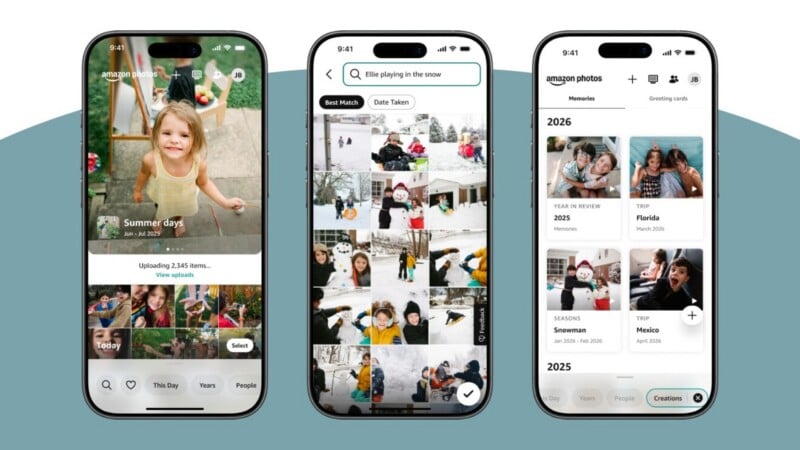
For over a decade, cloud photo services operated primarily as backup solutions—insurance policies against lost hardware. The user interface was almost universally a chronological grid of thumbnails, requiring manual scrolling and significant cognitive effort to locate specific moments. Amazon’s redesign effectively dismantles this static approach. Upon launching the updated app, users are no longer met with a wall of unorganized images. Instead, they are greeted by a curated "Memory Feed" that utilizes machine learning algorithms to identify and group photos into meaningful clusters.

These clusters are organized by trips, specific people, and significant milestones, presented in a full-screen, narrative-driven format. This "story-style" interface, popularized by social media platforms but here applied to private archives, allows photos to flow together in a cinematic sequence. By automatically surfacing highlights, Amazon aims to reduce the "friction of discovery." This is particularly relevant given that the average smartphone user now captures over 2,000 photos per year, a volume that makes manual organization nearly impossible for the casual consumer.
The platform’s popular "On This Day" feature has also been elevated within the hierarchy of the user interface. By placing historical retrospectives at the forefront, Amazon leverages the psychological power of nostalgia to drive daily app engagement. This shift reflects a broader industry trend where tech giants like Apple and Google are increasingly using AI to act as "digital curators" rather than just "digital librarians."
Semantic Search and the Power of Natural Language
Perhaps the most significant technical advancement in the redesign is the implementation of enhanced search functionality powered by advanced computer vision and natural language processing (NLP). Historically, finding a photo required remembering the exact date it was taken or having the foresight to manually tag it—a task few users perform consistently. The new Amazon Photos search engine allows for descriptive, conversational queries.

Users can now input complex phrases such as "Ellie playing in the snow" or "beach sunset in Florida last summer." The system analyzes the visual content of the library, identifying objects, weather conditions, geographic locations (via metadata), and facial recognition to deliver precise results. This transition to semantic search represents a major leap in utility. It effectively eliminates the "buried treasure" problem of large libraries, where high-value memories are lost in a sea of screenshots, receipts, and accidental pocket photos.
This AI-driven approach also levels the playing field with Google Photos, which has long been considered the gold standard for searchability. By integrating these capabilities directly into the Prime ecosystem, Amazon is offering a high-utility alternative for users who may be wary of Google’s data practices or who are already paying for a Prime subscription and seek to consolidate their digital costs.
Strategic Integration with the Alexa Ecosystem
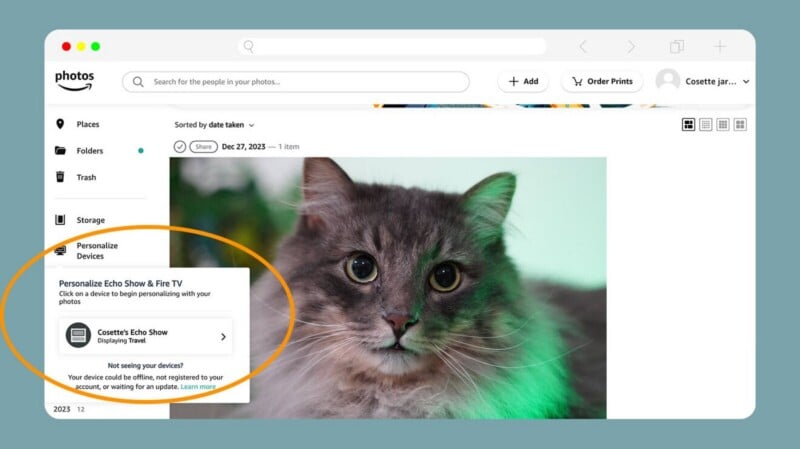
Amazon’s competitive advantage in the photo storage market lies not just in its software, but in its massive hardware footprint. The redesign deepens the synergy between the mobile app and the Alexa ecosystem, specifically through the "Alexa+" enhancement. This integration allows for an ambient media experience that extends beyond the smartphone screen and into the living space.
With voice commands such as "Alexa, show me photos from our trip to Hawaii," users can instantly broadcast their curated memories to Echo Show smart displays or Fire TV-connected screens. This transforms these devices into dynamic, voice-controlled digital frames. For Amazon, this is a strategic move to increase the "stickiness" of its hardware. A device that constantly displays personal, high-value memories is less likely to be unplugged or replaced.
Furthermore, this ambient experience reinforces Amazon’s goal of creating a "frictionless home." By automating the display of memories, Amazon ensures that the photo library remains a living part of the user’s environment rather than a forgotten folder in the cloud. This ecosystem-wide accessibility is a key differentiator from competitors like Apple’s iCloud, which, while deeply integrated into the iPhone, lacks a comparable presence in the dedicated smart display market.
Chronology of Amazon’s Photo Services and Market Context
To understand the significance of this redesign, it is necessary to view it through the lens of Amazon’s long-term cloud strategy. The journey from a simple file locker to an AI powerhouse has been a decade in the making:
- 2011: Amazon launches "Amazon Cloud Drive," a generic storage solution for various file types.
- 2014: The company introduces "Prime Photos," offering unlimited photo storage as a value-add for Prime members. This was a direct response to the growing consumer demand for mobile backups.
- 2017-2019: Amazon begins integrating basic image recognition, allowing users to search by "Dog" or "Mountain," though the interface remains largely a static grid.
- 2021: A pivotal moment in the industry occurs when Google Photos ends its unlimited free storage policy. This drives a significant influx of users toward Amazon Photos, which remains one of the few platforms offering unlimited full-resolution storage for subscribers.
- 2024: Amazon begins the phased rollout of the current "Discovery-First" redesign on iOS, prioritizing narrative feeds and AI search.
- 2025-2026: The company plans to complete the Android rollout and introduce further updates that will integrate generative AI features, potentially allowing for automated photo editing or more complex memory creation.
Supporting Data: The Economics of Memories
The redesign is not merely an aesthetic choice; it is backed by the economic realities of the cloud storage market. As of 2024, Amazon Prime has an estimated 200 million members globally. For these users, Amazon Photos represents a "sunk cost" benefit.
The service remains bundled with the Prime membership, which currently costs $14.99 per month or $139 per year in the United States. This subscription includes:
- Unlimited high-resolution photo storage (maintaining original file quality, unlike some compressed "high quality" tiers from competitors).
- 5 GB of video storage for free.
- Paid tiers for additional video needs: 100 GB for $1.99/month, 1 TB for $6.99/month, and up to 2 TB for $11.99/month.
Industry analysts suggest that by enhancing the Photos app, Amazon is aiming to reduce "churn"—the rate at which subscribers cancel their Prime memberships. A user who has 50,000 photos stored in the Amazon ecosystem and enjoys a daily curated feed of their children’s growth is significantly less likely to cancel their subscription than someone who only uses Prime for shipping.
Impact and Implications: The Future of Personal AI
The move toward an AI-driven "Memory Feed" raises important questions about the future of personal data and the role of algorithms in shaping our perceptions of the past. By choosing which photos to surface, Amazon’s AI is effectively acting as an editor of the user’s life story. While this provides immense convenience, it also places significant power in the hands of the platform’s algorithms.
From a technical standpoint, the redesign signals the end of the "Storage Era" and the beginning of the "Assistance Era." Consumers are no longer satisfied with a digital box to dump their files; they want a service that understands the context of those files. The implication for the broader tech industry is clear: storage is now a commodity, but intelligent retrieval is the new value proposition.
As Amazon continues to roll out these updates to Android users and expands the capabilities of the Alexa integration throughout 2026, the battle for the "digital home" will intensify. For the end user, the result is a more accessible, vivid, and interactive way to preserve the past. The photo library is no longer a static archive; it is a dynamic, evolving narrative that follows the user from their phone to their living room, powered by an AI that knows exactly what "Ellie playing in the snow" looks like.

