


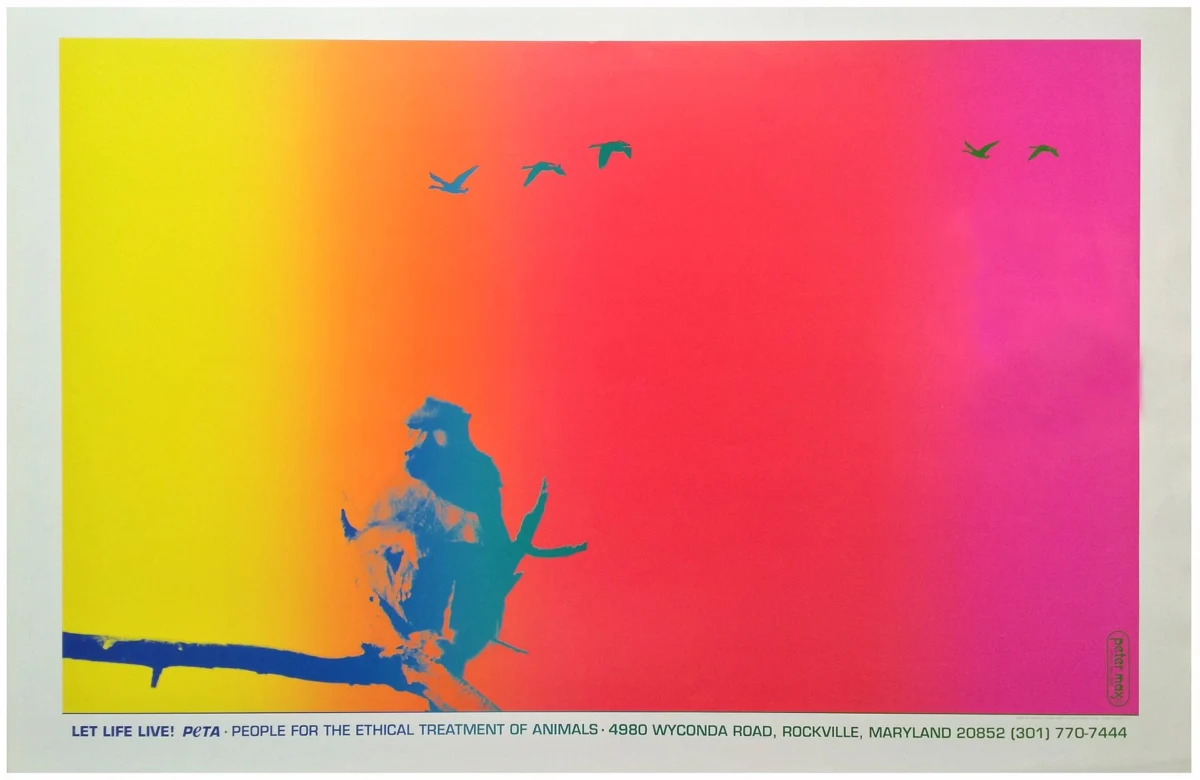
The intersection of fine art and social advocacy has long provided a powerful platform for cultural change, and few figures embodied this synthesis quite like legendary pop artist Peter Max. Celebrated globally for his kaleidoscopic palette, visionary graphic lines, and optimistic, psychedelic compositions that came to define the counterculture movement of the 1960s, Max harbored a lifelong dedication that rivaled his passion for painting: the unyielding defense of animal rights. While museums and private collectors prized his vibrant canvases for their contributions to American visual culture, the artist himself viewed his platform as a vital instrument to champion the vulnerable, voiceless creatures of the world.
From his early childhood displacement fleeing Nazi persecution to his deep immersion in Eastern philosophy, vegetarianism, and veganism, Max’s artistic journey was inextricably linked to an expanding circle of compassion. His philosophy transcended abstract philanthropy; it manifested in daily acts of micro-empathy—such as rescuing insects from indoor hazards—as well as high-profile interventions that saved livestock from slaughter. By examining the trajectory of Max’s life, his activism illuminates a lesser-known yet deeply influential chapter in the broader history of animal welfare advocacy.
Early Roots of Empathy: Displacement and the Loss of a Childhood Companion
The formative experiences that shaped Peter Max’s worldview were forged in a crucible of historical upheaval. Born in Germany in 1937, Max and his family faced immediate peril with the rise of the Nazi regime. In 1938, they fled their homeland, embarking on a perilous journey that ultimately led them to Shanghai, China, where they lived as refugees for the next decade.
This transient and tumultuous childhood instilled in Max a profound sensitivity to vulnerability and displacement—themes that would later echo through both his art and his activism. The definitive emotional catalyst for his lifelong commitment to animal rights, however, occurred upon leaving Shanghai. Amid the logistics of international relocation, his family was forced to leave behind his closest childhood companion: his cat.
Decades later, Max recounted the profound psychological impact of that separation with raw emotion. He recalled weeping continuously for hours, consumed by an overwhelming, inconsolable sorrow. That early grief served as his introduction to the deep emotional capacity of animals and the profound trauma inflicted by forced separation. It planted a seed of empathy that would eventually blossom into a comprehensive philosophy of universal compassion, permanently altering how the future artist viewed the non-human inhabitants of the earth.
The Path to Plant-Based Living: Spiritual Awakening and Nutritional Science
As Max matured and rose to prominence in the American art scene during the turbulent 1960s, his personal philosophy evolved alongside his artistic output. In his twenties, a pivotal encounter with Swami Satchidananda introduced Max to contemplative traditions, including yoga and meditation. These spiritual practices fostered a heightened awareness of interconnectedness, prompting the artist to reevaluate his relationship with the natural world and the food on his plate. Embracing vegetarianism, Max aligned his daily lifestyle choices with the principle of non-harming (ahimsa), which underpins many Eastern philosophies.
Years later, his commitment to plant-based living deepened further after he crossed paths with Dr. Joel Fuhrman, a prominent family physician, nutritional researcher, and author of the bestselling book Eat to Live. Influenced by Dr. Fuhrman’s scientific arguments regarding the health benefits of a whole-food, nutrient-dense diet free of animal products, Max transitioned entirely to veganism.
For Max, this dietary shift was not merely a health choice; it was a logical extension of his moral worldview. He recognized that modern industrial agriculture inflicted massive, systemic suffering on sentient beings, and he resolved to completely remove his personal complicity from that cycle. This dedication to veganism informed every aspect of his daily existence, transforming his art studio and home into sanctuaries of mindfulness where every living creature mattered.
Micro-Empathy: Valuing Every Creature, Great and Small
While many activists focus exclusively on charismatic megafauna or high-profile species, Max’s compassion recognized no hierarchy of scale. He frequently articulated a philosophy that every living entity, regardless of size, possessed an inherent right to safety and respect.
In an interview with Vegetarian Times magazine, Max illustrated this ethos through a deeply personal anecdote that captured his daily routine: "If I see a bug crawling on the floor, I rush to the bug before my kitties get to him. I pick him up, take him to the park, and let him out where there are green plants and maybe a little bit of water so he doesn’t have to walk too far. I feel so good every time I do it. I tell you, it’s an overwhelming feeling. The bug is so small, and the feeling so huge."
This anecdote encapsulates the core of Max’s psychological approach to activism. To him, the act of saving a single insect was spiritually equivalent to rescuing a larger mammal. It required the same level of acute observation, immediate intervention, and selfless grace. This radical inclusivity set him apart, demonstrating that true compassion is measured not by the intelligence or economic value of a species, but by the purity of the observer’s intent.
High-Profile Advocacy: The Dramatic Rescue of Cincinnati Freedom
Max’s dedication to animal welfare was not confined to domestic kindnesses; he frequently leveraged his considerable cultural cachet and artistic assets to intervene in institutional crises. One of the most famous examples of his direct action occurred in 2002, centering on a runaway cow that captured national media attention.
The incident began when a bovine managed an astonishing physical feat, leaping over a six-foot fence at a slaughterhouse in Ohio. Dubbed an escape artist by local press, the cow successfully eluded police capture for 11 days, sparking widespread public fascination and sympathy as she navigated suburban landscapes and wooded areas. As the search intensified, animal welfare advocates scrambled to find a legal mechanism to prevent her execution upon recapture.
Recognizing the urgency of the situation, Peter Max stepped into the fray. Utilizing his status as an internationally renowned artist, Max made a direct, high-level appeal to the authorities and the facility owners. In exchange for the cow’s life, Max offered to donate a piece of his original artwork—a gesture carrying significant financial and cultural value.
The strategy succeeded. The slaughterhouse accepted the trade, sparing the animal from processing. Transported safely to a specialized farmed animal sanctuary, the cow was aptly named Cincinnati Freedom. Thanks to Max’s generosity and swift intervention, Cincinnati Freedom lived out the remainder of her natural life in peace, surrounded by open pastures and sympathetic caretakers, embodying the tangible impact that cultural figures can achieve when they mobilize their assets for social good.
Philanthropic Partnerships and the PETA Humanitarian Award
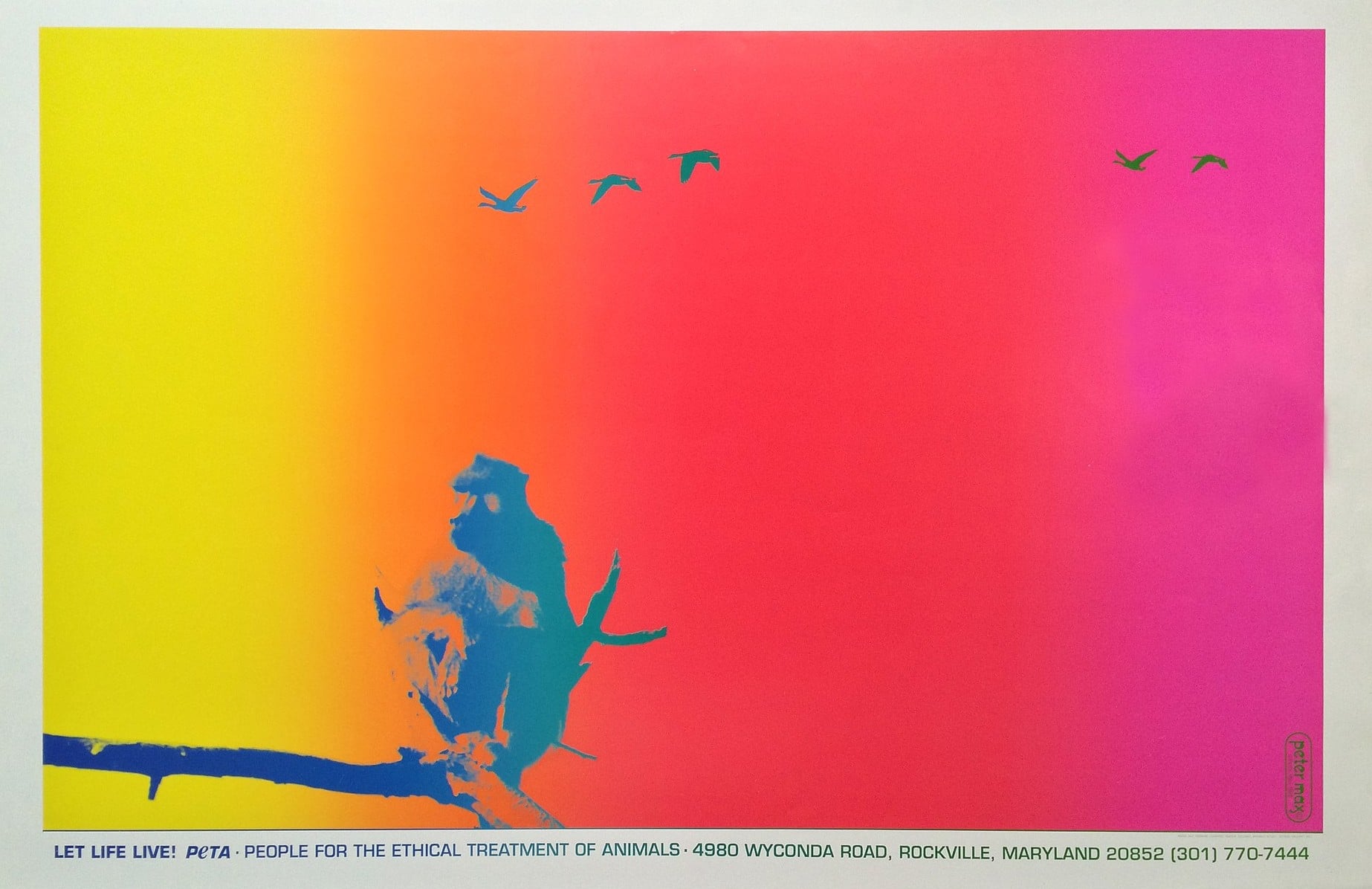
Max’s involvement with institutional animal rights organizations dates back decades, establishing him as a reliable ally for advocacy groups seeking to amplify their messaging through high-impact visual media. In 1988, Max demonstrated his ongoing commitment by creating a special, limited-edition poster for People for the Ethical Treatment of Animals (PETA) to commemorate their Second Humanitarian Awards Gala. Proceeds from the artwork were directed straight back into the organization’s campaigns, providing crucial financial support for grassroots organizing and educational outreach.
In recognition of his sustained artistic contributions and unwavering public advocacy, PETA honored Max with a prestigious humanitarian award at the gala event. This accolade highlighted a broader trend within the contemporary art community: the growing recognition that artists possess a unique civic duty to address systemic injustices. By lending his globally recognized aesthetic—characterized by vibrant typography, explosive color fields, and uplifting iconography—to the animal rights movement, Max helped modernize the visual language of advocacy, making compassion appear modern, dynamic, and vital.
A Lifelong Creed: The Philosophical Legacy of Peter Max
Throughout his long and storied career, Peter Max was frequently interviewed about his inspirations, his artistic process, and the philosophical underpinnings of his prolific output. Whenever journalists or biographers inquired about the cause that held the deepest place in his heart, the artist never hesitated.
"I’m completely an animal rights person," Max stated unequivocally during one such retrospective interview. "I would like animals not to suffer so much at the hands of humanity. I believe that in due time, human beings will respect other animals."
This quote serves as a powerful summary of his life’s philosophy. It acknowledges the historical and ongoing reality of anthropogenic suffering while retaining an optimistic, forward-looking vision of moral evolution. Max viewed human history as an arc bending slowly toward a more inclusive circle of empathy, where future generations would look back upon the exploitation of non-human animals with the same moral clarity that modern societies apply to historical human atrocities.
Implications and Broader Cultural Impact
The legacy of Peter Max extends far beyond the auction houses, museums, and galleries that house his iconic pop art. His life demonstrates how personal trauma can be transmuted into universal empathy, and how creative genius can be successfully harnessed in service of the vulnerable.
At a time when global industrial practices continue to pose unprecedented threats to wildlife, biodiversity, and farmed animals, the example set by figures like Max remains critically relevant. He proved that advocacy does not require a singular approach; it can be practiced simultaneously through massive public gestures—such as trading fine art for the life of a runaway cow—and through quiet, intimate moments of respect for a wandering insect.
Ultimately, Peter Max’s contribution to the animal rights movement was twofold. First, he provided material support, financial resources, and cultural visibility to organizations fighting on the front lines of animal welfare. Second, and perhaps more importantly, he modeled a way of living that refused to compartmentalize art from ethics. For Peter Max, every brushstroke was an affirmation of life, and every act of kindness was a masterpiece in its own right.

