


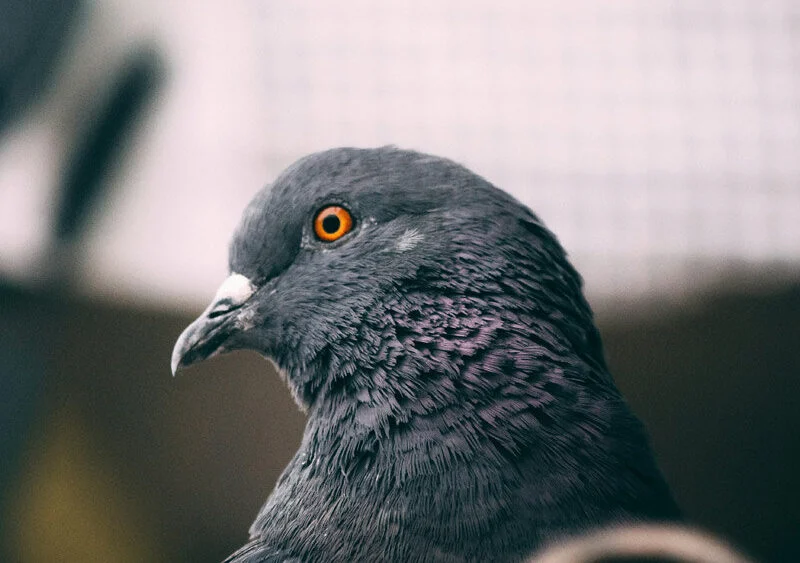
The avian world is governed by a sophisticated visual processing system that has long fascinated biologists and engineers alike. Birds, particularly homing pigeons, possess an extraordinary capacity to navigate complex environments, moving at high speeds while maintaining precise trajectories. New research conducted by a collaborative team from the University of British Columbia (UBC) and the University of Alberta has shed light on the mechanics of this navigation, specifically focusing on how pigeons utilize subtle eye movements and the concept of "optic flow" to process their surroundings. This breakthrough not only deepens our understanding of avian biology but also provides a biological blueprint for the next generation of autonomous drone technology.
The Mechanism of Avian Navigation
At the core of the study is the phenomenon of optic flow—the pattern of apparent motion of objects, surfaces, and edges in a visual scene caused by the relative motion between an observer and the scene. For a flying bird, the world is a constant stream of visual data. To process this flood of information without becoming overwhelmed, the pigeon’s brain must filter out noise and focus on critical environmental cues.
Researchers Anthony B. Lapsansky and Douglas L. Altshuler of UBC, alongside Douglas R. Wylie of the University of Alberta, set out to quantify exactly how pigeons manage this intake. The study, which was recently published in the journal Current Biology, utilized advanced miniature technology to observe the birds in their natural flight habitats. The team worked with 16 homing pigeons, species renowned for their navigational prowess and their ability to return to a home loft from hundreds of miles away.
Methodology and Chronology of the Research
The experimental phase of the project required a sophisticated approach to tracking. Traditional laboratory settings often fail to capture the nuances of avian behavior, as flight is a dynamic, three-dimensional activity that is difficult to replicate indoors. To overcome this, the researchers equipped the 16 pigeons with lightweight, miniaturized computer systems and camera rigs attached to specialized hoods.
Throughout the study, these devices recorded high-resolution data on eye movements, head orientation, and flight trajectory as the birds navigated familiar flight paths. This allowed the researchers to synchronize the visual data captured by the birds’ eyes with their physical movements.
The timeline of the research involved a multi-stage observation process:
- Calibration: Establishing baseline eye movements in a controlled environment to ensure the miniaturized computers could accurately track micro-saccades and rotational eye shifts.
- Data Acquisition: Tracking the pigeons across varied flight paths to observe how they responded to different environmental variables, such as wind resistance, altitude changes, and obstacles.
- Landing Analysis: Distinguishing the specific visual processing techniques employed during descent versus those used during high-speed cruising.
- Synthesis: Comparing the recorded visual patterns against existing computational models of flight navigation.
The Science of Stereopsis and Panoramic Sight
One of the most significant findings of the UBC study pertains to the physiological positioning of the pigeon’s eyes. Unlike humans, who possess frontal-facing eyes, pigeons have laterally placed eyes, which grant them a significantly broader, panoramic field of view. This evolutionary adaptation is crucial for detecting predators from multiple angles, but it introduces challenges regarding depth perception.
The study revealed that when pigeons prepare for landing—a maneuver requiring high precision—they execute a specific shift of their eyes inward. This behavior allows the birds to align their visual fields, facilitating "stereopsis." By focusing both eyes on the same target, the pigeons can accurately judge the distance between themselves and their landing site. This movement is not merely a reflexive action but a calculated adjustment that integrates visual feedback into their motor control systems.
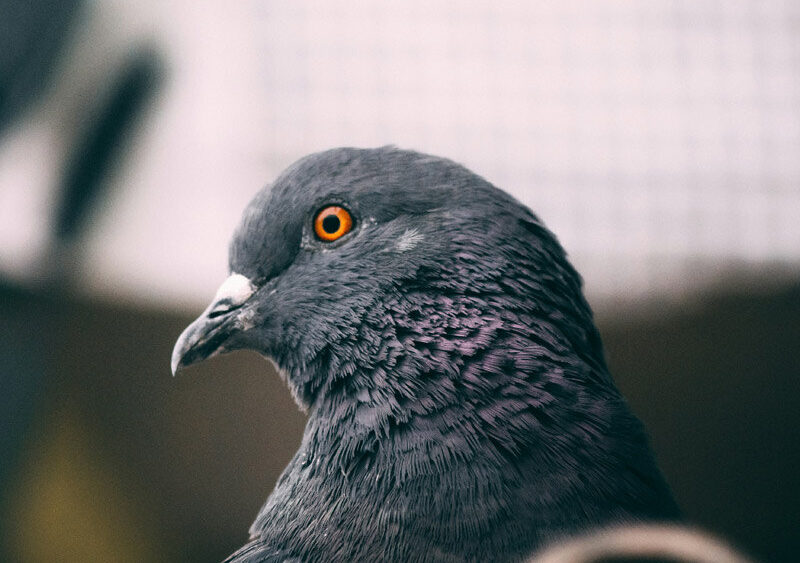
Furthermore, the researchers identified that these eye movements are not rapid or erratic. Instead, pigeons utilize slow, controlled movements to scan their flight path. This "smoothing" of the visual input allows the pigeon to maintain a steady trajectory even when external factors, such as sudden gusts of wind or shifting light, might otherwise destabilize their flight.
Implications for Autonomous Technology
The engineering community has long struggled with the "visual processing bottleneck" in autonomous drones. Current drone cameras are often fixed in place, meaning the device must rotate its entire chassis to change its field of view. This process is energy-intensive, slow, and often results in motion blur that degrades the data processed by the drone’s onboard computer.
By mimicking the pigeon’s eye-movement strategies, engineers could develop cameras that operate with independent, articulated movement. If a drone could scan its environment using small, rapid adjustments of a lens rather than moving the entire fuselage, it would achieve three primary advantages:
- Increased Energy Efficiency: Reducing the mechanical work required for scanning allows for longer flight times.
- Enhanced Maneuverability: Rapid, micro-adjustments enable the drone to react to obstacles in milliseconds, similar to how a bird weaves through a dense forest.
- Improved Image Stability: By decoupling the camera’s gaze from the drone’s flight path, the image feed remains stable, allowing for more reliable obstacle detection and mapping.
Analysis of the Broader Impact
The findings from the UBC and University of Alberta team represent a transition in robotics from "sensor-driven" design to "bio-inspired" design. For decades, roboticists attempted to solve navigation problems by increasing raw computing power. However, this study demonstrates that the solution may not lie in more power, but in better data filtering.
"The way birds stabilize their heads and control their eyes represents an optimized interface between the environment and the brain," noted observers familiar with the research. "By replicating this ‘rich conduit’ of information, we are essentially building machines that can ‘see’ with the same level of nuance as natural creatures."
This research has broader implications for industries beyond consumer drones. Agriculture, for instance, could benefit from drones capable of navigating between fruit trees or complex crop rows with the agility of a bird. Search-and-rescue operations in collapsed buildings or dense wilderness could also see a surge in reliability if autonomous drones can interpret visual flows as effectively as a homing pigeon.
Challenges and Future Directions
Despite the promise of these findings, challenges remain. Translating biological function into silicon and glass is complex. The pigeon’s brain does not just "record" an image; it interprets it through millions of years of evolutionary refinement. Replicating this requires not only the camera hardware but also the sophisticated neural networks capable of processing that data in real-time.
Future studies are expected to focus on the software side of this equation: how to translate the pigeon’s ocular motor control into algorithms that can be uploaded to drone flight controllers. As researchers continue to bridge the gap between avian biology and aerospace engineering, the line between natural instinct and artificial intelligence continues to blur.
Ultimately, the humble pigeon, often overlooked in urban environments, has provided a masterclass in visual navigation. By studying these birds, scientists are not just learning about the mechanics of flight; they are unlocking the secrets of spatial awareness that will define the future of autonomous navigation. As the research continues to evolve, the integration of these findings into commercial and industrial technologies seems not only likely but inevitable, marking a new era in the symbiosis of nature and machine. For those interested in the granular data and specific mathematical models of the study, the original abstract remains available through Cell.com, providing a foundation for future innovations in the field.

