


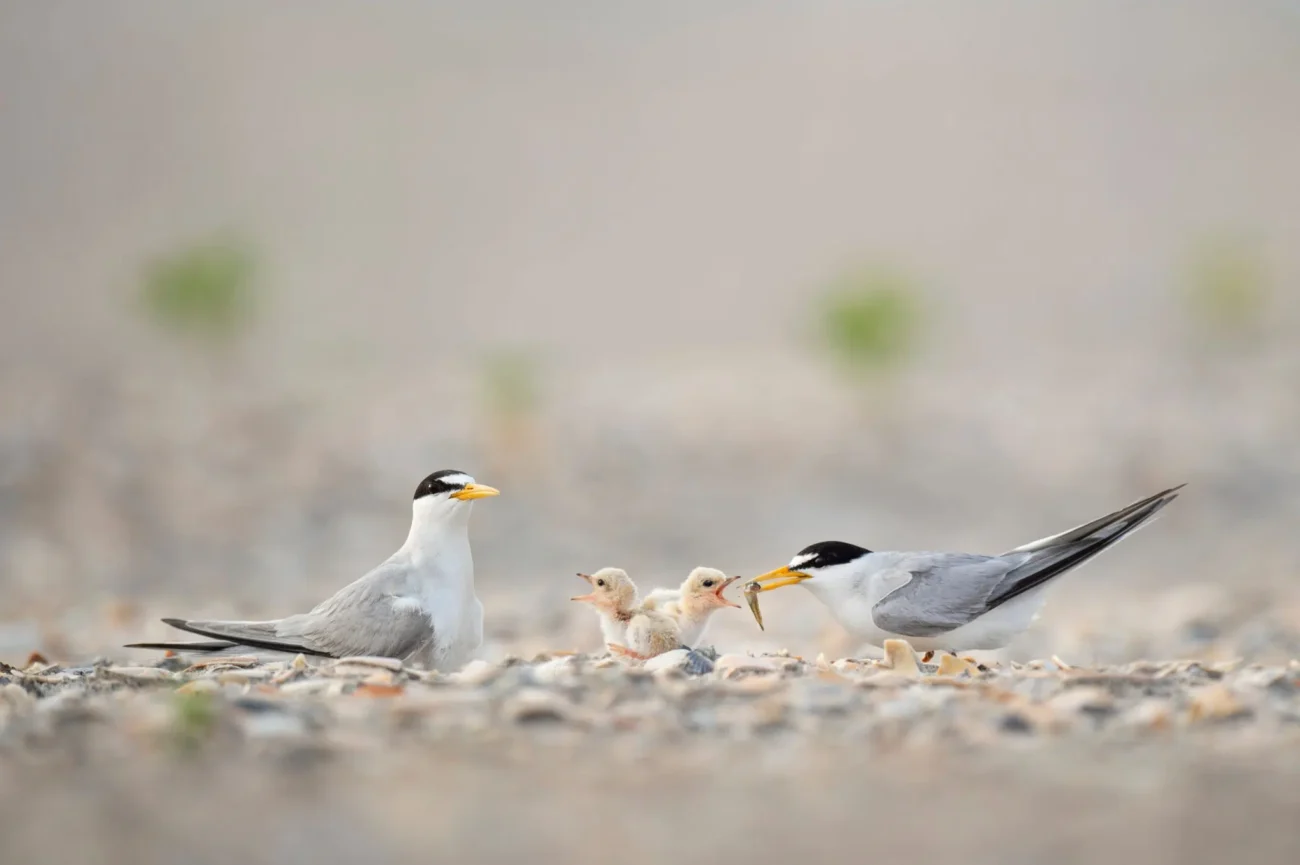
In the intricate tapestry of global conservation, the concept of a "mixed flock"—a collection of diverse species operating as a unified, resilient entity—serves as a potent metaphor for the future of environmental advocacy. As the climate crisis intensifies, the necessity of integrating fresh, diverse, and youthful perspectives into institutional decision-making has moved from an aspirational goal to a strategic imperative. Caroline Herman, a former Communications Officer at BirdLife Europe and Central Asia and a serving Belgian UN Youth Representative for Climate, stands at the forefront of this shift. Her transition from BirdLife to broader international advocacy offers a window into how the next generation is reshaping the landscape of environmental policy, communication, and community engagement.
The contemporary rise in youth interest in ornithology and conservation is not merely a hobbyist trend; it is a calculated response to a digital-first era. As Herman observes, the ubiquity of screen-based work has fostered a profound psychological and physical craving for reconnection with the natural world. For young professionals, the pursuit of birding or conservation is a pursuit of a three-dimensional existence—a tangible engagement with biodiversity that counters the ephemeral nature of modern digital life.

A Chronology of Advocacy and Institutional Change
Herman’s trajectory within BirdLife Europe and Central Asia, based in Brussels, provides a clear timeline of how youth activism has successfully intersected with high-level policy. During her tenure, she played a pivotal role in several landmark campaigns that defined the European environmental agenda between 2024 and 2026.
The chronology of her involvement began with the intensive lobbying efforts surrounding the EU Nature Restoration Law (Restore Nature). This campaign, which saw unprecedented civil society engagement, highlighted a significant demographic shift in activism. Unlike previous environmental movements that relied heavily on established scientific bodies, the Nature Restoration Law campaign successfully synthesized scientific rigor with a vocal, high-energy youth movement. Following this, the focus shifted toward the European elections, where youth engagement became a deciding factor in policy priorities. More recently, the #HandsOffNature campaign demonstrated the capacity of young advocates to use digital-native storytelling to hold policymakers accountable.
Data-Driven Representation: Bridging the Gap
The demographic imbalance in climate negotiation spaces remains a persistent challenge. According to recent reports from the United Nations Framework Convention on Climate Change (UNFCCC), while youth participation at COPs has increased by approximately 20% over the last decade, the substantive influence of youth delegates in final policy drafting remains disproportionately low.

Herman’s work as a UN Youth Representative for Climate seeks to rectify this by acting as a conduit between local citizen sentiment and international bureaucratic processes. By conducting surveys and gathering direct inputs from young Belgians, she has sought to translate the anxieties and hopes of her generation into actionable data for federal ministers. A notable instance occurred during the 2025 United Nations Climate Change Conference (COP30) in Belém, Brazil. During a high-level meeting with the Belgian Federal Minister of Climate, Jean-Luc Crucke, Herman facilitated a dialogue that prioritized the voices of South American youth—individuals living on the front lines of climate-induced displacement and ecological degradation. This tactical inclusion of frontline witnesses serves to highlight the limitations of current, often static, policy frameworks.
The Psychology of Collective Impact
The "imposter syndrome" and existential dread often associated with the climate crisis are well-documented phenomena among young activists. Research from the Lancet Planetary Health journal suggests that nearly 60% of young people globally feel "very" or "extremely" worried about climate change. Herman acknowledges that individual isolation is the fastest path to professional and emotional burnout.
Her philosophy of "shared learning" is designed to combat this. By advocating for a model where older professionals and younger activists view one another as mutual experts, she promotes a cross-pollination of skill sets. The youth, she argues, are experts in "being young" in a rapidly changing world—a perspective that provides a necessary, albeit sometimes uncomfortable, critique of current, non-future-proof policies. The goal is not for youth to replace established expertise, but to act as a corrective lens, ensuring that long-term policy remains anchored in the reality of those who will inherit its consequences.

Fact-Based Implications for Future Policy
The implications of integrating youth into formal decision-making bodies like BirdLife or national climate councils are multi-faceted. First, it ensures the longevity of institutional knowledge. As the environmental sector faces a looming retirement wave among its founding generation, the active recruitment and mentorship of younger staff, as practiced by BirdLife, is essential for organizational continuity.
Second, the shift toward "representative communication" changes how scientific facts are disseminated. Younger communicators are increasingly abandoning the "doom-and-gloom" narrative in favor of actionable, community-based solutions. This transition is not purely stylistic; it is a tactical response to audience fatigue. By focusing on local communities—as seen in Herman’s birding excursions in Poland or her panels in Gent—advocates are building a grassroots foundation that is more resilient to political volatility.
However, the path forward is not without systemic friction. There remains a disparity in resources. While youth movements have gained social media visibility, they often lack the institutional funding of established NGOs. Herman’s recommendation to "look for the community around you" emphasizes the need for decentralized, local alliances to compensate for these resource gaps. The strategy is to harness the "collective impact" of diverse groups rather than relying on a single, centralized authority.

Official Responses and Institutional Support
Organizations like BirdLife, by championing these voices, are effectively evolving their own operational models. By providing platforms for young staff to lead, not just assist, organizations gain access to a broader, more diverse demographic of donors and volunteers. This internal evolution reflects a broader shift across the NGO sector, where "youth representation" is evolving from a tokenistic committee seat to a functional role within editorial, campaign, and policy departments.
Industry analysts suggest that the success of such initiatives will be measured by the ability of these organizations to maintain these diverse flocks through periods of economic uncertainty. If, as Herman suggests, the primary role of an organization is to empower the individual to feel part of something larger, then the retention of young talent will depend on the degree to which they are permitted to disrupt existing, ineffective processes.
Conclusion: The Way Forward
The legacy of Caroline Herman’s work—and the broader movement she represents—is rooted in the realization that no single entity holds the entire puzzle of the climate crisis. The diversity of energies, visions, and ages within the conservation community is not a liability; it is the sector’s primary strength.

As she moves into the next phase of her career, Herman’s message remains consistent: the energy of youth is a renewable resource, provided it is supported by robust, intergenerational mentorship and institutional trust. The "mixed flock" approach, while challenging to manage and prone to occasional internal friction, produces a more durable and adaptive response to the environmental challenges of the 21st century. For those operating within the global conservation space, the imperative is clear: listen to the chorus, acknowledge the diversity of voices, and recognize that the future of biodiversity depends on the ability to act not as separate generations, but as a unified, global force.

