


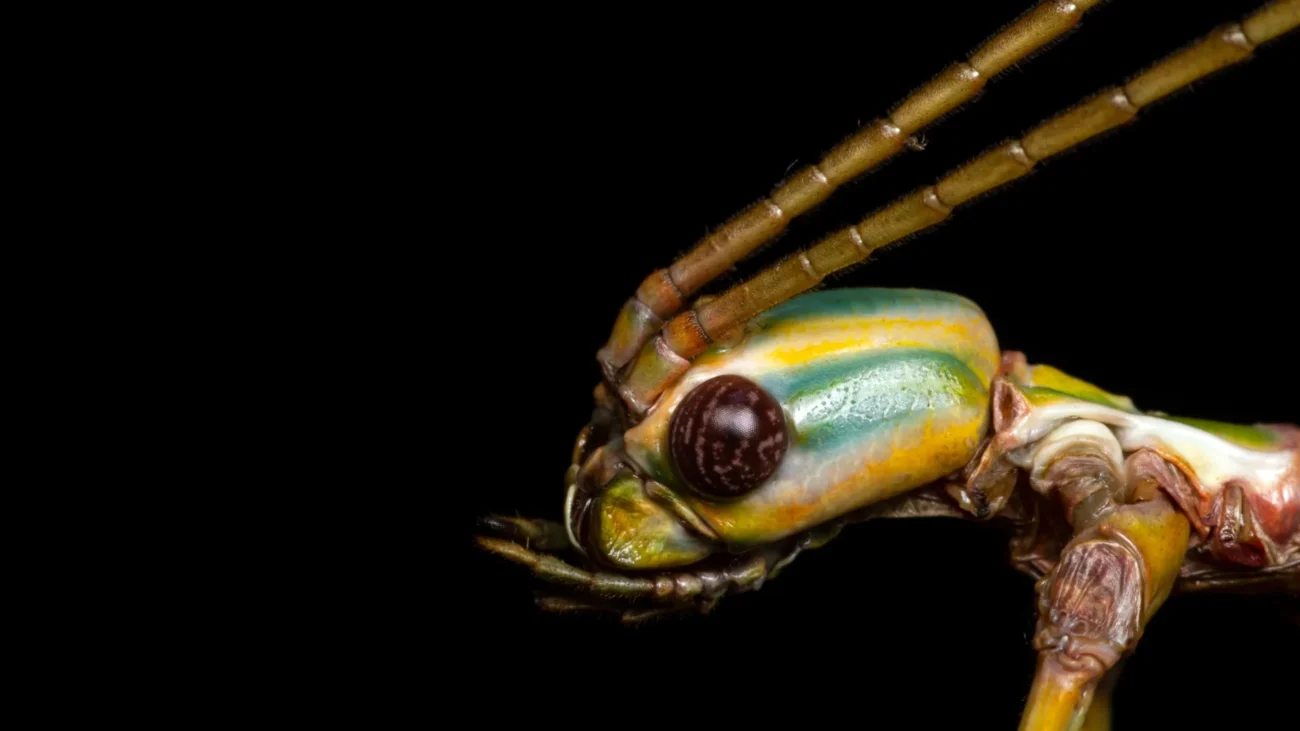
In a striking reminder of how much of the natural world remains scientifically undocumented, researchers at the University of Sydney have formally identified two previously unrecognized species of large stick insects in Australia. The groundbreaking discovery proves that even within heavily photographed and thoroughly investigated ecosystems, entire species can evade formal scientific classification for generations.
The findings, published in the peer-reviewed journal Austral Entomology, center on a meticulous reexamination of Australian stick insects belonging to the genus Anchiale. By combining modern molecular techniques with historical museum archives, field surveys, and a massive trove of contemporary citizen science data, the research team upended decades of established taxonomy. What scientists previously believed to be just two distinct species of Anchiale has now been decisively expanded to five.
The geographical footprint of these newly defined and restructured species spans a vast Australian landscape, stretching northward from coastal New South Wales, tracking across the sun-drenched expanse of coastal Queensland, and terminating deep within the tropical ecosystems of northern Australia. Furthermore, the researchers have flagged a potential sixth species from Cape York that currently awaits formal description pending the collection of additional physical specimens.
Taxonomic Detective Work and Multidisciplinary Methodology
The path to these discoveries was far from straightforward, requiring an intricate synthesis of traditional taxonomy and cutting-edge genetic science. Lead author Dr. Braxton Jones, a Postdoctoral Research Associate in the Molecular Ecology, Evolution and Phylogenomics Laboratory and a researcher at the Aola Richards Sydney Insect Hub, described the undertaking as a high-stakes exercise in biological detective work.
"Taxonomy is often a bit like detective work," Dr. Jones explained. "Even among some of Australia’s most photographed and frequently reported insects, we’re still finding species that have escaped scientific recognition."
Historically, taxonomists relied almost entirely on the morphological characteristics of preserved museum specimens—examining external anatomy, coloration, and structural dimensions. However, physical appearance alone can be profoundly deceptive in the insect world, where distinct species can evolve to look nearly identical due to shared ecological pressures, a phenomenon known as cryptic speciation.
To pierce through this morphological ambiguity, the University of Sydney team deployed an exhaustive methodology. They analyzed DNA extracted from museum archives, some of which dated back many decades, and cross-referenced genetic markers with fresh samples gathered during extensive field surveys. Crucially, the researchers also incorporated observations from live insects raised in captivity, allowing them to observe behavioral traits, life cycles, and reproductive characteristics that cannot be gleaned from a pinned museum specimen.
Adding a modern layer to this traditional scientific toolkit was the inclusion of citizen science data. More than 1,000 public observations submitted through digital biodiversity platforms such as iNaturalist and the Atlas of Living Australia provided researchers with invaluable geographic distribution points. These crowdsourced photographs and location logs helped guide field expeditions to precise habitats where the insects were most active, bridging the gap between professional academic research and community-driven natural history.
Unraveling Decades of Misidentification and a Bizarre New Egg Structure
One of the most profound revelations of the study involved a large stick insect that had long been familiar to both professional entomologists and amateur insect enthusiasts. For decades, this prominent insect was broadly classified under a single, well-known name. However, when the research team integrated DNA sequencing data with broader ecological and morphological assessments, the evidence became irrefutable: the widely recognized insect was actually two entirely different entities. One segment of this population has now been formally split off and recognized as a distinct species, Anchiale robusta.
The revisions did not stop at mere reclassification. The team also formally described a brand-new species, Anchiale mabiensis, which inhabits the critically endangered Mabi rainforest situated on the Atherton Tablelands in tropical Queensland.
Anchiale mabiensis introduced an unexpected biological puzzle for the researchers. Female stick insects of this new species produce eggs featuring a highly unusual, distinctive structural lid—a biological adaptation that has never before been documented in any known stick insect species or their closest evolutionary relatives. While the exact ecological function of this lidlike structure remains under investigation, entomologists suspect it may play a specialized role in protecting the developing embryo from local environmental stressors, parasitoids, or extreme humidity fluctuations characteristic of the tropical rainforest floor.
Implications for Forestry, Agriculture, and Conservation Biology
Beyond the intrinsic academic value of expanding humanity’s catalog of biodiversity, the newly refined taxonomy carries significant practical implications for forestry management, agriculture, and environmental conservation.
One of the stick insect populations historically subsumed under the old classification framework is well-known to land managers for occasionally reaching plague-like population densities. During these population explosions, the insects can strip vast quantities of leaves from trees, causing localized stress to native forests and commercial forestry plantations alike.
By discovering that this pest-like behavior was actually distributed across more than one distinct species, researchers and land managers now possess the granular clarity needed to approach environmental management differently. Different species often exhibit distinct life histories, host-plant preferences, reproductive rates, and vulnerability to natural predators. Understanding these nuances will allow agricultural and forestry authorities to develop targeted, species-specific management strategies rather than relying on broad, generalized interventions that may prove ineffective or environmentally disruptive.
Furthermore, the discovery of Anchiale mabiensis in the fragile remnants of the Mabi rainforest underscores the urgent necessity of targeted habitat protection. The Mabi rainforest—a type of complex semi-deciduous vine forest—has been heavily fragmented by historical land clearing for agriculture, leaving only a tiny fraction of its original coverage intact.
"These findings demonstrate the importance of protecting threatened ecosystems and documenting Australia’s extraordinary biodiversity before we lose species without us having even discovered them," Dr. Jones emphasized. The race to document undescribed insects takes on heightened urgency in an era defined by rapid habitat destruction, shifting climatic baselines, and accelerating biodiversity loss.
Funding and Institutional Support
The successful completion of this complex taxonomic revision was made possible through targeted institutional grants and public funding structures designed to bolster national scientific capabilities. Financial support for the research was provided by the Australian Biological Resources Study through the National Taxonomy Research Grant, administered by the Commonwealth Department of Climate Change, Energy, the Environment and Water. Additional support was furnished via a CSIRO postgraduate scholarship, highlighting the vital role of government-backed academic grants in fostering early-career scientific talent and sustaining foundational taxonomic research in Australia.
A Continuing Frontier in Australian Biodiversity
The publication of these findings in Austral Entomology marks a major milestone for Australian entomology, yet researchers are quick to point out that the journey is far from over. The suspected sixth species from Cape York Peninsula—currently held in scientific limbo pending the acquisition of additional adult specimens—serves as a tangible reminder that Australia’s vast, remote landscapes still harbor hidden biological treasures.
As advanced genetic sequencing tools become more accessible and collaborative networks between professional scientists and citizen naturalists continue to strengthen, the scientific community anticipates many more hidden discoveries. For now, the humble stick insect genus Anchiale stands as a testament to the complex, deeply layered tapestry of life down under—proving that even the creatures most obvious to the naked eye can harbor well-kept evolutionary secrets.

