


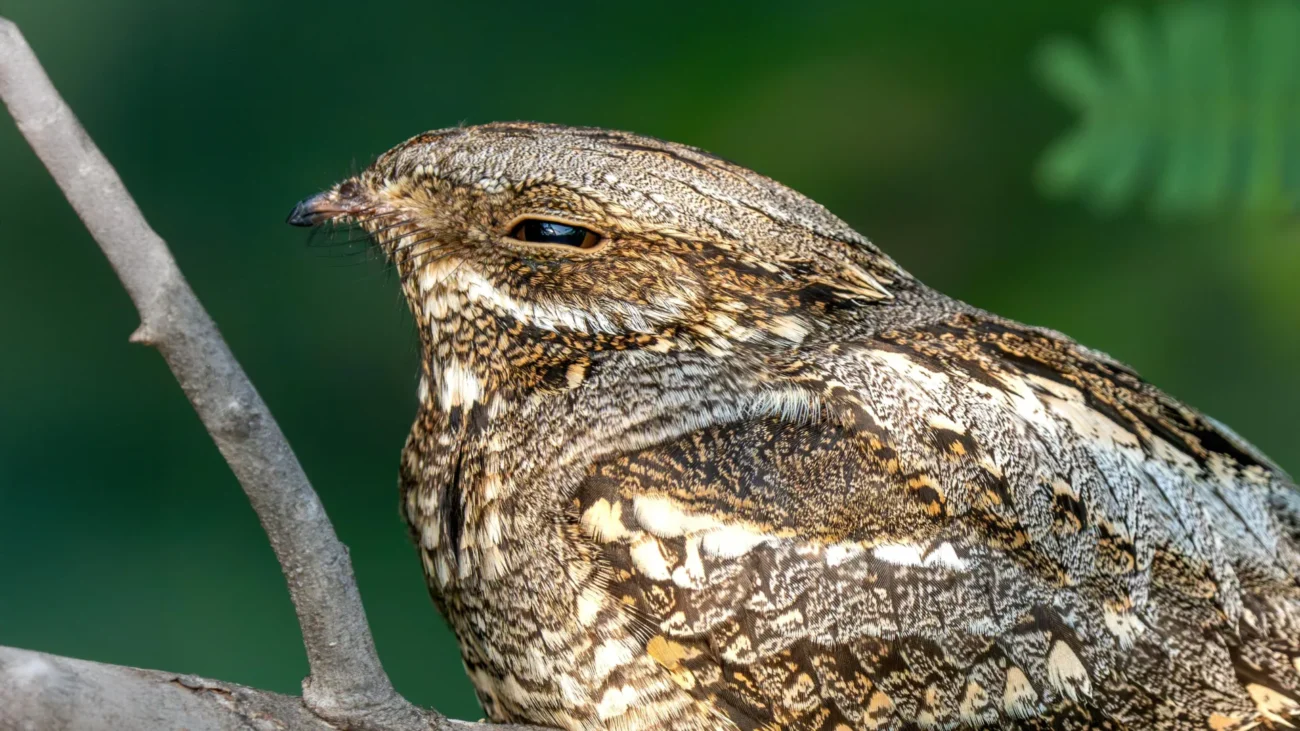
The European nightjar, a master of nocturnal skies known scientifically as Caprimulgus europaeus, has long fascinated ornithologists with its grueling annual journeys spanning thousands of miles between its European breeding grounds and wintering territories in southern Africa. Yet, recent aerodynamic research has upended longstanding assumptions about avian flight mechanics, revealing that this migratory insectivore sacrifices high-speed aerodynamic efficiency for crucial aerial agility. A team of researchers at Lund University in Sweden has discovered that the nightjar utilizes an unexpected wingbeat technique previously documented primarily in bats and large insects, forcing a major reassessment of how biological evolution balances competing survival pressures.
The findings, published following rigorous wind-tunnel experiments, challenge the deeply rooted scientific paradigm that long-distance migratory birds must possess wings optimized exclusively for maximum energy efficiency. Instead, the nightjar presents a complex biological compromise: a wing design that accommodates the contradictory mechanical demands of transcontinental migration and high-precision, low-speed aerial insect hunting. This discovery not only sheds light on the adaptive plasticity of avian morphology but also offers novel biomimetic insights for the engineering of flapping-wing robotic aircraft and unmanned aerial vehicles.
Unraveling the Aerodynamics of an Elusive Night Hunter
To comprehend the significance of the Lund University study, one must first examine the ecological niche of the European nightjar. As a crepuscular and nocturnal hunter, the nightjar relies heavily on its maneuverability to intercept flying insects—such as moths, beetles, and an array of other nocturnal arthropods—on the wing. This feeding strategy requires slow, highly responsive flight capable of executing sharp turns, sudden decelerations, and erratic loops to capture evasive prey.
Simultaneously, the same anatomical structures must sustain the bird through an arduous biannual migration crossing diverse geographic barriers, including the Mediterranean Sea and the Sahara Desert. Traditional aerodynamic models would predict a specialized wing morphology tailored strictly for cruising efficiency, characterized by high aspect ratios, pointed wingtips, and minimized drag. However, physical inspections and behavioral observations show that the nightjar possesses broad, rounded wingtips that deviate significantly from the classic blueprint of a long-distance soaring specialist.
To measure the aerodynamic consequences of this anatomy, researchers led by Christoffer Johansson, an associate professor of biology at Lund University, designed a controlled wind-tunnel study. By acclimating the birds to flight within the artificial airflow and employing high-speed camera systems alongside particle image velocimetry—a technique that visualizes airflow patterns by tracking microscopic particles suspended in the air—the team quantified the forces generated by the wings across a spectrum of flight speeds.
The empirical data revealed a stark aerodynamic penalty: while the broad wingtips provide exceptional stability and maneuverability during slow-speed foraging, they create significant performance liabilities as the bird accelerates. At higher flight speeds, the wings generate lift—the upward aerodynamic force counteracting gravity—with markedly lower efficiency compared to morphologically specialized migrants like swallows, swifts, or falcons.
"This runs counter to the intuitive image of a long-distance migrant as a perfectly optimized flying machine," Johansson explained. "Instead, the nightjar’s wings appear to be a compromise between several different demands. The bird can fly slowly and maneuver while hunting, but the trade-off is reduced efficiency in lift generation at higher speeds."
The Chronology of Discovery and Experimental Methodology
The path to understanding the nightjar’s unique flight profile represents a culmination of decades of incremental advancements in avian biomechanics. For many years, field ornithologists documented the extraordinary migratory distances of Caprimulgus europaeus, often tracking individuals via light-level geolocators and satellite telemetry. These tracking efforts established the exact chronology of their journeys: departing European breeding sites between August and September, arriving in sub-Saharan Africa by October, and returning northward between April and May.
However, observing migration patterns and quantifying the complex fluid dynamics of flapping flight are entirely different scientific challenges. Early aerodynamic research on birds largely focused on steady-state gliding and flapping mechanisms derived from fixed-wing aircraft principles. It was only with the advent of high-speed digital cinematography and advanced computational fluid dynamics in the early 21st century that researchers could accurately measure unsteady aerodynamics—the transient forces generated by rapidly changing wing orientations during a continuous wingbeat cycle.
In the Lund University experiments, individual nightjars were trained to fly steadily inside a specialized wind tunnel capable of simulating varying airspeeds. Researchers captured dozens of consecutive wingbeat cycles at frame rates exceeding 500 frames per second. By analyzing the velocity vectors of the wake turbulence shed by the wingtips and trailing edges, the scientific team reconstructed the instantaneous lift and thrust forces produced throughout every millisecond of the stroke cycle.
The analysis went far beyond confirming inefficiencies at high speeds; it exposed a radical departure from standard avian kinematics during the upstroke phase of flight.
An Unexpected Kinematic Parallel with Bats and Insects
In standard ornithological models of forward flight, the wingbeat cycle is divided into a downstroke and an upstroke. Traditionally, the downstroke is understood as the primary power phase, generating both the lift required to stay airborne and the thrust required to move forward. The upstroke, conversely, was long categorized as a largely passive or recovery phase, during which the wings are partially folded or pronated to minimize air resistance while being repositioned for the next propulsive stroke.
The wind-tunnel data for the nightjar painted a radically different picture. The researchers discovered that even as the bird elevates its wings during the upward portion of each wingbeat, it continues to actively generate forward thrust. This active upstroke mechanism relies on precise adjustments to the angle of attack and camber of the wing while it moves upward, effectively turning the wing into a dynamic airfoil that produces forward propulsion even against the direction of gravitational pull.
This kinematic profile shares almost no resemblance to standard avian flight patterns observed in similarly sized passerines or shorebirds. Instead, it bears striking similarities to the flight mechanics documented in bats and large insects, such as hawkmoths and dragonflies, which frequently utilize continuous force-generation across both upstrokes and downstrokes to achieve high maneuverability and hovering capabilities.
The discovery highlights a profound example of convergent functional evolution across vastly divergent biological taxa. Despite millions of years of separate evolutionary divergence and fundamentally different skeletal architectures—feathery avian wings versus membranous chiropteran wings or chitinous insect wings—nature has repeatedly converged upon the same fluid-dynamic solutions to resolve the physical constraints of aerial locomotion.
"What’s interesting is that the same type of aerodynamic solution seems to appear in quite different animals," noted Johansson. "This suggests that the upstroke does not have to be merely a passive or lift-generating part of the wingbeat. It can be actively used to generate thrust when the wings cannot be folded very much."
Evolutionary Trade-Offs and Functional Morphology
From an evolutionary perspective, the nightjar’s flight mechanics provide a textbook illustration of optimization constraints. In evolutionary biology, perfect optimization for a single physiological trait is exceptionally rare because organisms must survive multiple, often conflicting, environmental pressures throughout their life cycles.
The European nightjar faces a classic multi-objective optimization problem. To survive, it must successfully execute a multi-thousand-mile migration where energy economy is paramount; yet it must simultaneously secure sufficient caloric intake via insect hunting to fuel that very migration. If evolution had favored absolute high-speed cruising efficiency, the nightjar would possess long, rigid, highly tapered wings that would render low-speed insect interception virtually impossible. Conversely, if the wings were optimized purely for extreme maneuverability without regard to drag or lift-to-drag ratios, the energetic cost of crossing geographical barriers would become prohibitive, leading to exhaustion and mortality en route.
The resulting phenotype—a compromise wing structure supplemented by an insect-like active upstroke—represents an elegant evolutionary workaround. By adopting a behavioral and kinematic modification (thrust-generating upstrokes), the nightjar compensates for structural compromises in its wing morphology. This suggests that animals can expand their behavioral repertoires not only through anatomical mutations over geological time scales, but also through the exploitation of complex fluid-dynamic mechanisms within existing structural limits.
Broader Implications for Aerospace Engineering and Robotics
Beyond the realms of evolutionary biology and ornithology, the findings carry substantial implications for modern engineering, specifically the burgeoning field of biomimetic robotics. As aerospace engineers increasingly look to nature for inspiration in designing micro-air vehicles (MAVs) and autonomous drones, understanding the mechanical limitations and aerodynamic tricks of biological flyers has become critical.
Modern flapping-wing drones often encounter mechanical restrictions similar to those observed in biological systems. Designing motors, linkages, and actuators capable of complex wing-folding maneuvers during high-frequency wingbeats introduces immense mechanical complexity, weight penalties, and structural vulnerability. Many robotic designs struggle with efficient thrust generation during the recovery phase of the wing stroke.
By demonstrating that an animal can achieve sustained forward propulsion during the upstroke without relying on complex, energy-sapping wing-folding mechanisms, the nightjar model provides a blueprint for simplifying robotic wing kinematics. Engineers developing insect-scale surveillance drones or maneuverable delivery robots operating in confined or turbulent environments could potentially utilize fixed or minimally folding wing geometries, relying instead on active aerodynamic control of the angle of attack during the upstroke to maintain propulsion.
Furthermore, insights from the nightjar study could inform the development of control algorithms for autonomous aerial vehicles navigating variable wind conditions. Just as the nightjar balances conflicting demands of stability and agility, robotic systems tasked with both long-range transit and localized inspection could benefit from adopting hybrid aerodynamic strategies inspired by avian-insect convergence.
Future Directions in Biomechanical Research
With these findings established, the research team at Lund University is already setting its sights on broader horizons. The primary objective of ongoing and future investigations is to determine whether the thrust-generating upstroke is an evolutionary anomaly unique to the nightjar family (Caprimulgidae) or a widespread, under-appreciated aerodynamic strategy shared across a broader array of avian species.
Researchers plan to expand their wind-tunnel protocols to test other families of nocturnal and crepuscular birds, such as frogmouths, oilbirds, and nighthawks, as well as specialized insect-hunting diurnal raptors and swallows. By mapping these flight mechanics onto a comprehensive phylogenetic tree, scientists hope to isolate the specific ecological and morphological triggers that prompt animals to adopt insect-like flight strategies.
"We now want to investigate how common this way of generating force is among other birds and flying animals," concluded Johansson. "It could help us understand which aerodynamic principles are specific to the nightjar and which are more general. This knowledge may also inspire the development of new types of flapping aircraft."
As interdisciplinary collaboration between biologists, fluid dynamicists, and aerospace engineers continues to deepen, the European nightjar stands as a compelling reminder that the natural world still holds fundamental secrets regarding the physics of movement. What began as an inquiry into the migration habits of a cryptic nocturnal bird has ultimately broadened our understanding of evolutionary compromise, fluid dynamics, and the universal laws governing flight across the animal kingdom.

