


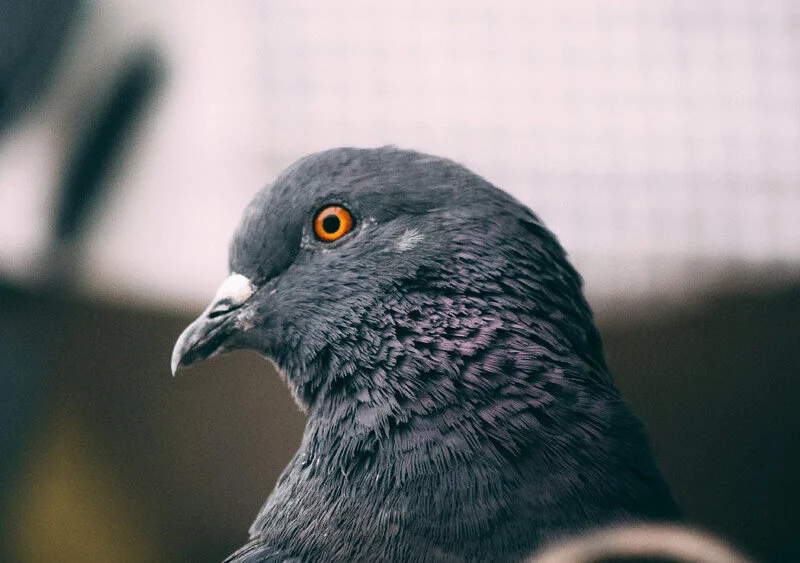
For centuries, the homing pigeon has been celebrated as one of the natural world’s most reliable messengers. During the height of the First and Second World Wars, these birds were instrumental in maintaining lines of communication when technology failed or when radio signals were compromised by enemy interception. Their ability to return to a specific home loft, often from hundreds of miles away, has long been categorized as a biological marvel. While historians have focused on the bravery and historical impact of these avian couriers, the scientific community has remained preoccupied with a more fundamental question: How do they navigate with such pinpoint accuracy across unknown terrain?
Recent research published in the journal Science has moved the conversation beyond the traditional understanding of avian navigation, suggesting that the secret to a pigeon’s internal compass may lie deep within its liver. This discovery introduces a compelling new layer to the study of magnetoreception, challenging long-held assumptions about how migratory birds process environmental data.
The Evolution of Avian Navigation Theory
To understand the magnitude of this discovery, one must first look at the established theories of bird navigation. Historically, ornithologists and biologists have proposed that birds utilize a multi-modal "map and compass" system. This system allows them to determine their position relative to their destination and their direction of travel.
The primary tools historically identified in this process include:
- Solar Navigation: Many birds use the position of the sun, calibrated against their internal circadian rhythms, to maintain a consistent heading.
- Acoustic Mapping: Studies have suggested that pigeons can detect infrasound—low-frequency noise from oceans or mountain ranges—which creates a "soundscape" map of the world.
- Magnetic Navigation: The most widely accepted theory involves magnetoreception, the ability to sense the Earth’s magnetic field.
For decades, the prevailing consensus was that magnetoreception was localized primarily in the beak, the inner ear, or even the eyes, where light-sensitive proteins called cryptochromes were thought to allow birds to "see" magnetic fields. However, the discovery of superparamagnetic microphages in the liver provides a physiological mechanism that could explain how birds maintain their orientation even when visual cues, such as the sun, are obscured by dense cloud cover.
The Mechanics of Hepatic Magnetoreception
The recent study centers on the function of superparamagnetic microphages—specialized cells that accumulate iron-oxide nanoparticles. These nanoparticles are absorbed into the bloodstream via protein transport mechanisms and are subsequently concentrated in the liver.
In the presence of the Earth’s geomagnetic field, these iron-oxide clusters become magnetized. Because these cells are situated in close proximity to the hepatic nerve fibers, researchers hypothesize that they act as a sensory transducer. In essence, the liver may function as a biological magnetometer, converting the physical force of the magnetic field into a neural signal that the pigeon’s brain can interpret as directional data.
This process becomes critical during periods of heavy overcast conditions. When the sun is hidden and solar-based navigation is impossible, the pigeon relies on these hepatic sensors to maintain its course. The implications of this are significant: it suggests that the bird possesses a redundant navigation system, allowing it to toggle between different sensory inputs depending on environmental conditions.
Empirical Evidence and Experimental Methodology
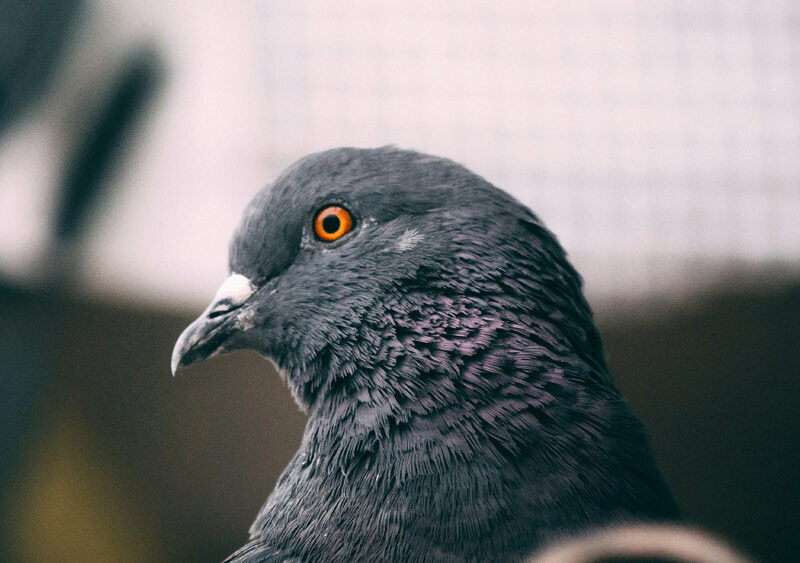
The research team behind this study conducted a series of controlled experiments to test the dependency of pigeons on these hepatic structures. A cohort of 34 trained pigeons was prepared for a standardized flight path covering 19 kilometers (approximately 11.8 miles).
The methodology was designed to isolate the role of the microphages:
- Baseline Training: All 34 pigeons were acclimated to the route, ensuring they had a clear understanding of the geography.
- Variable Environmental Conditions: The researchers monitored meteorological forecasts, waiting for days characterized by dense, low-hanging clouds to ensure that solar navigation would be suppressed.
- Targeted Depletion: A subset of the pigeons underwent a procedure to deplete the iron-oxide microphages in their livers, while a control group remained unaltered.
- Real-Time Tracking: Each bird was fitted with lightweight, internet-connected GPS transponders to log flight paths, altitude, and speed.
The results were statistically significant. Pigeons with intact hepatic microphages successfully navigated the course despite the lack of visual solar cues. Conversely, the pigeons with depleted microphages failed to navigate home in every instance. The failure was not merely a delay in arrival; the birds exhibited disorientation, failing to establish the correct heading from the start of the flight. This consistent failure suggests that the liver-based mechanism is not just a secondary aid but a primary sensory component during challenging weather.
The Broader Implications for Ornithology
The discovery of hepatic magnetoreception opens new avenues for researchers studying migratory patterns across various species. While pigeons have served as the primary model for this study, the presence of similar physiological structures in other migratory birds, such as Arctic terns or bar-tailed godwits, remains a subject of intense academic interest.
If the liver acts as a sensory organ for magnetic fields, it alters how we evaluate the impact of environmental pollutants on wildlife. For instance, if certain chemicals or dietary factors interfere with the body’s ability to process iron-oxide nanoparticles, they could potentially impair a bird’s migratory capability. This introduces a new metric for assessing the health of migratory populations in the face of environmental change.
Analysis of Current Magnetoreception Theories
The scientific community is currently navigating four competing theories regarding magnetoreception. This study on hepatic microphages does not necessarily invalidate the others, but rather positions them as part of an integrated sensory suite:
- The Radical Pair Mechanism: Proposes that light-dependent chemical reactions in the eyes allow birds to visualize magnetic fields.
- The Magnetite-Based Mechanism: Suggests that clusters of magnetite in the beak or inner ear act as a compass needle.
- The Olfactory Map Hypothesis: Argues that birds navigate by sensing wind-borne odors that vary according to geography.
- The Hepatic/Liver Mechanism: The newly identified system that provides a reliable backup when visual or olfactory cues are compromised.
The consensus among experts is that these systems likely work in concert. A pigeon likely uses its visual system for general orientation, while the hepatic system acts as a high-precision compass, particularly during long-distance migration or adverse weather.
Future Research Directions
While the findings published in Science are compelling, the researchers emphasize that this is only the beginning of a broader inquiry. Future studies are expected to explore the neural pathways connecting the liver to the brain. If the liver is indeed sensing the Earth’s magnetic field, the next logical step is to map the specific nerves that carry this sensory information to the avian central nervous system.
Furthermore, there is a need to understand how these nanoparticles are ingested and synthesized. Is this a process driven by diet, or is it an innate biological trait developed during the bird’s maturation? Understanding the lifecycle of these microphages could provide insights into how avian species adapt their sensory capabilities to changing geomagnetic conditions.
As technology continues to advance, the use of high-resolution GPS tracking and refined biological imaging will allow researchers to observe these phenomena in the wild, rather than in controlled training environments. The history of the homing pigeon has transitioned from the battlefield to the laboratory, and with this new understanding of their internal physiology, the humble pigeon remains at the forefront of biological discovery. This research underscores that even the most common creatures may hold the secrets to the most complex mysteries of the natural world.

