


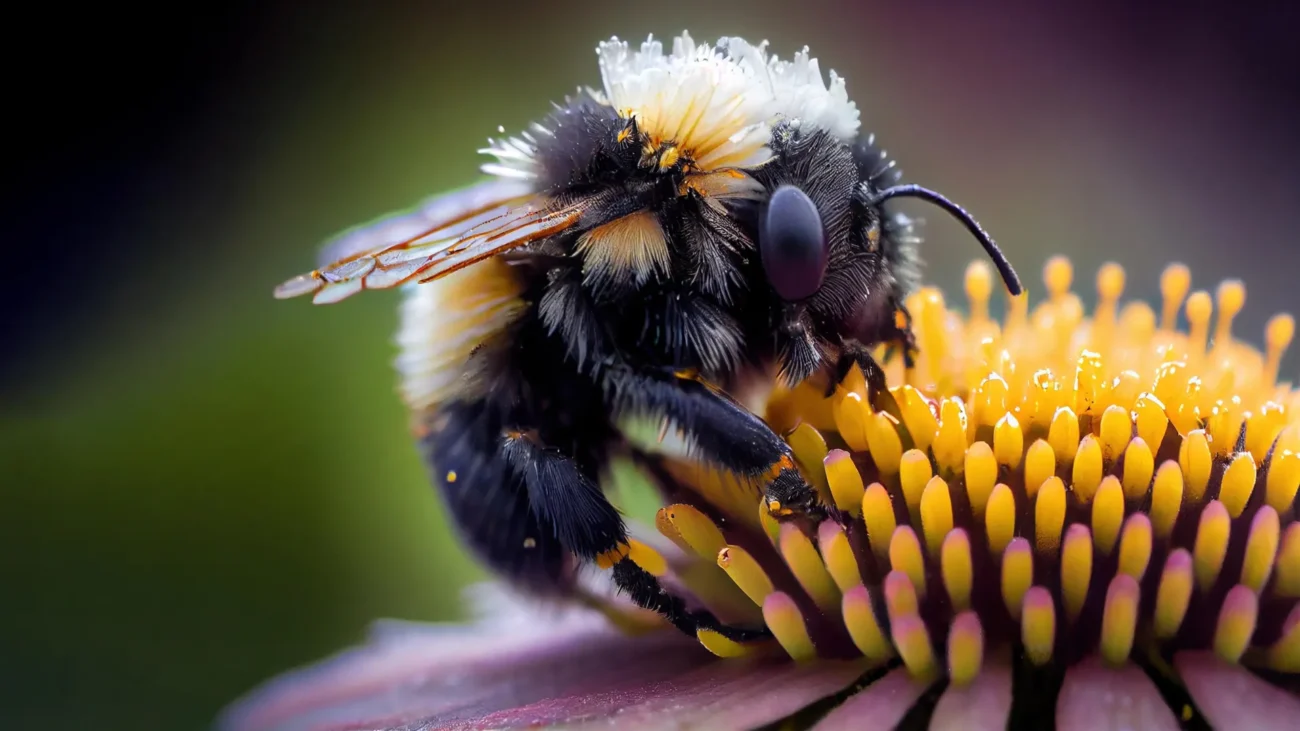
New scientific research published by the University of Cambridge has uncovered a startling ecological vulnerability: bumblebees can accumulate up to seven times more toxic heavy metals in their pollen loads and bodily tissues than honeybees, even when both species forage side by side in identical environments. The study, which sheds light on an insidious and frequently overlooked threat to native pollinators, raises urgent questions regarding how invisible environmental pollution impacts the health, cognitive function, and reproductive success of wild bee populations.
The findings, published in the peer-reviewed journal Ecological Entomology—the official publication of the Royal Entomological Society—demonstrate that traditional methods of monitoring environmental contamination using honeybees may significantly underestimate the risks faced by other vital pollinators. While industrial zones, mining districts, and urban centers are universally recognized as hotspots for heavy metal pollution, this research confirms that agricultural regions and rural landscapes, often perceived as pristine sanctuaries for wildlife, harbor hidden chemical hazards that disproportionately affect wild bumblebees.
Background and Context of Pollinator Contamination
Heavy metal contamination in the environment stems from a diverse array of anthropogenic and natural sources. Industrial manufacturing, smelting operations, heavy vehicular traffic, and legacy mining sites continuously release elements such as lead, cadmium, arsenic, chromium, cobalt, and tin into the atmosphere. Once airborne, these metallic pollutants settle over vast geographical expanses, contaminating soils, surface waters, and vegetation.
Furthermore, rural landscapes are far from immune. Agricultural practices heavily contribute to the spread of heavy metals through the application of phosphate-based fertilizers, animal manures, and sewage sludge used as soil conditioners. These substances frequently contain trace amounts of toxic elements that accumulate in agricultural soils over decades.
As bees traverse these landscapes to gather essential nutritional resources—nectar and pollen—they inadvertently ingest and collect these persistent contaminants. Unlike organic pollutants that degrade over time, heavy metals are elemental and persist indefinitely in ecosystems. When bees absorb or ingest these toxins, the impacts can be profound. Previous toxicological studies have established that even low-level exposure to heavy metals can impair insect learning and memory pathways. Because bees rely heavily on spatial memory and olfactory learning to navigate complex landscapes and locate food sources, cognitive impairment can severely compromise their foraging efficiency. Furthermore, scientific literature has consistently linked metal toxicity to reduced brood survival, lower reproductive output, and developmental abnormalities within the colony.
Methodology and Comparative Analysis of the Cambridge Study
To understand how different bee species interact with environmental contaminants, researchers from the Department of Zoology at the University of Cambridge designed a targeted field study. Led by Dr. Sarah Scott—who conducted the research during her tenure at Cambridge before moving to Newcastle University—the scientific team deployed specialized pollen traps to collect samples from honeybee (Apis mellifera) and bumblebee colonies stationed directly alongside one another in Cambridgeshire, England.
The selected study sites were located in rural environments where baseline soil contamination was traditionally considered low to moderate, representing typical European agricultural countryside rather than a heavy industrial zone. The researchers meticulously analyzed the gathered pollen, as well as the bodies of adult bees, utilizing advanced spectrometry to measure concentrations of six primary heavy metals: arsenic, cadmium, chromium, cobalt, lead, and tin.
Despite occupying the exact same geographical territory and utilizing the same overlapping foraging grounds, the two species yielded dramatically different biochemical profiles. The analytical results revealed that pollen collected by bumblebees contained between two and seven times higher concentrations of toxic heavy metals across nearly all analyzed elements compared to the pollen gathered by honeybees in the adjacent hives. Furthermore, chemical extraction of the adult bees themselves indicated that bumblebees accumulated roughly three times higher concentrations of heavy metals within their physical bodies.
Dr. Scott emphasized the nuance of these findings, noting that while the absolute concentration levels observed in the Cambridgeshire study were generally sub-lethal—meaning they were not immediately fatal to the foraging insects—sub-lethal exposure carries severe cumulative consequences. "Most metal levels we found were not high enough to kill bees, but even low levels can still harm bee health and colony success in subtle but important ways, such as affecting their ability to forage and reproduce," Dr. Scott explained.
Behavioral and Biological Drivers of Differential Exposure
The stark contrast in heavy metal accumulation between honeybees and bumblebees is not a matter of random chance, but rather the direct result of distinct biological traits, nesting habits, and foraging behaviors unique to each species. Understanding these behavioral mechanisms is critical for predicting how different pollinators absorb environmental toxins.
Nesting Architecture and Colony Demographics
The structural organization of the colony plays an immediate role in vulnerability. Honeybees are social insects that construct expansive, long-lived colonies typically housed above ground in hollow trees, wall cavities, or managed wooden hives. A single honeybee colony routinely supports a massive workforce ranging from 30,000 to 60,000 individuals.
In stark contrast, bumblebees build annual colonies that are remarkably smaller, usually housing between 50 and 500 workers at their peak. Furthermore, bumblebees predominantly nest underground in subterranean cavities or sheltered surface structures like dense leaf litter and abandoned rodent burrows. This ground-level and subsurface nesting habit places bumblebee colonies in direct, continuous physical contact with soil dust and sediment that may hold elevated concentrations of settled heavy metals.
Foraging Range and Dietary Breadth
Foraging strategies also dictate exposure levels. Honeybees are exceptional travelers, routinely venturing up to 10 kilometers away from their central hive in search of high-yield floral resources. Because of their large workforce and extended flight range, honeybee colonies can distribute their foraging pressure across a vast spatial area, effectively diluting their intake and bypassing localized pockets of heavy contamination.
Bumblebees, conversely, are central-place foragers with a much more restricted territorial range. Workers typically forage within a radius of approximately 1.5 kilometers from their underground nest. This limited flight capacity confines them to local environmental conditions, granting them fewer opportunities to bypass localized pollution hotspots.
Additionally, dietary specialization influences exposure. Honeybees sample a highly diverse array of plant species, effectively spreading their pollen collection across multiple botanical families and diluting any single source of contamination. Bumblebees often collect smaller absolute amounts of pollen from a narrower selection of specific plant species, making their overall toxicological exposure heavily dependent on whether their preferred floral hosts accumulate high levels of heavy metals.
Morphological Differences: The Surface Area Factor
Beyond behavior, physical morphology plays an undeniable mechanical role. Bumblebees feature notably robust, densely haired bodies covered in branched setae (chaetotactic hairs). While this heavy coat is evolutionary perfection for trapping and transferring pollen grains between flowers during pollination, it simultaneously acts as an exceptional trap for airborne particulate matter, industrial dust, and soil particles laden with heavy metals. These microscopic particles cling to the bumblebee’s furry exterior and are subsequently transported back to the nest alongside harvested pollen.
Implications for Rural Ecosystems and Biodiversity
The publication of these findings in Ecological Entomology serves as a vital wake-up call for conservationists and environmental regulators who have historically relied on managed honeybee populations as the primary biological indicators for environmental health. Because honeybees display lower accumulation rates and wider foraging safety margins, utilizing them exclusively can provide a false sense of security regarding the actual ecological burden carried by wild, native pollinators.
Professor Lynn Dicks of the Department of Zoology at the University of Cambridge, who served as the senior author on the study and is a Fellow at Selwyn College, highlighted the specific danger posed to wild populations. "Even in areas that we usually consider safe or lower risk for heavy metals—typically rural areas, away from industrial or mining areas—bees can pick up toxic metals," Professor Dicks noted. "Bumblebee colonies tend to have fewer workers available to perform tasks, so the loss of individual foragers can have a disproportionately large impact on overall colony function and survival."
Given that bumblebees are premier pollinators for both wild flora and essential agricultural crops—including tomatoes, peppers, blueberries, and clover—any systematic decline in their health threatens broader ecological stability and global food security.
Official Responses and Constructive Recommendations
The release of the Cambridge study has prompted discussions among agricultural scientists, environmental toxicologists, and conservation groups regarding mitigation strategies. Funding for the research was generously provided by the Royal Society, reflecting the growing institutional prioritization of pollinator health research in the face of cumulative environmental stressors.
Despite the concerning revelations regarding heavy metal accumulation, the research team is unified in urging the public and environmental managers not to abandon pollinator conservation efforts, such as urban and rural gardening initiatives.
Dr. Scott strongly advocated for the continued cultivation of flowering plants, even in environments where minor soil contamination might be suspected. "Bees play a critical role in both biodiversity and food security, so we’d still encourage people to plant flowers to help them, even if you live in an area more likely to be contaminated," Dr. Scott emphasized. "At the end of the day, bees still need food. Even if it carries traces of heavy metals, having some food is better than having no food."
As regulatory bodies continue to evaluate the long-term impact of agricultural chemicals, industrial deposition, and soil degradation on native fauna, studies like this underscore the urgent need for integrated pollution management. Protecting wild pollinators will require not only creating hospitable floral habitats, but also addressing the foundational health of the soil and air across both urbanized and rural landscapes.

