


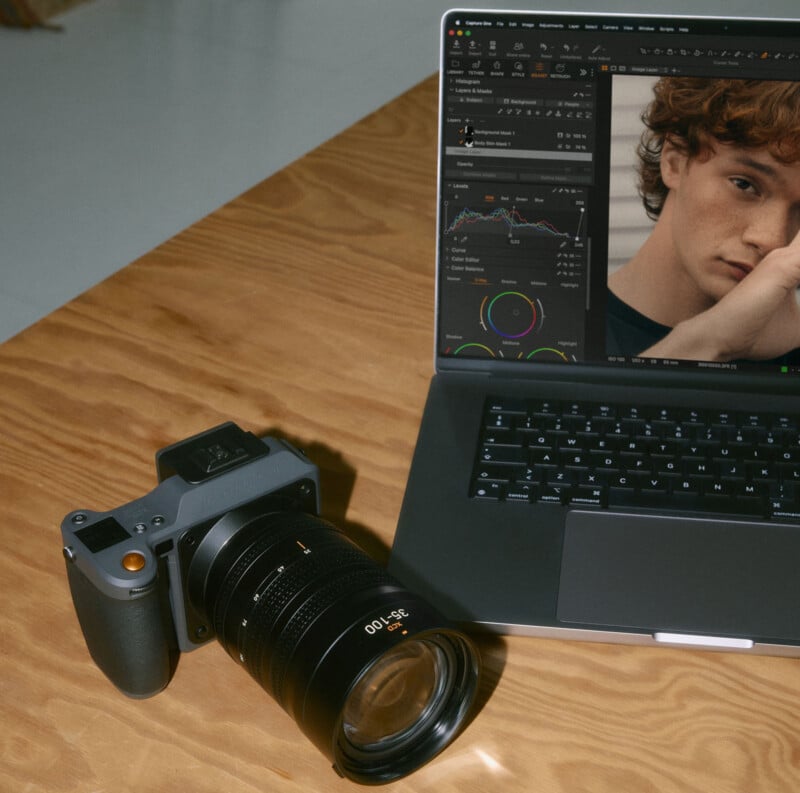
In a landmark development for the professional imaging industry, Capture One has officially announced the integration of native support for Hasselblad’s proprietary .3FR RAW image format, ending a multi-decade period of incompatibility that has long defined the high-end photography landscape. The update, which initially targets Hasselblad’s flagship 100-megapixel medium-format systems, represents a fundamental shift in the strategic direction of Capture One following its transition to an independent entity. This collaboration marks the first time that Hasselblad users can leverage Capture One’s renowned color grading and tethering tools without resorting to complex file conversion workarounds, effectively dismantling one of the most significant barriers in the professional studio ecosystem.
The initial rollout of this support is specifically tailored to the current generation of Hasselblad’s high-resolution sensors. Supported models include the Hasselblad X2D 100C, the X2D II 100C, and the CFV 100C digital back. While the current integration focuses on RAW file rendering and image processing, both companies have confirmed that native tethering support—a critical requirement for commercial and fashion photographers—is currently in development and slated for a future release.
A Historical Rivalry Transcended
To understand the significance of this announcement, one must look back at the entrenched rivalry that has dictated the medium-format market for over twenty years. For much of its history, Capture One was a subsidiary of Phase One, a Danish manufacturer of high-end digital backs and camera systems. Phase One and Hasselblad, based in Sweden, were direct competitors in a niche, high-stakes market where the primary clients were world-class fashion, architectural, and commercial photographers.
This competition was characterized by a deep-rooted animosity often compared to the legendary rivalries between Ferrari and Lamborghini in the automotive world. Because Capture One was owned by Phase One, the software was intentionally designed to be the premier processing engine for Phase One hardware. Consequently, supporting a direct competitor’s RAW format was viewed as counter-intuitive to Phase One’s hardware sales. For years, Hasselblad users were forced to use Hasselblad’s proprietary Phocus software or Adobe Lightroom, as Capture One remained a closed ecosystem for its primary rival’s files.
The landscape began to shift in 2020 when Capture One was spun off as an independent company under the ownership of Axcel, a Nordic private equity firm. Free from the hardware-driven mandates of Phase One, Capture One’s leadership, headed by CEO Rafael Orta, began a strategic pivot toward becoming a universal platform for all professional photographers, regardless of their camera brand.
"There is a well-documented history between Hasselblad and Phase One, and we’re not here to dwell on it," Orta stated in a recent interview. "Capture One has operated as an independent company since 2020, and what matters to us is serving photographers. They have asked us for this for years—on forums, in feature requests, in conversations. That’s why we’ve been working for a while with the Hasselblad team to deliver their shooters a native Capture One workflow."
The Technical Challenge of .3FR Integration
Integrating Hasselblad support was not a simple matter of enabling a file extension. The process required a deep-level collaboration between the engineering teams in Copenhagen and Gothenburg to ensure that the unique characteristics of Hasselblad’s "Natural Colour Solution" (HNCS) were respected and accurately translated within the Capture One environment.
Capture One has built its reputation on its superior RAW conversion engine, which treats each camera sensor as a unique entity. To maintain this standard, the company eschewed a generic file reader in favor of bespoke color profiles. Engineers developed dedicated profiles for the 100-megapixel Back-Illuminated (BSI) CMOS sensors found in the X2D and CFV lines. These profiles are designed to handle the massive dynamic range and subtle tonal transitions that medium-format photographers expect.
Furthermore, the integration extends to Hasselblad’s XCD lens ecosystem. High-resolution medium-format sensors are notoriously unforgiving regarding optical imperfections. To address this, Capture One’s team meticulously mapped the optical characteristics of Hasselblad’s lenses. This data allows the software to automatically apply corrections for:
- Optical Distortion: Ensuring straight lines remain straight, particularly in architectural photography.
- Chromatic Aberration: Eliminating color fringing at high-contrast edges.
- Vignetting: Compensating for light fall-off at the corners of the frame, especially when shooting at wide apertures.
This level of precision ensures that the transition from Hasselblad’s Phocus software to Capture One is seamless, preserving the "Hasselblad look" while providing the advanced layer-based editing and color balance tools that have made Capture One the industry standard.
Chronology of the Medium Format Software Evolution
The journey toward this integration can be traced through several key milestones in the digital photography era:
- 1990s – Early 2000s: Phase One develops Capture One as a tethering and RAW conversion tool specifically for its digital backs. Hasselblad develops Phocus to support its H-System cameras.
- 2010s: The rivalry intensifies as both companies move into integrated medium-format bodies (Phase One XF vs. Hasselblad H6D). Capture One remains strictly incompatible with Hasselblad RAW files, despite overwhelming user demand.
- 2019 – 2020: Phase One separates its software division. Capture One becomes an independent entity. This marks the theoretical possibility of a Hasselblad partnership.
- 2022: Hasselblad releases the X2D 100C, which receives critical acclaim for its image quality and built-in SSD storage. The demand for a Capture One workflow for this specific sensor reaches a fever pitch.
- 2023: Confidential discussions begin between Capture One and Hasselblad engineers to share technical specifications for the .3FR format.
- July 2024: Capture One officially launches support for the 100-megapixel Hasselblad lineup, signaling the end of the software embargo.
Strategic Implications for the Professional Market
The partnership is a direct response to the evolving needs of the professional photography market. As digital imaging technology matures, the "walled garden" approach is becoming increasingly untenable. Professional photographers frequently switch between systems or use different brands for different assignments. A photographer might use a Sony Alpha system for event work but rely on a Hasselblad X2D for high-end studio portraits. Previously, this required maintaining two entirely separate post-processing workflows.
By bringing Hasselblad into the fold, Capture One consolidates its position as the "operating system" of the professional studio. This move is also a strategic defense against Adobe’s dominance. While Adobe Lightroom and Camera Raw have supported Hasselblad for years, many high-end professionals prefer Capture One for its superior tethering stability and sophisticated color editor.
From Hasselblad’s perspective, this move expands the appeal of their hardware. For some photographers, the lack of Capture One support was a deal-breaker that prevented them from investing in the Hasselblad ecosystem. By enabling this workflow, Hasselblad removes a major obstacle to hardware adoption.
"Over the years, we’ve seen more and more professional photographers choose Hasselblad, and we’ve received a great deal of feedback from our users," a Hasselblad spokesperson noted. "One of the most consistent requests has been native support for Hasselblad RAW files in Capture One. This partnership is a direct response to that feedback."
The Future of Phocus and Specialized Software
Despite the new partnership, Hasselblad has made it clear that its proprietary software, Phocus, will not be discontinued. Phocus remains the only software capable of utilizing certain niche Hasselblad features, such as Multi-Shot technology (found in older H-system models) and specific metadata handling unique to the Hasselblad ecosystem.
Hasselblad intends to develop Phocus alongside the Capture One integration, offering it as a free, specialized tool for users who want a pure, first-party experience. However, the company acknowledges that in a multi-platform world, providing choice is essential.
Broader Impact on the Imaging Industry
The reconciliation between these two giants suggests a broader trend toward interoperability in the high-end tech sector. In an era where AI-driven processing and cloud-based workflows are becoming standard, proprietary file formats that isolate users are increasingly viewed as a liability rather than a competitive advantage.
For the wider photography community, this news is a signal that the "Medium Format Wars" of the 2000s have entered a new phase of professional maturity. The focus has shifted from blocking competitors to empowering the end-user. As Capture One continues to refine its support for Hasselblad—specifically with the upcoming tethering functionality—the boundaries between different high-end systems will continue to blur, ultimately benefiting the quality of digital imagery across the commercial and fine-art sectors.
In conclusion, the addition of Hasselblad support to Capture One is more than just a software update; it is the resolution of a historical anomaly. It validates Capture One’s status as an independent platform and reinforces Hasselblad’s commitment to its user base. For the professional photographer, it means the freedom to choose the best hardware for the job without sacrificing the best software for the edit. As the 100-megapixel era continues to push the limits of what is possible in digital capture, this partnership ensures that the tools used to refine those images are as powerful as the cameras that create them.

