


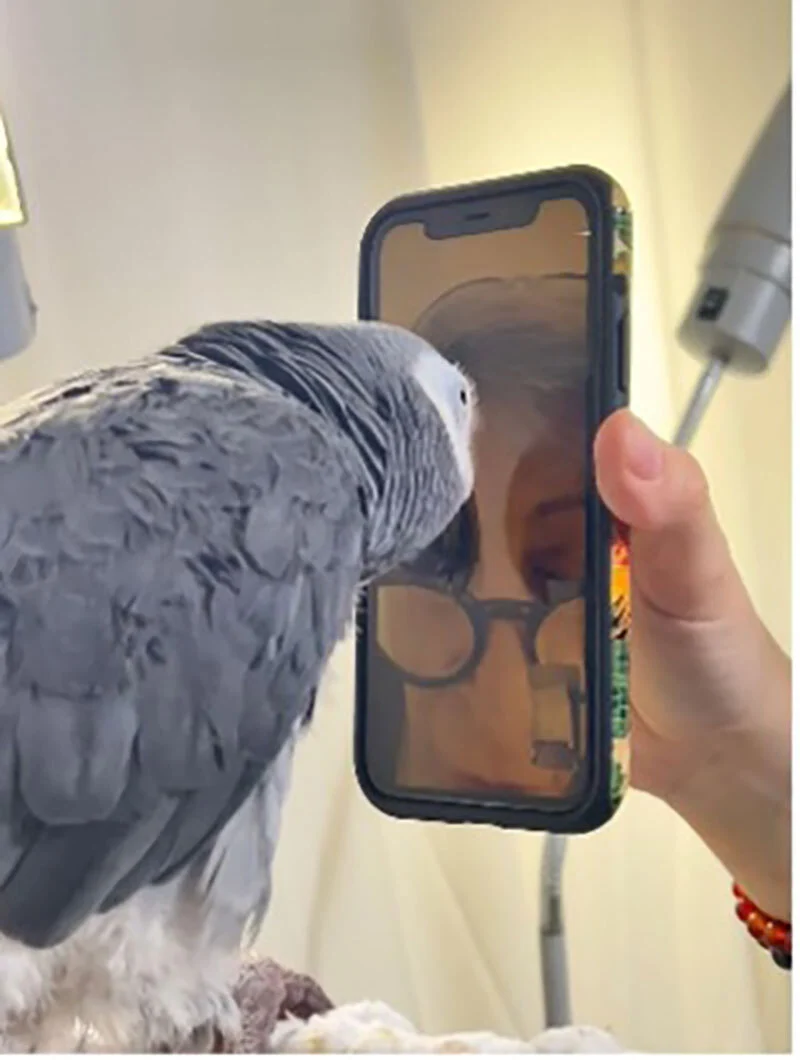
In an innovative application of modern technology to animal welfare, Dr. Irene Pepperberg, a globally recognized authority on avian cognition, has detailed her ongoing success in maintaining a profound bond with her African Grey parrot, Griffin, through regular video calls during her extensive travels. This practice, initiated several years ago with the intention of fostering connection despite physical distance, has proven remarkably effective in mitigating the behavioral challenges often associated with separation in highly intelligent and social avian species. Dr. Pepperberg’s observations highlight not only the adaptive capabilities of African Grey parrots but also the evolving potential of digital communication in supporting the emotional well-being of companion animals.
Background and Context: A Legacy of Avian Intelligence
Dr. Irene Pepperberg’s pioneering research with African Grey parrots has revolutionized our understanding of animal intelligence, communication, and emotional capacity. Her work began notably with Alex, a parrot whose cognitive abilities, including the capacity for language, numerical concepts, and abstract thought, challenged long-held scientific assumptions about non-human minds. Following Alex’s passing in 2007, Dr. Pepperberg continued her groundbreaking studies with Griffin and Athena, two other African Greys who have further contributed to the scientific community’s insights into avian cognition.
African Grey parrots are renowned for their exceptional intelligence, complex problem-solving skills, and remarkable vocal abilities, often capable of mimicking human speech with astonishing accuracy and context. Beyond their cognitive prowess, these birds are highly social creatures, forming deep bonds with their human caregivers and flock members. This strong social imperative makes them particularly susceptible to distress, anxiety, or behavioral changes when separated from their primary companions. In Dr. Pepperberg’s lab, Griffin, like his predecessor Alex, is not merely a research subject but a cherished companion, whose emotional and psychological well-being is paramount. The "cold wing" treatment, a term Dr. Pepperberg uses to describe Griffin’s initial aloofness or refusal to engage upon her return, is a common avian behavioral response to perceived abandonment or significant changes in routine, underscoring the depth of their emotional bonds.
The Genesis of a Digital Connection
The concept of connecting with her parrots via video calls emerged a few years prior as Dr. Pepperberg sought practical solutions to maintain her presence in Griffin’s life despite a demanding international travel schedule. Initially, this idea was an experimental foray into how technology might bridge the physical gap. As she candidly notes, a follow-up on the efficacy of this novel approach had been pending until now.
For many years, Dr. Pepperberg’s professional life necessitated frequent travel, often involving three trips per month. Upon reaching the age of 75, a conscious decision was made to reduce this rigorous schedule, bringing it down to approximately one trip per month, though exceptions for conferences remain outside her direct control. Even with this reduction, her absences from the lab are significant enough to warrant proactive measures to reassure Griffin. While a dedicated team of research associates meticulously attends to Griffin’s every need in her absence, Dr. Pepperberg recognized the unique importance of her personal connection. Ensuring Griffin understood he was not being abandoned by her specifically became a high priority, prompting the consistent implementation of these digital interactions.
Navigating Time Zones and Technological Frontiers
The logistical challenges of orchestrating these interspecies video calls are considerable, particularly when Dr. Pepperberg travels internationally. Within the United States, time zone differences are manageable, typically involving at most a three-hour differential. This allows for relatively easy scheduling, ensuring calls can be made before Griffin’s customary 8 PM bedtime. However, international travel introduces complexities that test the limits of modern communication. For instance, an eight-hour time difference in locations like Dubai, or a thirteen-hour difference combined with the international dateline in Japan, drastically narrows the window for a suitable call. These constraints often necessitate creative solutions, such as Dr. Pepperberg utilizing an internet "hot spot" from a colleague’s car to ensure a connection. These impromptu calls have often delighted her colleagues, who also enjoy the rare opportunity to virtually interact with Griffin.
A critical aspect of these digital interactions revolves around the scientific unknowns concerning how parrots perceive video calls. Parrots possess tetrachromatic vision, meaning they have four types of cone cells in their eyes, enabling them to see into the ultraviolet (UV) spectrum, unlike humans who are trichromatic. Cell phone cameras, optimized for human vision, typically do not capture UV light. Consequently, Dr. Pepperberg acknowledges the uncertainty regarding what visual information Griffin genuinely processes from the screen. Human faces, lacking significant UV components (unlike parrot feathers), might appear differently or with less detail than what a parrot would naturally perceive. Similarly, the fidelity of her voice through a phone speaker and Griffin’s ability to recognize it definitively remain subjects of ongoing inquiry. Despite these perceptual ambiguities, Griffin consistently reacts positively. His behavior, such as bending down to "kiss" the screen, strongly suggests he associates the visual and auditory stimuli with Dr. Pepperberg. This robust positive association, regardless of the precise mechanisms of perception, underscores the value of the experience for Griffin.
Griffin’s Digital Engagement: A Parrot’s Perspective
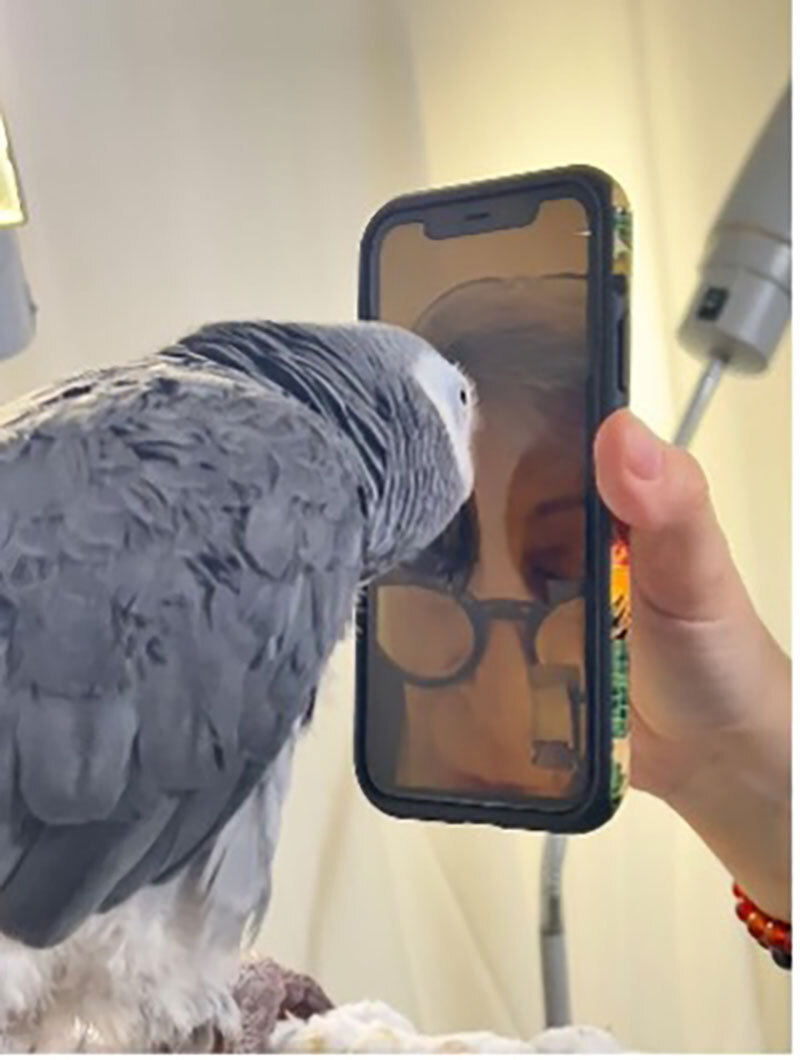
Griffin’s interactions with Dr. Pepperberg during these video calls provide compelling evidence of his cognitive and emotional engagement. The act of "kissing" the screen, by touching his beak to the display where Dr. Pepperberg’s image appears, is a clear indicator of a positive emotional response and recognition. This behavior suggests he is not merely reacting to a novel stimulus but engaging with what he perceives as a representation of his bond partner.
Furthermore, Dr. Pepperberg has noted Griffin’s nuanced understanding of the limitations of the digital medium. He has learned not to request "tickle" from the phone, a clear indicator that he comprehends the distinction between her virtual presence and her physical absence. This selective behavior demonstrates a sophisticated level of understanding; he recognizes her image and voice, associates them positively, but also understands that she cannot physically perform actions like tickling through the screen. This cognitive discernment speaks volumes about his capacity for abstract thought and his ability to differentiate between real and represented stimuli. The fact that he finds the experience non-aversive and consistently engages with it further supports its positive impact on his welfare. For Dr. Pepperberg, these calls offer a valuable opportunity to visually assess Griffin’s well-being and appearance while she is away, providing her with peace of mind.
Scientific Underpinnings of Avian Cognition and Emotional Well-being
The success of these video calls can be contextualized within the broader scientific understanding of African Grey parrot intelligence and social dynamics. African Greys are highly empathic birds, capable of recognizing and responding to human emotions, and forming complex social structures. Studies have shown their ability to infer intentions, engage in reciprocal altruism, and display self-awareness, all traits that contribute to their deep capacity for bonding.
The "cold wing" treatment observed by Dr. Pepperberg is a classic example of an avian behavioral response to perceived social disruption. In the wild, separation from the flock or a mate can be life-threatening. Domesticated parrots, particularly highly bonded individuals like Griffin, can experience distress or perceived abandonment when their primary caregiver is absent. This can manifest as temporary social withdrawal, aggression, feather plucking, or other stress-related behaviors. The reduction in the duration and intensity of Griffin’s "cold wing" behavior upon Dr. Pepperberg’s return, directly attributable to the video calls, is a significant behavioral outcome. It suggests that the digital interactions provide a sufficient sense of continued connection or reassurance to mitigate the negative psychological impacts of her absence. This outcome offers compelling, albeit anecdotal, evidence that even a mediated presence can fulfill some critical social and emotional needs for these intelligent birds.
Beyond the Screen: Video Calls vs. In-Person Interaction
Despite the undeniable benefits of video calls, Dr. Pepperberg is clear that they are not a substitute for genuine, in-person interaction. Her relationship with Griffin is multi-faceted and deeply embedded in daily routines. When she is in town, Griffin typically spends at least an hour daily on her hand, receiving affectionate tickles and preening. Additional time is dedicated to structured training sessions and shared companionship, such as when Griffin enjoys his afternoon birdy snacks while Dr. Pepperberg eats her own human snacks (like carrots, which Griffin reportedly despises, thus preventing any sharing disputes). None of these rich, tactile, and interactive experiences can be replicated by a brief, ten-minute video call.
However, the crucial distinction lies in whether a video call is better than nothing. Dr. Pepperberg unequivocally states that it is "for sure." The primary evidence supporting this claim is the significant reduction in the "cold wing" treatment upon her return. If Griffin initially ignores her, the duration of this behavior is markedly shorter when calls have been maintained. This tangible improvement in their reunion dynamics provides a strong impetus for Dr. Pepperberg to prioritize these digital check-ins, often structuring her travel days around the narrow windows available for "phoning home." She draws a parallel to the human experience of video calls during the COVID-19 pandemic, acknowledging that while nothing could replace a real hug, seeing the faces of loved ones and sharing news undoubtedly made life "a bit less miserable." This human experience resonates deeply with her observations of Griffin, underscoring the universal need for connection.
Broader Implications for Avian Welfare and Interspecies Bonds
Dr. Pepperberg’s innovative approach carries significant implications for avian welfare and our broader understanding of interspecies bonds. For pet bird owners, especially those with highly social and intelligent species like African Greys, cockatoos, or macaws, this methodology offers a potential avenue for mitigating separation anxiety and maintaining psychological well-being during absences. As remote work becomes more common and travel remains a necessity for many, exploring technological aids for companion animals could become an increasingly important area of focus in animal care.
Furthermore, this research contributes to the growing body of evidence supporting the complex emotional lives of animals. Griffin’s nuanced responses – his "kisses," his understanding of the limitations of the screen, and the reduction of his "cold wing" behavior – challenge simplistic views of animal cognition and highlight the depth of human-animal relationships. It suggests that even mediated forms of interaction can tap into fundamental social and emotional needs, providing comfort and continuity in the face of physical separation.
Future research could delve deeper into the specific perceptual mechanisms involved, perhaps by developing parrot-optimized video displays or audio systems. Comparative studies across different avian species or even other highly social companion animals could further illuminate the universality of these benefits. Dr. Pepperberg’s ongoing work with Griffin continues to push the boundaries of interspecies communication and care, illustrating that while physical presence remains ideal, the digital realm offers valuable tools for nurturing the profound bonds we share with our animal companions. This innovative practice serves as a testament to the enduring quest to understand and enhance the lives of the remarkable creatures with whom we share our world.

